Published
Part 1
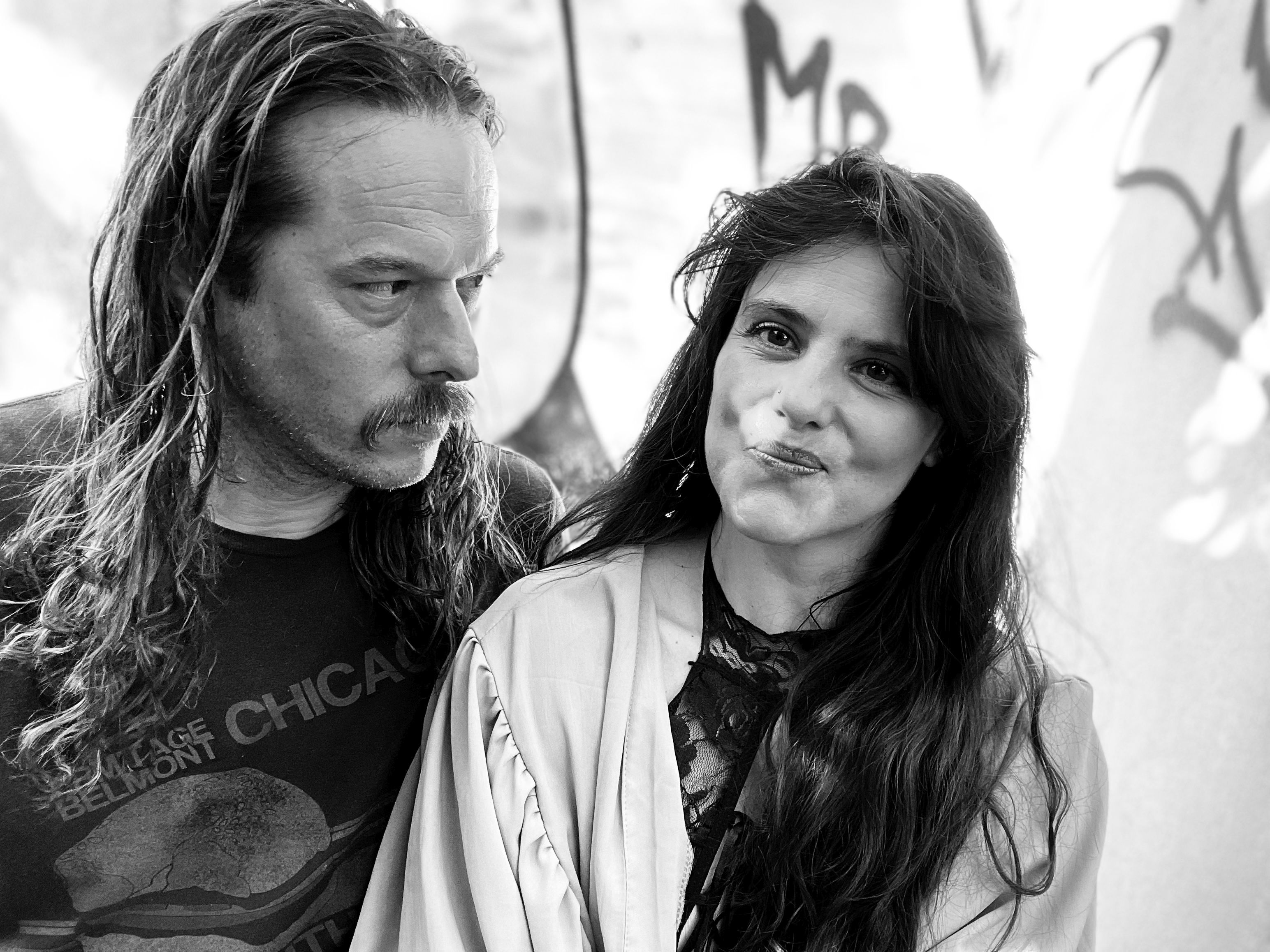
Names: Ibelisse Guardia, Frank Rosaly
Occupations: Singer, multimedia-performer (Ibelisse Guardia), drummer, composer, sound designer (Frank Rosaly)
Nationalities: American (Frank Rosaly), Bolivian (Ibelisse Guardia)
Current release: Ibelisse Guardia and Frank Rosaly team up for MestizX, out now via International Anthem.
Recommendation for Amsterdam, the Netherlands:
FR: Shout out to Tacos La Sinaloense in the Ten Kate Markt! Their birria is no joke.
IGF: Check the Space is The Place series happening in different venues like the Bimhuis in Amsterdam (experimental, improvised music programming), The Rest is Noise series mainly at Muziekgebouw aan ’t IJ (divers, international, pushing boundaries). Go to street markets like Dapper market and Ten Kate Markt (local vibes, good food!), hang out in the South at the Bijlmer neighbourhood, Keti Koti Festival (abolition of slavery celebration, amazing music, crazy good food, community), OCCII music venue (punk vibes), Cinetol music venue (pop music and super nice local craft bier), W139 in the centre of Amsterdam and super cool art gallery (check their program), Framer Framed art space program (with a focus on social justice), FIBER Festival program (electronic music and eco-centred programming), Garage Noord (for some superb DJ line-up and dancing), Dekmantel Festival (just awesome).
Topics we are passionate about but rarely get to talk about:
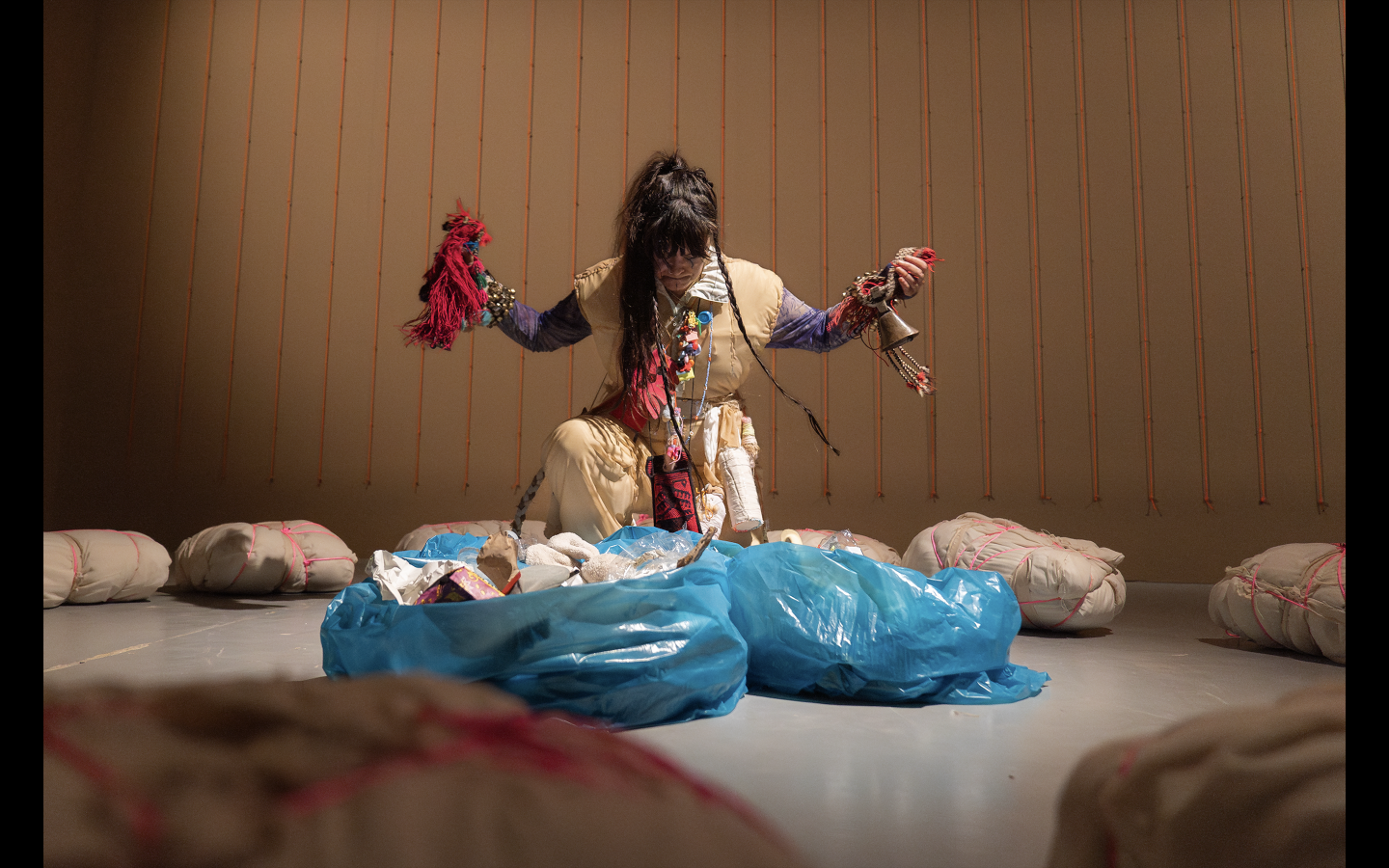
IGF: I am a performance artist as well, and I think that is a very undermined (even by myself) practice. In the sense of how our bodies are instruments as well, our presence on a stage matters, it is language. That is why I like Sun Ra so much, to not be afraid of the parallel story tellings within story tellings, of what actually carries the music - our vessels called bodies. I think that is another important focal point in my case for connecting with what others artist do, or what I do when allowing real transformation, on a cellular level. It just changes the space when you are open and those imaginaries are also part of the narrative.
If you enjoyed this interview with Ibelisse Guardia and Frank Rosaly and would like to stay up to date with their music, visit their official websites: Ibelisse Guardia; Frank Rosaly.
What were some of the musical experiences which planted a seed for your interest in jazz?
FR: I saw Tito Puente play when I was 8. Blew me away!
Then I got the Smithsonian Collection of Classic Jazz on tapes when I was about 11. It’s in a format that starts from early rags, King Oliver and Joplin, all the way up to Ornette’s album Free Jazz and Coltrane’s Alabama.
Those last tapes fried my brain.
IGF: My first encounter was with cassette tapes (from a friend’s father) from Ella Fitzgerald and Louis Armstrong.
You have to think of me growing up in Bolivia with no record stores or any kind of music available at the time. I remember feeling totally blown away by the warmth coming out of that music. Later on another friend gave me a VHS tape by Keith Jarrett.
Keep in mind I also didn’t even know or understand there were other approaches possible to music or an instrument like the piano. I was playing classical piano at the time for like 13 years. His playing ignited something in me that had to do with challenging the borders of what sound and an instrument mean - and that I was allowed to bend it in my way, in my time.
What does the term jazz mean today, would you say?
FR: I see jazz as a progression of music, not the crystallising of it. It’s something always in flux. Artists informed by the jazz canon but aren’t beholden to the form of our predecessors are the ones I find interesting.
To me, there is a huge difference between an artist and a musician, so I am looking for artists. I seek the artist in myself, as well. The ‘musician’ can wow me, but if I don’t sense content beyond that, if they’re just busy with quoting, rehashing, reflecting trends, or busy with just the extremities of ability, then they lose me.
Artists are the ones who display bravery, committing to finding themselves, truly, and creating an individual or collective sound/approach from a soul place, from knowing themselves. That’s where the thing I define as jazz continues to exist, with or without the label ‘jazz’.
IGF: For me jazz is a container that was born out of real live experiences in a specific time, and it contains an enchantment which many others have resonated with, like a space to find something within. A resonance of sorts that serves as an embodiment for a collective canon.
But above all, how I see it, it stands for connecting with one’s deepest core. Jazz bent me in ways I am still trying to comprehend, even though I do not identify as a jazz musician! It is that canon that reverberated in a place in me, that told me a lot about playfulness, about allowing, opening, breaking, searching, processing, connecting, moving, contending, aligning to that what lives inside of me, while imagining possible futures.
And if I listen really well, I can connect with others on those many levels and in all those dimensions. Whether that be through music or even just the way I live my life.
As of today, what kind of materials, ideas, and technologies are particularly stimulating for you?
FR: So many! From newer technologies - Drum machines, the Octatrack, sampling, Ableton, synths, following fellow-nerds on Instagram, the club, and of course recordings.
More important to me are the old technologies - Practicing trance, meditation, self-awareness, ceremony, dream, and ritual. These are things I learned to embrace much later on, thankfully, with Ibelisse’s influence in some regards.
These practices allow me to reach much further in my musical world, where I embrace intuition over mechanical mastery. It also creates a kind of meaning to what I am doing.
IGF: For me, it is about going even deeper into my roots. Understanding the connection how my ancestors saw the relation between sound, environment and ritual.
Sound had such a different meaning, it was and is a communal happening. It is taking on squares and streets for the purpose of celebrating the cycles of the earth in relation to us (humans of the earth). With that in mind I feel more connected to narratives that come to me in the form of materials, ideas and technologies.
For instance: I am now busy with a new project where I am translating microtonal Andean ritual music into modular synthesis. I asked permission and I do it with the utmost reverence to my people's traditions. I am also curious how that resonance from the mountains could travel, take new shapes and teach us something about the interconnectivity between sound-human-earth-cycles.
Where do most of your inspirations to create come from – rather from internal impulses or external ones? Which current social / political / ecological or other developments make you feel like you need to respond as an artist?
FR: The internal and external are interconnected for me.
External inspiration is everything that occurs in life, right? From interactions at the supermarket to the news to what I eat? It all affects my practice. Or at least, I allow it to do so. I try not to separate all the daily input from my practice, to not quarantine my experiences and feelings when I’m busy with “the work” of making sounds.
Ultimately, we are interpreting, judging and analysing all input through our mind, and that same mind is composing, practicing, developing musical craft. So, how are we interpreting and judging? How does that relate to the musical choices we make? Are they ego-based? Are they defensive or protective in nature? What do you sound like when you let in the latest news about Trump, Gaza or Sudan? Big questions typically followed by difficult or challenging answers if you’re honest with yourself! Those nuances help me find interesting solutions to musical questions.
I also love to nerd out— analysing, transcribing, listening ad nauseam to recordings of bata drumming or Haitian ritual music, or watching people’s workflow using the Syntakt on YouTube.
If I had to put one word to a current development that affects my work, Decolonization is a huge source of influence. It relates to all things in the contemporary human-made structures and systems like capitalism affecting ecology, political movement and accenting resistance and celebration of positive human interaction.
I am in a heavy stage of de-conditioning, which forces me to look at all my preconceptions both as person, but of course as an artist. I think that is the most obvious example that expresses itself in what I do, like MESTIZX. I guess that comes from an internal source.
IGF: It is always moving, I don’t think there is a real separation between internal and external. They are in constant dialogue and negotiation.
It is impossible in this day and age not to deal with how we humans are choosing to walk and act on this earth. To this end, I use the means of time-travelling, meaning I try to study and understand his-tories, her-stories, their-stories in order to grasp our present realities. I feel very drawn to weaving my art from my Latinx diaspora's point of view, firstly because it is really inspiring and secondly because the resistance I feel from those territories gives me a lot of strength.
I am always thinking about how I can compose from a worlding point of view, meaning what are those worlds I would like to hear and connect with today and in the future? How can I weave important codes of memory in messages for the future? How can I recognise my own colonial mindset?
“Ayllu” in the Andes is the fabric of everything that is, that worldview doesn’t see anything as separated but as entangled, and always in relation to one another. I love that, we are the weavers of the fabric of our reality.
That source is very inspiring for me, to contribute to the ecology of the whole with my songs, performances and worlds I build. Including de -codifying one self, recognise biases, unfurl the clogs within, to make space and vanish somehow. Vanish pretentiousness and align more to root systems.