Published
Part 2
Music has become a lot more global, and incorporating elements from other parts of the world or the musical spectrum is commonplace. Do you still think there are city scenes with a distinct, unique sound? How does your local scene influence your work?
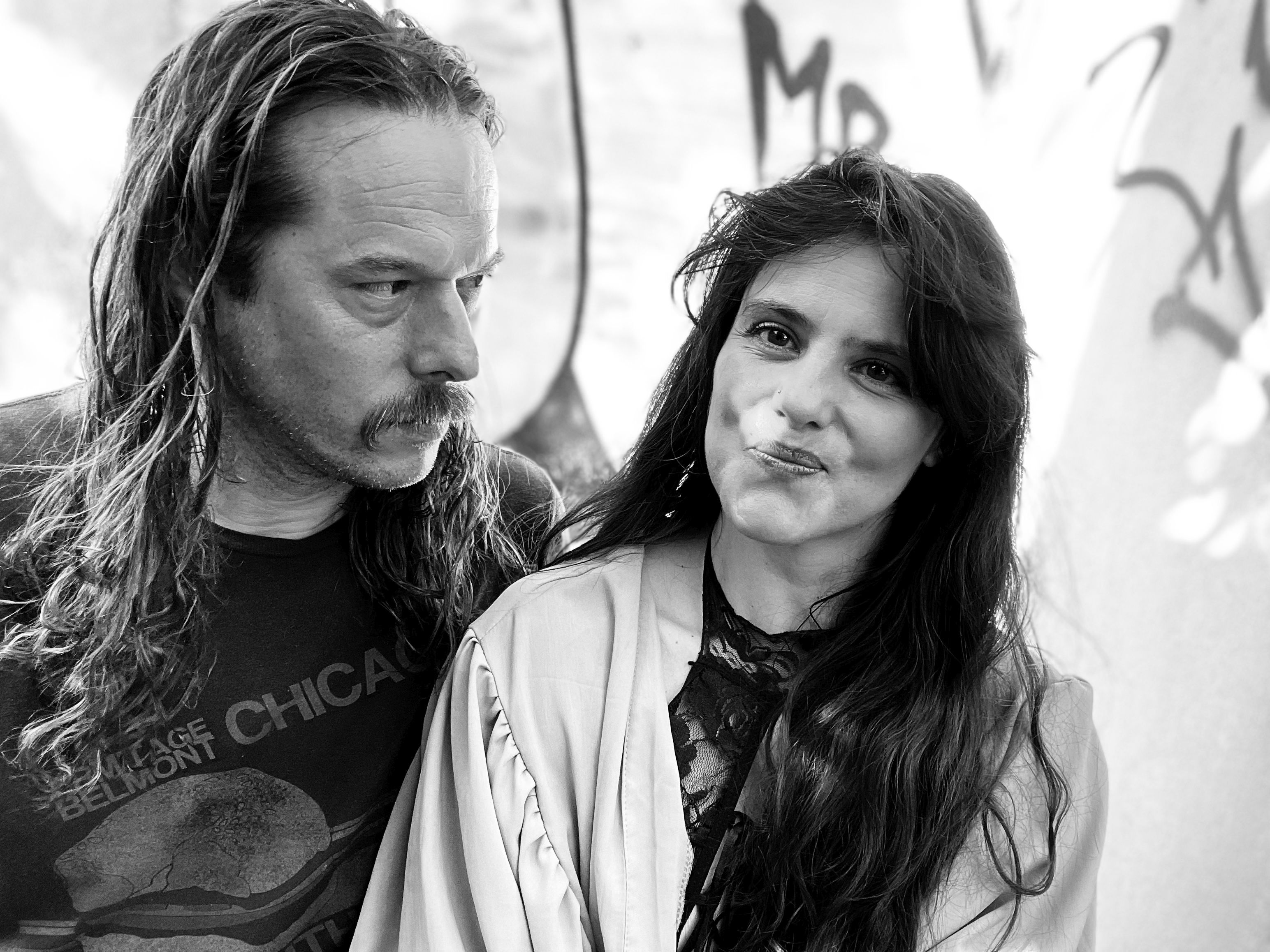
FR: In The Netherlands alone, where Ibelisse and I live, there are so many little scenes with their own approach. Amsterdam's more classically improvised scene has its own sound versus The Hague’s more art-science scene. But both still have the red thread of experimentation or even ‘jazz’’ as a touchstone.
Or how about Chicago? Luckily, that scene isn’t as beholden to media coverage like NYC, as a comparison, so I feel like there is more experimentation. That and there is so much struggle in Chicago, and artists I think react to that.
Or consider some of the bubbles in Berlin, London, or some musicians coming out of Australia, Africa, South America, specifically Brazil, Colombia, Chile! Just like anywhere, people are adopting sounds from everywhere, especially as streaming has made everything available to everyone. But I think that’s healthy.
Amsterdam’s scene is small, but super diverse. Sadly, there is currently a shift with gentrification and defunding that has been closing many alternative spaces. Ibelisse and I are part of a collective called MOLK Factory, which is trying to bridge this closing gap with opportunities to play, but with a focus on community building and presenting a cross-pollination of multi-media performance.
We’re currently working with a few other collectives who will start a new series that highlights improvised music but also embraces other genres, media and situations— evenings of hybridity and inclusion.
IGF: Yes, all the music is now available everywhere with just a click. Which, as I mentioned before, is not like the time/place I grew up in. So I think yes, it makes it possible for all of us to space-travel in the blink of an eye to a lot of places through sound. For sure that has a major influence on the output of all communities.
And yet I do feel every territory somehow keeps a resonance of sorts that stays and is unique to that place. I agree with Frankie that some places like Amsterdam and its decreasing availability to means for people to develop, make it super hard for people to find that “sound”. But electronic and dance music is a scene that is thriving nevertheless. It is also about what the public is interested in, that cultivates certain scenes and allows for it to nourish and bloom its existence.
In Chicago I really felt a unique sound, if I can put it that way. I don’t even know how I would describe it, of course it is jazz influenced but it goes beyond that, it has that “sound” that people were exploring unapologetically and indeed so many incredible artists in music are important figures now.
Amsterdam is changing, but my main influence is actually the ability to connect with people on a super grounded and humbling way. A community of like-minded folks that are good friends, supportive colleagues and superb humans.
What role do electronic tools and instruments play for your creative process?
FR: I compose a lot at the piano, but I also use Ableton a ton because I do a fair amount of sound design and composing for Muziek-Theater, and it has been such a helpful tool to develop sounds quickly and intuitively. I love to curate a sound and then allow that particular timbre to inform the choices I make. I usually make much weirder choices!
I embrace synths and sampling into my work, and I am deeply influenced by production developments in Hip Hop and dance music. These days I am a super Elektron user. The workflow is tricky for the first couple years, but damn I love their machines.
[Read our feature on the Elektron Machinedrum]
IGF: A huge role. I love electronic tools, they are such amazing tools! They have the ability to speak back at you. They have their own universe embedded in their little cases and it pushes me to explore places that I wouldn’t ever think of.
For me, they are like living entities with endless possibilities and they really feel like co-composers, with their own autonomy and aliveness.
I mostly work with Buchla easel command, Prophet 6, Digitone and I use Ableton as my main DAW for composing.
[Read our feature on the Prophet 6]
Thanks to technological advances, collaboration has become a lot easier. What have been some of the most fruitful collaborations for you recently and what approaches to and modes of collaboration currently seem best to you?
FR: I’ve made several recordings by passing files back and forth overseas, which is its own process. It’s slower, but these collaborations have generated surprising results because of the inevitable game of telephone that happens - certain things I find important in someone’s contribution becomes a focal point, while their intention might have been super different, and vice versa.
Generally, I like to write music for specific people in mind, where my understanding of how they approach music makes a huge impression on what I write down or don’t. I also try to make the rehearsal time and space more like a family gathering, with down time, conversation, food and a hang. I find that super important.
IGF: Yes, it is really mind blowing what is possible nowadays. I am getting a lot of assignments to compose for theatre pieces, installations, video and performances. It is fantastic, since some of the collaborations are based in other countries. It makes possible to ping-pong processes in very rapid ways, it is malleable and fluid.
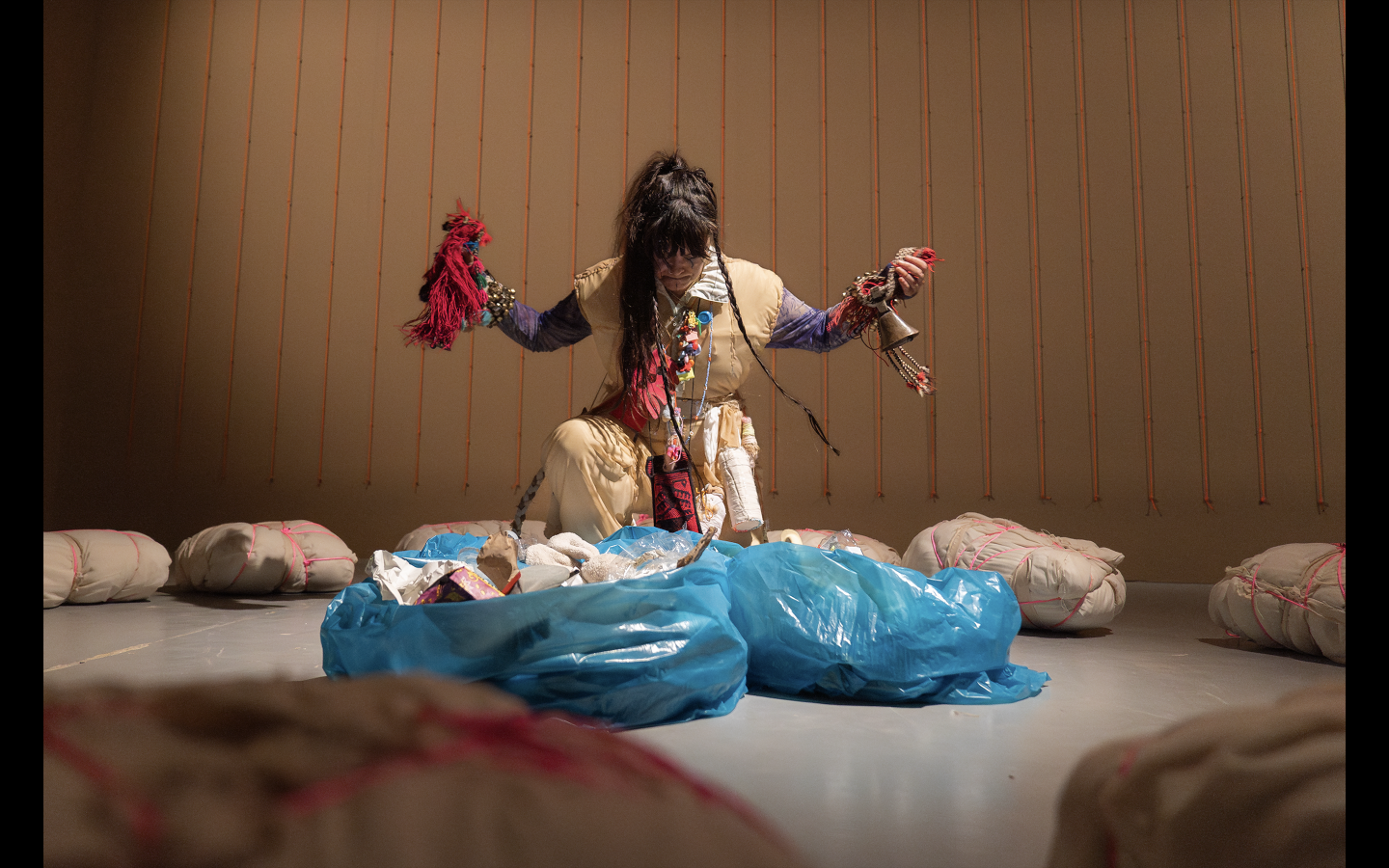
Sometimes it allows me to push my own boundaries, like the installation “WOMBTOMBS - Palliative care for a dystopian world”, I made in collaboration with artist duo Boogaerdt/VanderSchoot (NL) at the MU Hybrid Art House, in Eindhoven.
In this piece, I used a multi speaker installation to create an in-depth-embodied experience for a 1000 meters2 space. I was awesome and indeed fruitful.
Pushing my own boundaries is definitely something I purposefully search for.
Jazz has always had an interesting relationship between honouring its roots and exploring the unknown. What does the balance between these two poles look like in your music?
FR: What I see and hear in what I do is not always what others might observe.
I feel like everything I do is Jazz in some way, it’s a very internal thing that I feel. That’s because it has been my biggest inspiration, which bleeds into latin jazz, then salsa, then son, then bomba, plena, Santeria, Senegalese Sufi drumming, then into trance (as a concept, not the music genre), into electronic dance music. It’s all connected. I suppose those two poles are completely integrated for me.
I also feel there is no dividing line of these things. It’s been a big complaint of my contemporaries and even critics, because they don’t know where to put me or how to describe what I’m doing.
IGF: That is why it is such an important reminder that jazz is, for me, a core inspiration to connect and honour my own roots and to explore unknown-ness. Exactly that. And to be honest I couldn’t do it if it wasn’t for these two poles pulling at me.
It creates friction, doubt, discomfort, feelings of being lost and then by going through them, it brings you back to feeling grounded, while upgrading craftsmanship, pushing and pulling towards fresh sounding worlds and challenging one's own obsolete narratives.
It is that balance and unbalance that keeps me inspired.
How much potential for something “new” is there still in jazz? What could this “new” look like?
FR: I honestly have no idea how to answer this question. I feel like the new thing in jazz is already happening, but folks don’t call it jazz. So how is it a “new thing in jazz”? It’s contradictory. Case in point - Is J. Dilla or Ras G jazz to you? To me they are related.
Maybe this is a silly metaphor, but I think of the progression of hip hop: I could compare DJ Kool Herc to Jelly Roll, RUN-D.M.C. to Sachmo, Wu-Tang to Coltrane’s quartet, Yasiin Bey and Talib Kweli to Wayne and Miles, Eminem to Michael Brecker, Missy Elliot to Ella.
The development in Hip Hop —of approach, style, technique, vibe, whatever you call it, they both developed in similar ways, but sped up in Hip Hop. It’s always been about creating a fresh approach and sound in both lineages. The many language components may be unrelated, but the impetus, compared to jazz, feels similar.
I can think of dozens of examples how I see a jazz-like correlation to the two. The development in instrumentation, like the first trap set versus turntables … the industry making stars out of certain people, not based on merit, but reflecting trends. The exploitation of the music and it’s origins …
But moreover, the social struggles and developments reflected in alignment with music: that is important to consider when we talk about a new thing in jazz. Art reflecting the times. Jazz developed out of a necessity. I see a lack of that these days. What are folks talking about when they put out a record? Aren’t we in need of dialogue about what’s happening in this world? For me, reacting to what’s going on is part of the development of jazz, not just citation.
IGF: I think new is old, old is new. It is moving in step with the wheel of time, reinventing itself in so many ways, constantly.
I agree with Frank that it is happening right now, but it was already happening and it will keep on happening. No matter how much the gatekeepers of the sound of jazz disagree. My gut tells me that jazz is a free energy that wants to shape-shift itself into endless configurations, and it will do so no matter what titles we give it or how much we would like to hold on to it. It will just move to the people that are willing to channel it.
I think someone like Moor Mother is an artist that is quantum-jumping and showing a lot of us what “new” can be, has been and will un-relentlessly be. We are the ones that need to catch up!