Published
Name: Jan Lukas Roßmüller
Nationality: German
Occupation: Pianist, composer, improviser
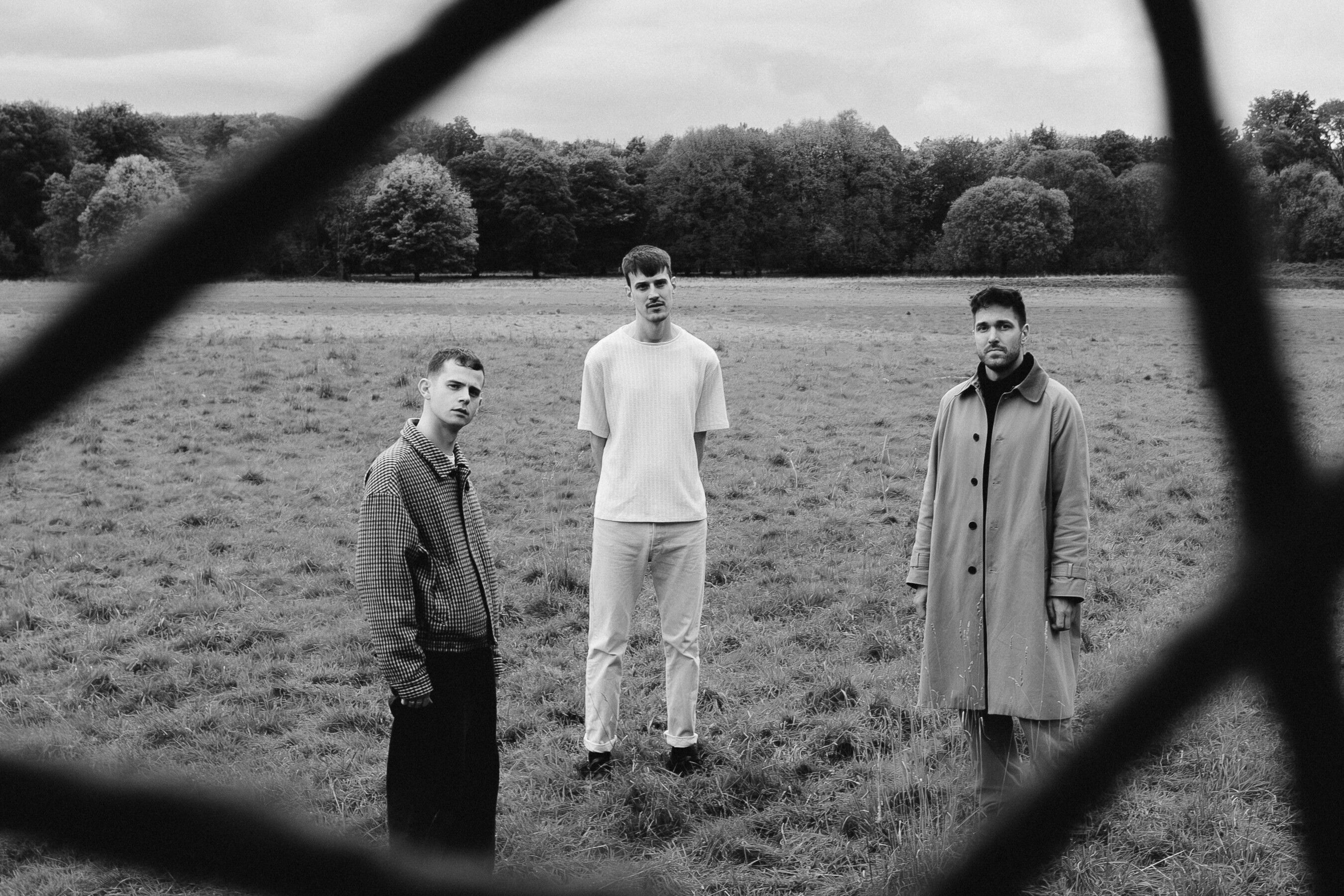
Current release: Jan Lukas Roßmüller's new album Solo & Trio, featuring himself on piano as well as Florian Herzog (bass), and Jakob Görris (drums) is out via unit.
Shoutouts: I’m very interested in composition, which creates a specific frame for modern styles of improvisation. I like it when I hear a lot of risk and spontaneity. Suddenly being together in a very complex form while improvising can be very powerful. There are a lot of great bands working in this direction: Felix Hauptmann's Trio Percussion is a good example I heard recently.
Of course, there are also a lot of great festivals, labels and spaces. A special shout out goes to my label UNIT Records. They do much more than just release the music. Last year I was able to compose and record my solo album in Switzerland during a residency organized by them. It was a very special opportunity to work in a beautiful place in the mountains.
Recommendation for Cologne, Germany: The Kolumba! A great museum combining modern architecture with the ruins of an old church in the basement. Always very interesting, conceptual exhibitions showing art from medieval times to the present. And go see a good concert!
If you enjoyed this Jan Lukas Roßmüller interview and would like to know more about his music or stay up to date with current live dates, visit his official homepage. He is also on Instagram, and bandcamp.
The borders between producers, sound artists, and even songwriters are becoming increasingly blurry. What does being a composer mean today, would you say?
For me, it's interesting to be a composer and a performer of my own music, but also an improviser. I approach every project a bit differently.
For my solo record, I wanted to have a mix of mostly improvised music, bringing flow and openness, and a few fixed and composed parts, adding a certain clearness. My piece “Tschiertschen,” for example, is a short composed structure I repeat and vary slightly.
The trio record features music that we developed out of my compositions. It’s more strict because there is more written material, but a lot is shaped during rehearsals.
Many people perceive classical music and contemporary composition as having high barriers of entrance, both for listeners and musicians. What have your own experiences been in this regard?
Coming from jazz piano rather than classical training, the classical music tradition has been more of an additional source of inspiration for me, especially during my studies.
I concentrated on things I was interested in as a pianist: Bach's polyphonic pieces, the sound of Messiaen's symmetric scales and their chords and the very different musical phrasing of classical piano pieces. But I just play them out of curiosity without the pressure of having to perform them live. I'm just trying to understand the logic in them and looking for things to adapt for my own music.
I don’t like the strict aura around classical music. It's helpful for me to focus on the music.
As of today, what kind of materials, ideas, and technologies are particularly stimulating for you?
At the moment I’m very interested in getting a lot of different sounds out of acoustic pianos.
Recently I focused on generating specific echoes by silently pressing keys and exciting the strings by playing other notes - or on generating kind of a negative echo by playing a chord or cluster and releasing/muting the keys one after another.
You can hear it on ”Nahen“ on my solo album.
Where do most of your inspirations to create come from – rather from internal impulses or external ones? Which current social / political / ecological or other developments make you feel like you need to respond as an artist?
Sometimes I get impulses and ideas from concerts, records, or written music. My trio piece "Karjaen" is based on a pattern from a Messiaen prelude, which I played incorrectly in the beginning.
But I liked the mistake I made, so the composition has the “wrong“ and the original line in it.
I wrote the piece after hearing a concert from the Kirke Karja trio the night before. I was still influenced by their sound as a trio. But those are just starting points; for the rest of the process I rely mostly on my intuition.
Tell me a bit about the sounds & creative directions, artists & communities, as well as the colleagues & creative hotspots of your current hometown, please. How do they influence your music?
Cologne has a great scene for contemporary jazz forms and improvised music. I have the feeling that many people are searching for new combinations of ideas emerging from jazz and improvisation.
It’s important for me to be able to hear what other people are doing. I go to Loft or Stadtgarten or to the concert series Brustkasten by Impakt collective. That can be very inspiring, especially if I need ideas or motivation to do something new.
Composing has always had an interesting relationship between honouring its roots and exploring the unknown. What does the balance between these two poles look like in your music?
Honouring roots is normally not a thing I plan on doing. References to music, similarities - they just happen naturally.
My trio composition "Yusef and Eric" is based on a series of notes I read in a practice book by Yusef Lateef. He got it from Eric Dolphy and wrote it down. I played and liked it directly, so I wanted to use it.
It was an inspiration, but I wouldn’t call the piece an homage. It's just nice to have little connections to other people's music.
How much potential for something “new” is there still in composition? What could this “new” look like?
I think the only way to find something new is to go deeper into material, ideas, etc. Combining existing things, mixing and developing them further.
What role do electronic tools and instruments play for your creative process? What does your creative space / studio look like and what tools does it contain?
It depends.
In many projects, I'm just focusing on playing acoustic piano, experimenting with sounds and textures. In my rehearsal room I have a Sauter upright piano from the 70s, which has a bright, clear sound. Good for practicing, but sometimes also a bit limiting compared to a grand piano.
I also work with synthesizers for some projects and think about using them for my solo project in the future.
It is my impression that adding a conceptual, non-musical dimension to one's work is almost a prerequisite for commissions and grants. How do you view this tendency and how “conceptual” is your own approach to writing?
Sometimes I have some loose conceptual ideas that would also shape my way of composing. But I haven't pursued any of them so far.
It always felt more natural to me to focus on the music without having a conceptual superstructure in mind.
Working with long forms, complex concepts or new vocabulary is potentially more challenging today because they require us to remember things that happened perhaps minutes ago – while most of us are finding it hard to focus even on what's happening right now. Both as a composer and as a listener yourself, how do you deal with this?
I don’t think you have to fully analyze music as a listener to enjoy it. But I think complex music is probably easier to conceive live than on recordings. You can see the musicians interacting. You automatically have an attentive atmosphere.
I try to think especially about form and variety, when I record complex music. For my solo record, I balance both abstract, impressive parts and those where I allow a kind of spontaneous beauty in melodies or harmony.
It's similar for the trio record. Pieces with abstract harmonic clusters, like in the solo part of "Yusef and Eric", or complex forms like in "Warner" or "Marsjazz" still have a rhythmic power that is captivating.
For many artists, life-changing musical experiences take place live. Few works these days, however, are performed beyond their premiere. What, do you feel, does this mean for composers, and the music they write, and how does this reality influence your own work?
I think about records and concerts as a presentation of my musical work at a specific time.
But projects always develop, especially those involving improvisation. It’s an artistic process of constant evaluation, changing procedures, or even rewriting. Everything is part of a process for me.
How, would you say are live performances of your music and your recording projects connected at the moment? How do they mutually influence and feed off each other?
I think it’s helpful to see them as two different things.
Take my solo project: For the record I had a certain minimalistic, concentrated mood in mind. That’s how I ended up playing little miniature pieces. I experiment more when I play live. Normally I play one set without taking a break. I can adapt to my own mood, the room and the instrument, the audience.
So ideally you rehearse and play some concerts to develop the music before you are recording it.
To some, the advent of AI and 'intelligent' composing tools offers potential for machines to contribute to the creative process. What are your hopes, fears, expectations and possible concrete plans in this regard?
I work very analogue at the moment.
The Montreux Festival intends to preserve its archive of recordings for future generations. Do you personally feels it's important that everything should remain available forever - or is there something to be said for letting beautiful moments pass and linger in the memories of those that experienced them?
Its great to have immediate access to lots of music as a musician: different recordings, live bootlegs, etc.
I don’t think those are in any way competing with the unique experience of a live concert.