Published
Part 1
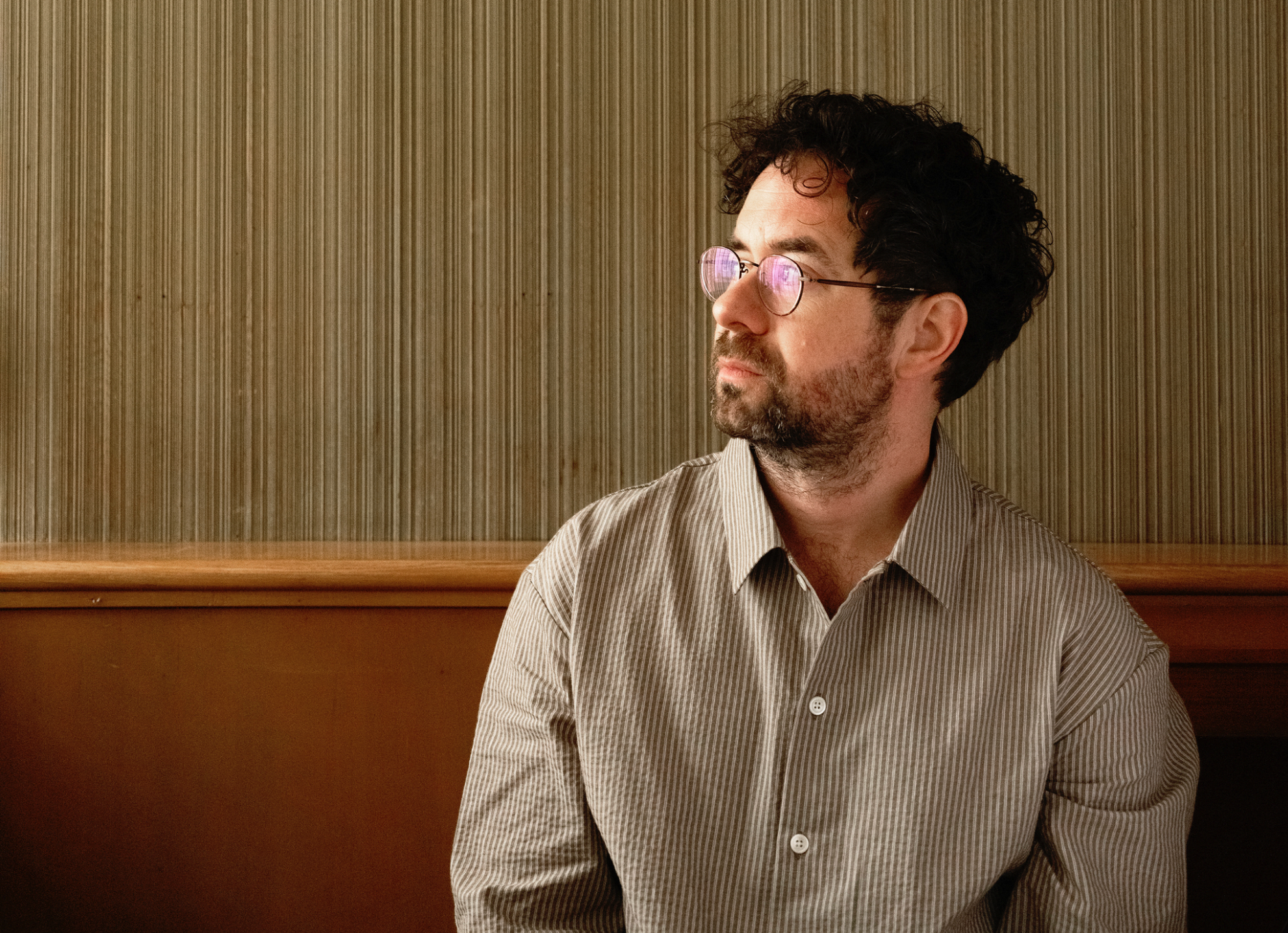
Name: Jean-Michel Blais
Occupation: Composer, pianist
Nationality: Canadian
Recent release: Jean-Michel Blais's new album mirador is out via Mercury Classics.
Hometown Recommendations: That's a tough one. Montréal has quite a few. but considering everything we've discussed in this interview, the Dépanneur Café is a surviving little hipster café with live music every day, where I first started playing and improvising. Cinéma moderne is a tiny, independent cinema in the neighbourhood, where you can eat, bring your own booze and watch a beautifully curated selection of films. Chez mamie is a french restaurant that feels a little like eating at your grandmother's house, with everything made on the premises and a wonderfully cosy atmosphere. and, of course, there's the beautiful maison symphonique, where you can experience some of the best acoustics in town. Finally, if you're looking for a night out, système is a great place for clubbing, with a lovely atmosphere and a proper electronic music sound system. It really depends on what you're after. Montréal has a bit of everything.
If you enjoyed this Jean-Michel Blais interview and would like to find out more about his music, visit his official homepage. He is also on Instagram, Facebook, and bandcamp.
The borders between producers, sound artists, and even songwriters are becoming increasingly blurry. what does being a composer mean today, would you say?
Without really knowing it, I started out doing a bit of everything at once, surrounded by my friends. Improvisations became compositions, then interpretations.
I was involved in the recording, working with a friend who had more or less improvised his way into becoming our sound engineer. We mixed everything together, and spent about $500 on mastering, which I didn't even know was a thing at the time. The artwork was a photograph taken by a friend, otherwise, we did everything ourselves. and that became II, an album that unexpectedly made it into time magazine's top ten albums of 2016.
No pretension, no expectations, just a gang of mates trying to capture life, its sounds and imperfections, and putting them out there for others to hear. I don't think much has changed since then. I'm still involved in pretty much every aspect of my projects, although I've learned to leave things in the hands of professionals when I reach the point where I'm no longer helping.
Over the years, I've expanded from piano and ambient sounds into electronics, orchestral arrangements and, more recently, choral writing. to me, being a composer is ultimately about communicating an intention to others, starting with yourself, with varying degrees of precision. I still make lists of musical references to guide everyone involved, mood boards for the visual universe, and I try to work with people who genuinely love the project and often end up becoming friends.
Perhaps that is my definition of composing today, knowing how to bring people together around an idea, and giving them enough direction and freedom to make it their own.
Many people perceive classical music and contemporary composition as having high barriers of entrance, both for listeners and musicians. What have your own experiences been in this regard?
I think there's a whole spectrum of what we call classical music. It stretches from early Gregorian chant to contemporary sound art, or even silence, as in John Cage.
That said, I can understand why people might feel lost. I'd say the classical and romantic periods are probably more familiar entry points for most listeners. Minimalism has also enjoyed quite a comeback lately, or perhaps I should say it has finally become popular. Classical music has served many different purposes throughout history, sometimes even as a way of distancing itself from the general public and creating a space for higher social classes. So it's hardly surprising that some people find it difficult to approach today.
But honestly, I don't think it takes that much. I believe anyone can fall in love with almost anything. Technically, all you need is a little attention and memory, perhaps some curiosity and eventually a bit of education. Think about horror films - they use plenty of contemporary music that audiences might never willingly attend in a concert hall. I also think concert etiquette can be intimidating, although we're seeing things open up, with music increasingly combined with images, lighting, film and even pop culture.
I grew up in a middle-class family with fairly popular roots. I didn't grow up listening to classical music, I only discovered it at twelve. Perhaps that's why mediation has always mattered to me. Music should come first, everything else is decorum. I try to bring popular melodies and references into my classical compositions, while also introducing classical repertoire to audiences who might not otherwise encounter it. In fact, my own music is often considered quite popular from a classical perspective.
My relationship with the musical establishment has also been a little complicated. I first met my piano teacher because I was improvising. She helped me structure those improvisations and eventually write them down. I see myself as an improviser, essentially a composer expressing himself through the piano, and increasingly through other instruments.
I entered the conservatoire quite young, but eventually left because its structure felt too restrictive. I wanted to learn the clarinet, harpsichord and basso continuo improvisation, play the organ, join an orchestra and take composition classes. Instead, I was expected to remain primarily an interpreter. I later tried to enter a university composition programme, but my work was considered too diatonic, too simple, not visionary enough.
I didn't quite fit in there either. so I've been wandering ever since, using every album as an opportunity to teach myself something I wasn't taught, DAWs, writing software, chamber orchestration and, most recently, choral writing. Perhaps that's also why I care so much about making music more accessible.
As of today, what kind of materials, ideas, and technologies are particularly stimulating for you?
Perhaps as a reaction to AI, I've found myself increasingly interested in the human element, the sounds we produce, our vibrations, our voices, the noises of everyday life. And, of course, acoustic instruments, starting with the human voice, then the orchestra, and naturally the piano.
I'm also becoming more attracted to analogue processes. there's something reassuring about working with materials that feel tangible and organic, where you can actually sense the physicality of what's happening.
At the same time, I'm not rejecting digital technologies. I'm simply becoming more conscious of my relationship with the immaterial, holograms, generative ai, self-playing pianos and so on. I still use these things as creative tools, and I'm fascinated by their possibilities. After all, not everyone has an orchestra readily available at their fingertips!
But I think my curiosity is increasingly directed towards what makes us human, rather than what allows us to imitate or replace ourselves.
Where do most of your inspirations to create come from – rather from internal impulses or external ones? Which current social / political / ecological or other developments make you feel like you need to respond as an artist?
Having been born with Tourette's and growing up queer, I've naturally drawn a great deal from the forms of alienation I've experienced throughout my life, and still encounter today. But rather than responding with confrontation or activism in the traditional sense, I try to create something that brings people together. I'd call it an activism of love and community, perhaps something inherited from my Catholic upbringing, albeit a rather secularised version of it.
Coming from a middle-class family with popular roots, I've also always been interested in music as a way of bringing social classes together. I love the idea of getting people into the same room who might otherwise never have crossed paths. One of my favourite examples is a construction worker who came to one of my concerts at the Maison Symphonique, despite having never set foot in the building before. That's a meaningful achievement to me.
The reverse is equally important, bringing music into unconventional spaces, whether that's a bunker, a crematorium, a seaside location or a festival with no particular classical music identity. It's about disrupting established habits and getting people to move beyond their usual cultural territories.
Finally, there's the intergenerational aspect. At my concerts and listening sessions, I regularly see children aged three or four sitting alongside people in their eighties. I find that incredibly moving. If music can create a space where all these people can coexist, regardless of their background, age or experience, then I feel it's doing something worthwhile.
Tell me a bit about the sounds & creative directions, artists & communities, as well as the colleagues & creative hotspots of your current hometown, please. how do they influence your music?
I moved to Montréal at twenty, partly because of its music scene and partly because of its queer community. I met many of my closest collaborators through my liberal arts studies, and later through the Dépanneur Café, a little café with live music of all kinds, where I started playing and improvising.
It wasn't until I was signed to arts & crafts at thirty that I really started pursuing music professionally. Gradually, with a few collaborators, we began building a bridge between Montréal's very strong, predominantly Francophone and somewhat nationalist pop scene, with its own market and funding structures, and the emerging neoclassical scene. We were among the pioneers of that movement here. Today, there must be a good dozen artists making a living from it, while also collaborating with people from entirely different musical worlds.
In parallel, it took me a while to establish myself within the classical scene, particularly to gain some credibility. That really happened thanks to Nicolas Ellis and his Orchestre de l'Agora. Together, we managed to arrange, produce and present concerts at the Maison Symphonique.
I insisted on including around a third of classical repertoire in those programmes, so that we could genuinely mix the worlds rather than simply put them side by side. Some of the classical musicians told me they'd never received such a warm welcome from an audience as they did from my fans, even when I wasn't necessarily playing myself. That was quite something to witness.
It reinforced my belief that classical music doesn't belong exclusively to classical audiences. We need to reclaim it, make it ours again, and allow it to circulate freely between communities.
Composing has always had an interesting relationship between honouring its roots and exploring the unknown. What does the balance between these two poles look like in your music?
I'd like to give two examples. The first is roses, a piece I composed for my 2018 album dans ma main.
It quotes a passage from Rachmaninoff's second piano concerto, …
… which had also been used in Eric Carmen's "All by myself," later even more popularised in Québec by Céline Dion. And that's my entry point.
I love these semiotic superimpositions, where the same musical object can refer to several things simultaneously. Here, it's my popular childhood, Céline Dion, my classical education and my love for Rachmaninoff, but also my travels in Russia, before the war, and my affection for its people. All these layers coexist in a few notes.
The second example comes from my latest album, mirador (2026).
Over the past few years, I've been fortunate enough to travel quite extensively. My choral work eventually brought me to a residency in Estonia and meet arvo pärt's centre, where I wrote laulasmaaand ulysse, two rather grandiose, aquatic and epic pieces. Meanwhile, my studies in psychology in Buenos Aires, followed by falling in love with someone in Salta, took me towards the Andes. I eventually travelled along the mountain range from South to North, reconnecting with my childhood love of Andean traditional music.
I ended up incorporating it into the album, working with Tulio Velazco Villagra, an indigenous musician originally from Peru, who plays charango, panpipes and quena. For me, roots and discoveries constantly overlap. In fact, our roots often determine the direction in which we're curious enough to explore. How much further can we really go than our desires allow us to?
How much potential for something “new” is there still in composition? What could this “new” look like?
I don't think we can really identify something as new until we have enough historical distance from it, probably beyond our own lifetime. At least, that's what history has taught me. But if we accept that premise, I think we'll always continue making things that are simultaneously different and familiar.
What matters more to me is the subjective perception of novelty than objective novelty itself. Take my piano, for instance. It still has 88 keys, as it has for centuries. And yet, we keep finding new ways of articulating those same notes to move people differently.
Of course, technology introduces new possibilities, and the arrival of AI, sometimes rather frighteningly, places us in front of an uncertain future. Still, we're listening to more or less the same spectrum of sound waves and looking at the same range of colours. The materials aren't necessarily new; it's the way we arrange, perceive and experience them that changes.
I suspect there will always be room for novelty, unless we stop looking for it. perhaps it will increasingly take forms that resemble things from the past, but mediated by different technologies, reaching different audiences and existing within entirely new contexts. Maybe that's enough.
I'm not particularly interested in being new for the sake of being new.