Published
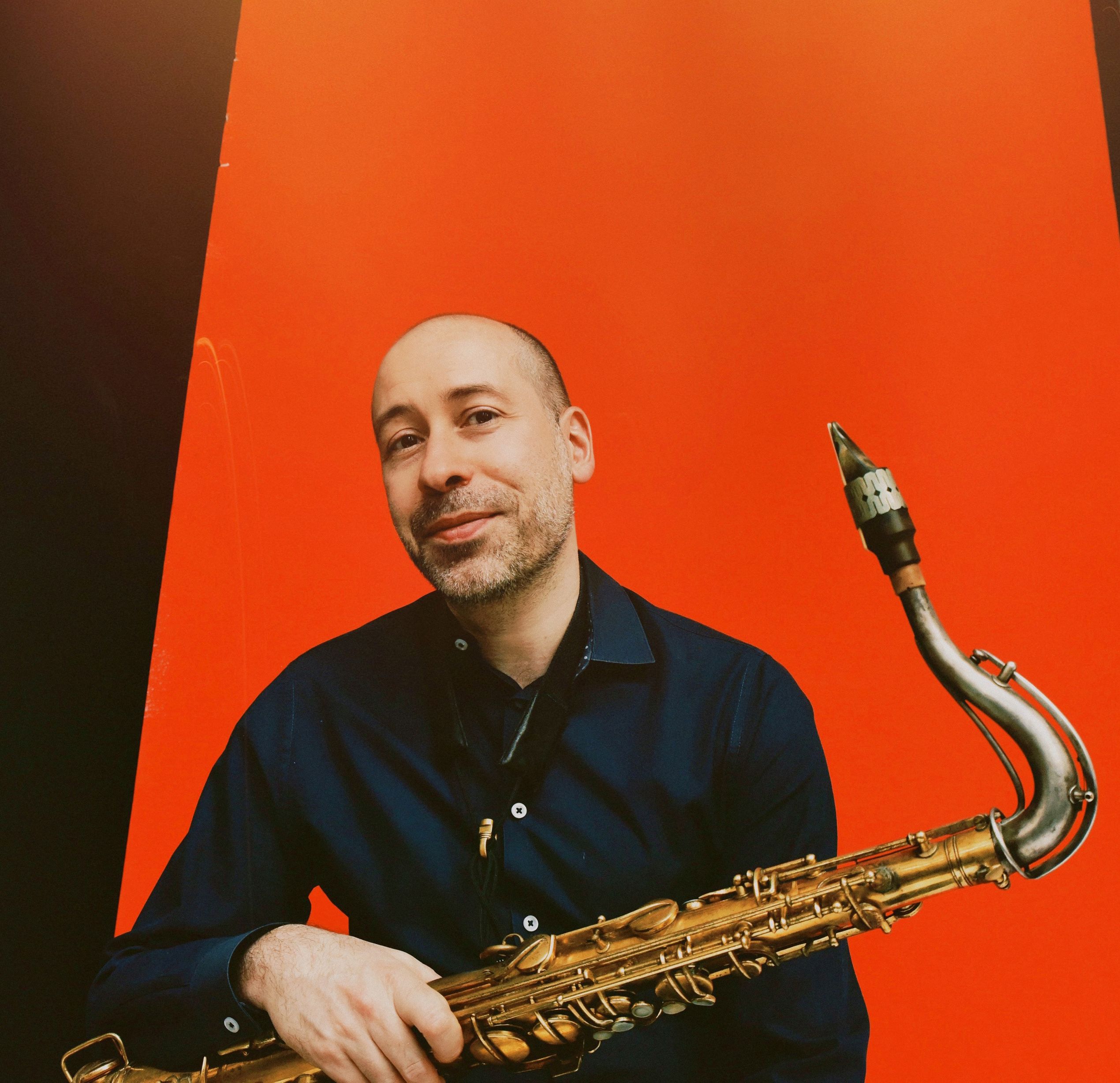
Name: Jérôme Sabbagh
Nationality: French, NYC-based
Occupation: Saxophonist, composer, band leader, label founder at analog tone factory
Current release: Jérôme Sabbagh's album Vintage, released on Sunnyside Records, which saw him work with Kenny Barron, Joe Martin and Johnathan Blake, was recently picked as "audiophile recording of the year" by The Los Angeles and Orange County Audio Society.
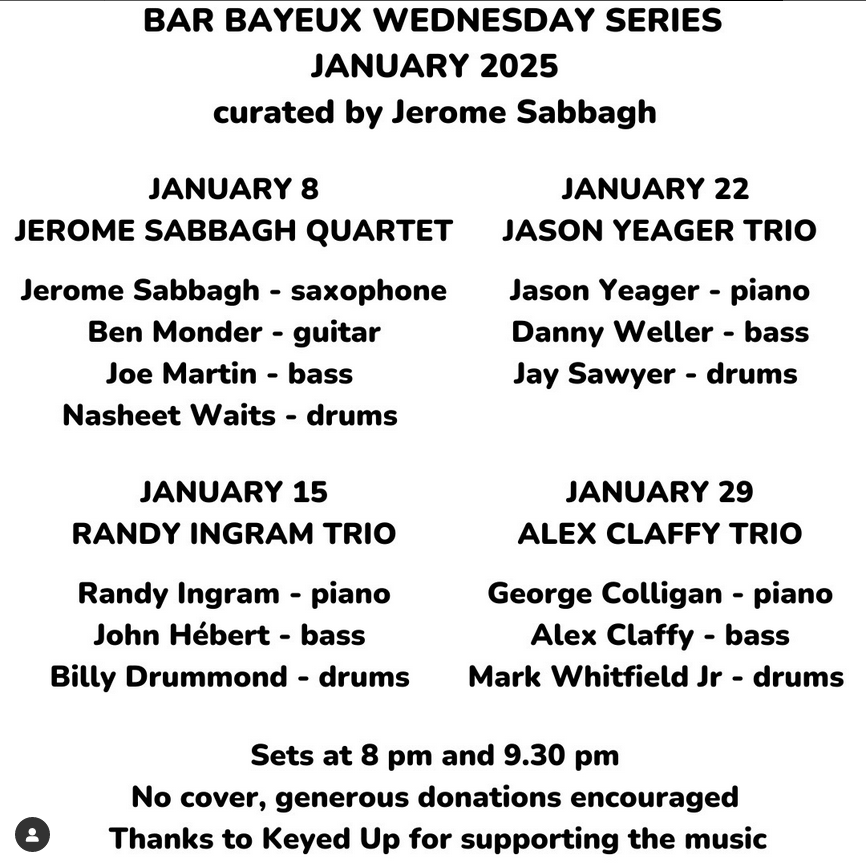
Current event: Currently, Jérôme is curating a series of concerts for Bar Bayeux in Brooklyn, New York. See the program for January 2025 here: 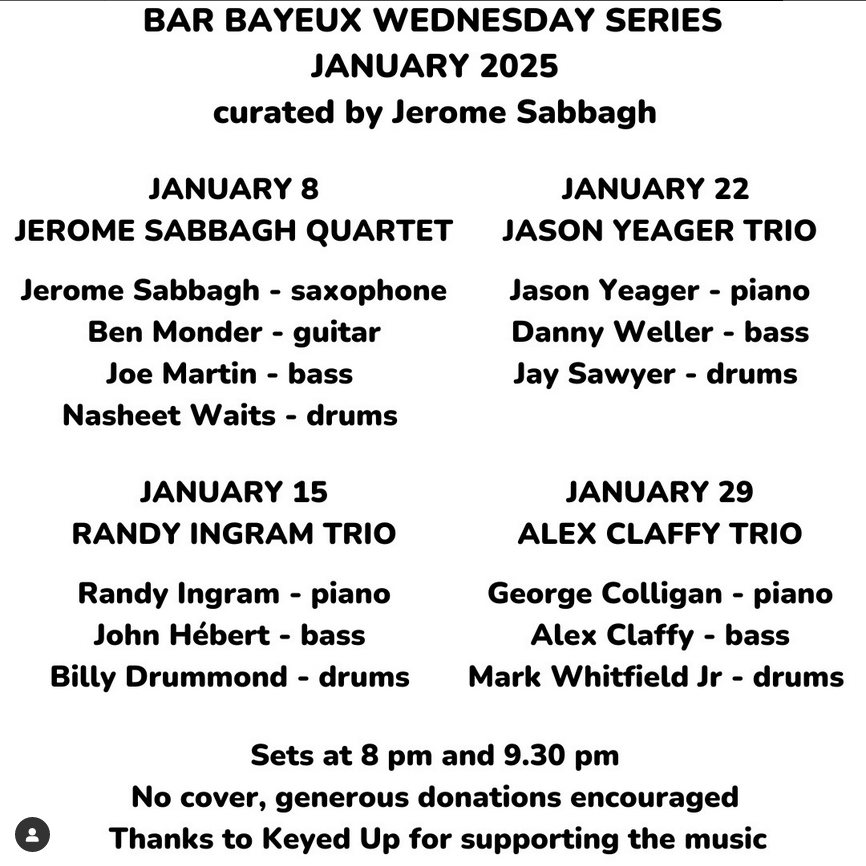
Global Recommendation: One of my favorite restaurants in Paris is called Kokoro. It’s tiny, it’s very good. It’s usually just the chef and a waitress. There is not a lot of choice, but everything is great. The chef can talk to you about all the wines, he knows all the producers.
In a nutshell, I feel it’s a good model, not only for food, but for other things, including music. Doing things on a small, human scale, feels better, developing a specific audience is important. It’s an inspiration to me.
If you enjoyed this Jérôme Sabbagh interview and would like to know more about his work and music, visit his official homepage. He is also on Instagram, Facebook, and bandcamp.
For a deeper dive, we recommend our earlier interviews with Jérôme about the Best Sounding Format, Analogue Philosophy, and Audiophile Records.
What were some of the musical experiences which planted a seed for your interest in jazz?
I was lucky to have a fantastic music teacher in middle school in Paris, Annick Chartreux, at Lycée Claude Monet. She exposed me to great music, including Miles Davis, Jimi Hendrix and Mozart.
Herself an accomplished pianist and composer, she started a school band, which is unusual in France. That’s how it all started for me.
What does the term jazz mean today, would you say?
A continuum of improvised music rooted in the Black American tradition of swing that still shows a tangible connection to it, at least to some degree, even as it might also incorporate different elements.
As of today, what kind of materials, ideas, and technologies are particularly stimulating for you?
I am inspired by older technology: vacuum tube preamps, recording to tape and the excellence in sound quality that was achieved during the 50s and 60s. Things were simpler, but done better.
Older technology captured the spirit of the music better. It still does. Overall, it inspires me to do better.
In terms of ideas, I have always been drawn to the idea that, if you work hard enough, you can learn something completely foreign, and that can become your life.
Where do most of your inspirations to create come from – rather from internal impulses or external ones? Which current social / political / ecological or other developments make you feel like you need to respond as an artist?
I feel playing improvised music with honesty and integrity, and trying to reach an audience doing that, is in itself a worthy endeavour. Perhaps naively, I see it as an act of defiance in a society that overall values shallow things and encourages our worst instincts.
As a citizen, I am engaged in the world I live in. I vote, I try to stay informed and awake.
As a musician, music is enough in itself to me. Making music overtly about something - especially about the bigger political, social and ecological issues of the day - sometimes feels to me like a slicker, even more cynical, form of branding and positioning in an age of social media.
Music has become a lot more global, and incorporating elements from other parts of the world or the musical spectrum is commonplace. Do you still think there are city scenes with a distinct, unique sound? How does your local scene influence your work?
Yes, for sure. Living in New York has been a huge influence on the music I play.
What role do electronic tools and instruments play for your creative process?
Almost none. I like electronic music but I don’t really write any.
I still write tunes with pen and paper. I don’t use any software notation. I like the look of handwritten charts better, at least when they are legible. Writing music that way also forces you to think about what you are doing.
Thanks to technological advances, collaboration has become a lot easier. What have been some of the most fruitful collaborations for you recently and what approaches to and modes of collaboration currently seem best to you?
I don’t know. Everyone is different and that’s fine. I still like getting in a room with people and playing.
I have no desire to make music through a screen with someone on the other side of the world. Music helps me get away from screens, that’s one of the things I like about it these days. I still want to make something happen live with other musicians, and hopefully for an audience.
Fruitful collaborations recently have been being able to record with jazz greats Kenny Barron on Vintage and Al Foster on Heart.
Jazz has always had an interesting relationship between honoring its roots and exploring the unknown. What does the balance between these two poles look like in your music?
Exploring the unknown is also honoring the roots of the music. I personally don’t see a contradiction. There’s plenty of exploring the unknown from the masters we love.
In general, I don’t worry so much about what I play, and how exploratory it might be - or not - as long as it feels good and connected, and as long as I feel I’m being honest with myself.
How much potential for something “new” is there still in jazz? What could this “new” look like?
New is playing something you haven’t played before. It’s coming up with things as a group that you might not have been able to dream up by yourself, or write down. It’s not that easy to do and it takes a lot of work.
But it really doesn’t matter to me within what “style” that takes shape, or what anyone else thinks about it. How new or old people feel your music is, is completely besides the point. It’s a false debate to me. New to me is not about style per se. In fact, some of the stuff that’s being described as “new” feels stale and contrived to me. Mixing this and that is not a groundbreaking idea.
Improvisation transcends style. Keith Jarrett or Tom Harrell can play standards and improvise in a way that feels fresh and vital, even as they are not necessarily sounding that “new”.
For many artists, life-changing musical experiences take place live. How do you see that yourself?
I very much agree with that.
There are things I feel I learned playing with musicians, particularly older musicians and masters such as Paul Motian, Frank Wess or Al Foster that I don’t think I could have learned any other way.
How, would you say are your live performances and your recording projects connected at the moment? How do they mutually influence and feed off each other?
I try to make recordings that get closer and closer to the things we can do live, at least on a good day. That’s the goal for me.
Improvisation is obviously an essential element of jazz, but I would assume that just like composition, it is transforming. How do you feel has the role of improvisation changed in jazz?
I hear more language and technique, but sometimes less of a sense of connectedness, less of a connection to the song.
On the other hand, the boundaries between what’s improvised and what’s composed are blurring, which can be really nice.
What, would you say, are the key ideas behind your approach to improvisation?
Melody, sound, listening, space.
Are there approaches, artists, festivals, labels, spaces or anyone/-thing else out there who you feel deserve a shout out for taking jazz into the future?
I am grateful for all the grassroots initiatives of people all over the world who are passionate about this music, who start a home concert series, or a small festival, who volunteer at the big ones to cook or drive.
I am grateful for anyone who still buys records, in any way shape or form, and comes to shows.
The Montreux Festival intends to preserve its archive of recordings for future generations. Do you personally feels it's important that everything should remain available forever - or is there something to be said for letting beautiful moments pass and linger in the memories of those that experienced them?
I would rather have fewer things available and let things be.
I recently did a gig with Greg Hutchinson. He asked me to ask the audience not to film with their phones, which everyone does all the time now. He’s right. Let the moment be, so we can all experience it together. Not everything is meant to be preserved forever.
That said, the “new” live record of Joe Henderson/McCoy Tyner with Henry Grimes and Jack DeJohnette, from 1966, is extraordinary, and I’m glad it exists!
To your earlier question, it’s from 1966, and it sounds as new as it gets.