Published
Name: Baroque in Blue
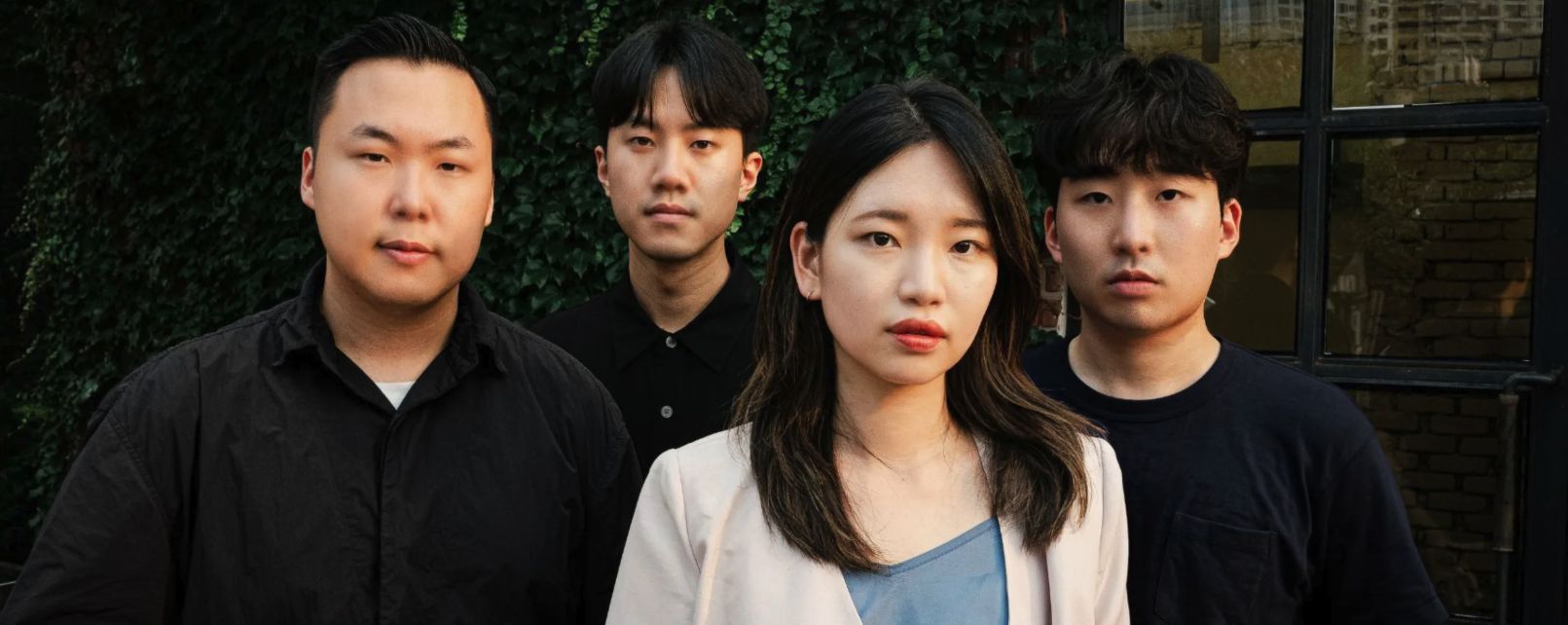
Members: Jisu Jung (piano, composition, production), Soojung Lee (saxophone), Hyeonjin Jung (viola), Kanghyun Lee (cello)
Interviewee: Jisu Jung
Current release: Baroque in Blue's self-titled album is out now.
Current event: Baroque in Blue are one of the ensembles performing at the 2026 edition of London's K-Music Festival. For more information and tickets, go here.
If you enjoyed this Jisu Jung of Baroque in Blue interview and would like to find out more about her music, visit her on bandcamp.
What does the term jazz mean today, would you say?
To me, jazz is a genre that encourages us to be ourselves.
There is no absolute right or wrong in jazz. It gives us the freedom to explore, to express ourselves, and ultimately, to be whoever we want to be.
Tell me a bit about the sounds & creative directions, artists & communities, as well as the colleagues & creative hotspots of your current hometown, please. How do they influence your music?
For me, it’s very much about collaboration.
As a Korean, I’m deeply influenced by traditional Korean music, so I often incorporate traditional musical elements into my work, such as traditional instruments, rhythms, and motifs.
Many musicians in my hometown are also deeply connected to Korean traditional music, and I think that shared cultural background really helps define who we are and where we come from.
Jazz has always had an interesting relationship between honouring its roots and exploring the unknown. What does the balance between these two poles look like in your music?
I was trained in classical music from a very young age, and it has become a fundamental part of my musical identity. Then I discovered jazz, and the freedom and spontaneous communication of jazz allowed me to express myself more freely while embracing my classical background.
For me, jazz is a language—a tool that allows me to tell my own story in my own voice, within a much broader musical spectrum.
How much potential for something “new” is there still in jazz? What could this “new” look like?
I think there is still so much potential for something new in jazz.
Jazz allows for individuality, creativity, freedom, and spontaneity, and that creates endless possibilities. I feel that jazz gives me the freedom to be more fully myself, and the more I embrace that freedom, the more it brings out my creativity.
For me, that personal expression is where something new can emerge.
Improvisation is obviously an essential element of jazz, but I would assume that just like composition, it is transforming. How do you feel has the role of improvisation changed in jazz?
I think improvisation has become a way of expressing an individual’s uniqueness.
The musical ideas that emerge through improvisation can come from transforming an existing piece, or from combining fragments and patterns from different compositions.
But even when we work with familiar materials, the result can be completely different each time. That’s what makes improvisation so personal and alive.