Published
Name: Jonah Parzen-Johnson
Nationality: American
Occupation: (Baritone) Saxophonist, composer, improviser
Current release: Jonah Parzen-Johnson teams up with Laura Naukkarinen for Live In Italy, out via WeJazz.
Hometown Recommendation: One thing in Brooklyn!? I guess today I’ll recommend Sey Coffee, which is a coffee shop about a 25 minute walk from my house. A perfect stroll for two sides of an album on a there and back.
[Read our Lau Nau interview]
If you enjoyed this Jonah Parzen-Johnson interview and would like to know more about his music and projects, visit his official homepage. He is also on Instagram, and bandcamp.
Where does the impulse to create something come from for you? What role do often-quoted sources of inspiration like dreams, other forms of art, personal relationships, politics etc play?
I’m not sure I can say exactly where the source of my motivation to create comes from because a lot of my motivation to create comes from a desire to better understand myself and how I relate to the world.
I guess one of my greatest inspirations is the universality of human experience. Although it can feel like each of us moves through life in a vastly different way, there are certain universal human sensations: an involuntary smile, a flicker of frustration, a spontaneous feeling of empathy.
I want to find ways of creating music that explores those moments when we’re all kind of the same, because if we’re all the same, then we’re all worth fighting for.
For you to get started, do there need to be concrete ideas – or what some have called a 'visualisation' of the finished work? What does the balance between planning and chance look like for you?
Definitely not. Most of the time I start with a feeling. If I plan too much, it's easy to become desperate to actualize a specific vision.
I once had a teacher tell me that if, at any moment in my creative process, I became afraid of losing the work I had created, it was time to throw it out and start over. Maybe that sounds silly, but it’s really easy to become more focused on making something work than on whether it should even exist in the first place.
For me, most of the time, the best option is to start over. Sometimes I arrive back at the same place, and I’m usually happy when I get there.
Is there a preparation phase for your process? Do you require your tools to be laid out in a particular way, for example, do you need to do 'research' or create 'early versions'?
There’s a quote I once heard from the saxophone player Don Byas, “I don’t practice. I look at my horn, I think about what I’m going to do, and then I do it.” I’ve told that quote to some other people, and sometimes they look at me kinda funny, but I really love it.
Ideas need time to bake. Sometimes I spend weeks daydreaming, then one day I just start writing and 3 hours later I have something finished. When it’s done, if I feel insecure, I try to remind myself that in reality I’ve been writing for weeks, and the 3 hours at the end was just the last sprint.
Do you have certain rituals to get you into the right mindset for creating? What role do certain foods or stimulants like coffee, lighting, scents, exercise or reading poetry play?
My usual ritual is a mild panic followed by some extended procrastination and then finally a feeling of relief when I start making new things and remember that I really love it.
Why do I always forget?
For your latest release, what did you start with? If there were conceptual considerations, what were they?
With the narrative scores that Laura and I perform on A Few We Remember, and Live In Italy, I was trying to approach this universality from two directions:
When I began writing the compositions I was working to find a way to elicit certain emotions in a collaborator via little stories and see where that led us improvisationally.
As the pieces developed I started to see that they also allowed me to explore a simple memory, not just from my own perspective, but from the imagined perspective of a stranger that I barely knew, like a bus driver, or someone apologetically asking for money in the street.
Tell me a bit about the way the new material developed and gradually took its final form, please.
I’ve spent many years playing solo and the move from solo to duo was honestly very difficult for me. I spent a long time wondering how I could ever convince someone to be interested in telling the same story I was carrying around on my own.
On my 2024 album with Berke Can Özcan, my first duo collaboration, I kind of abandoned my version of storytelling completely and just challenged myself to explore how my world collided with Berke’s.
But on A Few We Remember, Lau and my 2025 studio album, I tried using this collection of narrative scores. Each score is a little story that I wrote, but more than that, it is a trigger for a sensation. If all goes well, the sensation finds its way into the improvisation. That was the idea at least.
I love the way the album came out, but I always had this nagging doubt about whether the stories were relevant once the music existed. When Laura and I went on tour last spring and played our way around Italy and then into Austria and Germany, I could feel much of the studio album in our playing, but there was a certain patience and reckless abandon that I didn’t feel before.
It came from familiarity. A shared language. We were telling the same story, and better than hearing my own voice coming back to me, I was hearing Laura telling her version of a story I told her. That’s when I knew the material was really done, and that’s what we’re sharing on the Live In Italy half of this release.
There are many descriptions of the creative state. How would you describe it for you personally? Is there an element of spirituality to what you do?
Not necessarily traditional spirituality, but I guess a sense of faith and disbelief.
Sometimes I wonder if one day I’ll have nothing left to say. Sometimes I wonder if anything I do is worth doing at all.
But I have faith that if I keep going, I won’t regret it. One day I’ll look back and see if I was right!
Once a piece is finished, how important is it for you to let it lie and evaluate it later on? How much improvement and refinement do you personally allow until you're satisfied with a piece? What does this process look like in practise?
It’s so easy to feel insecure when something comes together quickly.
I’ve been doing a lot of drywall repair work in my studio lately, and when you try to make the drywall mud look smooth, it takes a lot of discipline to say, if I keep going it might get better but it could also get a lot worse.
A lot of times, the first version is the best version.
What's your take on the role and importance of production, including mixing and mastering for you personally? In terms of what they contribute to a song, what is the balance between the composition and the arrangement (performance)?
When I mix something myself I always think of it like I’m editing a film. Mixing can bring things closer or further, it can make something feel real or fantastical, polished or raw. That’s huge. Two mixes can really make two completely different albums.
Sometimes in the world of instrumental experimental music it feels like people are afraid to use mixing as a creative tool, but whether you think of it that way or not, it's gonna transform the recording so you might as well think of it as another chance to actualize your creative vision.
Music and the accompanying artwork are often closely related. Can you talk about this a little bit for your current project and the relationship that images and sounds have for you in general?
Matti, the head of We Jazz Records, is also a designer, and he designs all of the releases for We Jazz. I love this about the label, because it gives a certain cohesion to the releases, and makes me feel like the album is part of something bigger. I always want a label to feel like a community, and even if I don’t know other artists on the label I sometimes feel like we’re all long-lost cousins.
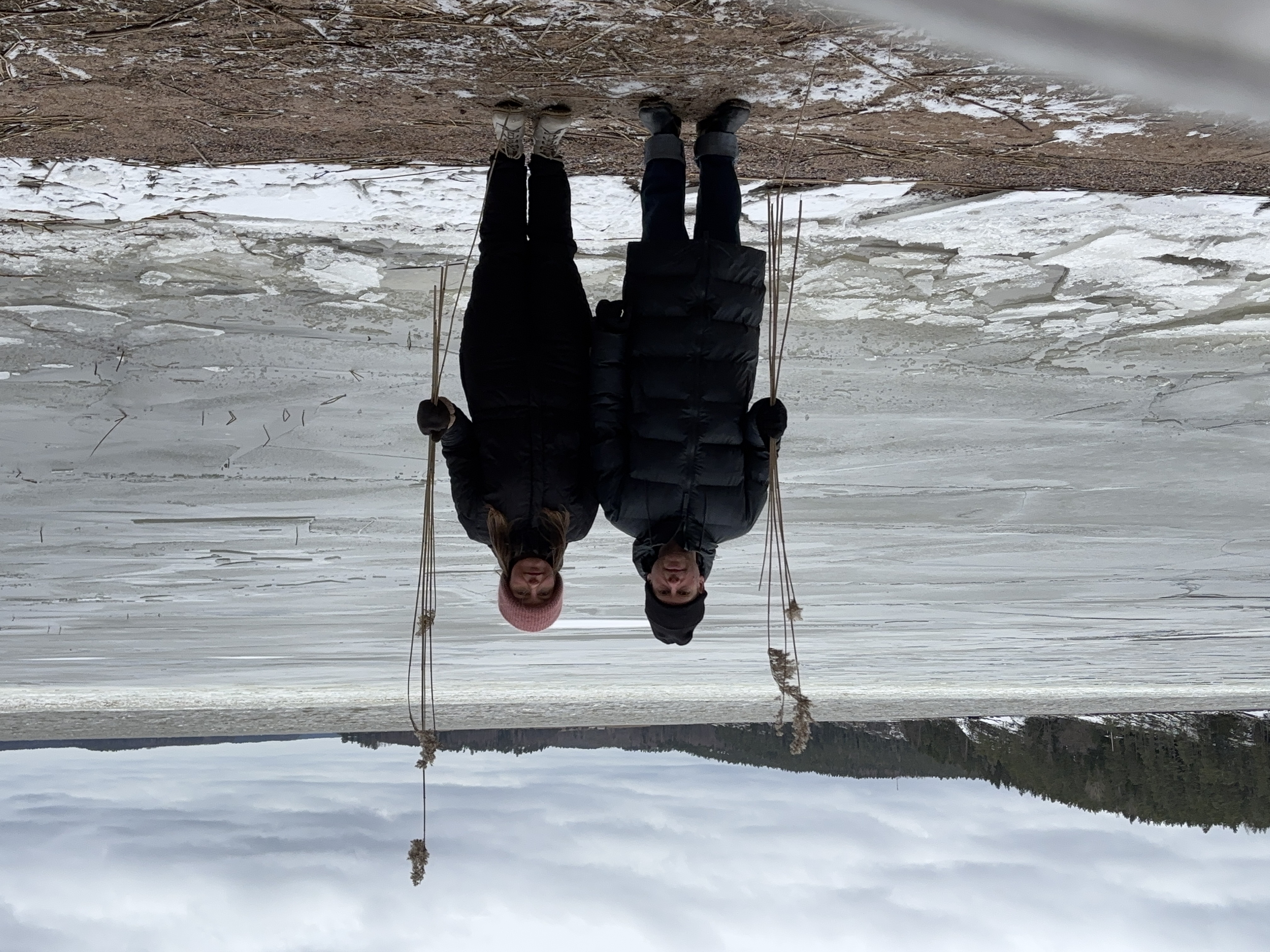
The artwork for this album is built on photos that Laura and I took together on walks between takes of the studio album. Every time I look at the photos I remember how quietly we talked and how happy I was.
After finishing a piece or album and releasing something into the world, there can be a sense of emptiness. Can you relate to this – and how do you return to the state of creativity after experiencing it?
Every time I release an album I have to remind myself that the release isn’t the end, it's the beginning. We are improvisers and the compositions on this album are going to be born again and again as we play them live.
Find us on tour in 2027 :)
I would love to know a little about the feedback you've received from listeners or critics about what they thought some of your songs are about or the impact it had on them – have there been “misunderstandings” or did you perhaps even gain new “insights?”
I don’t really believe in misunderstanding music. I wish people thought about music like food. However you experience it is exactly right.
Sometimes someone just hates an ingredient, and that doesn’t mean anything about the ingredient itself, it's just personal taste. Sometimes someone eats something and it reminds them of their childhood.
The chef wasn’t thinking about their childhood, but that doesn’t make the connection any less real. It’s all real. It’s all right.
Creativity can reach many different corners of our lives. Do you personally feel as though writing a piece of music is inherently different from something like making a great cup of coffee? What do you express through music that you couldn't or wouldn't in more 'mundane' tasks?
One of the most wonderful qualities of music is that we almost always make it to share with someone else. An audience is a room full of strangers and a community connected forever. That’s what music can do.
But I think in the end, it's more about intention than the product itself. You can make a cup of coffee that brings strangers together, or that disappears into the mundane realities of the day. I guess the question is, why are you making it?
For me, I create music to share something, and every day I feel grateful that there are people I can share it with.