Published
Name: Svaneborg Kardyb
Members: Nikolaj Svaneborg (Wurlitzer, Juno, piano), Jonas Kardyb (drums, percussion)
Interviewee: Jonas Kardyb
Nationality: Danish
Recent release: Svaneborg Kardyb's Superkilen is out October 18th 2024 via Gondwana.
Pure Drum Recordings Recommendations:
Abe Rounds - The Confidence To Make Mistakes
Jim White - All Hits: Memories
If you enjoyed this interview with Jonas Kardyb of Svaneborg Kardyb and would like to find out more about the band, visit their official homepage. The duo are also on Instagram, and Facebook.
To keep reading, check out our earlier Svaneborg Kardyb interview, our conversation with them about their creative process, as well as interviews with other Gondwana artists:
[Read our Portico Quartet interview]
[Read our Hania Rani interview]
[Read our Sunda Arc interview]
[Read our Jasmine Myra interview]
[Read our Kessoncoda interview]
[Read our Matthew Halsall interview]
What was your first drum set like and what are you using today? What, to you personally, are factors in terms of build and design that you appreciate in drums and percussion instruments?
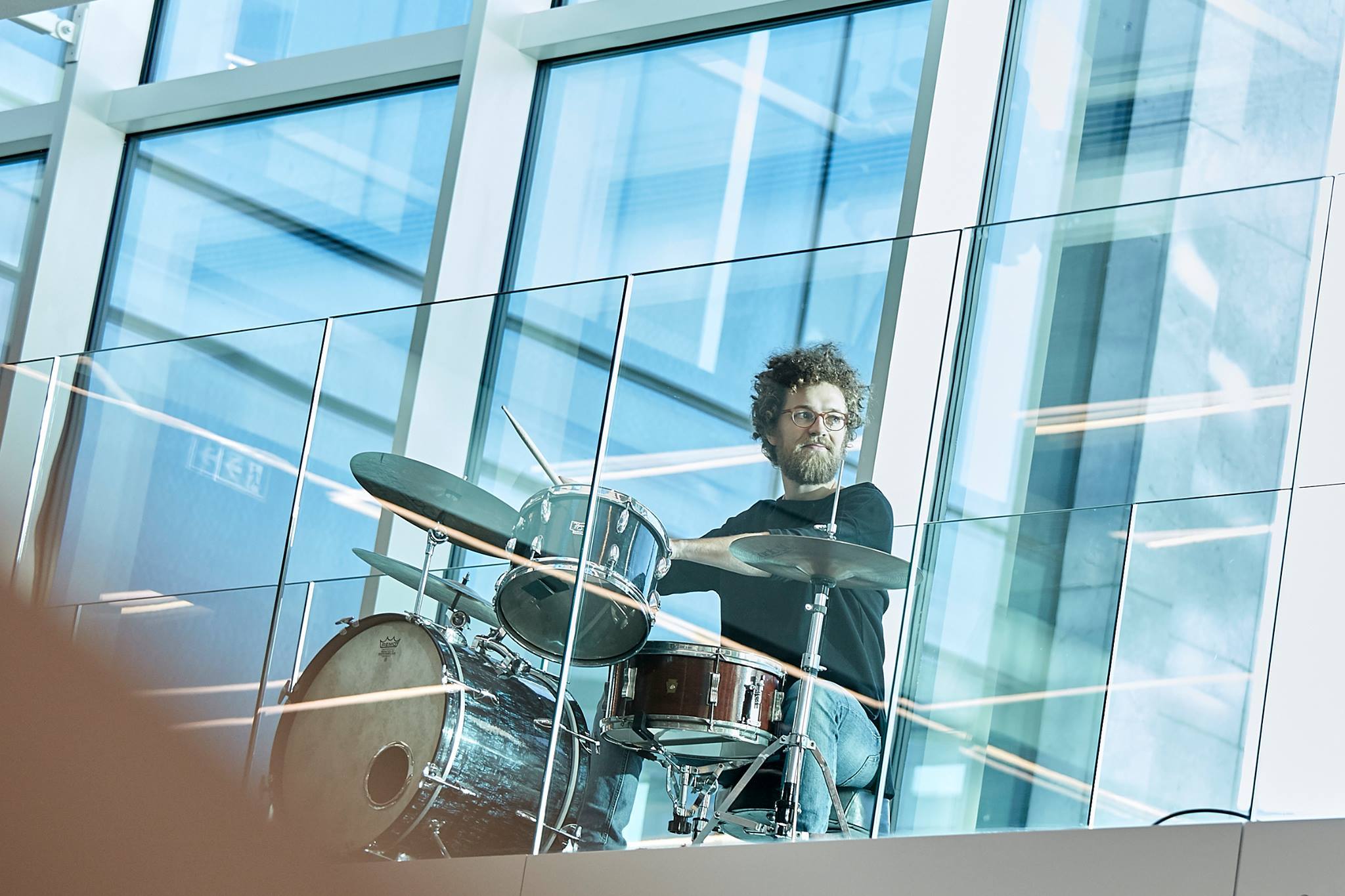
My first drum set was a black Hohner Percusison set. I (finally) got it when I was 8 years old. Before that, I played on pots and pans and whatever gave a nice sound. My parents exchanged a garden tractor for the drum kit and I was over the moon! It made sense cause we had a really small garden anyway. :)
Today I’m using different vintage drums like Slingerland and Ludwig … not a specific set. I like to collect different old drums that I think sound great and then I put them together in different set ups.
To me vintage drums have a warmth and personality, and if they resonate with me, then that’s what I do. Thin cymbals are important as well.
Late Rush-drummer Neil Peart said: “The equipment is not an influence. It doesn't affect the way I play. It's an expression of the way I play.” What's your take on that?
I get him, but I would say that the equipment very much influences the way I play. And I like it that way.
I’m not interested in uniformity and my music does not have to sound the same every night. I like that to adapt to the room, the instrument and the audience, and be open to these changes ... there is a lot of inspiration right there.
Drumming is an integral part of many cultures, and traditions. Which of these do you draw from in your playing – and why?
I draw from all kinds of cultures and traditions. Of course, African drumming is amazing and an endless inspiration. On our new album the tune “Vakler” is inspired by Mali drumming traditions. It’s fast and a lot is happening, but it feels almost like house music and can be very transcending.
I also like more eastern percussion with a lot of sustain! I was inspired by that on our song “Tvillinger” from the new album.
What were some of the main challenges in your development as a drummer / percussionist? Which practices, exercises, or experiences were most helpful in reaching your goals?
I really improved when I learned that I could play melodies on the drum set.
It was a new world for me: the fact that I didn’t only have to be the timekeeper was a relief and I found many new ways and new inspiration in taking another musical role. Away from chops and hard grooves and into textures, sustain and using percussion instead of drum sticks, for instance.
What do you think you're doing different than other drummers?
I’m thinking about drumming as something organic. The drums should resonate and I like discovering textures and notes instead of just hitting the drums. Timekeeping is not about following the right bpm, it’s all about how it feels in your body and how you interact with the other musicians.
Sometimes I put a maraca in my shoe, which is a nice trick … I’ve used it our song Orbit, where my left hand then is free to play a little melody on two cowbells.
How do you experience the concepts of "groove," "swing," and "rhythmic feel" in music?
It’s really important to find a ‘place to be’ in the songs. I love to draw from different genres - folk, blues, country, jazz, balkan and so on - they all have their own swing and personality.
In Svaneborg Kardyb, the rhythmic feel can be very different from one song to the next. As a duo we are very flexible in terms of swing and groove … we can change it during a song on stage if we want to. Nikolaj will also be the one grooving on the piano sometimes, while I will play textures or melodies on the drums.
The rhythmic feel is like colors and textures to the melodies. The groove can be fitted to the melody or it can challenge and be a contrast - both things are interesting. To me it’s a very fluent thing.
A great advice, when talking about this topic, is to try to play along to tracks without drums. For instance, try to play along to a Bob Dylan song, Joni Mitchell song, or an old blues song by Muddy Waters. Listen how they are grooving and then try to accompany and come up with your own parts.
How do time signatures and tempo affect our perception of rhythm?
To me it’s all about the song and the melodies. We are always in favor of the song.
But of course it’s also a great way to express different moods.
What is the relationship between harmony, rhythm and melody? How do non-percussion instruments contribute to the overall rhythmic texture of a piece?
There is harmony, rhythm and melody in every instrument. And even if you play a piece of music rubato, you can still feel the energy and the relationship between rhythm, harmony and melody.
I really much believe that harmony and melody are part of the drum set too! 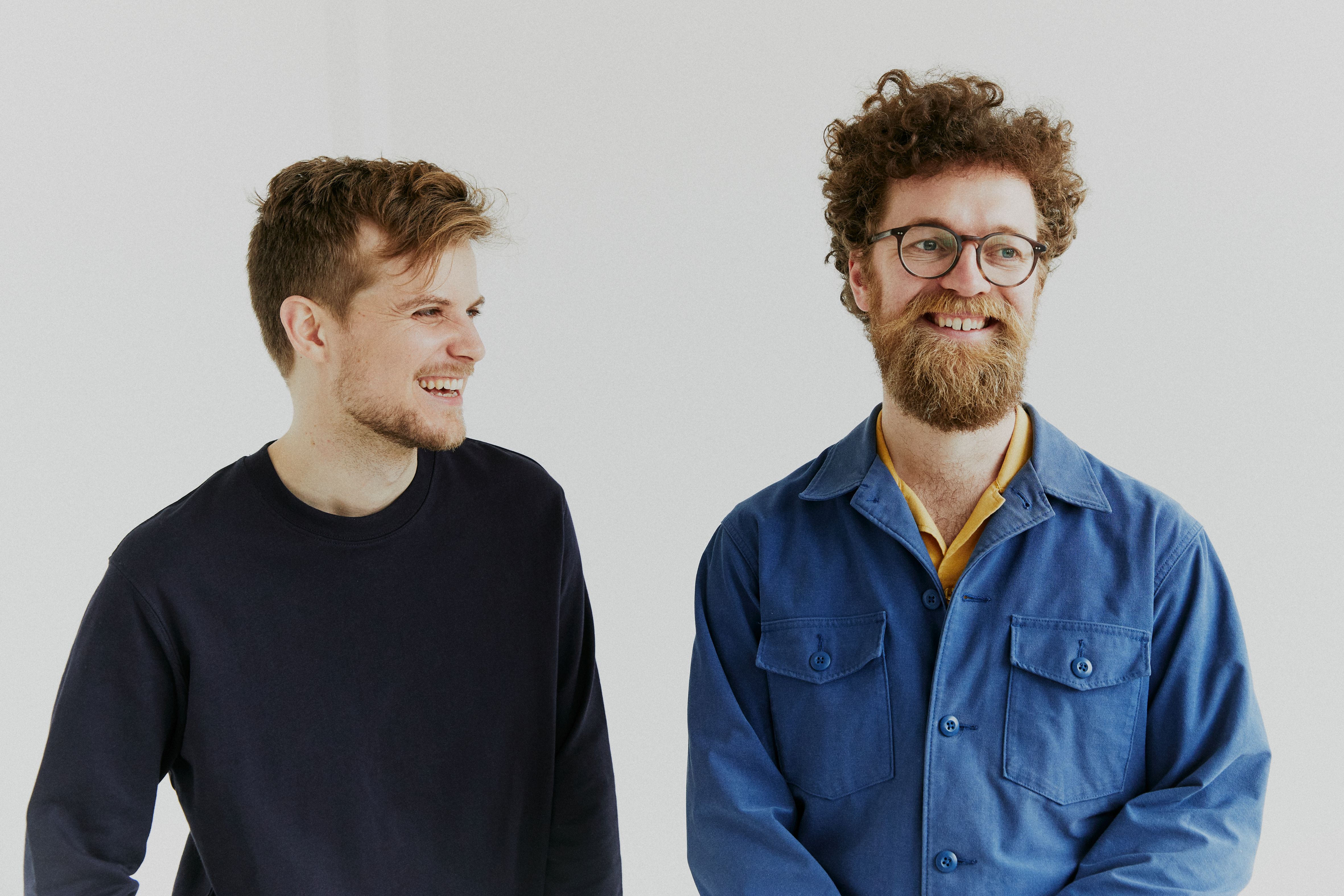
Svaneborg Kardyb Interview Image by Dennis Morton
In relation to drumming, Stewart Copeland said: “Listening is where the cool stuff comes from. And that listening thing, magically, turns all of your chops into gold.” What do you listen for?
I listen to my fellow musicians … it can be a really good exercise to focus on the other instruments … ‘how is the bass really sounding’, what is the melody doing’. Then, when you focus back on the drums and the whole thing together, that’s when it can be really magical and you feel the connection.
You can do the same thing when playing by yourself. Only focusing on one limb, try to just focus on hihat, then snare, then bass drum, and after a while try to put it all together - that’s where I feel the music in the drums.
Do you feel that honing your compositional / songwriting skills has an effect on your drumming skills?
Absolutely. And you don’t even to be able to play guitar or piano.
Drummers can be composers and songwriters as well. Just listen to Ringo Starr!
How has technology, such as drum machines and sequencers, impacted the way rhythm is created and perceived? Has it been a concrete influence on your own approach?
I like to be inspired by all kinds of things. Machines can be a fun way to play differently. Sometimes I will try to sound like a sequencer, which is a fun exercise. Also playing as if you had effects can be fun.
But I always try to do it manually and sometimes it helps me finding new ways on the kit. I’m pretty bad at using real machines! :)
Physical strain is a particularly serious issue for many drummers. How does it manifest itself, how do you deal with it and in how far does it affect your creativity?
True, and if you are touring a lot by car it’s an even worse combination.
Yoga is good for me! And then of course learning about different technices in order to achieve what you want musically.
Many recording engineers have remarked that the drums can be particularly hard to capture. What, from your perspective, makes drums sound great on record and in a live setting?
Playing softly can be a secret weapon in the studio! I also like organic sound in the studio … I don’t want to separate each drum, the drum kit is one whole instrument!
Snare buzz is a part of the instrument as well. Some engineers thinks it’s annoying, I try to embrace it instead.
Drums and percussion are remarkably often used for physical therapy / healing. What, from your point of view, makes them particularly suitable tools for this?
Makes sense. I guess it’s the physical vibrations that can resonate with your body and mind - but I also think it demands an open mind.