Published
Name: Svaneborg Kardyb
Members: Nikolaj Svaneborg (Wurlitzer, Juno, piano), Jonas Kardyb (drums, percussion)
Nationality: Danish
Recent release: Svaneborg Kardyb's Superkilen is out now via Gondwana.
Recommendations:
Joan As Police Woman - Lemons, Limes & Orchids
Floating Points - Crush
Gustaf Ljunggren & Skuli Sverrisson – Codimar
[Read our Joan As Police Woman interview]
If you enjoyed this interview with Jonas Kardyb of Svaneborg Kardyb and would like to find out more about the band, visit their official homepage. The duo are also on Instagram, and Facebook.
To keep reading, check out our earlier Svaneborg Kardyb interview, our conversation with Jonas about drumming, as well as interviews with other Gondwana artists:
[Read our Portico Quartet interview]
[Read our Hania Rani interview]
[Read our Sunda Arc interview]
[Read our Jasmine Myra interview]
[Read our Kessoncoda interview]
[Read our Matthew Halsall interview]
Where does the impulse to create something come from for you? What role do often-quoted sources of inspiration like dreams, other forms of art, personal relationships, politics etc play?
Nikolaj: I can’t remember my dreams. I really have a hard time remembering them. But sometimes I can wake up at night or in the mornings, and even though I can’t remember my dream or the music I dreamt about, the emotion from the melody is still there when I wake up. I can still feel that thing … and when that happens I will sit by the piano and that emotion will be the seed for what I will be playing.
Actually this has happened a lot of times and some of our tunes have started this way … for example the chords from “Orbit.”
For you to get started, do there need to be concrete ideas – or what some have called a 'visualisation' of the finished work? What does the balance between planning and chance look like for you?
Jonas: In the best of worlds, taking chances is the way. It’s about being in the moment and playing whatever comes to mind. We’ve done that a lot in Svaneborg Kardyb, we sit down at our instrument, start playing and then what we do will influence what the other one is doing and vice versa.
Sometimes the result is unexpected, otherwise it’s well known territory. But it’s a nice way to generate ideas that can almost be the final result right in that moment. Otherwise these ideas can be brought to further investigation.
Do you have certain rituals to get you into the right mindset for creating? What role do certain foods or stimulants like coffee, lighting, scents, exercise or reading poetry play?
Nikolaj: It’s nice to have a ton of memos of small melodies or short chord patterns before we delve into composition. There is also a big sense of awareness while setting up the gear before a rehearsal or a concert … It's a ceremonial thing and a great way to prepare your mind for what’s gonna happen.
We’ve tried to set up in the mornings while being completely silent, which gives an even stronger focus. Food, reading and nature are good components as well.
What do you start with? And, to quote a question by the great Bruce Duffie: When you come up with a musical idea, have you created the idea or have you discovered the idea?
Nikolaj: Both! The seed usually comes from something else, but very quickly you have to put yourself into it, in order to sculpt it in your own way.
But there is great importance in practicing discipline towards being ready for when that idea appears. The idea can just as well be outside of you than inside of you.
Many writers have claimed that as soon as they enter into the process, certain aspects of the narrative are out of their hands. Do you like to keep strict control or is there a sense of following things where they lead you?
Jonas: I don’t need strict control. I like to follow along both in music and life in general. If I try to force things I tend to be less in the moment.
It’s also interesting that sometimes the music is static but instead it’s the listener that changes throughout a piece of music or other art. That also applies for the artist while performing that piece.
Often, while writing, new ideas and alternative roads will open themselves up, pulling and pushing the creator in a different direction. Does this happen to you, too, and how do you deal with it? What do you do with these ideas?
Nikolaj: I find it super interesting to explore what an idea can and can’t be. We have melodies that we both arranged as ballads and house tunes. And in both cases it worked out pretty well.
Knowing that the idea has that other “twin brother version” makes both of them stronger.
There are many descriptions of the creative state. How would you describe it for you personally? Is there an element of spirituality to what you do?
Jonas: There is definitely spirituality in there and I think that’s because I leave out everything else. There is this thing that’s so hard to explain; the way you feel connected to the music, the other musicians and your instrument.
When you experience these vibrations that’s the best thing about working as a musician. 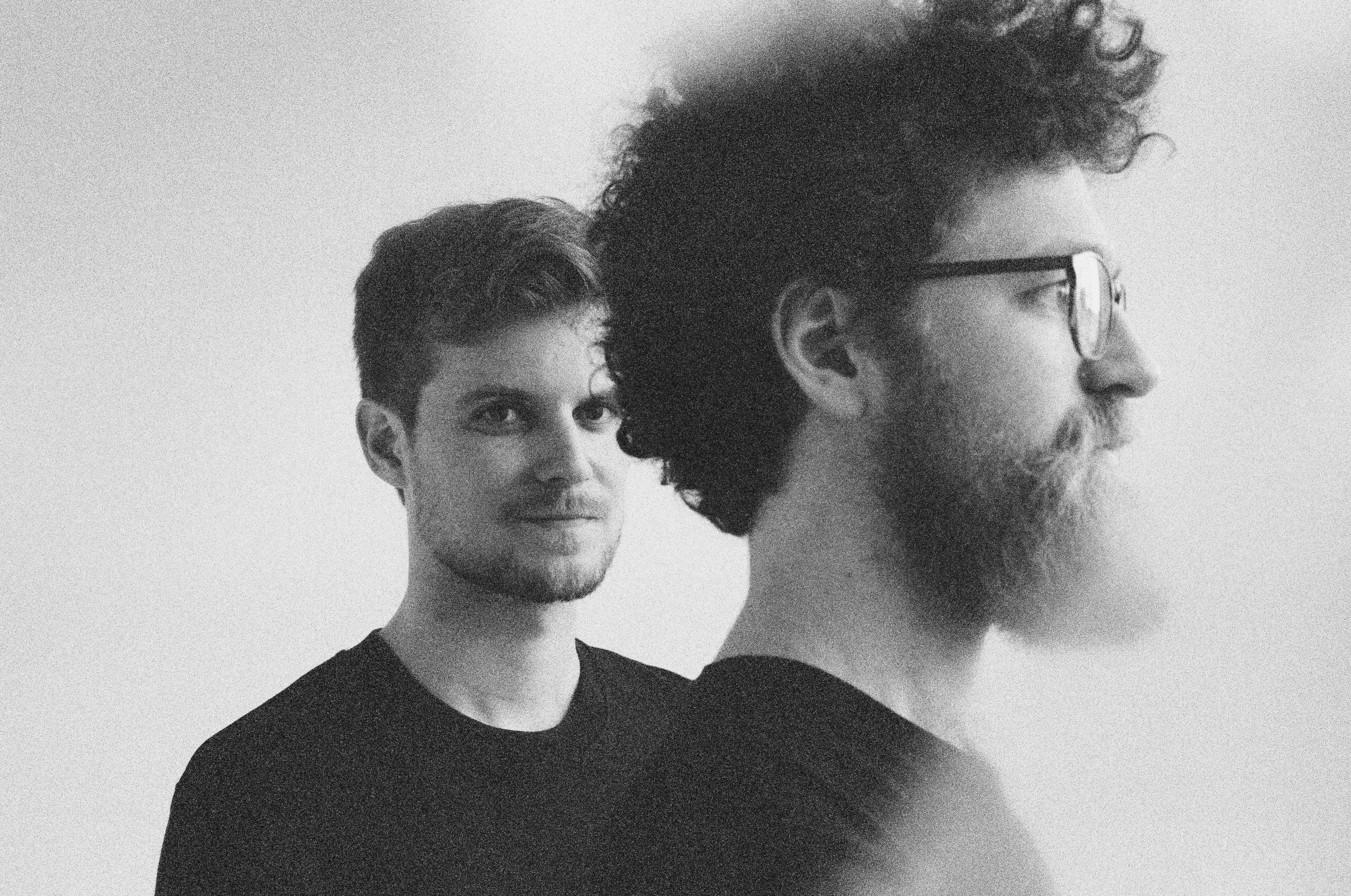
Svaneborg Kardyb Interview Image by Dennis Morton
Once a piece is finished, how important is it for you to let it lie and evaluate it later on? How much improvement and refinement do you personally allow until you're satisfied with a piece? What does this process look like in practise?
Nikolaj: Although it might be a really bad idea, I take every song we make very personally. I have long periods where the only music I hear is literally demos and memos from the rehearsal room, where I evaluate details and try to find the moments that have the biggest emotional impact. In our music it’s usually in the details.
For example a specific transition between two chords, played with a certain expression, or a mistake in the right hand that creates a shift in the melody, or a certain phrase where Jonas and I connect in a certain way.
When we then go to the studio I have this collection of emotional anchors to strive for.
When you're in the studio to record a piece, how important is the actual performance and the moment of performing the song still in an age where so much can be “done and fixed in post?“
Jonas: The actual performance is vital. This is what we strive for in the first place. And often when we both feel that ‘this was it’, or ‘this is the take’, we don’t need much post fixing. This is the foundation.
Post fixing and layers are not crucial but can be great to explore, in order to make the best presentation of that really good take.
Even recording a solo song is usually a collaborative process. Tell me about the importance of trust between the participants, personal relationships between musicians and engineers and the freedom to perform and try things – rather than gear, technique or “chops” - for creating a great song.
Nikolaj: Our band consists of only the two of us. So adding an engineer in the room gives us 50% more people - that’s a lot. The dynamic in the room and asking the right questions are really important and we’ve been really lucky to work with some excellent people whose musical integrity we admire and get really inspired by.
For example the tune “Blik” would never have existed if it wasn’t for Anders hitting record in the exact right moment - without us knowing.
And “Arendal” would never have found its form if Simon hadn’t spontaneously turned down the faders at the end of the song.
After finishing a piece or album and releasing something into the world, there can be a sense of emptiness. Can you relate to this – and how do you return to the state of creativity after experiencing it?
Nikolaj: Rather the opposite. When the music is out, it somehow makes room for creating new music, which can feel like a great relief. And sometimes the moment, right after a release, is when the most radical musical change happens.
Right after we finished the Over Tage album, we started jamming house music!