Part 1
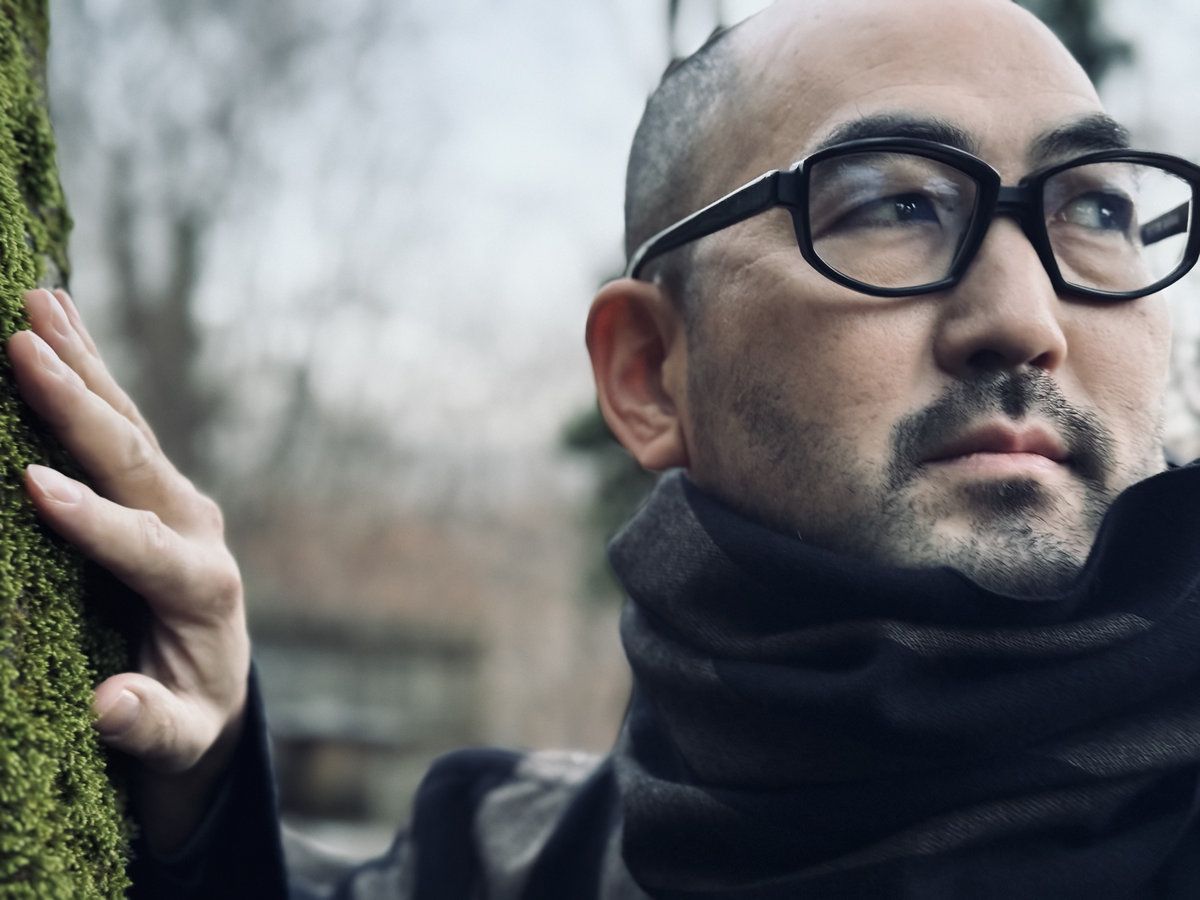
Name: Kaoru Watanabe
Nationality: American-Japanese
Occupation: Composer, multi-instrumentalist
Current Release: Kaoru Watanabe's new album The Arch is out via New Amsterdam.
Hometown Recommendations: The Arch in St. Louis because it is very beautiful. To see it up close restructures the brain- it’s a bit surreal how the metal seems to turn into liquid as it stretches into the sky.
If you enjoyed this Kaoru Watanabe interview, visit his official website for more information. He is also on Instagram, and Facebook.
Where does the impulse to create something come from for you? What role do often-quoted sources of inspiration like dreams, other forms of art, personal relationships, politics, etc play?
In general, the impulse to create something comes from various sources - family, history, nature, politics.
Many pieces stem from engaging with traditional music and seeing how I can make it a personal form of expression - drawing from the rhythmic concepts, scales, and tonalities of, say, Noh theater or Gagaku or regional festival music, but turning them upside down and inside out.
In a piece from 2014, I featured uchiwa daiko, drums traditionally used by Buddhist priests to accompany rhythmic chanting of prayers, and had performers strike the drum while reciting the final words of Eric Garner, “I can’t breathe,” who was murdered by the police that year. The performers spoke in their various native languages. It became a polyrhythmic, almost trance-like expression of anger, frustration, and sadness for ongoing political violence and strife.
A very different example of inspiration, however, came while I was holding my then-infant daughter. I realized I could still practice while trying to put her to sleep, so I created a simple melodic motif but in a fifteen-beat rhythm cycle. It went from being an improvised lullaby to a piece that I’ve performed with orchestras!
For you to get started, do there need to be concrete ideas – or what some have called a 'visualization' of the finished work?
Not at all. Most often, I like to start simple - with a phrase, a motif, a concept, a mood ... and then I allow whatever comes next to happen organically. Lots of writing, rewriting, editing. Often hours of work end up discarded.
I also write for specific people or ensembles- most of whom are composers or improvisers themselves and the composition won't feel complete without hearing how they interpret the music.
What does the balance between planning and chance look like for you?
It depends on the project. I recently did a piece, the makings of a new opera, in which I wrote a score outlining a specific structure for improvisation:
I specified the shape of lines, dynamics, frequency, mood, density, keys, text, and pitches, but the performers improvised the content. In that case, there was so much left to chance, and much of the rehearsal process focused on building trust and a shared understanding of how to shape the music while following the score so we knew where we were.
And just the other day, I filmed my first-ever music video with a secret guest artist. We had many ideas but no specific narrative established before we started. It was a nerve-wracking way of working, but I trusted the process, knew we'd be creative in the moment, and trusted the filmmakers would make magic in the editing room.
I rely on the joy of a studied, informed way of improvising through both life and art.
Is there a preparation phase for your process? Do you require your tools to be laid out in a particular way; for example, do you need to do "research" or create "early versions"?
First of all, my partner, Yurie is an important thought partner in all of my projects, so I always start with conversations with her.
I have found that over the years, I’ve been especially drawn to Japanese history, literature and mythology- the stories of Amaterasu, Yokihi, The Tale of Genji, Shizuka Gozen, Am-No-Uzume, Yasuke, Kasahara Ryusaku, and countless other tales, through which I learn about religion, cuisine, philosophy, and poetry.
It’s my way of engaging with worlds I didn’t really grow up with that are so deeply tied to the instruments I play. Yurie studied Japanese literature and kaiseki cuisine, so she possesses an intimate understanding of these worlds.
Another type of research I find myself doing involves musicians who play instruments not common in the Western world - not only do I need to learn about tunings, timbre, volume, techniques, and notation that I may be wholly unfamiliar with; more importantly, I try to learn as much about the original context in which the instruments are used- what ceremonies, what rituals, what sort of social gatherings.
All too often, these things are taken for granted, and the music's roots go unacknowledged. The fight for artistic freedom and responsibility is interwoven with the fight against cultural appropriation, erasure, and theft.
Do you have certain rituals to get you into the right mindset for creating? What role do certain foods or stimulants like coffee, lighting, scents, exercise, or reading poetry play?
The home I share with Yurie and Shinobu is beautiful, with large windows overlooking tall trees and the river. It’s full of paintings and sculptures that have personal meaning to us and smells of incense. I eat very good, healthy, and well-curated meals. We love to host artists, musicians, dancers, and designers for meals.
Because of my time with my daughter, I play basketball, study Japanese calligraphy, and work on my piano playing to accompany her violin practice. Separately, I recently got back on a skateboard after a couple of decades off, because it forces me to stretch, stay limber, work on balance, build lower-body strength, and listen to my body. I was very serious in middle and early high school, so I’m not learning (I would never recommend anyone start late in life!!), but I am enjoying the sensation of speeding around, doing low-impact tricks.
All this to say, I try to live a life that supports making art and engaging with the world and myself. To feel healthy, strong, and inspired.
For The Arch, what did you start with? If there were conceptual considerations, what were they?
The first decision I made, based on conversations with the producers and record label teams, was to perform everything on the record and not bring anyone else in.
Once I made that decision, I brought compositions into the studio to build on, or sometimes I recorded an improvisation and built from there. Working on all the pieces simultaneously, intermittently over the course of a year, I composed or recorded either at the studio or at home.
The idea that I would perform it was the first concept, as was my desire to incorporate more electronics into the music. We did want the album to feel like a musical snapshot of who I was as an artist in that moment.
Tell me a bit about the way the new material developed and gradually took its final form, please.
First and foremost, I need to talk about the producer William Brittelle. He’s someone I only met when we started working on this album together. He pushed, prodded, and challenged me over the course of the year in ways that were sometimes infuriating, even though he was always very respectful and considerate.
In general, whenever I played it safe or took an easy route, he wanted me to take a different approach or try another take. If I was at all hesitant about anything, like playing keyboards or tenor saxophone - an instrument I hadn’t practiced seriously or consistently in almost thirty years- on the album, he would win me over with his enthusiasm and utter conviction that it was good. He often didn't approve of a piece or my approach to it, even when I was satisfied, and we would butt heads for months about how to proceed.
One of the first tunes I brought in - a simple tune called “Unadorned” - went through so many variations that it ended up being the last tune we finished tracking and was the tune we had the strongest disagreements over.
There were many moments when I lost sight of the bigger picture, and he helped recalibrate my perspective. Almost all the pieces went through many, many versions, often with drastically different approaches over time.
A few key moments that broke up the creative process were when William convinced me to play keyboard on one track, which led the way to me playing keyboard on almost all of the tracks. Realizing how I could sequence notes and run them through various synths and effects to create a soundscape that allowed some of the pieces to blossom in ways that I would’ve never considered using in my music otherwise.
While I’m the sole composer and performer on the album, it truly felt like a collaborative process considering William’s involvement.
Many writers have claimed that as soon as they enter into the process, certain aspects of the narrative are out of their hands. Do you like to keep strict control or is there a sense of following things where they lead you?
Embracing surprise, exploration, and experimentation is a core tenet of my musical practice, as is choosing to work with artists who bring ideas radically different from mine.