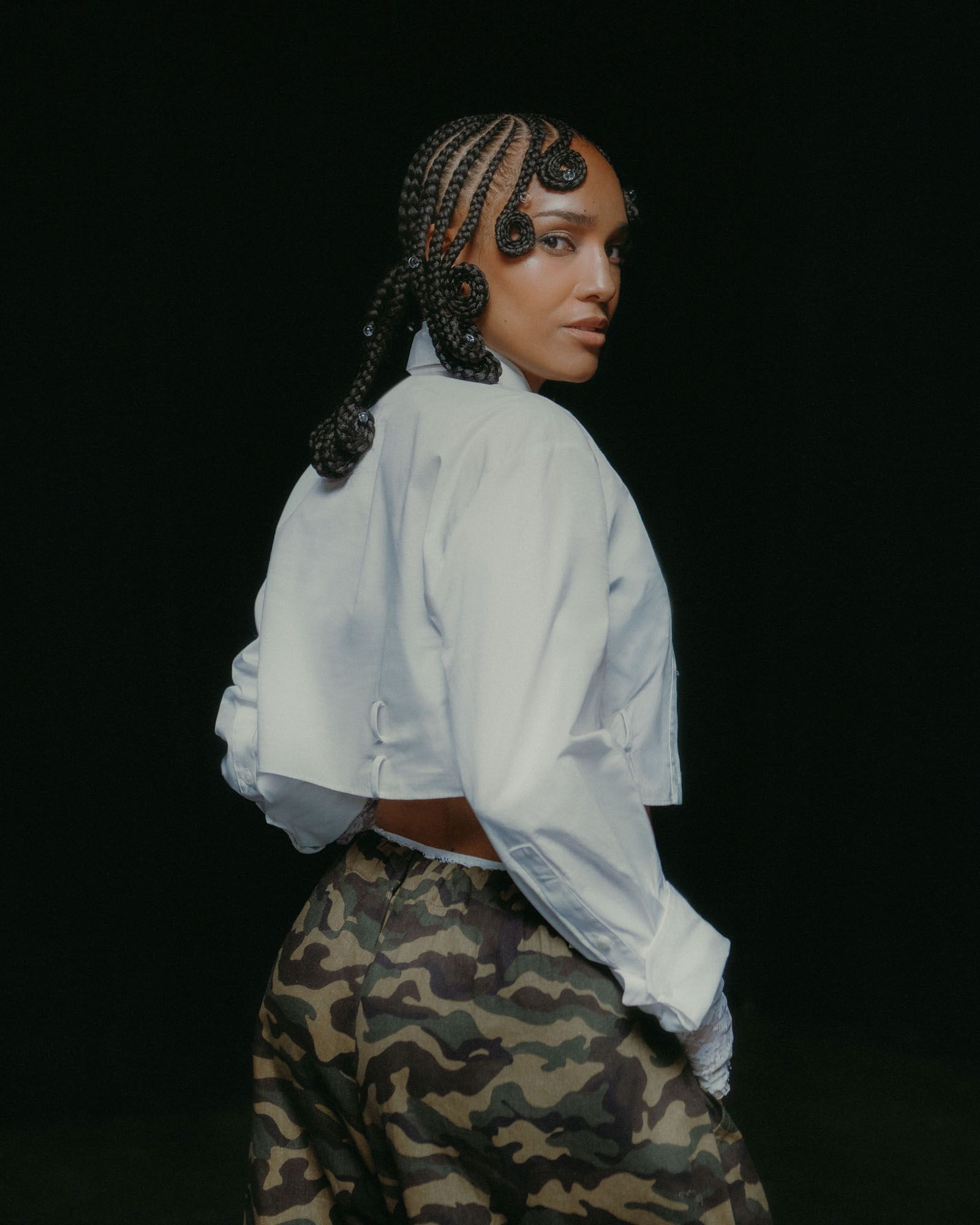
Published
Name: KARABA
Nationality: French-Congolese, Canada-based
Occupation: DJ, producer
Current release: DJ KARABA 's Tides EP is out now.
If you enjoyed this DJ KARABA interview and would like to stay up to date with her music and upcoming live dates and releases, visit her official homepage. She is also on Instagram, Facebook, Soundcloud, and tiktok.
Do you think that some of your earliest musical experiences planted a seed for your interest in DJing? How and when did you start DJing?
Absolutely! I’ve always been drawn to music.
My parents are huge music lovers, so I grew up surrounded by it. I think music was always my first love, and my natural reaction to it was always movement which is what led me to become a professional dancer before anything else.
Later on, I became obsessed with going to shows, especially DJ sets. So when I felt ready to challenge myself with something new and different, DJing felt like the natural next step.
Today, DJs are rarely just DJs. Very often, they can be producers who are also DJs or DJs who are also producers. Where do you see yourself on this spectrum and what kind of potential issues and cross-pollinations does this create?
I definitely see myself as a DJ first, then a producer.
I think everyone should follow what feels right for them, but to me, DJing and producing are two very different things. DJing lets me tap into my dancer side. I love stepping behind the decks and becoming this high-energy version of myself, connecting with the crowd in a moment of pure celebration and reconnecting with the dancer in me.
Producing, on the other hand, has been such a gift. It opened up a whole new space for me to express myself and be vulnerable. It’s where I get to speak through sound, and that’s incredibly freeing.
Both sides show different parts of who I am, and I need both to feel whole.
For you, is there still listening outside of looking for music for your next sets? If so, what do you prefer to listen to and how does it possibly nonetheless have an influence on your performances?
Oh yes, absolutely! I love music in all its forms, so there’s always time for listening beyond just digging for my sets. I listen to everything! Like I said, my parents were huge music lovers, so music has always been a part of my life. It just feels so good to me, I literally need it every day.
I’m also pretty nostalgic, so I often go back to the music I grew up with. Recently, I was revisiting old Janet Jackson tracks, Daft Punk, Cassius, and Whitney Houston. It really depends on my mood and what feels right that day.
I also love watching old tours and performances I grew up watching on TV when I dreamed of being a professional dancer. That’s a big reminder for me that DJing isn’t just about playing music, it’s a performance for me at least. Because of my dance background, I approach every set like a show, bringing that energy and presence to the stage.
When digging, what are you looking for? Is the process all about taste for you, or is it about “going beyond taste?”
The main thing for me is: does it make me want to dance? That’s always been and will always be the guiding force in the music I choose for my DJ sets.
Having been a dancer my whole life, that part of me really leads the way when I’m digging for music. It’s all about what moves me physically first.
There must be endless ways of “matching” two or more tracks. How do you prefer to do it? What makes two tracks inherently “matchable” and what constitutes a great transition?
I’m someone who likes to mix in key, so that’s always my approach.
Sometimes I’ll just go with what feels natural when I listen, but most of the time I prefer smooth transitions—and mixing in key is the best way to make that happen.
Do you engage with audiences/dancers - and how? Taking one of your online DJ mixes as an example, how does the experience and the way you deejay change when you subtract the audience?
I love engaging with the audience when I mix, it feels like this amazing exchange of energy. When there’s a crowd and they’re feeding me their energy, it really pumps me up and pushes me to connect with them even more, which I absolutely love.
But when I’m by myself, like during my YouTube DJ sets, I enjoy that too. Without an audience, I get to explore music I might not normally play live, meaning tracks that might not make me dance but still feel really good to listen to.
It’s a different experience, but I love both.
Collaboration is a key part of almost every aspect of music making, but it is still rare in DJing. Tell me about your own views on back-to-back DJing, interactions with live musicians or other forms of turning DJing into a more collective process.
I was actually really scared of doing B2Bs at first.
I’m someone who loves to prepare and that definitely comes from my dance background. As dancers, we rehearse for months just to perform for five minutes on stage most of the time. By the time we hit the stage, we know every second of the performance inside and out.
DJing, on the other hand, forced me to let go of that level of preparation and control, which I didn’t like at first but now I’ve learned to love it. One of my biggest B2Bs was with Rampa in Brooklyn last year. I was super nervous beforehand, but once we started, I realized it’s really just about sharing and being present. You let the music guide you. I also really enjoy playing with live musicians.
A lot of my sets on YouTube feature a percussionist. I love how it sounds and how it brings a whole new dimension to the music I play. It adds a raw, organic energy that I’m always drawn to.
How important is dancing for our wellbeing on a personal and even on a societal level?
It’s absolutely vital.
Dancing is movement, and movement is life, plain and simple.
Tinnitus and developing hyperacusis are very real risks for anyone working with sound. Do you take precautions in this regard and if you're suffering from these or similar issues – how do you cope with them?
This is something I actually need to get better at. I always wear earplugs when I go to shows, but I’m guilty of not wearing them during my own DJ sets. My friends have been on me about it because I know it’s important.
I love blasting my monitor when I mix, but I also understand how crucial it is to protect my ears if I want to continue to do this career.
Let's imagine you lost all your music for one night and all there is left at the venue is a crate of records containing a random selection of music. How would you approach this set?
I’d totally lean into the situation and just go with the flow. I’d check out what I have in the crate and see what kind of vibe I’m working with. If there are some calm tracks, maybe I’d start there and then build up to the high-energy ones.
Honestly, I think it would be a lot of fun to just play around and see where the night takes me!