

Published
Name: KosmoSuna
Members: Alexis Daumerie, Lucien Daumerie
Interviewee: Alexis Daumerie
Nationality: French
Occupation: Singer, Songwriter, Composer, Producer
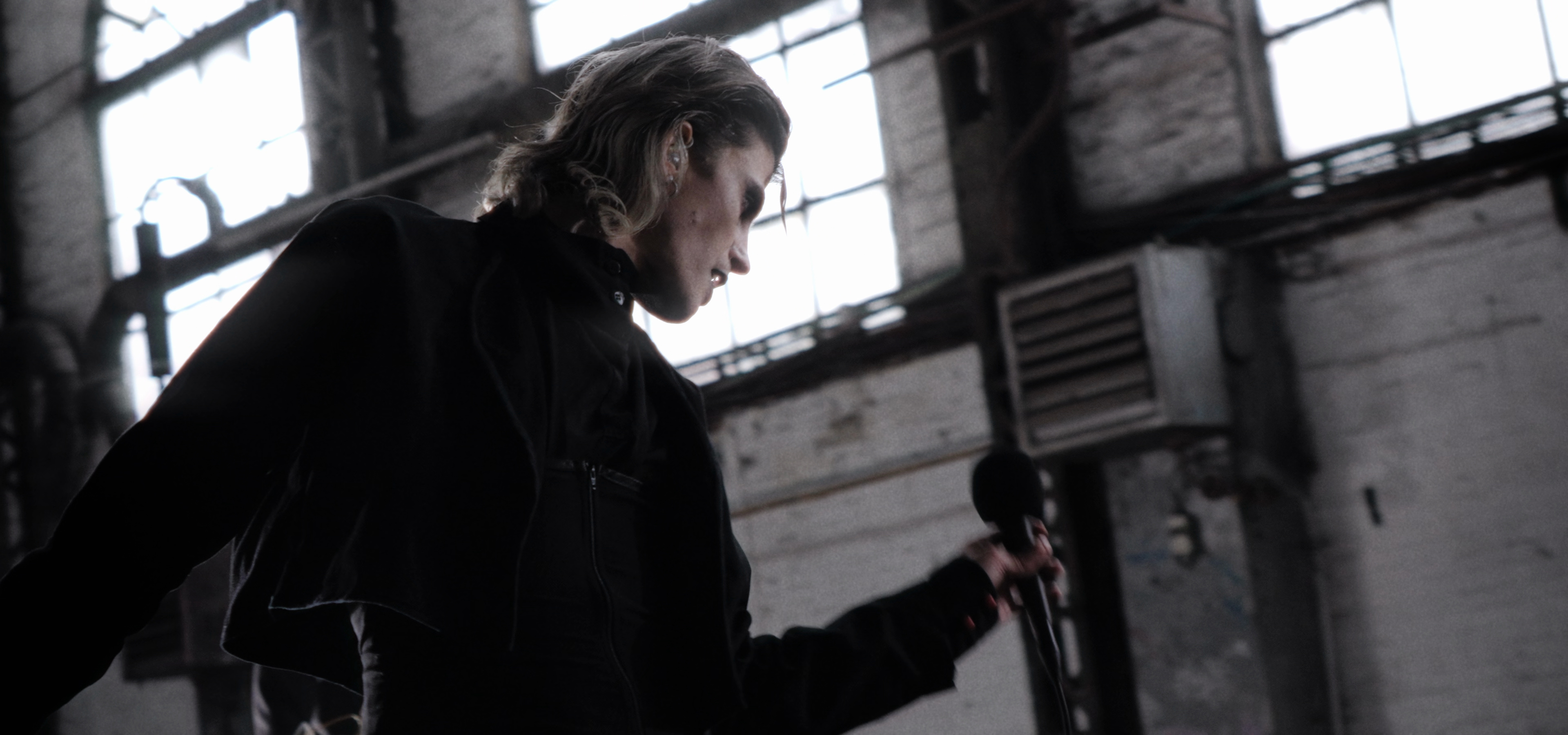
Current release: KosmoSuna's Live Session of the track ‘Pas Besoin’ directed by Victor Desmettre is out now. Pas Besoin (No Need in French) is the first single to feature on KosmoSuna’s new EP, Muted Skin, set to be released in 2027.
Hometown Recommendations: I recommend Albedo Kitchen, an amazing vegan restaurant in Lille, France. The owners are artists themselves (the band Ralph of London), and they also host concerts and exhibitions.
Things I am passionate about but rarely get to talk about: I love the smell of flowers, especially in the city of Lille, where it’s not so common: it’s a very concrete city, even if it’s slowly getting greener! On my way home, there is a house with lots of roses along the street wall, and it’s great to see them come back every year. I always take a little moment to smell them when I pass by, lol. I love that the owners let everyone enjoy them: it’s not locked inside their private garden, it’s for everyone, or at least that’s how I see it, poetically, lol. It’s one of my little pleasures.
If you enjoyed this KosmoSuna interview and would like to know more, visit the band on Instagram, Facebook, Soundcloud, and bandcamp.
For a deeper dive, read our earlier KosmoSuna interview.
When it comes to experiencing strong emotions as a listener, which albums, performances, and artists come to mind?
It depends on the mood I’m in … For example, at the moment I’m back into Jeff Buckley’s album Grace. Then there are all of Kelela’s albums: I just saw her live in Brussels on her New Avatar tour, and she keeps on surprising me.
What also comes to mind is the latest NTS session of Erykah Badu & The Alchemist, so inspiring.
And one last thing: every performance by Alison Mosshart, especially with The Dead Weather. I just love her energy.
There can be many different kinds of emotions in art – soft, harsh, healing, aggressive, uplifting and many more. Which do you tend to feel drawn to most?
Well, it depends. To me, a soft song can have very harsh lyrics, and vice versa.
As for our latest live session, Pas Besoin, a few different feelings coexist. It starts in the first verse with a sense of realisation and putting every harsh feeling into words.
Then, the deeper you go into the song, the more empowering it becomes, with a sense of freedom and self-love.
I have had a hard time explaining that listening to death metal calms me down. When you listen to a song or composition, does it tend to fill you with the same emotions – or are there “paradoxical” effects?
I totally get that. Death metal can be portrayed as aggressive music, but to me it has the opposite effect: it soothes you, especially when you need to externalise everything you have to face. It’s so essential to have spaces like this to scream in the face of the world’s fascist tendencies!
Thankfully, I had punk and rock as a teenager, and they still calm me down today. It’s a bit like a heartbreak: listening to a sad song, like Adele’s, can somehow make you feel better. The same goes for death metal. You can pour all your anger into it, and the people in the scene are usually the sweetest.
To me, it’s a way of realising that you’re not alone in feeling this way, and that helps a lot. So I’d say there is a paradox here.
In as far as it plays a role for the music you like listening to or making, what role do words and the voice of a vocalist play for the transmission of emotions?
To me, a vocalist’s voice is really important, and the words usually come next. I listen to a lot of music in languages I don’t understand, and it doesn’t matter: I feel something first through the intention and the colour of the voice.
But then, and it hasn’t always been this way, I also love to read the lyrics and the translations, and to try to understand the secrets behind the track, which are sometimes very explicit. That happens a lot with singers I’ve been listening to since I was a child.
I’ve rediscovered songs now and I’m like, “Wowww, I was so deeply connected to this!” Understanding the meaning now makes even more sense.
When it comes to experiencing emotions as a creator, how would you describe the physical sensation of experiencing them? [Where do you feel them, do you have a visual sensation/representation, is there a sense of release or a build-up of tension etc …]
When I create music, it’s very intimate … Mostly everything appears when I’m alone at home. It’s usually voices that come first, with no specific lyrics, “yoghurt”, as we call it in French.
I let myself go, and if something strong appears, whatever emotions it creates inside me, I know it’s the right direction when I want to stay inside the loop and the repetition: it means that I’m in the right place. Sometimes I can improvise for a very long time on a voice pattern I’ve created (harmonies), like a trance.
We also work the same way with Lucien (the other half of KosmoSuna). A lot of our tracks come from long improvisations and playful moments.
When it comes to composing / songwriting, are you finding that spontaneity and just a few takes tend to capture emotions best? Or does honing a piece bring you closer to that goal?
That’s a really good question, and it can also lead to another one: what matters most, the sound quality or the intentions and emotions? And what is a “good sound”? It really depends.
Sometimes I will just keep the first improvisation because it feels right. Sometimes it’s hard to recapture the same emotion, so why would you change it? Most of my backing vocals are actually voices I record at home. I love the fact that there is this living spirit in the background, which is my intimacy, and then the main vocal is usually recorded in a studio.
To me there isn’t really a clear rule; it’s more of an instinct: you know when a track is done. Some of them take ages to finish, and some are done in just one take.
How much of the emotions of your own music, would you say, are already part of the composition, how much is the result of the recording process? For your current release, what kind of emotions were you looking to get across?
I’de say everything we do with KosmoSuna is driven by emotion. It’s always the starting point, so it’s a combination of both … It’s a very organic process, from the lyrics to the instrumental.
For this current release, “Pas Besoin”, the song came out of the first residency we did in January 2025 for our upcoming EP. We didn’t have anything yet except one provocation: trying to make more positive music. Sonically, it slowly started to become a bit lighter, but our nature came back, and I don’t think it’s our time yet for a powerful, positive pop song, lol.
Creating a song is a very emotional process. Sometimes it’s only afterwards that you clearly understand what it’s about, or it’s mostly questions you ask, and it’s the audience who give you the answers. But for this particular release, we were looking for liberation: breaking the hold that a system, or a person, has on you.
The emotions are raw and literal in this song … Singing “Pas besoin de toi, non pas besoin de ta validation…” (“I don’t need you, I don’t need your validation”) isn’t very poetic or mysterious, but it felt right. It’s very liberating to summon those kinds of emotions.
It’s another form of vulnerability, because it can bring more hostility, but when you know your truth, you just feel aligned to embrace this role.
How do you capture the emotions you want to get across in the studio? What role do factors like volume, effects like distortion, amplification, and production in general for in terms of creating the emotions, energies or impressions you want?
I think that to capture the best emotions, you have to feel comfortable with the people you are recording with. The voice is a muscle, so if you are stressed and with people you can’t be true to yourself, it’s not going to work.
I love knowing that, if I want, I can feel secure enough to explain the story behind the track … the undercover side. For example, I recently started recording my voices with the artist-musician Hughes Rive at his home studio (Rive Studio), and it was lush.
Then there is definitely a psychological side to post-production. The mixing brings out all the subtleties you need to create the emotions: it’s a balance of emotions and techniques. All the effects you use on a track are really important and can increase or reduce the presence of a particular instrument or voice.
But again, everything is possible: if you want to put everything at the same volume with a huge distortion, just go for it! We may do that soon if the Macron government doesn’t leave ASAP, and if the Sixth Republic still isn’t showing up in 2027! Yes, that's a woke statement!
In terms of emotions, what changes when you are performing live on stage, with an audience present, compared to the recording stage?
To me, it’s the most vulnerable moment with an audience, and everything changes. You are bringing your intimacy into a room full of people, and it’s strong. The way you experience time is really different: it usually passes in the blink of an eye.
That’s the moment I feel the most alive. It’s an ambivalent feeling: I’m like, “Why am I doing this?” And then afterwards, I want to go back, which is why you always keep on doing it. Even if it can be terrifying, it’s exciting … To me, I’m still doing it because there are people who have shown me love every time I’ve performed.
You can really feel different emotions depending on the place, who’s in the crowd, the mood of the people, your own mood … That’s why, as a performer, you have to know what you are talking about in every song. It can be a small intention or a word, and it will protect you in every situation.
How does the presence of the audience and your interaction with it change the emotional impact of the music and how would you describe the creative interaction with listeners during a gig?
Seeing people’s faces and movements definitely brings emotions. It’s a shared experience. Even if, in the first place, you have to give the impulse … the best way is to trust the music first, and then the rest is extra.
What matters most on stage is to have fun and only serve the music. And number one: never judge the audience.
What kind of feedback have you received from listeners or concert audiences in terms of the experience that your music and/or performances have had on them?
I think I already talked about that in our last interview, but I may say it a bit differently today. I don’t know, lol.
What I love most is when people who are not used to our music say, “It’s not our type of music, but I felt something, and I can see that you put everything into it.” I think the worst thing is when someone doesn’t feel anything. I’m not looking for devotion from a crowd, and I’ve actually played against it since the beginning …
Anyway, it’s not really a place I’m allowed to be in, and I also rejected it. It’s too much for one person to carry on their shoulders and to be portrayed as a perfect star. It can happen so quickly that someone rejects you.
Would you say that you prefer to stay in control to be able to shape the emotions or do you surrender to them and allow the music to take over? Who, ultimately has control during a live performance?
Well, I used to be very controlled by my emotions, and it was too painful.
I could cry easily on stage, or be thrown off by something unexpected. But it’s a lesson, and a reflection of being human, not just a musician. It happened a lot in my first performances. Then it became my work, and you learn to take a step back and stay grounded: you can’t predict what’s going to happen.
So a sense of control came along, but in the right amount: more as a way of protecting myself while still sharing what’s inside the music. It’s somewhere in between. Sometimes there is this grace during a performance where you feel immersed and hit by unexplained feelings, and it just carries you away …That’s a good place to be, as long as it doesn’t submerge you entirely.
But there is nothing wrong with a bit of control, especially when you go on stage often and the stories behind the songs can be emotionally draining. Putting it in the right place is a way of sharing what you feel in a more universal way: it allows people to connect to the song and project themselves onto it. It becomes less about you and more about the music, and that’s beautiful.
But the sonic world of a song already creates that distance, and it’s a way of transcending what you feel.
The emotions that music is able to generate can be extremely powerful. How, do you think, can artists make use of this power to bring about change in the world?
To me, as an artist, it’s good not to take yourself too seriously and to let go of the illusion of being the saviour: change is a collective movement, and none of us are alone in this. That doesn’t mean you have to disappear into the group. It’s really important to take positions and put your unique point of view out there: that’s what your music is for.
But it’s good to question the figure of the leader, even when it’s you, so as not to become one in a way … Though I can’t control what people will project onto me. I can only lead my own emotions, not those of others.
I don’t recognise myself in the predominant model of “you have to be there all the time”. That’s the paradox of our profession: many of us are introverts who have to be extra extroverted to fit the standard image of an artist, and for many of us, it’s simply not sustainable. It’s also a very ableist state of mind, and it isn’t specific to music: our profession is part of society and suffers from the same problems.
I don’t believe in idolising one person, a habit that capitalism and the star system keep reinforcing. It contaminates our lives, because it stops us from thinking for ourselves: we project everything onto a single figure, and sooner or later it falls apart, because no one can live up to that image. Yet some stars are so disconnected from the reality most of us live in that they end up dominating our own lives, which is a huge contradiction.
We have to free ourselves from that alienation, stay critical, and give more space to the voices that are still too often marginalised. Whatever platform I have, I can choose which subjects I want to highlight. In my country, we are at a very critical moment, and there is no time to focus too much on the micro: we have to look at the big picture and vote for LFI in 2027, because it’s not about one person.