Published
Name: Kristin Sofroniou
Nationality: Cypriot-Swedish
Occupation: Pianist, composer, improviser
Current release: Kristin Sofroniou's new album Darkness Visible is out via Protomaterial.
Things I am passionate about but rarely get to talk about: Something I keep coming back to is Nefertiti by Miles Davis. I first heard it years ago, and I still remember the melody repeating, played by Miles Davis and Wayne Shorter in unison, but never mechanically together. There's a little air between them, a looseness. I love that way of making music and how it makes me think about playing with another person, about life in general: being freely together. Somehow, this became the creative idea behind the piece ‘Moving Freely’ on the album.
If you enjoyed this Kristin Sofroniou interview and would like to know more about her music, visit her official homepage. She is also on Instagram.
When the first time you noticed you were drawn to darker themes and moods in music, literature or the movies?
I remember being drawn to music and art with dark moods from a very young age.
I grew up in Stockholm until I was eight, and I guess Scandinavian children's stories and the long, dark winters left a mark on me. The night had its own music, its own sounds. Listening to them as a child, without being able to see what was around me, is probably my earliest memory related to this question.
In general, though, and in this album, I’m not interested in darkness alone, but in the relationship between darkness and light and how one exists within the other. I tend to imagine these opposites moving in a circle, chasing each other.
The phrase “darkness visible” comes from John Milton’s Paradise Lost. It is used to describe a paradoxical landscape in Hell where fire produces not light, but a darkness that can be seen. I’ve had this image in the back of my mind since 2006, and in many ways this album is an attempt to hear it.
“Darkness” is, of course, not strictly speaking a term related to sound. What constitutes darkness to you, especially in instrumental terms?
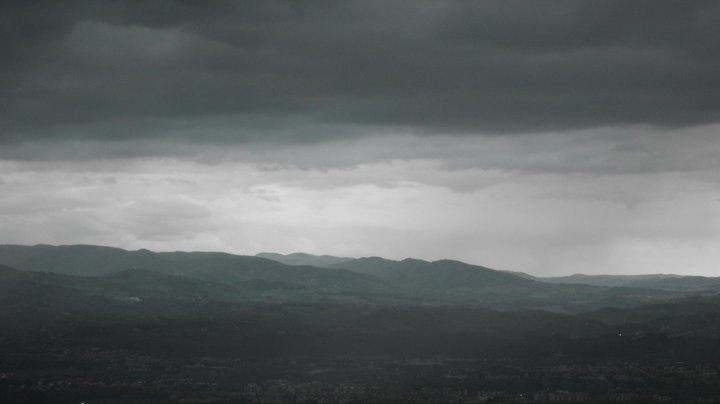
There's a photograph I took during a storm in Florence: a landscape of dark mountains, grey clouds and a small strip of almost-light between them. I thought about this image a lot while composing the album. In my mind, darkness in music, and especially the way I approached sound in this album, is like zooming in on different parts of that photograph. [see in the photo section]
In instrumental terms, darkness for me is what stays blurred or hidden: reverberation, roughness, background noise, sounds you can’t quite make out. Clarity is the opposite: a single melodic line, precise articulation, silence. Each piece sits at a different point between the two.
For example, ‘Slow Burn Alleluia’ uses a rough phone recording of a Good Friday liturgy as its starting point.
I recorded the piano at home, imagining the reverberation of a church during a procession: a person walking slowly towards death, proud of their sins, with people following and dancing. I improvised with that scene in my head.
The result is rough, muddy and incoherent in places. I guess that's totally the dark zone for a classically trained pianist! Yet here, darkness is also a celebration.
How would you describe the physical sensation and possible attraction of being exposed to darkness in music?
It's comforting, but also scary and exciting at the same time.
I find darkness attractive because you can never fully know it: there’s always something you cannot immediately see or hear. That calms me down, and the more time you spend with it, the more your perception changes.
Tell me about the creative process for your current release, Darkness Visible, please.
Darkness Visible emerged from two projects I had been playing around with over the last two years, without initially thinking about making an album.
One was ‘Pianoscapes’, a project I started simply for fun: a series of short videos that capture everyday moments and pair them with improvised music and re-compositions of classical music. The other came from my lifelong devotion to Bach and from experimenting with a Yamaha Reface, trying to play an electronic instrument in an analogue, almost pianistic way.
The album is a continuous sonic story that moves between two threads: shorter Bach fragments that travel between piano and keyboard, and longer electroacoustic pieces that bring sounds from everyday life, recorded in different parts of the world, into dialogue with newly composed music. In the longer pieces, the videos often provide the starting point and the context for the music.
‘Down’, for example, began with a very short video of three older people talking on a balcony in Anafi one summer night. I used fragments of their speech as musical material, improvising around the words and sounds of their voices.
‘Lamento. Exit’ developed in the opposite direction: I first recorded a piano improvisation that moves in a trapped, circular motion, seemingly unable to go anywhere. I paired it with a video from a train station in Vienna, where the movement of trains from left to right creates a counterweight to the trapped feeling of the piano.
How did you realise your goals in terms of the production, including effects?
Beyond darkness and light, this album also explores movement and stillness.
The relationship between darkness and light comes through more in the overall sound quality, while movement and stillness come through more in the use of effects.I played a lot with stretched and slowed-down sounds alongside more immediate, ‘alive’ ones, which often overlap and take on different roles within a piece.
The musical material comes from different sources: videos captured on a phone, piano recordings made at home, field recordings, and studio recordings. I kept the original sound quality of each recording rather than making everything sound “nice” or unified. The roughness, background noise, unexpected sounds and lack of clarity became part of the music.
On one occasion, for example, there's the sound of a woman eating crisps next to me. That turned into a rhythmic motif and a conductor's cue for the piano part. When I listen to it, I still imagine this woman eating crisps conducting me.
Exploring darker themes in the music often goes hand in hand with the accompanying artwork. Tell me a bit about this relating to your new release.
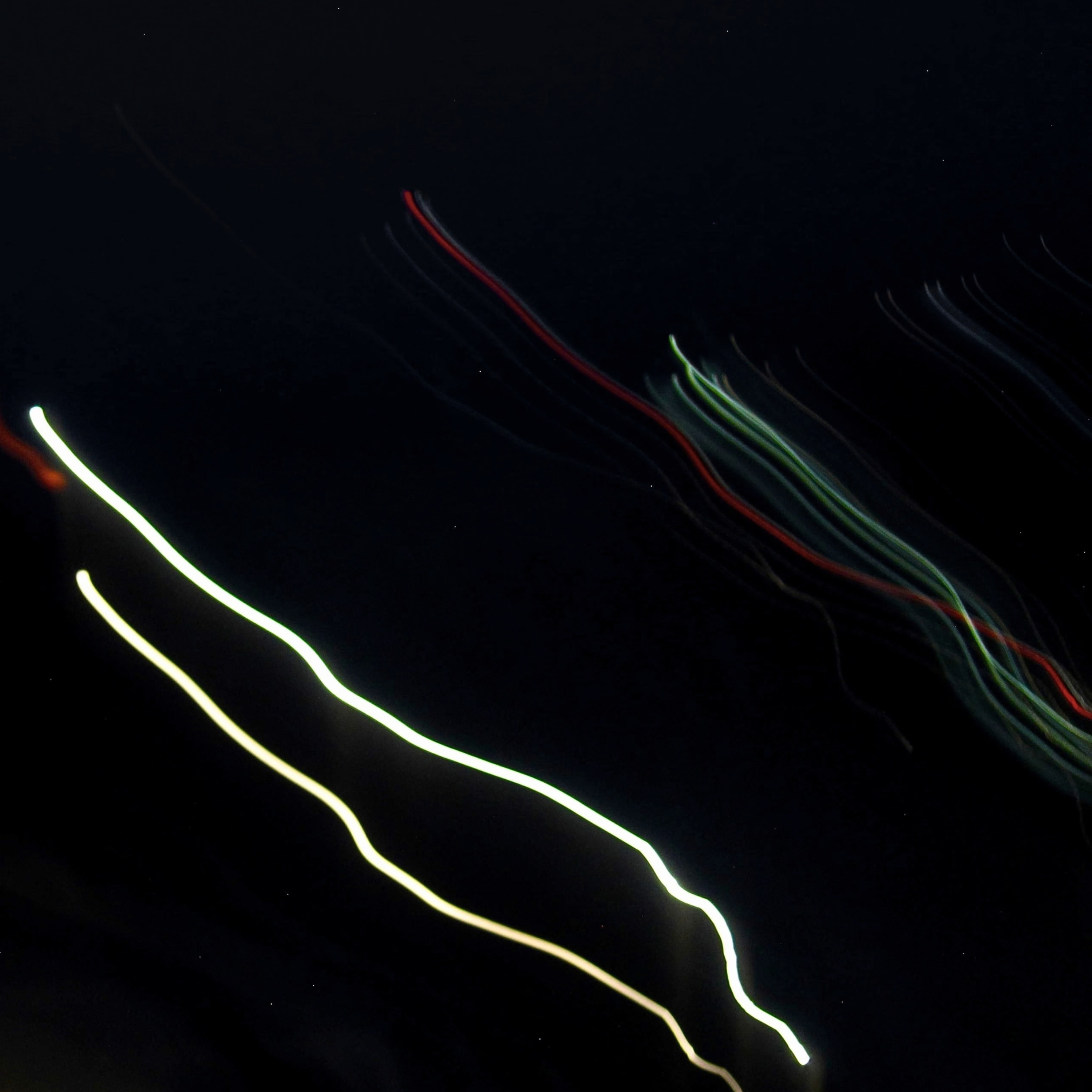
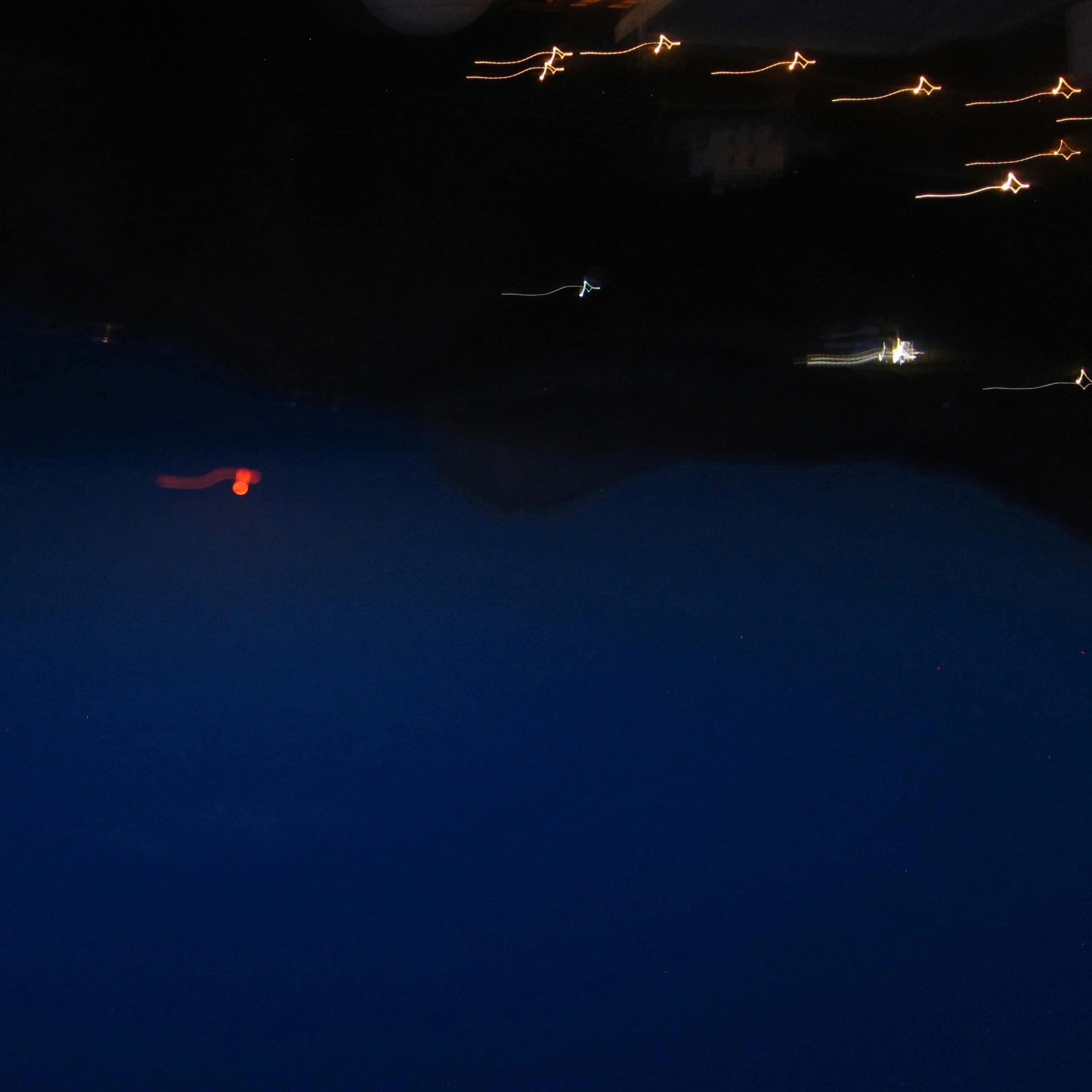
The album cover comes from photographs I took during a long hike in the mountains in Greece. After many hours of walking, we got lost just as the day was turning into night.
I started taking long-exposure photographs to distract myself from panicking and capture the movement of light in the darkness: the stars, the moon and the distant lights of the village. [see in the photo section]
I would love to know a little about the feedback you've received from listeners or critics about what they thought some of your darker songs are about or the impact it had on them – have there been “misunderstandings” or did you perhaps even gain new “insights?”
It's still early, as the album isn't fully out yet, but there have already been some “misunderstandings”. Some things I find really dark, others perceive as romantic. And sometimes it's the other way around: things I find playfully dark are a bit stressful for others.
I like the idea that something very specific and personal to me can become something else for someone else. In a way, that's also the starting point of the album: taking existing material and turning it into something new. Listeners can do the same.