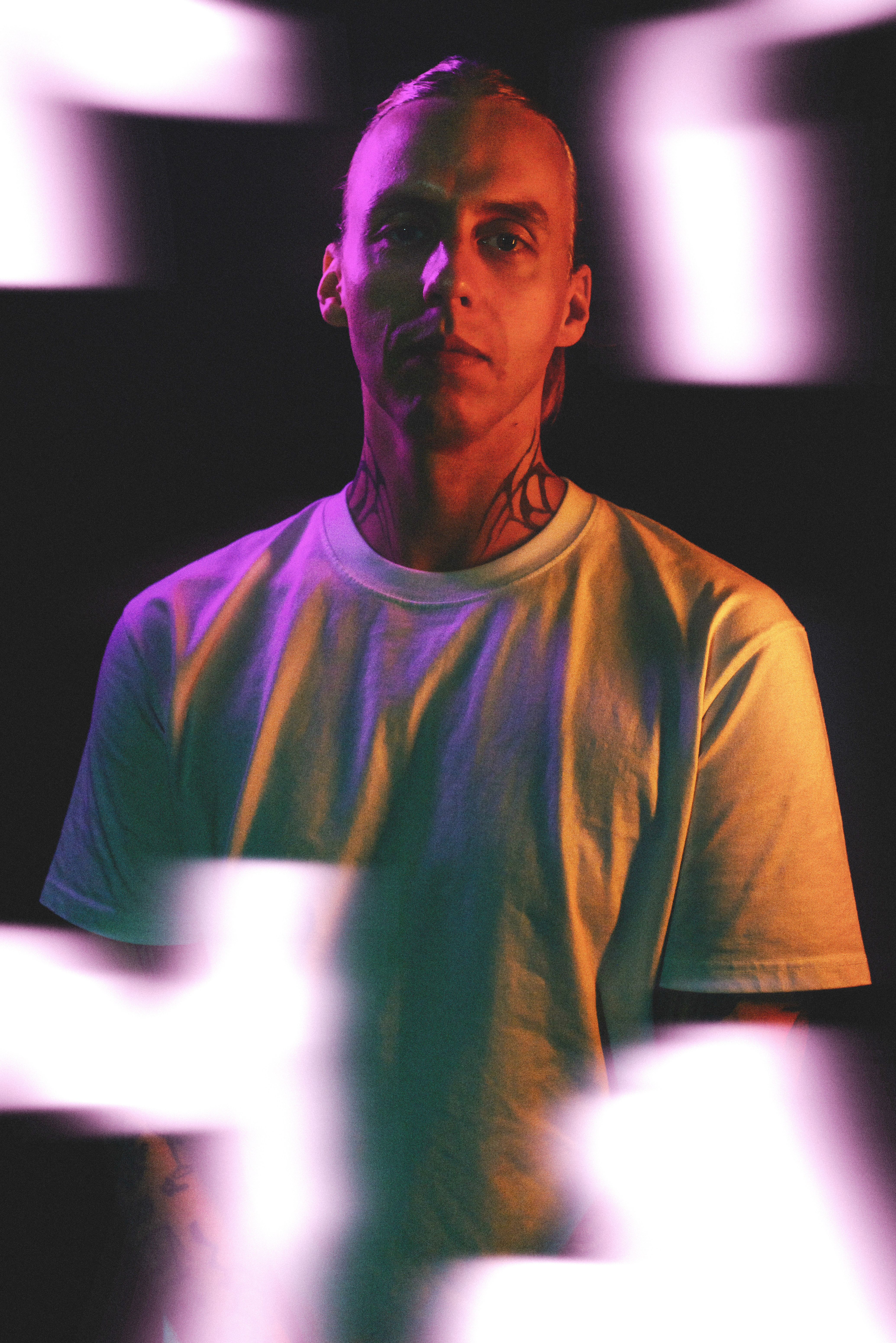
Published
Name: Johannes LaFontaine
Nationality: Iceland
Occupation: Producer, DJ, label founder at [199X] Recordings
Current release: LaFontaine's new Chensō EP is out via MOOD.
Things I am passionate about but rarely get to talk about: World of Warcraft!!!!!! My max level Frost Mage and it’s absolutely lethal. I’ve been playing on and off since around the same time I started making music. These days I only let myself sink into it maybe one or two days a month, but when I do, I fully get back into it.
If you enjoyed this LaFontaine interview and would like to stay up to date with his music, visit him on Instagram, bandcamp, and Soundcloud.
Are there examples of minimalism in music – and outside of music - that impressed you early on?
My favorite examples of this are Mathew Jonson – “Marionette” …
… and Exos – “Nuclear Red Guard.”
Both of those tracks manage to evolve very slowly, but still feel engaging and alive over a long duration.
A minimalistic lifestyle has always been appealing to me.
[Read our Mathew Jonson interview]
Were you ever interested in minimalism as a style – from the Philip-Glass-variety to solo instrumental work to minimal techno? If so, tell me a bit about your interest in this.
Yes, absolutely. I’ve always been interested in minimalism as a style. Philip Glass is a great example, I really enjoy his work.
That idea translates well into techno for me as well, especially tracks that can hold attention through subtle shifts rather than big structural changes.
Do you tend to find that, as many claim, “less is more?” Are the notes you don't play really as important as the ones you do play?
Absolutely.
Most of my older stuff is only 6–8 tracks in the project, so I've always believed less can be more in many circumstances.
Do you feel as that making music is a process of adding elements until it is done – or one where you chisel away pieces from something that is already there?
I definitely build things up rather than strip them back. I keep adding until it feels finished, but I'm also quick to delete ideas that aren't working.
A messy project completely ruins my workflow.
Many artists are becoming more minimalist in their music as the years go on, focusing on the “essence.” How is that for yourself and how would you describe your development in this regard?
I've actually become less minimalistic over the years. Now I’m more interested in exploring a sound as far as it can go.
Sometimes I'll resample a single sound eight or more times until it turns into something you couldn't achieve with traditional synthesis. That's become a bigger part of my process and how my music has evolved.
What were some of the starting points for the Chensō EP?
My latest release on MOOD consists of three completely different tracks, but they all started the same way. I always begin with the kick and bass, then build the percussion.
The way the drums end up sounding usually determines what kind of track the rest will become.
How did a minimalist mindset possibly inform the creative process?
It didn’t in this particular instance.
Do you like to set yourself limitations? If so, which were some of those limitations for the new pieces?
I don’t, maybe I should.
Thanks to sampling and digital synthesis, there are endless possibilities for sculpting the sounds and overall sound design of a piece or album. What are your considerations in this regard?
I sample a lot—usually resampling sounds I've made or recorded myself, processing them heavily, then resampling them again. I like seeing how far I can transform a sound.
I also love sampling bird sounds.
Would you say that you approach your creative tools with a minimalist mindset? Or do you need a wide choice of instruments and tools to make music?
I own some hardware and have access to pretty much any drum machine or synth I could want to record with. I've also recorded live jams on friends' gear to use later in production.
But 99.9% of the time I work entirely inside the box. For me, it's more about knowing my tools than constantly using new ones.
What were some of the most important pieces of gear or instruments for this release?
Ableton's built in sampler and FabFilter Pro Q3.
Reducing one's options and techniques often implies a different way of working with the materials. Tell me about yours, please.
I prefer working with a limited set of plugins. Restricting my options helps me focus more on creativity rather than constantly choosing between techniques.
Instead of spending time deciding which EQ or compressor to use, I focus on exploring and shaping the sound itself.
French producer Guillaume Duchastel told me: “Minimalism is about more than owning fewer things. It’s about focusing on what truly matters.“ What are some of your strategies for separating what matters from that which doesn't?
One of the first lessons I learned is that if I can’t hear a sound clearly in a busier section of the track, it often means it isn’t serving a strong enough purpose.
Instead of trying to force it to sit better in the mix, I’ll usually remove it from that part and focus on making the more important elements work. This helps me keep the arrangement clear and intentional.
With so much incredible music instantly available, are you finding that you want to take it all in – or that you need to be more selective? How do you pick the music you really want to invest in?
I don’t feel the need to constantly take in everything that’s available. On a day to day basis, I tend to return to music I already know or grew up with, rather than trying to keep up with everything new.
When I do need to discover new music for example for a set or podcast I prefer to be selective. I usually start with a small group of labels and artists I trust and follow their releases and influences.
From there, I explore more intentionally and discover new artists through that curated network.
Would you say that minimalism extends into other parts of your life as well?
Yes, I try to keep my life relatively minimal in terms of possessions. I regularly go through my clothes and belongings and remove things I don’t really use or need.
It’s not just about having less, but about reducing distraction and keeping a clearer environment, which also affects how I think creatively. I find that when my surroundings are simpler, it’s easier to focus.