Part 1
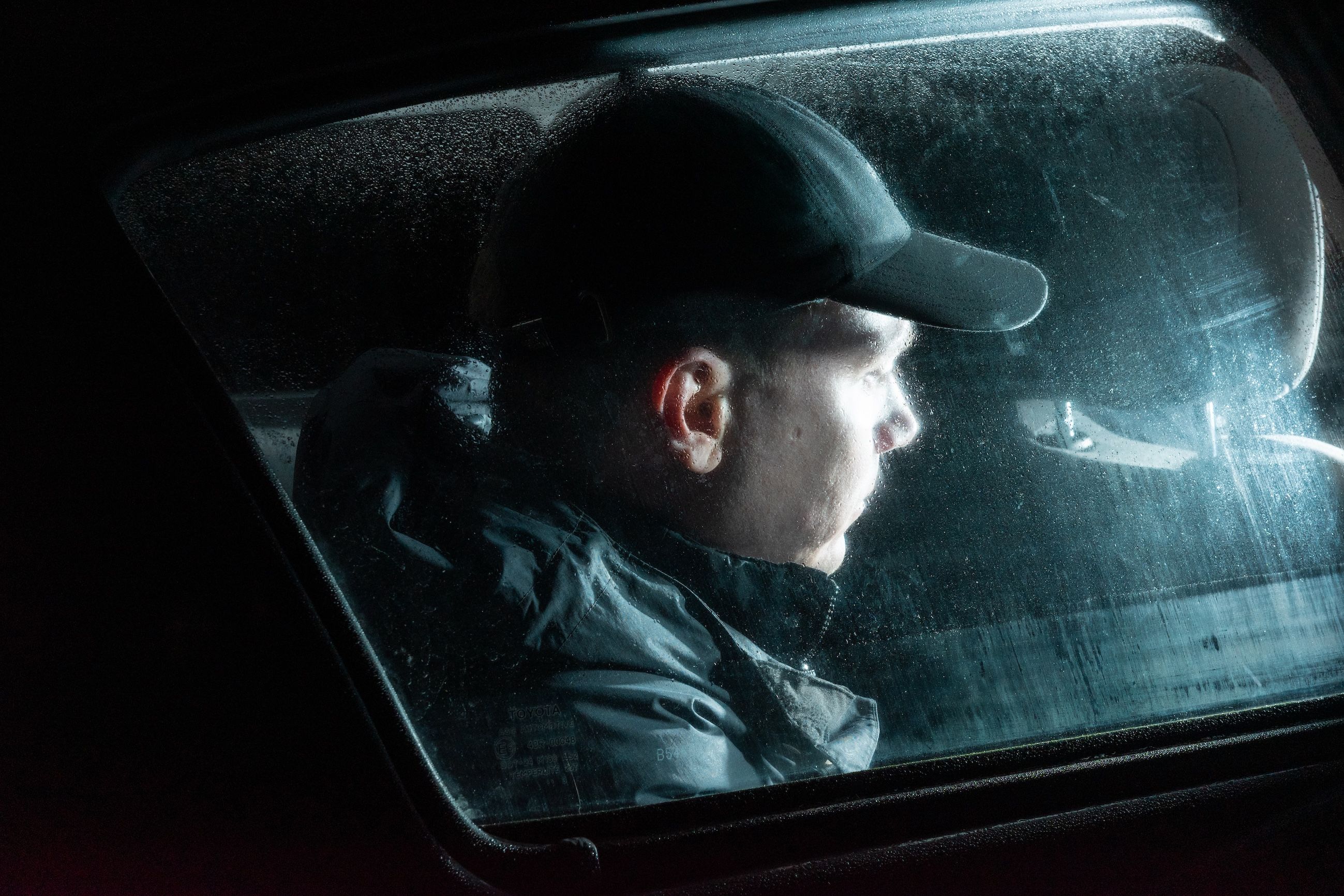
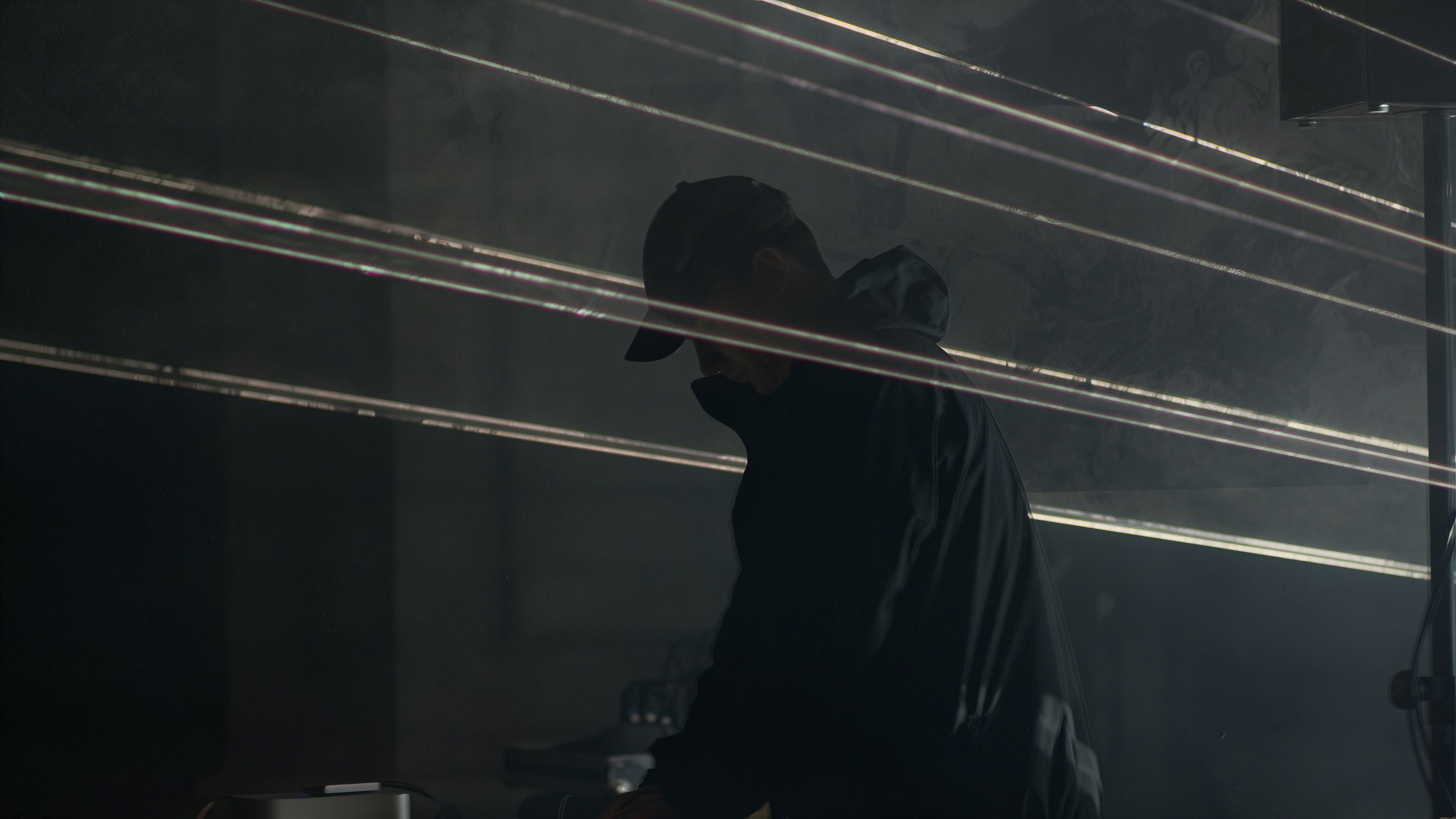
Name: Pierre Dozin aka Late Bush
Nationality: Belgian
Occupation: Producer, composer, sound engineer, founder at Sonic Shelter
Current release: Late Bush's new album Hoarses is out via Vlek.
If you enjoyed this Late Bush interview and would like to stay up to date with his music, visit him on Instagram, and bandcamp.
The press release mentions early music and baroque, power ambient, IDM and avant-pop as styles represented on Hoarses. Would you say you're rather a naturally eclectic listener or are there shared elements that connect them?
I’ve been listening to and interested in all these influences for a long time, so there’s naturally something quite eclectic in my relationship to music.
To I started noticing connections as an early teenager when my father was listening baroque, and I was listening to Aphex Twin and Bogdan Raczynsky. You could find relationships in a baroque piece and IDM, such as counterpoint.
That’s also true for dense power ambient or avant-pop. The means are completely different, but there can be a similar tendency to push an idea, a sound ornamentation or an emotion quite far. Through research and experimentation, I also started noticing more connections between styles that may seem quite distant at first.
I also wanted to move away from overly defined rules or genres within electronic music, and be able to go from something very fragile and acoustic to something much more synthetic or overwhelming without feeling like I had entered a completely different musical language, that felt more singular to me.
What interested you personally about the baroque era as a good departure point for this project?
For a long time, I’ve had a habit of exploring baroque scores as MIDI files, analysing them, isolating a few bars, looping, transposing or slowing them down, and trying different interpretations by taking them completely out of their original context. It has often been a starting point for sketches and experiments without necessarily thinking that I’m going to make something baroque.
Over time, I realised that simply playing these scores with completely unexpected sound design could create new and quite powerful emotions for me. Of course, I’m not at all the first person to experiment with this, but a line written several centuries ago can suddenly feel strange and contemporary when played through a synthesizer or a sound that has nothing to do with its original context.
I also love the fact that a score can travel through centuries in an almost abstract form. The original sound is gone, but some information remains and can continuously produce new sounds. I’ve always liked mixing different eras in my work, trying to create music that somehow feels both futuristic and like an echo of our collective past.
A core idea for Hoarses was that baroque music no longer exists as sound, it only exists as notation. Here's something I've often wondered about: Even if the composers of the baroque era had been able to record their music – do you think we, as 21st century listeners, would be hearing the same thing as an 18th century audience?
No, I don’t think so. Even if we could listen to exactly the same sound signal, we probably wouldn’t hear it in the same way. Our listening is conditioned by everything we’ve heard before and by our contemporary relationship to sound. Things that might once have sounded extremely powerful or unusual can now be part of our collective musical language.
You can see the same thing happening in sound design, electronic music or popular music: a sound or technique can seem radically new at one point and gradually become familiar.
There’s also the whole context surrounding the sound; the social function of the music, the architecture in which it was performed, the instruments, volume and amplification, and simply the way audiences experienced a performance. So even with a perfectly preserved recording, we would still be listening with contemporary ears.
That distance is also something that interests me, as a creative space.
One side theme to the project is the notion that notated music comes alive only through performance. What is your take on classical interpretation? Do you think it's important we keep playing these pieces?
My first concern isn’t really an academic or ethical idea that we must keep playing these works. I see it more as an endless cycle of transformation of music and cultural heritage. A score played few hundred years later will inevitably be understood and felt differently. Even an interpretation aiming for great historical accuracy still involves choices made by people living today
That said, I find it really valuable to keep hearing music from the past and learning about the history around it. It’s inspiring, and it also helps us understand where some contemporary ideas come from.
A lot of what we think of as new today is still connected, consciously or not, to forms, ideas and gestures that existed before.
If we only have the score to go by, what, do you feel, gets lost?
A score can transmit a huge amount of information, but it doesn’t contain the sound itself, the exact instrumentation used, or decisions made by performers. And in baroque music, many of these aspects were not necessarily fully specified in the score. So a lot inevitably disappears. But that loss also creates a space.
You can look at a old score almost as a structure or protocol, use the information that remains as raw material, remove it from its original context and build something else from it. So I don’t really see the score as a complete archive of a piece, but as a trace from which an infinite number of sounds can still emerge.
There is a scene for original practise in classical music whose thoughts have become very influential. What motivated you to reverse that direction and instead move the music forward rather than backwards?
I don’t really see what I’m doing as the opposite of historically informed performance. I find it very interesting that musicians try to understand as precisely as possible how these works may have been performed at the time. It’s simply not where I come from.
My relationship to sound comes much more from electronic production, synthesis and transformation than from classical performance practice. Conceptually, I’m also more interested in the impossibility of fully reconstructing the past than in trying to get as close to it as possible.
When a score travels through three hundred years, arrives in my computer as a MIDI file, and is then played by a synthesizer or transformed inside a DAW, something strange happens. A structure from the past suddenly exists inside a sonic environment completely foreign to it.
I'd love to know why you decided to compose a new piece rather than interpreting or completely remodelling an existing baroque piece?
Because I don’t really see Hoarses as a remodelling of the past. I didn’t want to take a baroque work and make an electronic version of it, or build the album around the idea of a rework or remix. The starting point was much freer.
I used scores and certain ideas from this music like other kinds of material: a MIDI fragment, a progression, a motif, a way of making several melodic lines interact. Very quickly, these elements would merge with synthesis, sound design, voices, sampling and my own writing. What interested me was combining different influences in which I could hear shared qualities and letting something personal emerge from that.
Ideally, you can sometimes feel something baroque in the music without necessarily being able to identify exactly where it comes from.
In terms of the creative process, what were aspects of compositional practise you would define as “baroque?”
There are obviously harmonic and melodic elements that come directly from that vocabulary, but I’m perhaps more interested in certain underlying principles than in directly quoting baroque music.
Ornamentation is one of them. Starting with a relatively clear structure and pushing it quite far through an accumulation of details, movements and variations.
There’s also counterpoint, parallel lines, motifs responding to each other, repetition and sequences creating a sense of almost continuous movement. I find similar things in electronic music I love, particularly IDM or very dense forms of ambient. A huge amount of information can coexist while still being organised around a clear architecture.
Production itself can also become a form of ornamentation for me. Automation, synthesis modulation, granular processing, reverb or layers of sound can all make a relatively simple initial idea constantly evolve.
One defining feature of baroque music was that it only existed in the moment of performance. If someone should want to perform their version of Hoarses two hundred years from now, what would be a “historically correct” interpretation?
If someone happens to come across Hoarses among the colossal amount of music that will have been released two hundred years from now, I don’t think there would really be one.
Even today, I don’t perform Hoarses exactly the same way from one event to another. It can be performed with or without strings, in more or less amplified concerts, on stereo systems or in immersive configurations. Certain elements and dynamics change depending on the space and the setup.
And in two hundred years, many of the tools I use today will probably have disappeared or become completely obsolete. Even with a similar setup, it would probably still be heard differently. So maybe the most historically accurate approach would actually be to adapt it with the tools, sensibility and context of that time.