Published
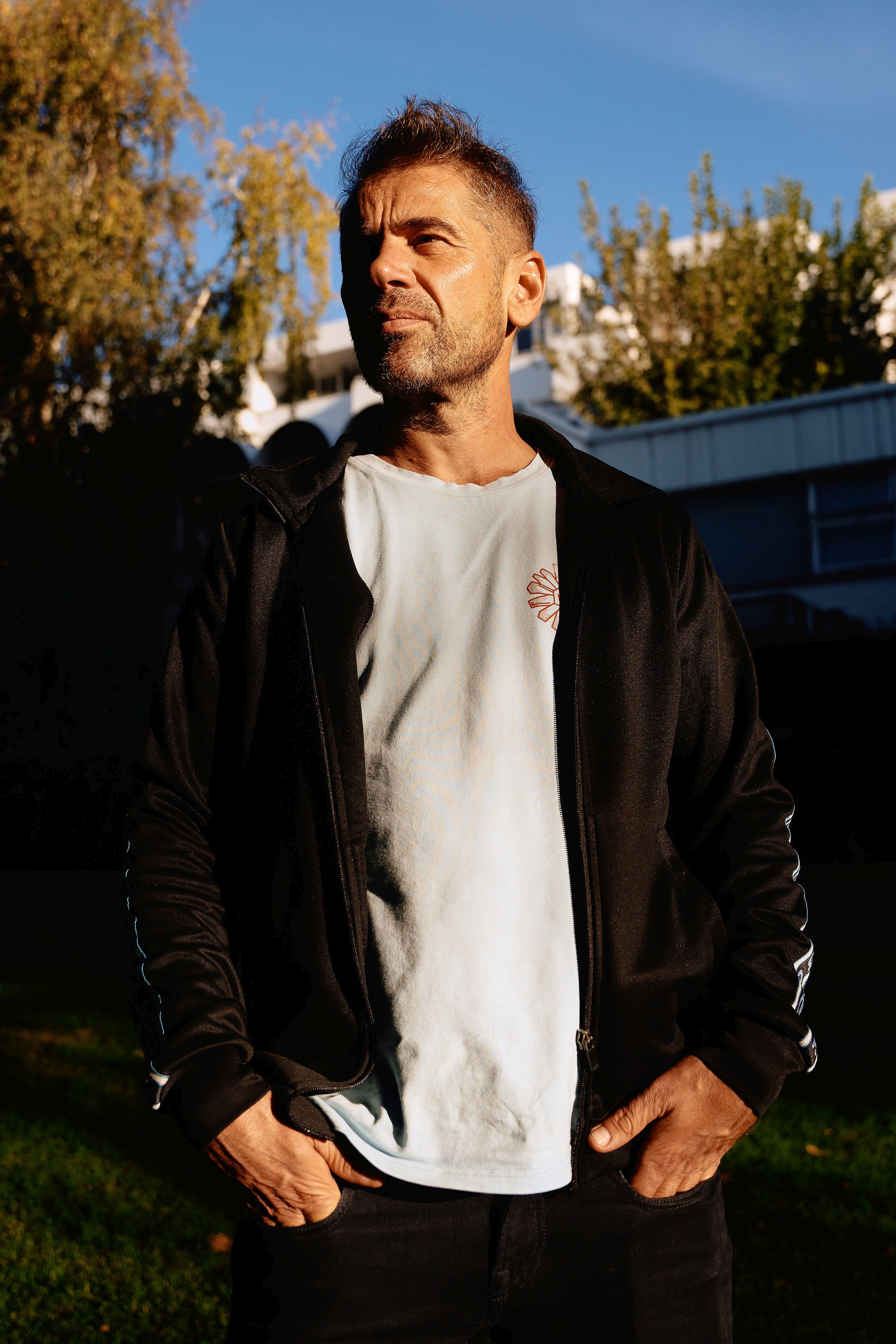
Name: Laurent Bizot
Nationality: French
Occupation: Label founder and artist manager at NØ FØRMAT!
Current Release: NØ FØRMAT! is celebrating its 20th birthday with a luxurious book filled with photographies and insights from the artists on its roster as well as a few select performance events. About the personal feedback from the artists, Laurent says:
“I won’t lie, it’s very moving. We love artists and we make a lot of effort all year long to help them achieve their dreams. Sometimes it’s hard, sometimes it’s tense, there’s disagreements, there’s even tension sometimes, but it’s all for the best. We want each album to be the very best possible, looking for the same level of requirement as the artist, So reading that they see that and are grateful for that is always pure happiness.”
If you enjoyed this Laurent Bizot interview and would like to stay up to date with the music on NØ FØRMAT!, visit the label's official homepage. It is also on Instagram, Facebook, Soundcloud, and bandcamp.
For a deeper dive, we recommend our interviews with artists who have released on NØ FØRMAT!
[Read our Koki Nakano interview]
[Read our Ballaké Sissoko interview]
[Read our Lucas Santtana interview]
[Read our Trio SR9 interview]
[Read our Urban Village interview]
[Read our Francesco Tristano interview]
[Read our Chilly Gonzales interview]
What were some of the defining moments that led you to start with your own label - and what or who were your early passions and influences? What was it about music and/or sound that drew you to it?
I was always fascinated by music. My first memory is of my dad playing the piano at home every night. Then he brought me to a small venue, and I was fascinated to see musicians playing live.
I used to play the guitar when I was a teenager, I started when I saw Tracy Chapman playing alone in Wembley, it was a big shock for me.
Then, during my studies, I volunteered for one year in a small associative rock and reggae venue. I enjoyed it but I realized there was no way I could make a living in that space so I decided to go for the other side, the big music companies, and learn.
I worked as a lawyer at Universal Music in Paris for 8 years. It was a wonderful learning experience to understand in detail every part of the music industry. Production, marketing, PR, accounting, contracts, publishing, touring ... It was fantastic to see everything happening every day, under my eyes in the same building.
What, would you say, are the key ideas behind your NØ FØRMAT!'s approach to music and art?
At Universal, I understood that obviously good music was not too much of the point for the industry. The point was to find music that could sell a lot of copies. But for me music has a deep and special meaning, it is not only entertainment, it has a real power on people’s emotions, and people’s lives.
So I wanted to create a special space for good music, very good music, not necessarily too commercial. It was maybe going to sell less, not enough compared to the cost, that was the problem ... but then I tried to find an economic model that would make those albums sustainable. And therefore make them available to the public, since at that time there was no easy distribution by internet.
The answer was in jazz reissues. Universal Jazz used to create collections for reissues, like “Jazz in Paris”. It was like a strong brand where you could put any good album in that particular theme, easy or difficult, known or absolutely not known. The collection appeal would commercially uplift the albums, even the ones that would be a total loss if released on their own. And all in all, it was sustainable.
It needed a very good curation, a special graphic design, and a communication effort on the brand itself. That was my inspiration for Nø Førmat! When you’re confident about the label and its fan base, you can easily sign artists "outside the box,” very art orientated, because you know that the brand will carry this artist, you don’t rely on the usual recipes of marketing for that specific album.
Tell me about the early years of NØ FØRMAT!, please. Who else was part of the community, what were some of the places you'd visit and where you'd meet?
I started quite alone but there was a Brazilian club called “Le Blue Note,“ rue Mouffetard, where lots of Brazilian musicians would come play and jam every night. I would go there very often with my friend musician Marcio Faraco. I learned a lot about music there.
Then I also chilled with the Malian musicians in Paris. Some collaborations were already existing, like Kouyaté-Neerman, an awesome musical dialogue between a vibraphonist and a balafonist. With some I made the connection, like Mamani Keita with the French musician an producer Nicolas Repac.
I also went to Mali a lot, and started to learn about their culture and the Bambara language, it was fascinating.
What were some of the events, releases, or other activities that showed you the label was progressing?
When a legendary artist like Oumou Sangaré or Salif Keita trusts you with a new project, it means that the label's reputation has grown.
And when we organize this 20th anniversary tour, and big venues like Opera de Lyon (1200 seats) are sold out, it means we do have an audience now.
There is a long tradition of French artists and labels and jazz. What, do you feel, explains the connection between Paris/France on the one hand and Black American Music? How would you describe your own connection with it?
I don’t know too much about jazz. I‘m very interested in improvisation hence in this particular part of jazz music. But I don’t have a jazz culture really.
I know for a fact that Paris was certainly an important and safe place for African American jazz artists in the beginning of the 20th century. But I also can tell that Paris has been a very important and vibrant place for musicians coming from all over the world and especially Africa, and mixing with European musicians, for several decades.
It’s not a coincidence that collaborative projects like Ballaké Sissoko and Vincent Segal were born in Paris. I don’t think it could have been created in any other city in the world. It’s typical of Paris. And clearly it’s the reason why we released a lot of projects involving Malian musicians because I used this characteristic of Paris.
I didn‘t travel all over Africa to find music there, I focused on hybrid projects that were typical of the Paris vibe.
How do you see the role of labels in the creative process? What is the scope and what are the limitations of what you are capable of doing? What were some of the labels you appreciated yourself?
The label can be key in the creative process. Most artists know what they want to achieve but they need some guidance, help, at different levels.
I strongly believe that having a second opinion that you trust is valuable for an artist. We reassure but sometimes we disagree, we try to avoid some mistakes that the artist doesn’t necessarily see. We bring ideas and connections that are relevant to the project.
By the way this role can be done by another person than the label, for some artists it’s their manager, for some their publisher. But I believe very few artists can succeed alone.
The limitation is when an artist thinks he/she can do everything on his own rather than opening up to other talents when there’s a pattern of control that is so high that (s)he can’t take things from someone else. In that case, we can’t really help, it’s not fun for us, and it’s generally not a very good sign for the project.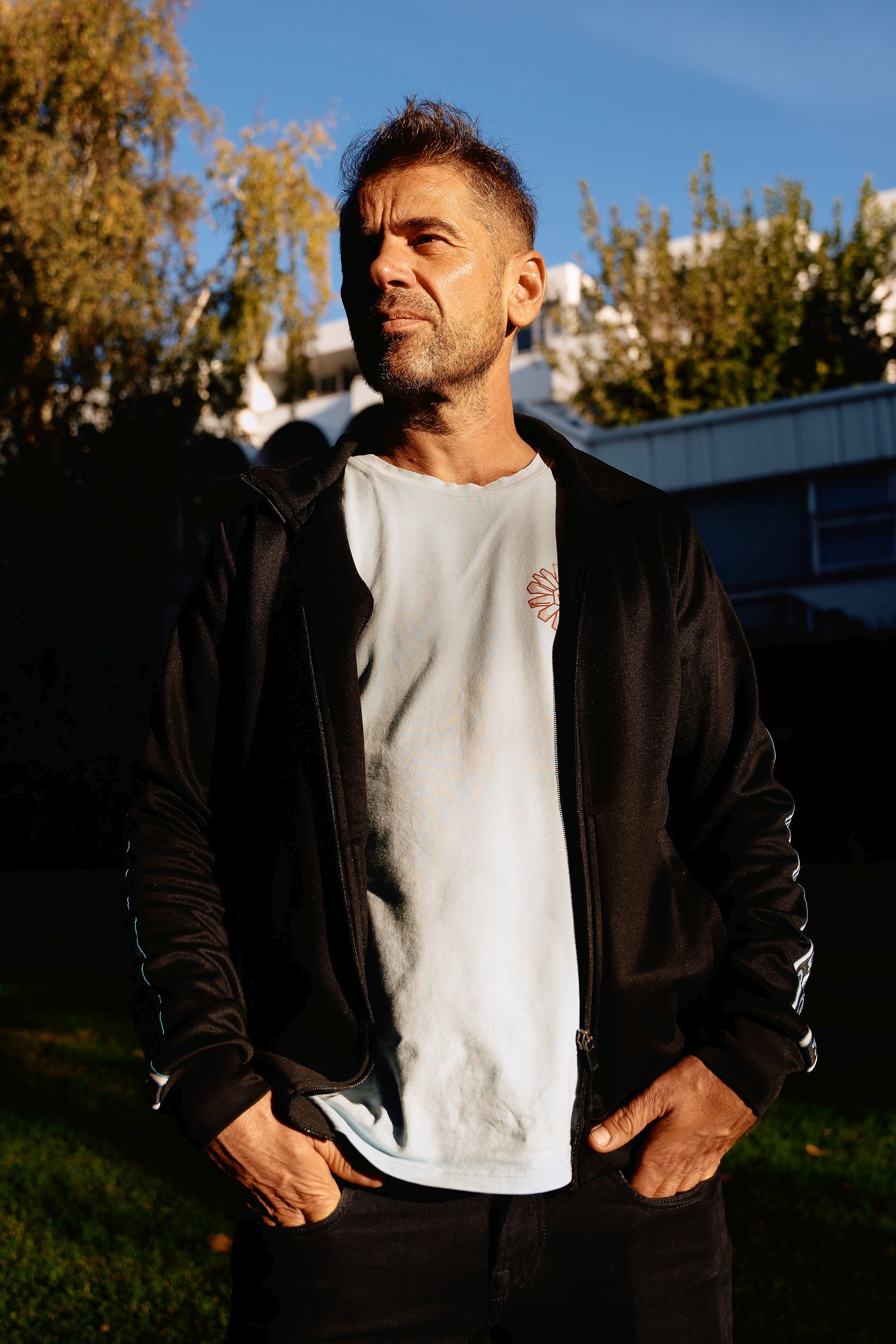
Laurent Bizot Interview Image by Simba Takaedza
In the incredible anniversary book, Koki Nakano mentions that his musical path would have been unthinkable without NØ FØRMAT!. Tell me a bit about the role of community for NØ FØRMAT!, please, and what some of the most important moments were for you personally in this regard.
We just try to be closer to our artists and have less of an industrial approach, but more one of craftmanship. Allow more freedom, and more adventure without saying “Forget that, it won’t sell”. If it makes sense and resonates with us, we encourage the audacity.
I remember when I met Chilly Gonzales, he was known in Berlin for his kind of cabaret-style rap. He explained to me that he recorded this solo piano album and he was looking for a label because his current label didn’t understand the strategy to release a solo piano album, in terms of marketing and career. We heard the music and said, “yes, of course we’ll release this album, tomorrow if you want!!”.
And he often said he was grateful for allowing this artistic freedom because thanks to that move he found a way of expression that became central to him for the rest of his career.
There is a lot of diversity on the NØ FØRMAT! roster, but there is a shared sensibility for discovery. Musically speaking, what unites the artists on your roster?
I think the common point is the passion for music and especially for their instrument. Most artists on the label are musicians first. And they have a special relationship with their instrument.
It moves me to see Vincent Segal playing his cello every day at 6 am like a monk doing his routine. Koki Nakano and his piano, Natascha Rogers and her drums. It’s a beautiful relationship. Those humans have something more that we don’t have, they’re blessed.
And what I realize is that they don’t crave for fame or money, they’re driven by a purely musical quest. That’s what I like and that’s what’s probably common to all our artists.
Jazz has always had an interesting relationship between honouring its roots and exploring the unknown. What does the balance between these two poles look like in your music?
It’s exactly what I’m interested in. Numerous albums we released are about that dialogue between cultural roots and the quest for an unknown, new sound.
Ballaké Sissoko uses nine centuries of kora playing tradition, but he meets with Vincent Segal‘s cello and they invent a new sound, that is not Malian music nor classical music.
Then we have him meet with Camille, Oxmo Puccino, or Feu! Chatterton on the album Djourou, creating a hybrid between mandingo melodies and French-speaking singer-songwriters. It’s fascinating.
Que Vola? is an unheard musical journey where Afro-Cuban spiritual rhythms bumped into the new free jazz improvisations. And so on …
For many artists, life-changing musical experiences take place live. How do you see that yourself?
I agree but I also like the work in the studio. They are two different experiences, but there’s creativity in both. Not to mention that under the influence of Vincent Segal, we experienced a lot of using the energy of the method of recording live in the studio.
That‘s what we did when we recorded the acoustic album of Kasse Mady Diabaté, but also the duet Ballaké Sissoko and Piers Faccini, or recently Salif Keita.
The name of the label seems particularly relevant today, as many of the old formats of the industry – from albums to traditional gigs – seem to be dissolving to a degree. If you take this anniversary as a point to look forward rather than back – where do you see things going for the music that you're personally interested in?
Obviously AI might change the game completely. I personally think we should have tried to exclude or forbid AI from coming into the art scene. Music, literature, painting, etc. Art is the most human and personal kind of expression. No AI, thanks. Keep it for technology, medicine, logistics, and science.
But anyway, it’s probably too late. I think in the next years we might see a market invaded by AI-generated music, which will impact so much the remuneration of real artists. But if it happens, there will be a reaction.
When we do a private acoustic show for our members, meaning 30 persons in a room, the artist playing acoustic without even an amp, this is not replaceable by any AI. The more it is rare the more some people, maybe not everybody but at least music lovers, will crave that authentic experience.
Do you feel as though working on the release of a new piece of music is inherently different from something like making a great cup of coffee? What do you express through your label work that you couldn't or wouldn't in more 'mundane' tasks?
I mean it’s more and less the same idea. Some people don’t care about food and how it’s made. They don’t mind going to a chain because it’s cheaper. Other people value restaurants where it’s homemade, they can feel it was made by one individual, with care.
I’m definitely on that side of the road, for everything.