

Name: Lauren Spear aka Le Ren
Nationality: Canadian
Occupation: Singer, songwriter
Recent release: Le Ren's new album Don't Be Funny Without Me is out via Royal Mountain.
Hometown(s) Recommendations:
Hometown = the Knick Knack Nook on Bowen Island
Montreal = The Little Shop
Things that I am passionate about but rarely get to talk about:
The Lord of the Rings movies (extended versions and the BTS)
Miniatures
Ted Spear’s album A Moment Gone Too Soon
Leonberger dogs
If you enjoyed this Le Ren interview and would like to stay up to date with her music and upcoming tour dates, visit her official homepage. She is also on Instagram, Facebook, and bandcamp.
Where does the impulse to create something come from for you? What role do often-quoted sources of inspiration like dreams, other forms of art, personal relationships, politics, etc play?
I often get the impulse to write after seeing a good play or movie, or hearing a good song. Experiencing someone else’s work reminds me that I have this tool too, a way to translate my lived experience into another form. It’s like seeing someone dance and being reminded to move, rather than just listen.
Sources of inspiration come from the usual places as well as the unexpected. For example, I recently wrote a song from the perspective of my sister’s dog.
For you to get started, do there need to be concrete ideas – or what some have called a “visualization” of the finished work? What does the balance between planning and chance look like for you?
To start a song, I think there needs to be a concrete feeling rather than an idea. You might have a handful of words or a certain chord progression, but in order to follow where the song wants to go, you have to understand what it’s trying to say.
Is the feeling anxious? Calm? Does the song want to tell you a little joke? Once you’re able to identify that feeling, I believe the rest follows.
When writing “Eternally,” I started with a melody I wanted to sing over and over. It was like making a bed for myself to lie in.
Is there a preparation phase for your process? Do you require your tools to be laid out in a particular way, for example, do you need to do research or create early versions?
I like to write in an empty home, with no other ears around. I gather all the ideas I’ve been trying to complete and revisit voice notes to see if there’s anything I can add or subtract.
When I really hit a wall, I’ll go for a walk and listen to what I’ve recorded, seeing if I can untangle it. I always feel like I have more insight when I’m in motion.
Do you have certain rituals to get you into the right mindset for creating? What role do certain foods or stimulants like coffee, lighting, scents, exercise or reading poetry play?
I hate overhead lighting so I write in the darkness lol. I have a friend who is a candle maker so I do love lighting one of their candles before diving in.
A cup of tea or coffee is always welcome!!
For Don't Be Funny Without Me, what did you start with? If there were conceptual considerations, what were they?
I started by going through the 70+ songs I had written over the past decade and selecting the ones I felt were the strongest. The oldest, “Free Wheeling,” was written in 2019 and still made me feel happy.
It was only after curating this body of work that I began to understand what I was really talking about: they all touch on the theme of becoming.
Tell me a bit about the way the new material developed and gradually took its final form, please.
It took years and years to make this record, and honestly, it’s a bit of a blur.
I remember taking the cover photograph long before the songs had been recorded, and that really helped anchor the project for me. It felt a little foolish to spend money on the artwork before I had even finished the songs, but I had such a clear image of what I wanted.
The photographer, Justin Aranha, happened to be in Toronto, so I took a rideshare there from Montreal just to work with him. I had loved his work for years, and since he had moved to Hawaii, I wanted to take advantage of us being in the same country at the same time.
The photograph came out exactly as I had imagined it, and having that image gave me something tangible to hold onto throughout the rest of the process.
What makes lyrics good in your opinion? What are your own ambitions and challenges in this regard?
I think lyrics are good when the writer has established a distinct voice and speaks clearly through it. Like with any author I love, I admire when someone can write about different people, times, and places, and yet you can still recognize their voice.
When I am old and grey, I would like someone to read a lyric of mine and be like “… this is Lauren.”
Many writers have claimed that as soon as they enter into the process, certain aspects of the narrative are out of their hands. Do you like to keep strict control or is there a sense of following things where they lead you?
There was a time when I thought I had no control, but I’m unlearning that.
The title track, “Don’t Be Funny Without Me,” for example, is just one slice of a larger story.
There were heavier parts of that relationship that I chose to leave out of the record, partly to protect the person I wrote the songs about, but also to protect myself from going back to that place.
You can always choose what you want to say and why.
There are many descriptions of the creative state. How would you describe it for you personally? Is there an element of spirituality to what you do?
Sometimes it feels like divination, and sometimes it feels like homework. I’m trying to make it more of the latter because there’s something rewarding about having a clear practice.
The most gratifying moments are when the two meet in the middle and have a little hand shake.
Once a piece is finished, how important is it for you to let it lie and evaluate it later on? How much improvement and refinement do you personally allow?
I believe refinement is almost always necessary.
Once I’ve had a couple of goes at a song, I always test it out on other people before deciding that it’s done. I play it for at least five of my most trusted friends, and if they’re good with it, then I’m good with it too.
How do you think the meaning, or effect of an individual piece is enhanced, clarified or possibly contrasted by the EPs, or albums it is part of? Does each piece, for example, need to be consistent with the larger whole?
Though a song can contain an entire world (I’m thinking of “Fast Car” by Tracy Chapman or “I Can’t Make You Love Me” by Bonnie Raitt) with a larger body of work, you inevitably learn more about the songwriter.
I love falling in love with a record and reading along to try and glean what the hell is going on with the musician behind the songs.
Music and the accompanying artwork are often closely related. Can you talk about this a little bit for your current project and the relationship that images and sounds have for you in general?
I made a crazy collection of visual references before shooting anything for this record.
My sisters and I sat down before Christmas and created a shared photo folder where we collected images from movies we had watched as children. The Little Princess, The Secret of Roan Inish, and The NeverEnding Story were all references.
Growing up, we didn’t have cable TV, so we watched a ton of movies. The ones we loved all felt so magical. They were shot on film and had this particular glow to them. I wanted the visual world of this release to capture some of that feeling.
After finishing a piece or album and releasing something into the world, there can be a sense of emptiness. Can you relate to this – and how do you return to the state of creativity after experiencing it?
Thankfully, I’m not feeling that (yet!) I think there’s been such a long build-up to this release that I’m more focused on the live shows.
I want to be able to present the album properly, so that’s where my head is at right now.
I would love to know a little about the feedback you’ve received from listeners or critics about what they thought some of your songs are about or the impact it had on them – have there been “misunderstandings” or did you perhaps even gain new “insights?”
Some commented on my “Gold in California” video saying that as a Canadian, I was “Americanising” my lyrics.
The song is actually about one of my close friends who moved to LA, and it was written about that transition and that period of her life. It felt strange to have someone make such a confident observation about a song without knowing anything about the story behind it. But that’s show biz, baby!
There have been some trolls, but the joke is on them because, little do they know, I love a fantasy creature.
Creativity can reach many different corners of our lives. Do you personally feel as though writing a piece of music is inherently different from something like making a great cup of coffee? What do you express through music that you couldn’t or wouldnt in more mundane tasks?
I think creativity comes in many different forms.
I’m dating someone who is a very good cook, and it’s been interesting to see how creative the process of making a meal can be for him.
I think music is my way of making myself a meal. It feels especially good when the thing you make is something you can share with other people.

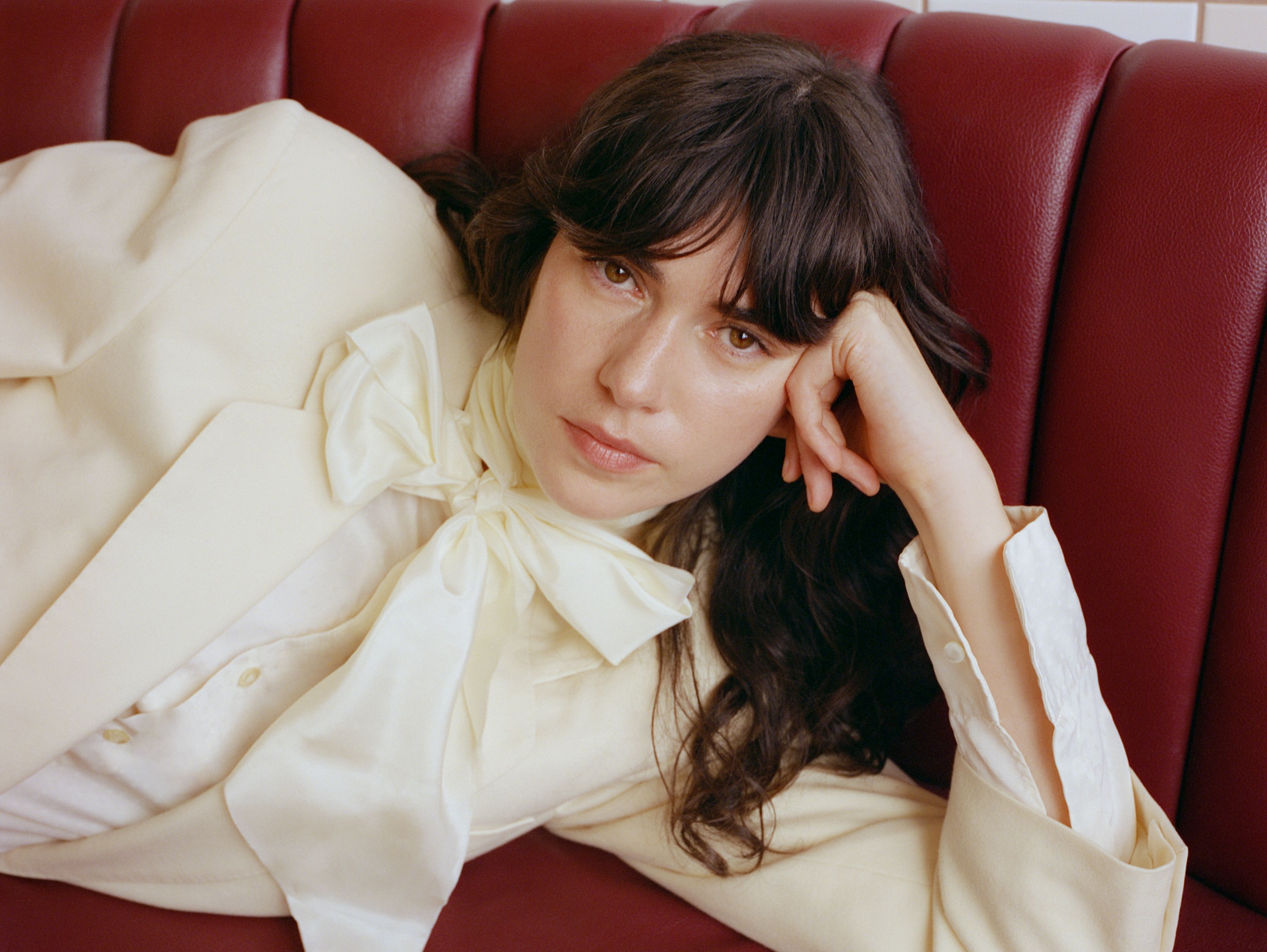 Le Ren Interview Image (c) the artist
"Sometimes songwriting feels like divination. Sometimes it feels like homework."
Video
