

Published
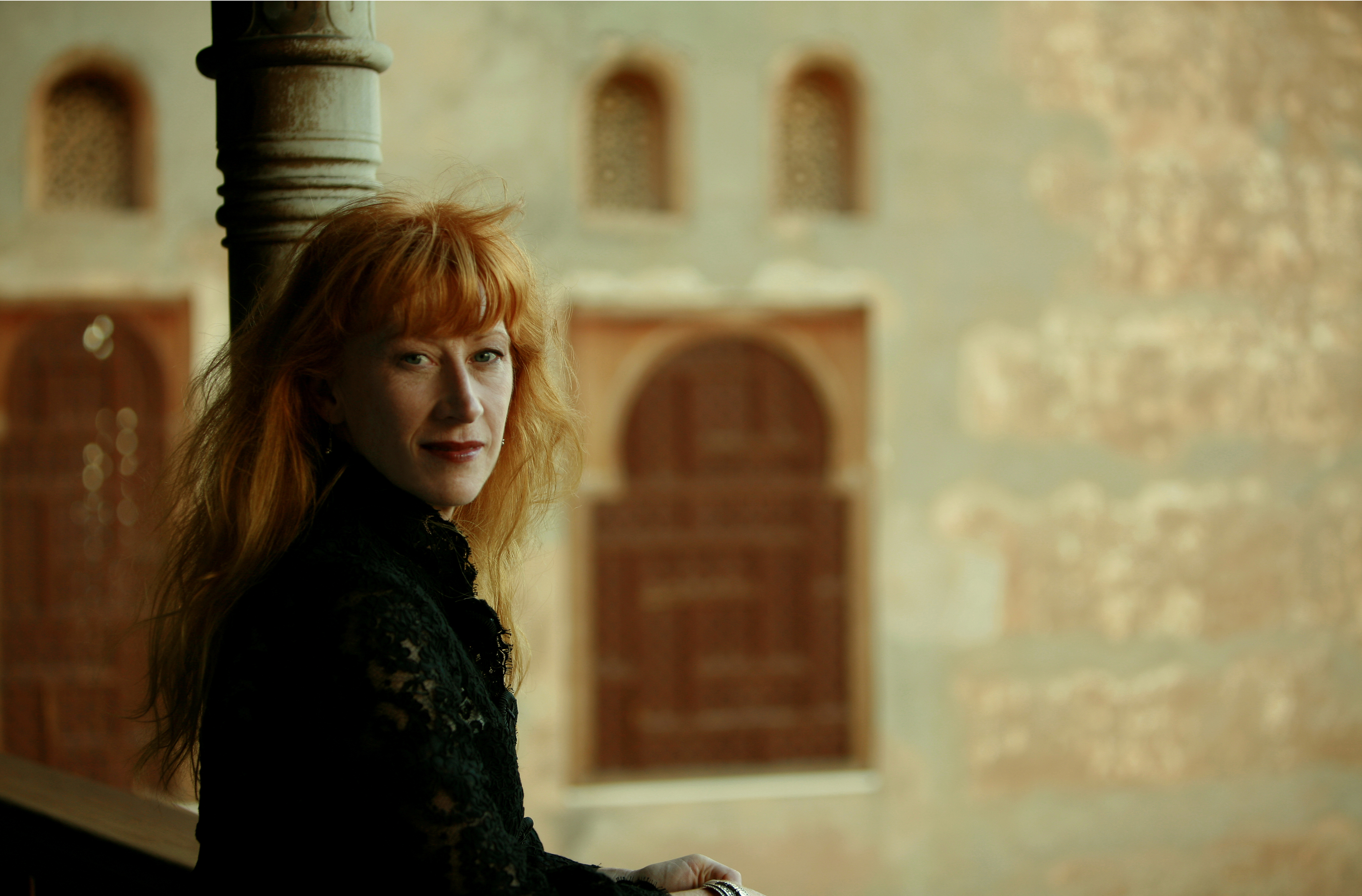
Name: Loreena McKennitt
Nationality: Canadian
Occupation: Composer, singer, songwriter
Current release: Loreena McKennitt's latest album release, the Definitive Edition of her masterpiece The Mask and Mirror is out via Quinlan Road.
If you enjoyed this Loreena McKennittinterview and would like to know more about her music and upcoming live dates, visit her official homepage. She is also on Instagram.
Where does the impulse to create something come from for you? What role do often-quoted sources of inspiration like dreams, other forms of art, personal relationships, politics etc play?
I have found my inspiration can come from many different directions … travel, reading, life experiences.
Sometimes I seek-out those inspirational moments, sometimes they find me quite unexpectedly.
For you to get started, do there need to be concrete ideas – or what some have called a 'visualisation' of the finished work? What does the balance between planning and chance look like for you?
I have chosen to pursue the history of the Celts as my inspirational springboard, and what has resulted is an exercise in musical travel writing.
With those travels, I have taken in a multi-sensory experience, the light in the sky, for example, sounds on the street or in the countryside; the feeling of being outdoors in reflective locations. These images then distill down to usually one image which I anchor the building of a song's arrangement around.
Every song I have written has a fixed corresponding image in my mind's eye. It helps keep me on track when I am recording, as I am always measuring the sound against the image.
I have never had a finished vision of a project/recording in advance, but have allowed the creative process to unfold. I often go into the recording studio without everything having been written and hence undertake a project in sections.
Is there a preparation phase for your process? Do you require your tools to be laid out in a particular way, for example, do you need to do 'research' or create 'early versions'?
The two most important parts of preparation are the travelling and reading. I do create little drafts of phrases, choruses, some word-smithing.
I have always built an album of complementary songs/pieces. I try to settle on the title early on, and it becomes like the top of an umbrella. Each song is like a spoke leading from that top so that it hangs together and pieces are contrasting.
They are very much conceived with the other pieces in mind, not as singles.
Do you have certain rituals to get you into the right mindset for creating? What role do certain foods or stimulants like coffee, lighting, scents, exercise or reading poetry play?
As a rule, I try to get regular exercises by running. I find my mind is more alert and I am more rested. I try to stay away from pragmatic and administrative things and allow myself just to go with the moment.
I remember when I was working on The Book of Secrets, and I was in Italy. I would often go for a drive with my notebook on the seat next to me. I find that seeing moving countryside frees up my mind.
For your latest release, what did you start with? If there were conceptual considerations, what were they?
The latest release was ‘Lost Soul‘, which was unrelated to the history of the Celts but rather a collection of songs which had been created along the way but never sat well in any particular recording.
The songs were, in a sense, the "Lost Souls“.
What makes lyrics good in your opinion? What are your own ambitions and challenges in this regard?
I've never felt my lyrics were the strongest thing I did. Hence, I gravitate toward some of the "Dead Poets" such as Yeats, Tennyson, Shakespeare and St. John of the Cross.
In my opinion, good lyrics come when there is a good marriage between the resonance of the words and how the music supports the sentiment.
There are many descriptions of the creative state. How would you describe it for you personally? Is there an element of spirituality to what you do?
I, like many creative folk, speak of a kind of channelling. One is not so sure where certain ideas or sentiments actually come from, especially when it feels somewhat involuntary.
The Sufis talk about "polishing the mirror of your soul." There is a great deal of that in the process I work within.
Once a piece is finished, how important is it for you to let it lie and evaluate it later on? How much improvement and refinement do you personally allow until you're satisfied with a piece?
I am seldom satisfied with my work. Usually, time and money run out, and I have to settle on something I can live with.
Having said that, because we usually record in 2–3 week installments, I take pieces and step away from them for a bit so I can come back fresh.
When we're working at Real World Studios, I rent a car and drive around listening to the previous day's tracks before we start each day. By then, I'll have had some rest and gained a little distance from it.
How do you think the meaning, or effect of an individual piece is enhanced, clarified or possibly contrasted by the EPs, or albums it is part of? Does each piece, for example, need to be consistent with the larger whole?
As mentioned in an earlier question, I do see each piece setting up and framing the next one.
I like it when listeners can go on a little unexpected journey through my albums exploring different themes, arrangements rich with uncommon instruments, and varying feels before concluding in a reflective way.
In terms of what they contribute to a song, what is the balance between the composition and the arrangement (including production, mixing and mastering)?
For my work, both are quite important, as I like to incorporate different instruments from various places and time periods.
This helps flesh out the imagery and can be intriguing for some or for others, hearing an instrument from their own culture that they weren't expecting, yet feels like a kind of "coming home."
Music and the accompanying artwork are often closely related. Can you talk about this a little bit for your current project and the relationship that images and sounds have for you in general?
In some instances, I've tried to incorporate or reflect some of the research or history that may be part of the recording.
As mentioned in an earlier question, I have an image in my mind for every song, which keeps me anchored when in the studio and confronted with thousands of choices.
After finishing a piece or album and releasing something into the world, there can be a sense of emptiness. Can you relate to this – and how do you return to the state of creativity after experiencing it?
Because I have always managed my career, by the time we are mixing the recording, we're already working on marketing tools and tour plans. There seems to be no pause to fall into a slump.
That season of the artist is now over, and I must prepare for the touring one.
I would love to know a little about the feedback you've received from listeners or critics about what they thought some of your songs are about or the impact it had on them – have there been “misunderstandings” or did you perhaps even gain new “insights?”
It is difficult to respond specifically to this question.
Over the nearly 40 years of my career, many people from all over the world have written to me or told me how they've experienced my music and how much it has meant to them. They include people from many different faiths, educators, military folk, truck drivers, therapists, and on and on.
Needless to say, I am very grateful they've found a place for my music in their lives.
Creativity can reach many different corners of our lives. Do you personally feel as though writing a piece of music is inherently different from something like making a great cup of coffee? What do you express through music that you couldn't or wouldn't in more 'mundane' tasks?
Yes, creativity can indeed reach into many different corners. Some do it through cooking and food, others with gardening, and yet others through what we call the arts. Creativity emerges when you begin with nothing but an idea and make it happen you execute a vision.
For me, creativity is a spiritual act, channeling to others something that has never existed before.