Published
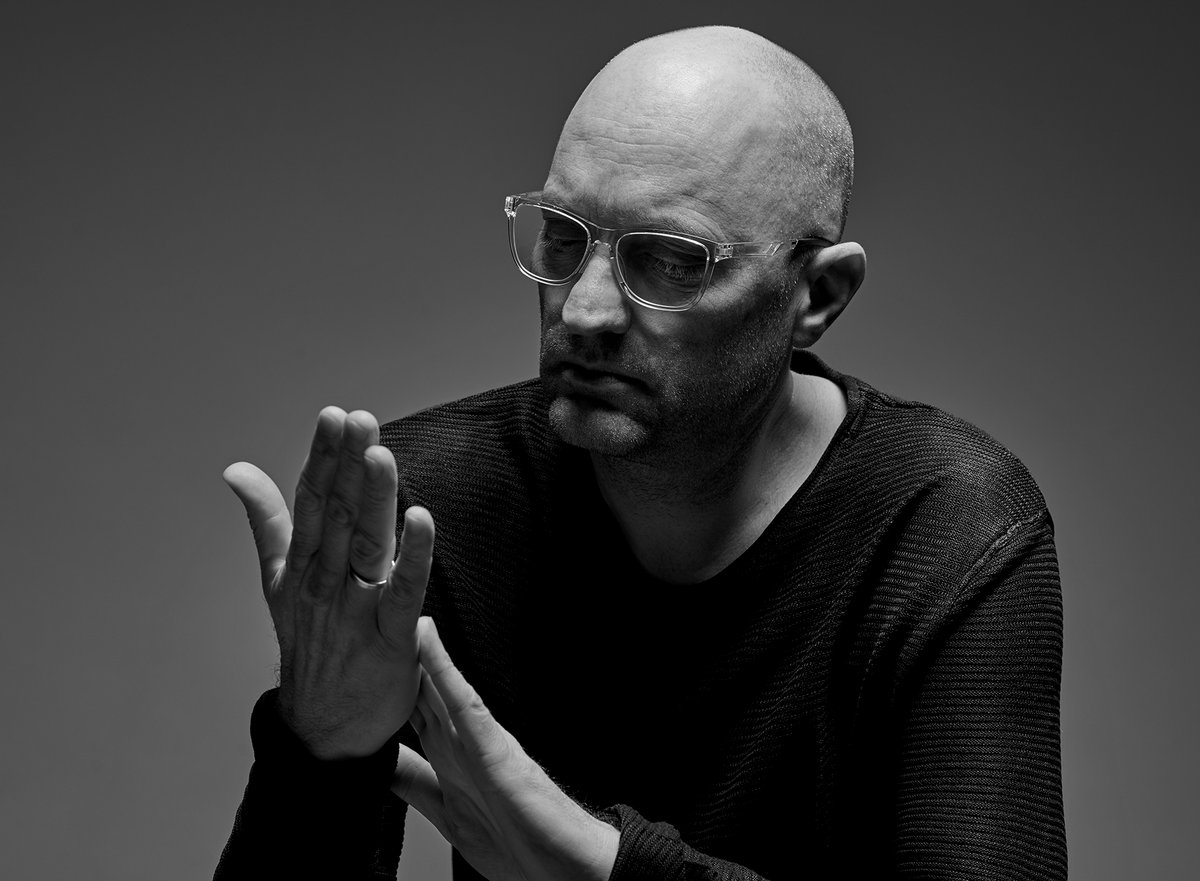
Name: Matheus Lodewijk aka LudoWic
Occupation: Composer, performer, Trautonium player
Nationality: Dutch
Recent release: LudoWic's new album NUNC STANS is out November 13th 2026 via Wic.
If you enjoyed this LudoWic interview and would like to find out more about his work, visit his official homepage. He is also on Instagram, tiktok, bandcamp, and Facebook.
Where do most of your current inspirations to create come from – rather from internal impulses or external ones? Which social / political / ecological or other developments make you feel like you need to respond as an artist?
I think inspiration for me mainly emerges when something external resonates with something that is already present within me. It could be an image, a conversation, a landscape, a film or an seemingly insignificant moment in everyday life.
Often, I do not immediately understand why something affects me. Only later do I discover that it has somehow stayed with me and eventually found its way into my music. Two recurring sources of inspiration are undoubtedly time and architecture.
I am, of course, aware of the world we live in. The speed at which everything is changing, ecological uncertainty, political tensions and the enormous amount of information we are constantly confronted with all influence the way I experience the world. However, I do not always feel the need to respond to these things directly or explicitly through my music.
I believe art can also serve a different purpose. Not every artistic expression needs to take a position or address a social issue. Sometimes it is precisely about creating a space in which people can pause for a moment, reflect and reconnect with their own thoughts. In a world that constantly demands our attention, silence and stillness may well be one of the most meaningful forms of resistance.
What kind of musical/sonic materials, and ideas were particularly stimulating for your new album NUNC STANS?
With NUNC STANS, I was primarily fascinated by the concept of time and the way we experience it. The Latin term refers to a kind of eternal present, a moment in which the past, present and future seem to exist simultaneously. This idea did not so much form a strict concept within which I wanted to compose, but rather a feeling that kept returning throughout the creative process.
I made the album during a period in which I more or less completely isolated myself in my studio for around four months. I was surrounded by vintage synthesizers, tape delays, gong speakers and instruments that had been part of my musical world for many years. The physical and unpredictable characteristics of this equipment played a particularly important role. The Trautonium and the Ondes Martenot were central sonic worlds within this process.
Thematically, I spent a lot of time thinking about transience, memories and the idea that everything we know will eventually change or disappear. On some level, I still find it incredibly difficult to fully come to terms with that realisation. That is why the idea of Nunc Stans and the eternal moment brought me a great deal of comfort.
Tell me a bit about how the pieces on the album came together, please.
The pieces on NUNC STANS emerged from a largely intuitive and organic process.
During the four months in which I worked almost exclusively in my studio, I was mainly occupied with experimenting, listening and collecting musical ideas. I did not have a rigid, predetermined plan for the album. Often, something would begin with a sound, a particular harmonic movement or an atmosphere that I wanted to explore further. From there, structures and compositions gradually began to take shape.
I found it important to give the creative process enough room to develop and not decide too quickly what something was supposed to become. Some ideas only found their ultimate meaning within a composition much later on. Others disappeared again, but left something behind that eventually found its way into another piece. I find this a beautiful aspect of composing: a composition is not always a straight line from beginning to end, but rather a collection of thoughts that influence one another along the way.
The titles of the pieces also form a kind of associative landscape for me. Words such as VELLICHOR, SILHOUETTE, UMBRA and PETRICHOR refer to particular states, perceptions or memories. They do not give the music a single, clearly defined meaning, but instead open up a space in which listeners can discover something for themselves.
Ultimately, I wanted the album to feel like a coherent whole, like a journey through different manifestations of the same central idea: the desire to hold on to something while knowing, at the same time, that it is passing.
How, would you say are your live performances and your recording projects connected at the moment? How do they mutually influence and feed off each other?
For me, the studio and the stage are two different ways of exploring the same musical world.
In the studio, I have the opportunity to work in great detail, build up layers and explore particular sounds over extended periods of time. It is a relatively controlled environment in which I can take the time to shape something exactly as I want it. Live, a certain degree of that control disappears. The music emerges in the moment, in relation to the space, the audience and the physical presence of the instruments.
It is precisely this difference that I find interesting. I do not want to simply reproduce my studio recordings on stage. I think it is important that a live performance has its own identity and that there remains room for spontaneity and change. Sometimes I discover new possibilities within a composition during a performance, which I subsequently take back into the studio. Conversely, ideas developed in the studio can become starting points for new live interpretations.
Ultimately, what I hope to achieve is for a performance to become more than simply presenting music that people already know. I want to create an experience in which listeners are temporarily taken out of their everyday perception of time.
Perhaps that is the most important common ground between my studio recordings and my live work: both are attempts to create a space in which time, thoughts and perception can exist in a different way.
Even if AI will not entirely replace human composition, it looks set to have a significant impact on it. What does the terms composing/producing mean in the era of AI, do you feel?
I think artificial intelligence forces us to reconsider what composing and producing actually mean.
For a long time, these concepts were closely associated with the ability to realise something technically: playing an instrument, writing a melody, creating an arrangement or producing a recording. AI can now take over or accelerate many of these processes. As a result, the distinction between conceiving music and actually creating it is becoming increasingly interesting.
For me, however, composing does not begin with creating notes or sounds, but with an intention. It begins with the desire to express, explore or understand something. That desire stems from human experience: memories, longings, uncertainties, observations and emotions. A system can recognise patterns, combine styles and generate convincing musical results, but to me, that is not automatically the same as feeling a genuine human need to create something.
Producing, too, means much more to me than technically bringing sounds together. It is about making choices, creating meaning, shaping space and deciding what you deliberately choose not to let the listener hear. In that sense, AI could be an interesting tool, as long as human intention continues to determine the direction.
At the same time, we need to remain critical and consider the consequences for creativity, authorship and the value of human work. I am not so much afraid that technology will make music that is better than what humans can create. What I wonder about instead is whether, in a world where virtually anything can be generated, we will still have enough attention for the things that truly carry meaning.
Perhaps the ability to leave things out, or to consciously choose imperfection, will become even more important. As production becomes increasingly effortless, value may shift towards vision, sensitivity and the willingness to take a personal risk.
Ultimately, music is not just a result that can be listened to; it is also a trace of human presence. And that is something I will always continue to explore.