Published
Name: A.M. Architect
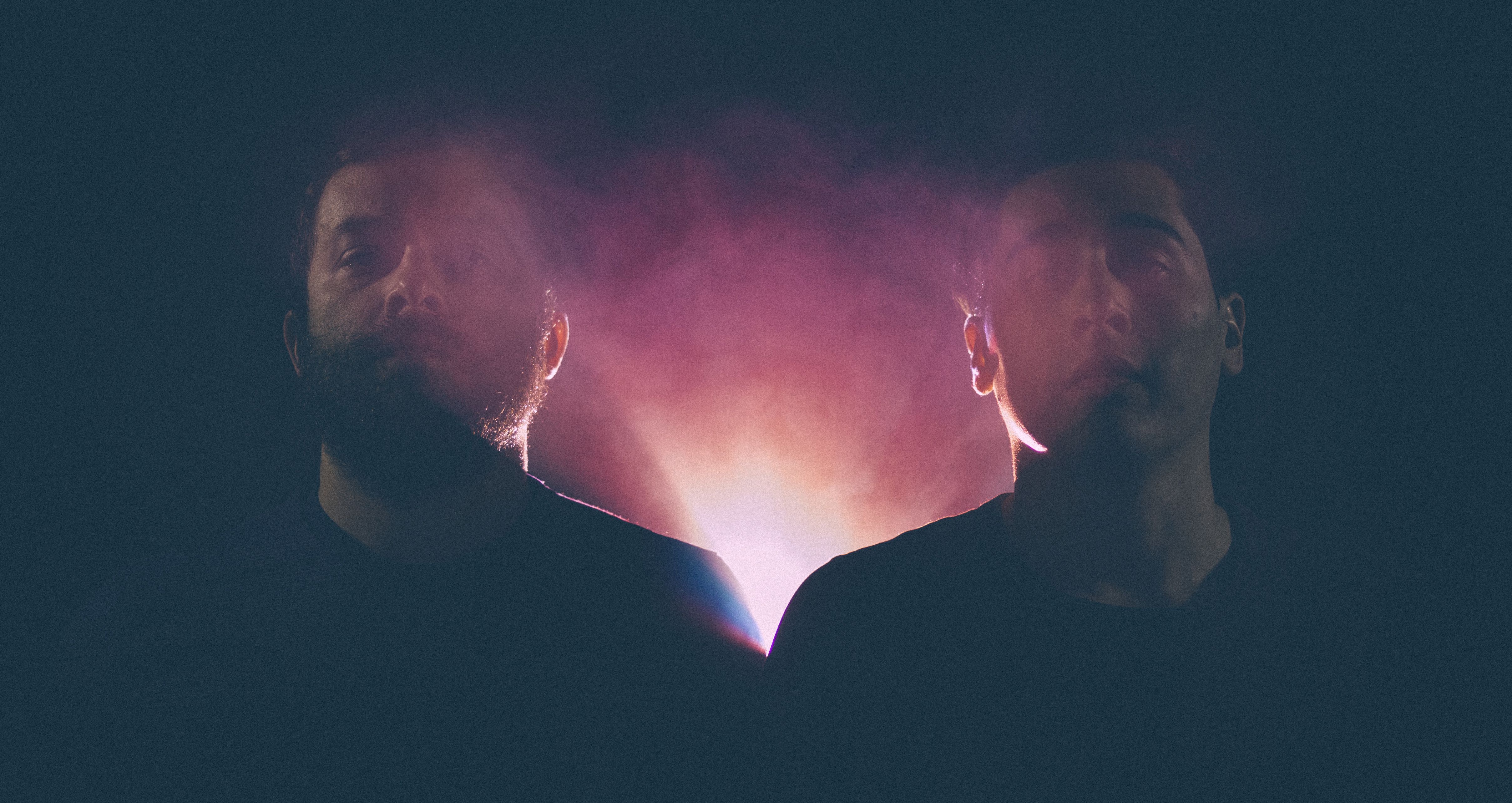
Members: Daniel Staunch, Diego Chavez
Nationality: American
Current Release: A.M. Architect's new album avenir is out February 7th 2025.
If you enjoyed this A.M. Architect interview and would like to know more about the duo and their music, visit their official homepage. They are also on Instagram, Soundcloud, and Facebook.
What were some of the musical experiences which planted a seed for your interest in electronic music?
Daniel: It was really when I started using effects pedals for guitar that would allow me to loop what I was playing and turn the guitar into a different sounding instrument. All of a sudden I was able to create lush ambient soundscapes and tones that were very different from traditional guitar playing.
Then I met Diego, who had gotten into electronic music through experimental motion design and animation videos, where some really progressive music was being composed to help push the visuals even further.
Most genres of music make use of electronic production means. What does the term “electronic music” mean today, would you say?
Diego: We are always looking for new tech to help us create our music and push the boundaries of what's possible.
A lot of people likely think of electronic music as dance or club or techno types of genres, but we like to think of electronic music as a genre that makes use of innovative tools that give us novel ways to explore our ideas.
I grew up mainly listening to electronic music but lately, along with others I've spoken to, been somewhat disappointed by most new releases. I'd be curious about your own view on this, the “creative health” of the scene and potential reasons for the disappointment.
Daniel: I think that a lot of people are happy to stick in a genre or chase a sound that is already popular. There are tutorials all over the internet about how to create a genre-specific sound. It has become formulaic to produce some genres of electronic music.
We have always strived to find our own sound, working to establish an identity for A.M. Architect so that people will be able to know that we bring something unique to the conversation. Of course we have influences, but many of them are outside of the electronic music genre.
Our collaboration has always been about making music that we both love and producing it in fresh and fun ways, and focusing on the act of creating OUR music rather than chasing a goal of what it should sound like.
What were some of the recent releases, or performances of electronic music that left a deep impact on you?
Diego: I was able to attend MUTEK in Montreal recently and was very interested in the large-scale audiovisual and sensory creations that merge sound and technology.
We have been interested in the intersection of the audio and visual worlds ever since we began A.M. Architect, and it is amazing to see the community and technology come together to create experiences that are for both our eyes and our ears.
It helped us focus the direction we want to take our live shows and even the ways that we compose our music.
What kind of musical/sonic materials, and ideas are particularly stimulating for your work right now?
Diego: We are very interested in the creative coding community and the implications this has for the music we create. Using new technology like the Norns, TidalCycles, Max/MSP and TouchDesigner, have given us new avenues for our production process.
For years we have worked to integrate innovative techniques with more classic production styles, like running guitar and rhodes through granular synthesis, or time stretching samples - we are always looking for ways to manipulate our instrument recordings.
These new technologies broaden the palette we can draw from to create new music.
Where do most of your inspirations to create come from – rather from internal impulses or external ones? Which current social / political / ecological or other developments make you feel like you need to respond as an artist?
Daniel: Most of our catalog of music is instrumental, and when we create that type of music we usually are searching for emotions that are more fundamental to our experiences. So I’d say it's more of an internal motivation rather than external.
In the past few years we have really been interested in creating audio/visual installations that are interactive for the audience, that allows them to play and unlock those emotions within themselves. Being able to compose this type of interaction with our art has been really exciting for us and allows our music to live in a different way and in a different setting than traditional records or shows.
We are becoming more interested in how this can be woven into our live experiences and the ways that we create sounds - incorporating ecological data, like wind directions and speed, or body movements or expressions, to make music a two way conversation between the artist and listener.
Music has become a lot more global, and incorporating elements from other parts of the world or the musical spectrum is commonplace. Do you still think there are city scenes with a distinct, unique sound? How does your local scene influence your work?
Diego: One of the cool things about South Texas is that the scene is very supportive for this type of music, with artists working together to create shows or meeting up to share new ideas and knowledge.
We are so grateful that there are more and more venues that can facilitate the types of experiences that we envision. For example dadaLab in Austin has an amazing team that cares about putting on immersive shows and working with artists and fans together to create a vibrant scene.
Today, electronic music has an interesting relationship between honouring its roots and exploring the unknown. What does the balance between these two poles look like in your music?
Daniel: Many of our influences are from outside of the electronic music world, and we don't often consider looking backwards or forwards with respect to the electronic music genre.
Our goals are to combine our personal influences within the A.M. Architect framework: making music that is specifically ours and creating it in a way that feels fresh and not forced.
How much potential for something “new” is there still in electronic music? What could this “new” look like?
Daniel: As long as there are people discovering the genre and willing to put in the time to create their own sound, electronic music will continue to evolve. I think that new technologies and fresh inspiration from new producers will always push the frontier of the genre.
At the same time though, listeners need to work harder than ever to find artists creating new sounds, because with online streaming, algorithms tend to serve up more of what the listener already likes instead of pushing them outside of their comfort zone.
What were some of the recent tools you bought, used, or saw/read about which changed your perspective about production, performing, and making music?
Diego: We are really interested in the community of developers that are building new ways to manipulate sounds, code, plugins, or patches that can be applied to hardware or software in the music creation process.
These online communities that support development for platforms like Norns (Monome Community),Tidal Cycles, or Max MSP are great creative spaces to share and learn and be part of what's happening.
Do you think that there is a limit to what can be done in sound design – and what defines these limits?
Daniel: We are always looking for new methods to produce the music that we create, and there is so much more to learn and do. So I think that there is certainly room to innovate both the sonic palette of the sound design that we make as well as the way in which we make it.
Experiences out in the world or in literature or art always provide us with excitement and inspiration to create again and again, and technology will continue to give us new methods to build our compositions.
In as far as it is applicable to your work, how would you describe the interaction between your music and DJing/DJ culture and clubs?
Daniel: we have, for years, struggled with how we fit into DJing or dance clubs, as we are both lumped into the electronic music genre but are pretty different in style.
We enjoy DJing and the club culture - that scene is great - but A.M. Architect sits in a slightly different place. This is one of the reasons that we have worked to move into a more immersive type of live show, combining our music with visual art that we create to give audiences a different type of experience.
How, would you say are your live performances and your recording projects connected at the moment? How do they mutually influence and feed off each other?
Daniel: I would say that we are more excited to perform live shows now than we have ever been - we are able to realize so much more of our vision for a live show now because we have focused on developing interactive video art into our performances and creating that in tandem with the music.
Reimagining our songs in a nonlinear environment and creating a two-way interaction between ourselves and the audience is really very exciting for us and something that we will continue to focus on through our installation work and live performances.
Even if AI will not entirely replace human composition, it looks set to have a significant impact on it. What does the terms composing/producing mean in the era of AI, do you feel?
Diego: We were early adopters of AI in generative image/video, and we learned how to make data sets and custom models that would run locally, working to create a look and feel that is unique to us.
I think that the future will be about creating very personalized models that can become a highly customized tool rather than a cheat code. There will likely be a fast and easy AI answer to many production problems, but taking the time to learn and create a unique model with its own vibe will be how producers can make bespoke use of some very powerful tools.
Are there approaches, artists, festivals, labels, spaces or anyone/-thing else out there who you feel deserve a shout out for taking electronic music into the future?
Diego: We mentioned some of these earlier in the interview, but really the communities that are growing around creative coding and democratizing the development of new tech and tools, these are the places where innovation is happening very quickly.
They are also great places to be part of a community of artists that are interested in all facets of music and visual art - learning and sharing and getting inspired.