Published
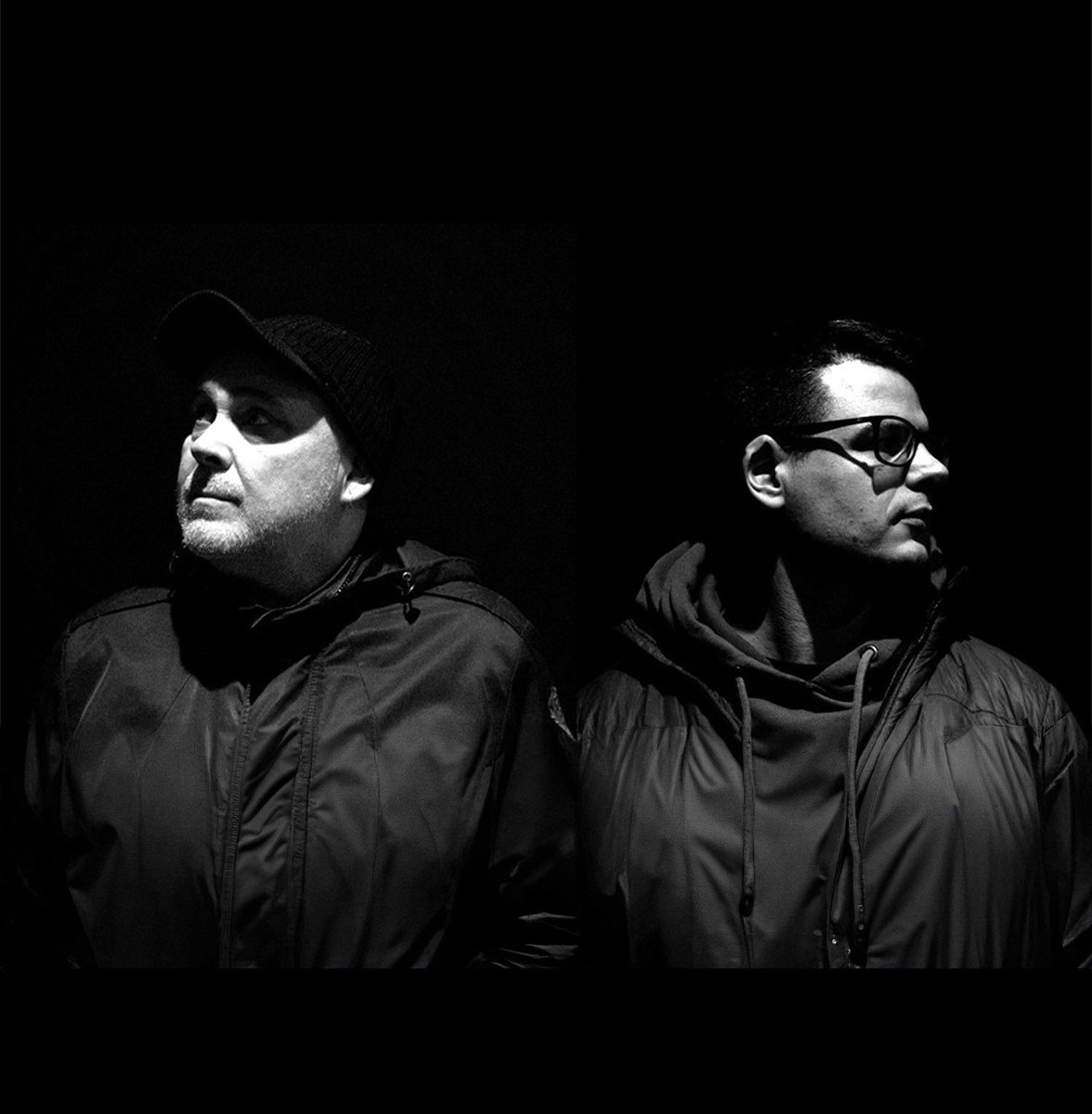
Name: Marconi Union
Members: Jamie Crossley, Duncan Meadows
Occupation: Producers
Nationality: British
Current release: Marconi Union's new album Multiforms: Ambient Transmissions, Vol. 3 is out via Just Music.
If you enjoyed this interview with Marconi Union and would like to stay up to date on their work, visit the band's official homepage. You can also find them on Instagram, Facebook, and twitter.
For a deeper dive, read our earlier Marconi Union interview.
When you're working on music, will there regularly be visual inspirations for you? Will you have paintings, sculptures or movies nearby while working with sound? What was this like for Ambient Transmissions 3?
JC: Yes we often find visual imagery whilst playing mixes back, YouTube is very convenient for this and it’s a great way of hearing the music in a different way. However with Multiforms I already had the basics of the Multiforms film so I would always reference the mixes to those visuals.
DM: If I'm writing from scratch then I don't tend to have particular visual references but as Jamie says, once we get further on in the process then we'll often listen to mixes whilst watching some sort of visual.
For me, the initial inspiration or guide is whether an idea has a emotional resonance or perhaps conjures an atmosphere, even if I can't at the time place exactly what it is.
There are remarkably many synaesthetic references in your album and track titles - "distance," "different colours," "a distant light," "weightless." What do these words mean for sound, would you say?
JC: I guess they all mean different things to different people, I find they conjure up thoughts of what the music is saying or sounding like. Different Colours, for example, for me, was like a new palette of sounds and a new way of writing from our previous albums.
DM: Many people seem to deal mainly in visual information so maybe that sort of language often attaches itself to music because we otherwise lack the words to express how we hear things.
The term “colour” is used frequently when talking about music. “Light” and “weight” not so much. Since you included both in your albums – if possible – could you express what “light” and “weight” mean in the context of your music?
JC: A lot of our music certainly up to Different Colours had a very dense sonic bed of sound, I would describe this in terms of weight, heavy low mid frequencies.
When we did Different Colours, we made a conscience decision to lose those thick sounding pads and concentrate more on rhythm and melody. This feels brighter and lighter in tone and emotion.
DM: I think those sort of terms are also about melody and harmony, what key a piece of music is in and how much or how little it modulates.
John Luther Adams once said: “The density of tones and the tempo relationships between the different layers of the music give shape to the colors.” Is that something you can relate to?
JC: Yes but I would probably say the full frequency spectrum would suggest this. Layers of sound that mask other frequencies is probably just the same as mixing and morphing colours.
Generally in music we try to create space for each sound but the mystery often lies in sounds that morph into each other and you can’t necessarily pick out what’s playing what.
Your recent album is one quite a few recent releases which give a nod to Rothko. Did you ever see a Rothko in person? If so, what was the experience like?
JC: Yes I have seen Rothko’s paintings at the Tate Modern in London many years ago and like a lot of art when you see it at scale it gives you a different perception of it.
I find scale and environments interesting, they enhance the illusion of what you’re seeing which is the same with music, volume often feels more exciting when it’s loud but generally loses detail.
DM: Yes, in the Tate Modern as well. It was busy but I managed to get a seat in front of the paintings. I found it quite an emotional experience.
Do you have an idea why Rothko's work seems to become more current over the years – and why it seems to particularly draw the attention of musicians?
JC: To be honest I’m not aware of his work being more or less popular or that musicians are drawn to his work any more than any other artist.
I’m certainly no expert on Rothko, I just like how things that appear to be simple draw you in and then the layers start to reveal themselves over time.
What interests you specifically about Rothko's multiforms – and where did you see the connection with Ambient Transmissions 3?
JC: The connection was made when making the visuals which were originally in colour. They gave the same feeling of layers constantly morphing and creating new layers, all the music just seem to fit.
The final decision was to make it black and white and we asked Ian Hazeldine who does our album artwork to add the transparent colour graphics, this along with the music seemed to literally sum up a work of Multiforms.
DM: It was Jamie who made the initial connection and almost as soon as I heard the word it was obviously going to be the album title.
Many artists, before commencing work on a new release, create a “palette” for each album. What is this like for you – and what did the palette look like for the new material?
JC: We were on a creative roll after finishing the previous album The Fear Of Never Landing and we were inspired with some of the sounds we used, so we continued with those sounds including some treated clarinet, vocals and acoustic guitar.
DM: In a similar way to Different Colours it was about wanting a small palette. If you listen to Ghost Stations, that album is much heavier and denser, which can be appropriate but also creates technical issues for mixing.
I didn't have a particular set of sounds in mind, it was more about having fewer of them.
Can you describe the creative process for Ambient Transmissions 3, please?
JC: The basic idea of the tracks were pretty much written and we made the decision to keep it beatless and concentrate more on atmosphere and just adopted those sounds and principles to the tracks.
It was a very quick process for us and we were conscience of labouring over it too much, playing the tracks to the film just seemed to work so it felt pretty fresh to us.
DM: The process for Multiforms was generally more about instinct than composition. Although we had the basic ideas, we tried to minimise the amount of time we spent creating different mixes and versions. In fact, as with Dead Air, we ended up taking some parts out.
I tend to believe that texture is the connecting link between visual art and sound, but it's not a term that gets mentioned a lot. Can you talk a bit about the role that texture holds in your compositions and how you shape it?
DM: The role of texture in our music is important as we don't deal that much in traditional song writing and don't always use the structural arrangements that you might associate with that sort of music. Instead we use texture to keep the music moving forward, to change the feel or to emphasis a particular emotion or atmosphere.
Practically it's partly about when and how new parts are introduced in a piece of music. It could be something as simple as a decision around when a bass tone enters.
For your work, does it matter “when and where one enters it” in the sense of a narrative that needs to be followed from beginning to end?
JC: On this and our previous album I would definitely say it’s best from start to end, I think the way the tracks are sequenced it creates that trip, journey, narrative however you describe it, there’s a definite start that takes you to a conclusion.
We apply these thoughts to all our albums but these last two albums in particular I would recommend listening to them as one piece.
DM: It we're making an album, then, for us, it's fundamentally about how the album works as a whole and so to start listening midway through would miss the point.
I absolutely love the music for Ambient Transmissions 3 in its own right, but the accompanying visualiser really adds another dimension to it. What was the departure point for it – was it created in sync, as a response, as a free juxtaposition?
JC: We actually saw it the other way round in that the film was the catalyst and the music accompanied the film.
Are you using it for your current live performances?
JC: We’re not currently playing the album live so no we’re not using the film, that may change later in the year.
Why did you decide to create a unique new set of images for the visualiser rather than working with actual Rothkos or something in that vein?
JC: We may be inspired consciously or subconsciously but we always create our own images or sounds, that’s what it’s all about for us.
DM: The problem with using other peoples' work or having someone make visuals to the music is that it doesn't always match up to how we hear the music.
When we're looking at the finished AV for Ambient Transmission 3, what, do you feel, creates that sense of connection that we may or not feel between the two layers – images and sounds? Is there an “actual” correspondence (whatever that may mean) or is it “merely” our brain that creates the connection?
JC: Without knowing the science behind it I would have to say it’s somewhere between both, if your brain makes that connection then surely that means there is an “actual” correspondence.
DM: I don't know, but if the visuals don't work with the music then people generally pick up on that even if they couldn't necessarily explain why.
Some of it is simple things like does the visual move at the same pace as the music.