Published
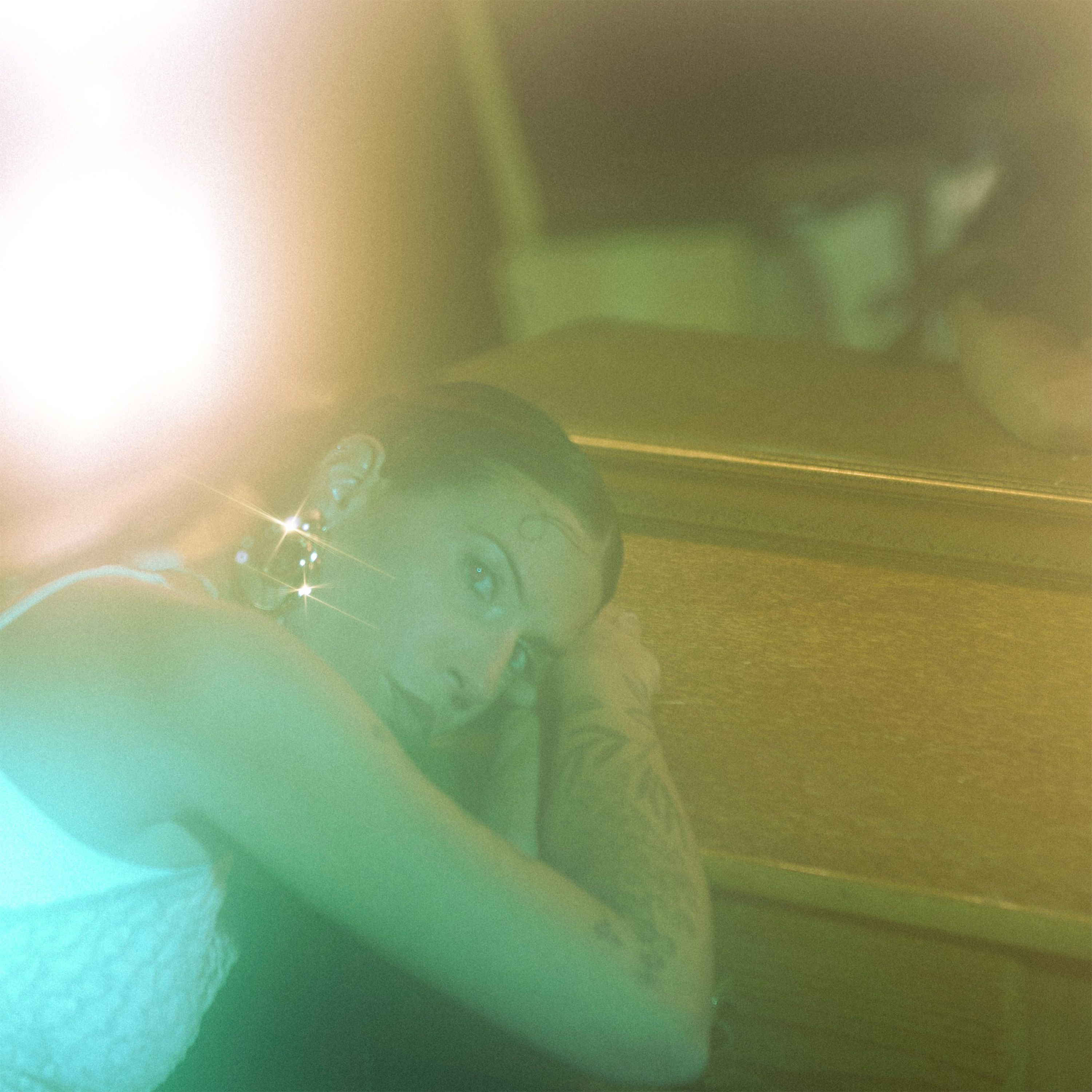
Name: Marie Delprat
Occupation: Composer, sound artist, performer, vocalist
Nationality: French, Switzerland-based
Current release: Marie Delprat's new What Remains After Desire EP is out via -OUS.
Topic that I am passionate about but rarely get to talk about: Poetry is especially important to me. I often return to writers like Ariana Reines or Anne Carson, whose language feels both intellectually precise and deeply embodied. The opening track of my EP What remains after desire, “Haboob,” takes its title from Ariana Reines's work. It’s like a trace of how literature quietly enters my musical world.
Alongside poetry, I keep coming back to feminist thinkers such as Audre Lorde, bell hooks, Donna Haraway and Silvia Federici. They have profoundly influenced the way I think about creativity, relationships and the body. Lorde's Uses of the Erotic, in particular, has become an important companion while developing my new project Soft Animal. Her understanding of the erotic as a source of knowledge rather than simply sexuality continues to shape the questions I'm asking in my work.
I'm also increasingly interested in forms of spirituality that aren't tied to institutions or fixed beliefs. More than answers, I'm drawn to practices that cultivate attention, vulnerability and a different relationship to the living world.
Those readings remind me that making art isn't only about producing objects; it's also about freeing the imagination, trusting the body, and creating spaces where other ways of relating can emerge.
If you enjoyed this Marie Delprat interview, and would like to know more about her music, visit her official homepage. She is also on bandcamp.
What were some of the musical experiences which planted a seed for your interest in electronic music?
I didn't come to electronic music through clubs or electronic records. I first encountered it through contemporary dance. I grew up playing recorder and studying early music, so my musical education was rooted in a very different tradition.
One experience that stayed with me was seeing Olivier Dubois's performance ‘Tragédie’ at the Festival d'Avignon when I was around eighteen. The music was by François Caffenne, whose electronic arrangements and sound world became inseparable from the choreography.
I remember leaving the theatre with the feeling that something had shifted. It wasn't only the music itself, but the way sound, bodies and space became one experience. I realised that music could create a physical and emotional connection with an audience in a way I hadn't imagined before.
That was probably the moment I understood that I wanted to compose my own music—not to reproduce that experience, but to search for that same intensity and sense of shared presence.
Most genres of music make use of electronic production means. What does the term “electronic music” mean today, would you say?
I think the term has become almost impossible to define through sound alone. Electronic production is now part of almost every musical genre, so for me "electronic music" is less a style than a way of thinking about sound.
What interests me is that electronic tools allow me to shape sound beyond the possibilities of acoustic instruments. They let me work with texture, space, breath, distortion and time in a very physical way. In my work, electronics are another instrument, one that constantly interacts with my voice and with the musical languages I come from, especially early music.
I don't really experience a boundary between electronic and acoustic music. I'm interested in the point where they stop being opposites. A processed voice can feel incredibly intimate, while an acoustic recorder can become almost synthetic. That's the space I like to compose in.
Disco, house, techno, drum n bass, IDM and many other genres were about a lot more than just music. For you personally, is electronic music (still) a way of life – and if so, in which way?
I’m not sure I would describe electronic music as a way of life in the sense of belonging to a particular scene or subculture. I didn’t enter it through club culture, and I’ve never felt that I had to adopt a specific identity in order to make this music. But it has deeply changed the way I listen and the way I live with sound.
Electronic music taught me to pay attention to things that might otherwise be considered secondary: texture, repetition, noise, the grain of a voice, the way a sound occupies a room or affects the body. That way of listening goes far beyond the moment of composing. It also shapes the way I understand performance. I don’t see music as something separate from the body, the space or the people listening. A concert is not only the presentation of finished pieces; it is a temporary situation that everyone in the room inhabits together.
In that sense, electronic music is less a lifestyle for me than a practice of attention, and perhaps a way of being present.
Debates around electronic music tend to focus on technology. What, though, were some of the things you learned by talking to colleagues or through performing and/or recording with other musicians? What role does community play for your interest in production and getting better as a producer?
I probably learned more from making work with other people than from talking about technology itself.
Because my music often exists in relation to performance, I spend a lot of time in dialogue with choreographers, performers, light designers, dramaturgs and sound engineers. They all listen differently, and that constantly challenges my own assumptions.
Performing has taught me something equally important: you never really know a piece until you play it in front of people. The audience becomes part of the composition. You start noticing where attention gathers, where it drifts, where a sound needs more space or less. That has probably influenced my production more than any particular piece of software.
I don't think of becoming a better producer as a purely technical process. Of course, I enjoy learning new tools, but what's most valuable is developing a more precise way of listening. That precision grows through exchange—with collaborators, with audiences, and with friends who aren't afraid to tell me when something isn't working.
What are examples for artists, performances, and releases that really inspired you recently and possibly gave you the feeling of having experienced something fresh and new?
Two records I keep returning to are Xen by Arca and Trinity by Eartheater.
When I first heard Xen, I was struck by the way Arca dissolved the boundaries between sound design, composition and emotion. The electronic textures never felt like an aesthetic in themselves; they carried an emotional and almost physical presence. That really expanded my understanding of what electronic music could communicate.
Trinity had a different impact on me. I was fascinated by the way Eartheater moves so freely between fragility and power, combining an almost medieval sense of melody with hyper-contemporary production. Her voice feels both intimate and transformed, and that tension has stayed with me for years.
Both records stayed with me while I was composing What remains after desire. They encouraged me to trust the voice as a material that could be transformed without losing its intimacy.
I started thinking of them as a way of extending the voice, stretching it, multiplying it, creating impossible spaces around it while keeping its emotional closeness. That became one of the central threads of the EP.
What kind of musical/sonic materials, and ideas are particularly stimulating for your own work right now?
At the moment I'm less interested in specific genres than in questions that keep returning through different materials.
I've been reading Audre Lorde's essay Uses of the Erotic, which has become an important companion while developing my new project Soft Animal. What interests me is her idea of the erotic not as sexuality, but as a way of knowing, a source of attention, sensitivity and creative power. I've been wondering how those ideas might exist in sound. How can music carry intimacy without becoming confessional? How can vulnerability become a compositional force?
Musically, I keep returning to works that blur the boundaries between the physical voice and electronic sound. Xen by Arca and Trinity by Eartheater are still important references, but so is Alexander Schubert's Supramodal Parser. I remember being deeply affected by the intensity of that piece: the voice isn't simply placed on top of the ensemble, it becomes part of an immersive sonic and physical environment.
The relationship between acoustic instruments, electronics, light and performance creates an experience that feels almost impossible to separate into disciplines.
In my own work, I'm increasingly interested in sonic materials that seem to exist between states: a voice that is recognisably human but subtly transformed; harmonies that evoke early music without quoting it; textures that feel both fragile and artificial.
I'm less interested in creating contrast than in finding moments where these materials become indistinguishable from one another. That's where I feel something new can happen.
Where do most of your inspirations to create come from – rather from internal impulses or external ones? Which current social / political / ecological or other developments make you feel like you need to respond as an artist?
Like many people, I feel overwhelmed by the violence of the present moment: the ongoing genocide in Gaza, the return of fascist ideologies in many parts of the world, the climate crisis, and the ways in which fear and polarisation increasingly shape public life. At the same time, feminist and queer thinkers have given me other ways of imagining relationships, power and care. Those perspectives have deeply influenced the questions I bring into my work.
I don't believe music can offer direct political solutions. But I do think it can cultivate different ways of being together. More and more, I'm interested in softness, not as something passive or comforting, but as a form of resistance. In a culture that often values domination, speed and certainty, I think there is something profoundly political about creating spaces where vulnerability, listening and ambiguity are allowed to exist.
That's one of the ideas I'm exploring in my current project Soft Animal, inspired in part by Audre Lorde's understanding of the erotic as a source of knowledge and connection. I'm interested in what remains when we choose attention over control, and whether music can become a place where those different ways of relating are briefly experienced together.
Tell me a bit about the sounds & creative directions, artists & communities, as well as the colleagues & creative hotspots of your current hometown, please. How do they influence your music?
I lived in Bern for 8 years and now I’m based in Basel. The scene is relatively small, which means people naturally move between disciplines. It's common to collaborate with dancers, theatre makers, composers, visual artists and musicians who all approach performance from different perspectives.
That openness has had a huge influence on my work. I don't think I would be making the same music if I were surrounded only by electronic musicians. Being in dialogue with people from contemporary dance and performance has shaped the way I think about composition, not as something autonomous, but as something that always exists in relation to bodies, space and an audience.
Places like Dampfzentrale in Bern or Gare du Nord in Basel have been especially important for me because they support artistic research rather than expecting finished products. They've given me the freedom to experiment, fail, and let projects develop over several years. That kind of trust is incredibly valuable.
What were some of the recent tools you bought, used, or saw/read about which changed your perspective about production, performing, and making music?
Recently I've been spending a lot of time with the COSMOS by SOMA Laboratory. It has probably changed my workflow more than any other piece of equipment I've bought in the last years.
I use it a lot with my voice and recorder or flute loops. Rather than simply processing sound, it reorganises and layers fragments in ways that feel almost alive. It often produces combinations I would never have imagined myself, so it has become a genuine compositional partner rather than just an effect.
I also recently bought the Double Knot v3 by Folktek. It's a completely different instrument: very tactile, very analogue, almost handcrafted in the way it responds. I love that it has such a strong personality. Instead of trying to do everything, it invites a particular way of listening and playing.