

Published
Name: Martti Vesala
Nationality: Finnish
Occupation: Composer, improviser, trumpet player
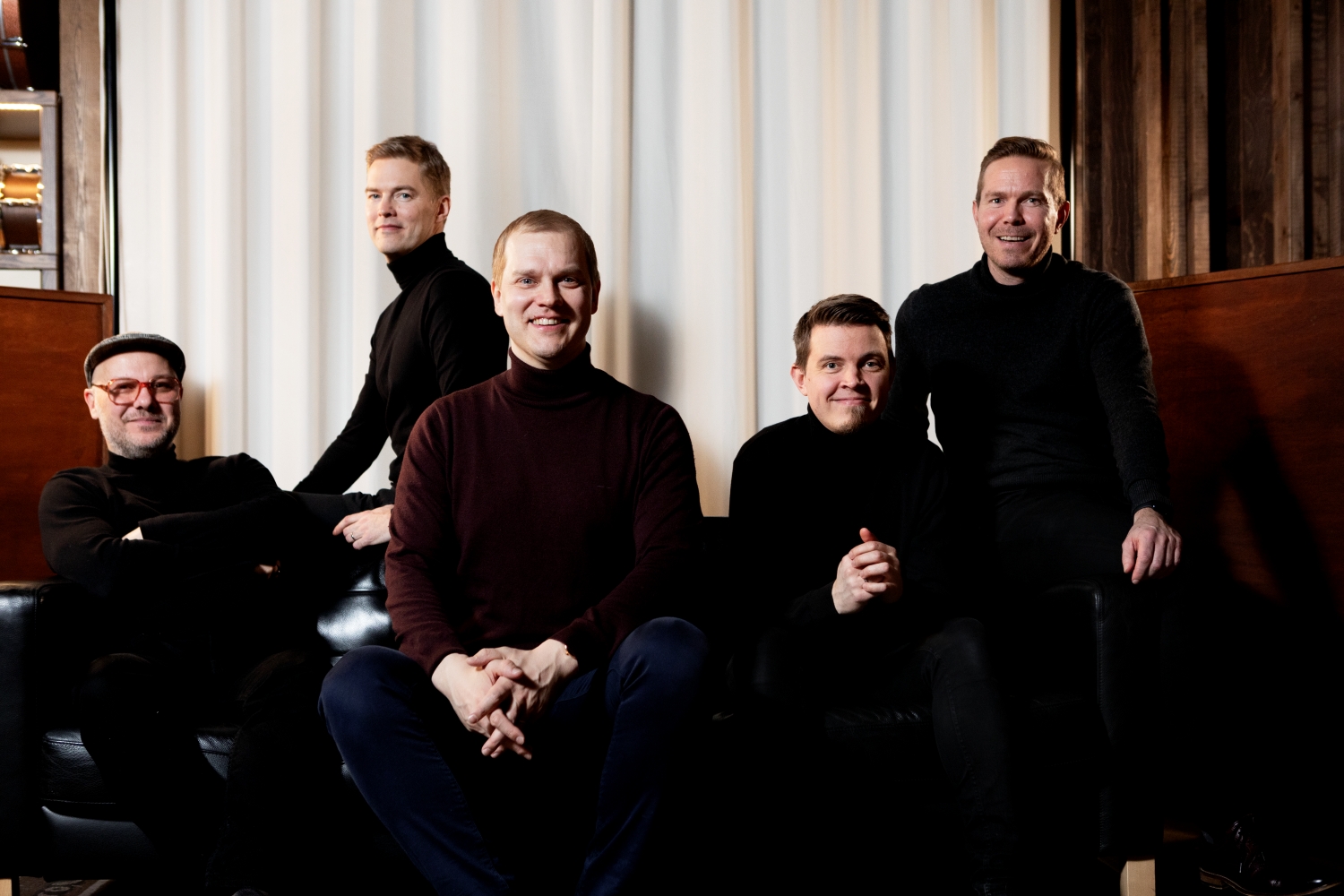
Current release: Martti Vesala's new album with his Soundpost Quintet, Pendulum, is out via Mustik Motel.
Shoutouts: FONT - Festival Of New Trumpet Music and Dave Douglas who is behind the fantastic idea. They have a very diverse and interesting line-up every year, so I really hope to participate someday, either as a performer or a member of the audience. Following their social media platforms is a great way of finding out about new talents, such as Skylar Tang, a sensational new artist on the rise.
A big shout out also goes to trumpeter Adam O’Farrill. His lates album Elephant is very inspirational to me right now. I also love what Marquis Hill is doing, I have been a dedicated follower for many years.
If you enjoyed this Martti Vesala interview and would like to know more about his music and projects, visit his official homepage. He is also on Instagram.
What were some of the musical experiences which planted a seed for your interest in jazz?
I remember listening to Miles Davis’ legendary album Kind of Blue when I was about 16 years old. This was the first jazz album I bought with my own money, by a recommendation from a piano player friend of mine who was already way into jazz. It was a true revelation to hear it for the first time.
I also played the trumpet in a school band in my high school and sometimes the conductor would bring in jazz charts with the marking ”solo” on it. I got a little curious and wanted to make up my own solos as soon as possible. It felt so nice to have the possibility to contribute to the song, bring in my own musical ideas that would hopefully fit the song and the arrangement.
At first it was trial and error: I would copy the licks of Miles Davis, Freddie Hubbard, Woody Shaw etc, pretty much any player I found inspirational. I kept investigating further, going to jazz festivals and concerts, cultivating the environment.
I was lucky because I had many peers that were into jazz at the moment, which is not something I take for granted, since I grew up in Jyväskylä, a town much smaller in population than the Finnish capital Helsinki.
What does the term jazz mean today, would you say?
When playing this music you will have to be very tuned in to the written music as well as what is not indicated - and hearing and projecting your own voice inside the music.
As of today, what kind of materials, ideas, and technologies are particularly stimulating for you?
It’s pretty much the same as when I started: I keep listening to great music, get inspired by other musicians by talking to peers and colleagues, sharing my ideas and thoughts on this music. Social networks are also a great tool for finding inspiration - as long as you keep in mind what you are searching for.
Also having the chance to work in different roles is inspirational. Working as a leader is very demanding but it’s the greatest thrill of my musical life. On the other hand, as a sideman there is another layer to this: you have been called to play your parts but you also contribute something of your own to the music.
Where do most of your inspirations to create come from – rather from internal impulses or external ones? Which current social / political / ecological or other developments make you feel like you need to respond as an artist?
When I was composing the material for my most recent album Pendulum with the Martti Vesala Soundpost Quintet, I came across the idea of the pendulum swing of history. It reflects the idea that history, cultural trends, and politics tend to swing back and forth between extremes. The pendulum of time shifts until a tipping point is reached and the momentum shifts in another direction.
This made an awful lot of sense to me at the time, still does. There are huge global crises happening as we speak and us humans seem to have a hard time finding common ground on big questions, such as climate change.
On the title song of the album, the persistent wide interval in the bass riff suggests the constant ebb and flow of the pendulum between the extremes.
Tell me a bit about the sounds & creative directions, artists & communities, as well as the colleagues & creative hotspots of your current hometown, please. How do they influence your music?
There’s a really nice environment for jazz in Helsinki these days.
I am very pleased that there are numerous weekly jam sessions happening in my town. Playing, jamming together and sharing ideas on the bandstand is something I believe is very important to the evolution of this artform. There are smaller venues who also feature jazz on their repertoire as well as bigger clubs.
I am very happy to see younger generations of musicians who are now making their way to the scene and into professional careers in music. As I also teach part-time in music schools, it has always been important to me to help the younger musicians as much as I can. I was fortunate to have great mentors when I was coming to the scene and remember how important it is to hear positive feedback.
There are also great orchestras in Helsinki, both classical and jazz. Umo Helsinki Jazz Orchestra has top tier players in its ranks and every now and then I get the chance to play with this great band. They’ve had some of my favourite contemporary artists as guest soloists and I have had the opportunity to perform alongside Linda May Han Oh, Ola Onabulé, Michael Formanek etc.
What role do electronic tools and instruments play for your creative process?
I have done some experimenting with sound processing and effects to alter the sound of my trumpet.
On my latest album release, Pendulum, the trumpet is heavily processed on the song ”Road Rage”. The song is about a frustrated driver (maybe me?) stuck in a heavy traffic jam.
The trumpet sound required some sort of processing to conjure this feeling of frustration so I came up with the idea about adding distortion, reverb plus some other effects and my engineer Tuukka Tervo helped me to create this.
On Pendulum I also used the modular synth to add more colors to the music. On ”Obsidian” it plays an important role: the song is really a solo for the double bass player Juho Kivivuori. As he is soloing with effects on his double bass, the synth on this piece works as a backdrop for his improvisations, adding this unique, dark texture to the song.
Thanks to technological advances, collaboration has become a lot easier. What have been some of the most fruitful collaborations for you recently and what approaches to and modes of collaboration currently seem best to you?
I have recently worked with Yelena Eckemoff, a great piano player and composer from United States. She approached me and asked me to participate on her new project, to be released 2028.
We had a chat on Zoom and exchanged many emails about the music. I did some recording for the pre-production of the album in my home studio which was something I had not done for a contemporary jazz album before.
It was a great experience and the pre-production is something I will definitely use more in the future on my own projects as it helps defining the music and all the nuances in it well before the actual studio recording sessions with the full band.
Jazz has always had an interesting relationship between honouring its roots and exploring the unknown. What does the balance between these two poles look like in your music?
Jazz has been evolving for more than 100 years now and it seems that there are no limits to it.
Jazz musicians are quick to absorb new sounds and combine them with what they already know, mainly because improvisation plays a big part in this musical idiom and improvising requires listening and being able to blend one’s personal sound to the musical surroundings.
I listen to a lot of different kinds of music from classical to rock, experimental music, improvised music, hip hop etc. As I compose, the things I have listened to will naturally find their way into my writing in subtle nuances, rather than direct quotations.
There’s definitely an audible link to some of the 1970’s early jazz/rock -fusion to my compositions on Martti Vesala Soundpost Quintet’s latest album, for example the aforementioned song ”Road Rage” with distorted and processed sounds.
How much potential for something “new” is there still in jazz? What could this “new” look like?
I think the potential of jazz is limitless, there are always ways to create new sounds within this musical idiom.
Jazz is able to absorb many new ideas, styles and sounds because of the improvised aspect. This is one of the reasons I love this music so much.
For many artists, life-changing musical experiences take place live. How do you see that yourself?
I totally agree, performing the music before an audience really brings it to life in the most profound way.
Recorded music is also important and with social media, smart phones etc. there’s a way to share your experience with others and hopefully reflect on how the music affects you and the people you are sharing this experience with.
How, would you say are your live performances and your recording projects connected at the moment? How do they mutually influence and feed off each other?
I have made albums as a band leader for almost 20 years now. With each recorded album I have also toured extensively, promoting the new album and my compositions. As a result, I have come to the conclusion that some of my compositions do require more producing in the studio and are much more difficult to reproduce in a live setting.
So it is nice to think that those people who buy the album after the show get to hear the studio versions of the repertoire and also the material I chose not to perform live. This way, I hope, hearing the band live and listening to the album gives the listener even deeper insight into my music.
I also love the way songs have evolved through time in Martti Vesala Soundpost Quintet’s live sets. There are some songs that have been on almost every setlist, for example ”Decline” from our debut album Helsinki Soundpost.
I love the way it keeps going more and more abstract as we play it, reminding me of the musically adventurous album Live at Plugged Nickel by the great Miles Davis’ 1960’s quintet.
Improvisation is obviously an essential element of jazz, but I would assume that just like composition, it is transforming. How do you feel has the role of improvisation changed in jazz?
I think essentially it has not changed that much.
In jazz the listener has to have the feeling that the music may take different directions at any given moment, depending on the collective improvisational level of the ensemble.
There’s always an element of surprise which can be very stimulating for the attentive listener.
What, would you say, are the key ideas behind your approach to improvisation?
Improvising in a certain idiom takes a lot of practice and you really have to master the vocabulary of the music. However, the element of surprise should be there as well.
When improvising, I strive to surprise myself every now and then, leave my comfort zone and see where that leads me. My quintet is really fantastic because they feed me ideas and just listening to them stirs my imagination and makes me take chances and reach for the unknown.
The Montreux Festival intends to preserve its archive of recordings for future generations. Do you personally feels it's important that everything should remain available forever - or is there something to be said for letting beautiful moments pass and linger in the memories of those that experienced them?
Of course being present when the music was created is the most profound way to experience it.
However, there’s always room for good music in this world and it’s great to be able to listen and have access to it even if you weren’t a part of the audience when the music was created.