Published
Name: Matt O’Neil
Nationality: American
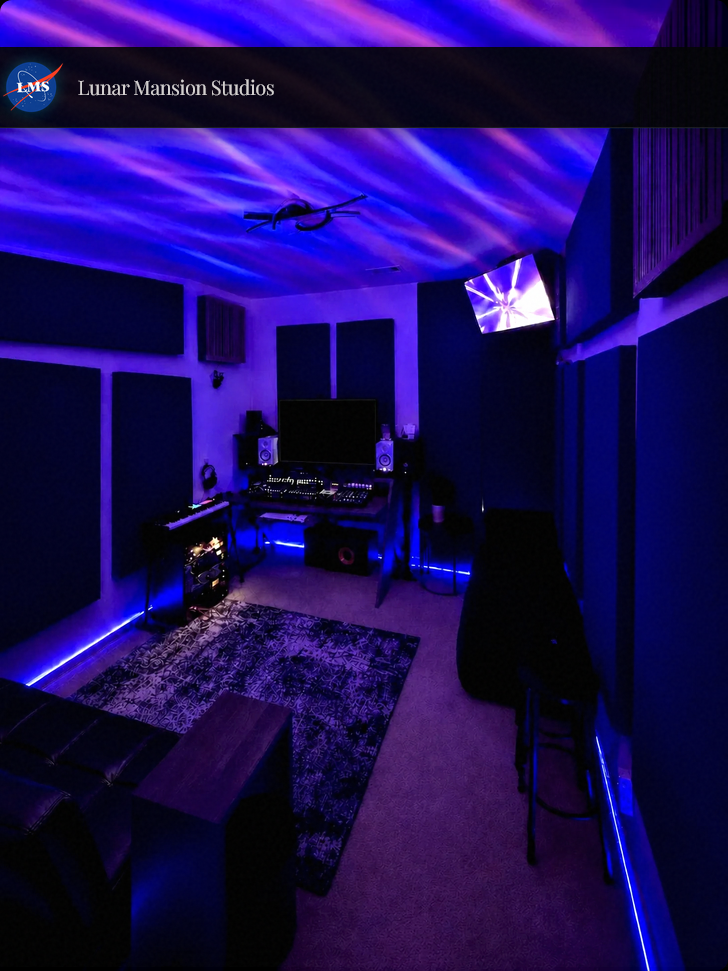
Occupation: Recording engineer, producer, songwriter, studio founder at Lunar Mansion Studios in West Houston
If you enjoyed this Matt O’Neil interview and would like to know more about his work and current productions, visit the website of Lunar Mansion Studios. He is also on Instagram.
How would you define your role in the creative process? Is engineering a “technical” job or a “creative” one – or something different altogether?
For me, it’s both. I like figuring out the technical side, but I’m doing that to get a sound or help a performance. I actually studied architecture before going to Berklee College of Music. That mix of creative and technical work has always appealed to me.
My background includes engineering on Travis Scott’s “Butterfly Effect” as well as work with Don Toliver, NLE Choppa, Megan Thee Stallion, Odetari and others. Everybody comes in with a different idea of what they want. A big part of my job is figuring that out and knowing the equipment well enough to keep up.
Sometimes an artist knows how they want it to feel, but not the term. My job is to get them there.
How important do you think are the vocals – including the lyrics – of a song for its success? Do you feel as though songs should – speaking as generally as makes sense – be built from the vocals up?
Melody and delivery usually come first for me. The rhythm, the cadence, the way somebody says something can grab you before you’ve really thought about the words.
A lot of times when I’m writing, or helping an artist write, we’ll work out a part in gibberish first. We have the melody and cadence, then write words that fit. The lyrics still matter. They need to deepen the feeling without losing what made that first idea work.
Once the vocal is there, I’m listening to how it works with the instrumental. Even riding the vocal fader is about that relationship: keeping the words clear without making the voice feel disconnected from the music.
I’ve been thinking about someone like Max Martin’s approach to vocals, for example in his work for Taylor Swift, and how it may not initially strike one as special but still “make” the song to a significant degree. I’d love to hear your take on this, maybe also taking the work of other producers and engineers into consideration and how that aligns with your own ideals.
What I like about Max Martin’s vocal production is how natural the result feels. You hear the singer and the song rather than thinking about every edit, double or tuning decision. I haven’t been in his sessions, so I can only speak to what I hear on the records.
Odetari is a different example from my own work. I mixed and mastered “Look Don’t Touch,” and we worked together for years. I got to watch him develop his sound, and he was really committed to his ideas. A lot of the processing on those records is obvious, but it fits what he’s doing.
So I don’t think there’s one right amount of production. Sometimes it’s subtle and sometimes it’s a big part of the sound. I’m listening for whether it works for that artist and that record.
The layout and equipment profile of your studio already suggests some fundamental views on recording and what you are looking for. What were considerations when setting it up?
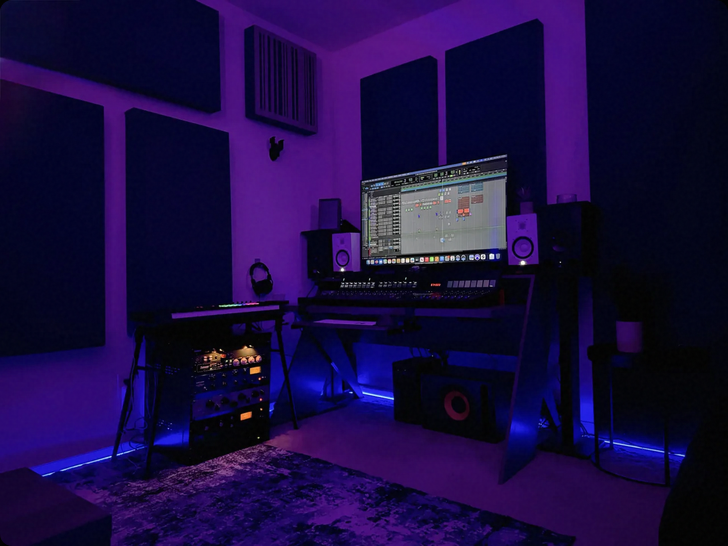
Vocals were the priority, so I started with the booth. It’s isolated, with custom GIK treatment and Guilford of Maine finishes. I wanted to get that part right because that’s where we’re capturing the voice.
I use Adam A7X speakers and Yamaha HS5s for monitoring. I know how they sound, and that helps me make EQ and level decisions.
The gear choices were similar. I like the BAE 1073 for its darker tone and softer edges. I chose things I knew I’d use and that gave me sounds I liked.
Many singers have remarked on the importance of the right microphones for capturing their voice. What are your own preferences for different recording situations?
Most days I reach for the Sony C800G or the AKG C414 XLII. I like the Sony when I want the vocal to cut through, along with that tube character. The C414 is a good all-around option for me when I want something rounder; I like how the high end sits.
I also have a modded WA-251 that I love for female vocals and R&B singers. It depends on the voice in front of me.
The recording rooms prioritise intimacy over impressiveness. Why do you prefer this approach over studios which “wow” singers?
I want somebody to walk in and feel comfortable. A big room can be exciting, but it can also make an artist feel a little on the spot. At Lunar Mansion, the private booth and ambient lighting help make it feel more relaxed.
I also like having fewer distractions. I’ve worked in huge studios with a lot of gear that we never ended up using. For my room, I wanted a setup where the things we need are there and we can keep moving.
How I handle the session matters too. If something goes wrong, I try to stay calm so it doesn’t throw the artist off.
You also seem to consider lighting very important. What effects on performance have you observed from experiences on various projects?
It’s a vibe thing. I’ve noticed that bright lighting can make people more aware of being watched. With the lights lower, they’ll relax, move with the song and try things they might otherwise hold back.
Some of the best takes I’ve recorded have happened with the booth lit low, when the artist seemed to forget I was there. A cold, clinical-feeling room can make that harder, even with a great recording chain.
So lighting is something I pay attention to when I’m getting the room ready.
Outside of the specific microphones, how do you approach setting up the room with microphones?
I start with the singer and how they’re going to perform.
A rapper close to the mic can get that up-front, aggressive sound, with more low end from proximity. For a singer with a wider dynamic range, I give them more room so they can move closer for quieter lines and back off when they get louder.
If the top end of a voice is harsh, I’ll try the microphone slightly off-axis to soften the sibilance before reaching for a de-esser. I position the capsule at mouth height or slightly above, angled toward the singer.
I get that sorted before the first take, while we’re still talking. The booth is already treated and isolated, so I can focus on the voice and placement. I also print the hardware chain, so I’m making those sound choices as we record.
Communication with artists can sometimes be tricky. Would it help if artists became more technically savvy in their terminology – or would something get lost?
Knowing the terminology can help, but I don’t need an artist to explain everything in technical terms. I’d rather they just tell me what they want to hear.
One artist asked me to make the beat sound “underwater” leading into the hook. I knew what they meant and used a low-pass filter. We didn’t need to talk about cutoff frequencies to get there.
That kind of description can be really useful. It tells me the feeling they’re going for.
What changes in the general philosophy towards vocal production over the past decades have you observed – and what’s your take on them?
One trend I’ve noticed is that more decisions can be left until the mix. You can record a clean vocal and build a lot of the sound afterward. Tuning has become part of the sound itself, too, rather than just a way to correct something. That isn’t how everybody works, but it’s a shift I’ve heard.
Having all those options can make it hard to know when to stop. Earlier in my career, I’d spend too long making little mix changes that weren’t really helping.
I still like printing the hardware vocal chain while recording. Then I have tools like FabFilter Pro-Q 4 and Pro-MB for things I need to address in the mix. I’m comfortable committing to a sound on the way in. After that, I try to make changes because I hear something that needs attention, rather than just because I can.
From your various projects, how do you respond to an artist’s directions and how do you decide how much editing or processing a vocal needs?
Once I understand the direction, I listen to what’s already in the vocal and work from there. I don’t want to process away something that was good about the take.
Compression is a good example. If it’s taking the punch out of the beginnings of words, or bringing the breaths way up, I’ll back it off or adjust the timing. The meter might only show 4 dB of reduction, but that doesn’t tell me whether it sounds right. I have to listen to what it’s doing.
How has technology, such as autotune or effect processing, impacted singing? Has it been a concrete influence on your own approach?
For melodic rap or trap with a hard-tuned sound, I let the artist hear tuning in the headphones while recording. They can perform with that sound instead of trying to imagine what I’ll do later. I dial in the final tuning during the mix.
I like a small plate reverb to give the vocal some space, and a slap delay for depth. Waves H-Delay is one of the tools I use for slap and timed throws. I’ll automate quarter-note, eighth-note or half-note throws, and use a longer hall or large plate when I want a longer reverb tail. It depends on the movement and space the part needs.
If I’m getting more interested in the effect than the vocal, that’s usually a sign I should pull it back.
Which other vocal processing tools / technologies do you personally appreciate and how do you use them?
A chain I’ve used a lot is a Sony C800G or AKG C414 XLII into a 1073, then a Distressor and a Tube-Tech CL 1B. I like the BAE 1073 for that darker tone and softer edge.
On an aggressive vocal, I’ll get around 5–10 dB of gain reduction from the Distressor at ratios between 4:1 and 6:1. The attack is around 2 and the release around 3 on the controls. Those are knob positions, not milliseconds. The CL 1B comes after it in manual mode, usually doing another 2–3 dB. I like how smoothly it catches the peaks.
I’ve also added a Pultec EQP-1A after compression to bring in some air, soften harshness or adjust the low end for the voice. I print that full hardware chain.
In the mix, I use FabFilter Pro-Q 4, Waves C4 and FabFilter Pro-MB. I use mid-side EQ for competing sounds in stereo material, and multiband compression when I need to control a particular frequency range.
In as far as one can generalise, do you believe that it’s best to get as many takes as possible or to go for that one special moment and capture it – even with simple means (like a mere smartphone recording) if need be?
I’ve had a session where we lost an entire vocal take. I stayed calm, asked the artist for another pass, and the next one was better. So even when you think you’ve already got it, another take can surprise you.
I don’t judge it by how many takes we did. I put them against the track and listen. A phone recording can be great for holding onto an idea, but choosing the finished vocal still comes down to how the performance works in the song.
When it comes to evaluating the best performance, what do you listen for?
I put it against the track and see if I believe it. Does it feel like it belongs there? Can I understand the words without the singer sounding too careful?
The take I choose isn’t always the cleanest one. Sometimes there’s something in the delivery that grabs me, and that’s what I want to keep. Then I’ll ride the fader line by line to keep the vocal present without flattening all the dynamics. If I’m struggling too much to make a take fit, I’ll question whether I picked the right one.
Creativity can reach many different corners of our lives. Do you personally feel as though working on a great recording is inherently different from something like making a great cup of coffee? What do you express through your work in the studio that you couldn’t or wouldn’t in more ‘mundane’ tasks?
There’s a similarity. With coffee, you’re adjusting things like the ratio, temperature and timing, then tasting it. Recording also involves making small adjustments and paying attention to the result.
For me, the difference is that I’m working with somebody else’s idea in the studio. If I’m making coffee for myself, I just need to like it. With a recording, I’m trying to understand what the artist wants and help them get it across. That’s the part I enjoy.
Even a small change, like how a compressor catches the first word of a hook, can affect how the performance feels. I get to bring my own taste and experience to it while helping somebody make the record they’re hearing in their head.