Part 1
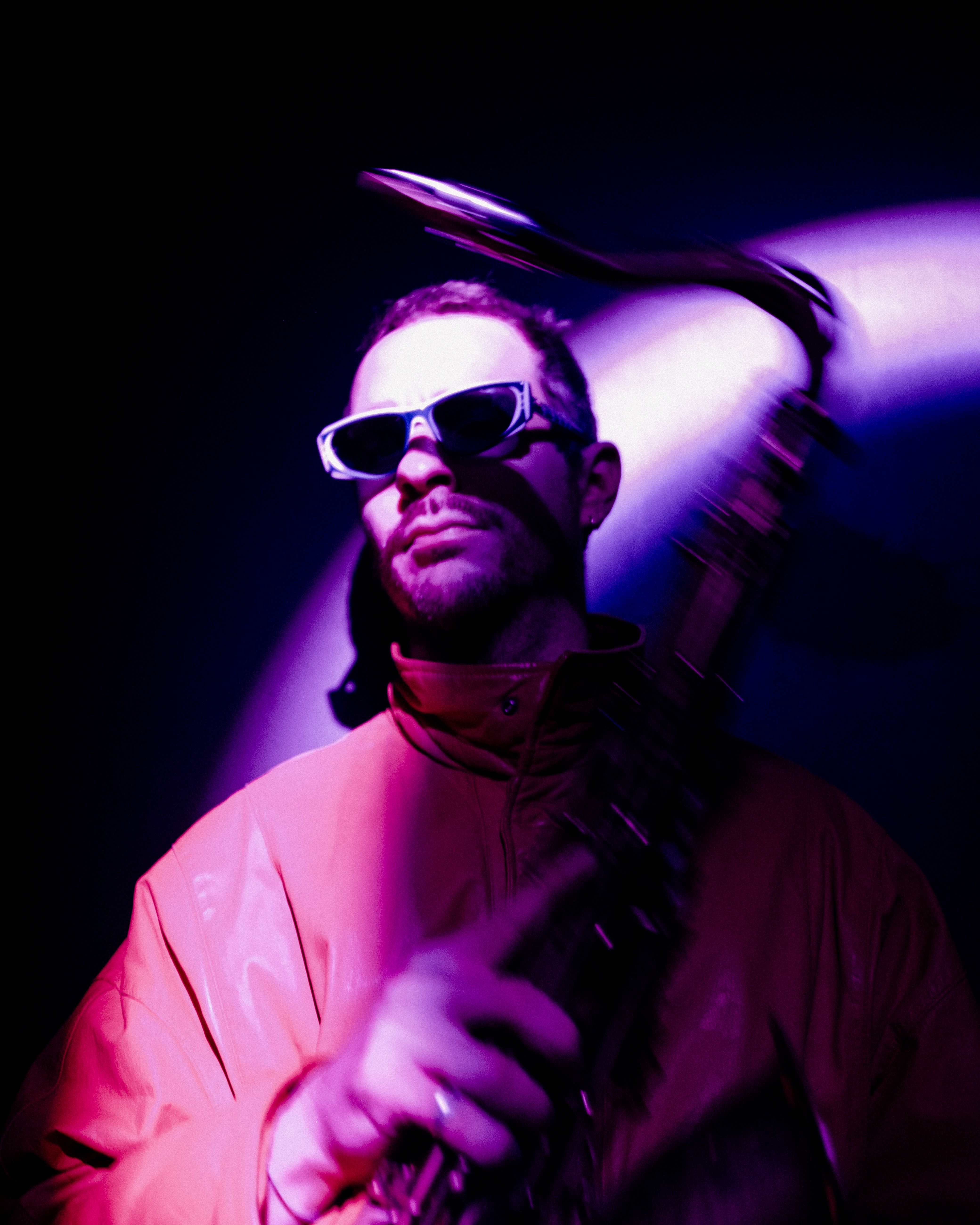
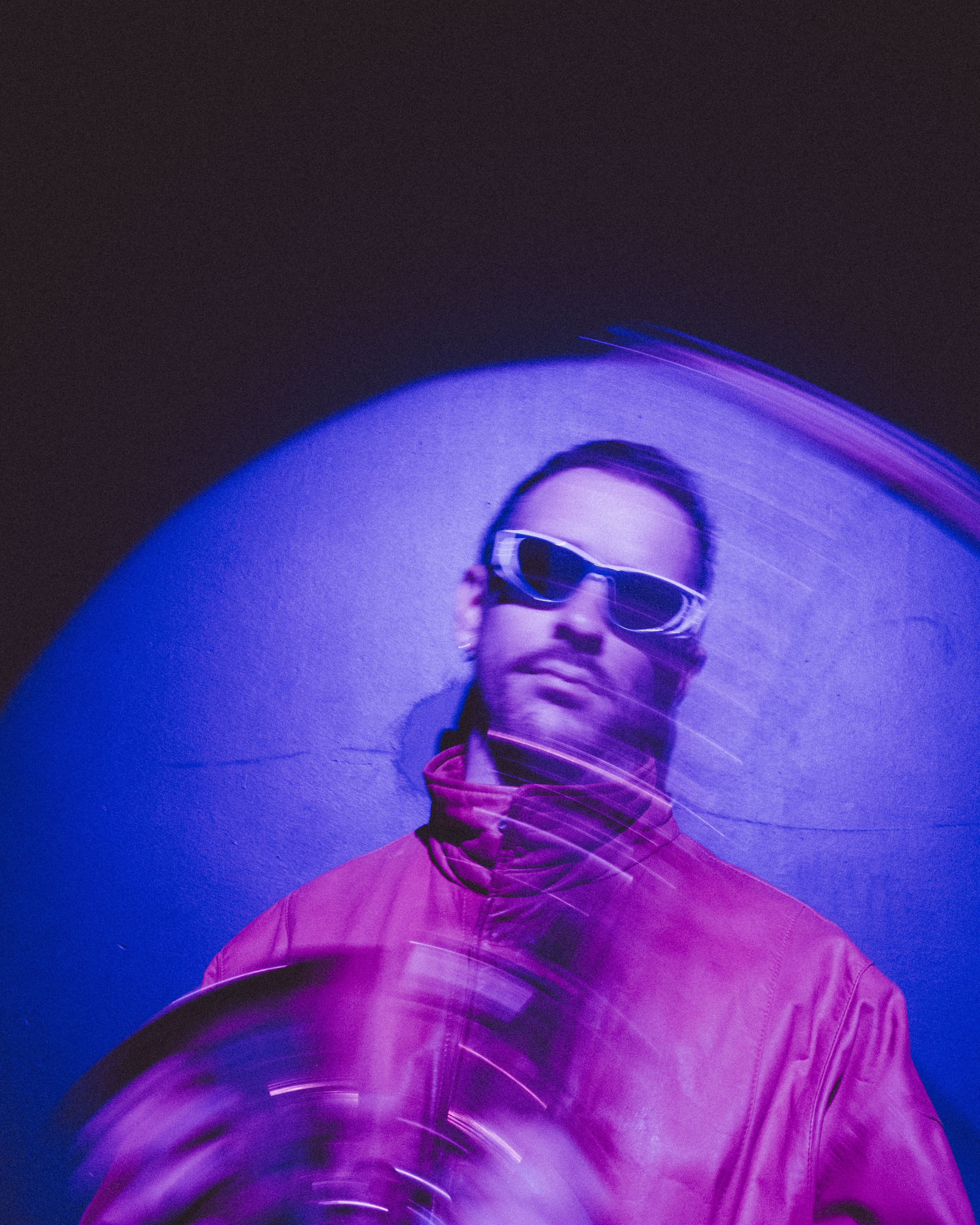
Name: Mattias De Craene
Nationality: Belgian
Occupation: Saxophonist, composer, producer
Current release: Mattias De Craene’s solo album A House Where I Dream is out via Viernulvier.
If you enjoyed this Mattias De Craene interview and would like to know more about his work, visit him on Instagram, bandcamp, and Facebook.
When I listen to music, I see shapes, objects and colours. What happens in your body when you're listening? Do you listen with your eyes open or closed?
That really depends on my intention when listening. The intent of the music also greatly influences the experience. Usually, it is indeed an inward journey, but sometimes music can also help to see the outside world or your surroundings in a different light.
Recently, I had to spend the night in a hospital, a place where I don’t feel comfortable. I was in my room on the 12th floor. I put on the beautiful album Dream Cycles by Natasha Pirard, and through that music, I was able to look outside with less judgment.
I could stare at the buildings, and for a moment, my thoughts drifted away.
If I want to go for a really inward and transcendent experience, I choose the headphone experience with my eyes closed, so I can really immerse myself in the music.
Music is something very strange, and it does strange things to our brain. Some music can touch us because we recognize parts of ourselves in it that we hadn’t yet discovered. It can also begin to sound different over time. For me, music is the mirror of the soul. It is precisely that specific, undefined place that good music shows me. It’s hard for me to put into words, but … yes … I see things, I feel things, and I experience things. And I think we all have that. These are things that only music can bring about.
A good and specific example for me is my first encounter with the music of Jon Hassell and Brian Eno (Fourth World music). It was like being struck by lightning. I heard tribal future music. In my imagination, I saw a world that had burned out, where only sand and water remained. It was inhabited by “survivors,” some tribes.
Everything was very futuristic, yet at the same time very earthly.
Only later did I learn about his Fourth World concept, where he combines the beating heart, the mother, of the world with our first-world electronics.
Fourth World music is a fusion of the traditional and the modern, the organic and the technological, aimed at creating a new musical landscape that is free from cultural or geographical limitations.
How do listening with headphones and listening through a stereo system change your experience of sound and music?
Again, everything depends on the intention and character of the creator and the perceiver. Depending on the music I’m going to listen to, I choose either headphones, the record player, or even my little phone speakers. I can truly enjoy playing an album softly on my phone during a quiet moment of solitude. Those are often even very happy personal moments. Of course, this doesn’t work for every album or style and the “moment” has to be right.
In general I find that more modern and electronic music usually works better with headphones. Older music or jazz (which I listen to quite often) where a different kind of attention has been given to the mix, compared to how we know it today, often works better for me on a stereo system. But I do find it interesting to listen to it on my headphones, as you can hear the structure of the mix much more clearly.
Of course, this is a generalization, and there are probably 1,000 examples that would contradict it, but I think it’s clear what I mean. Both can work well. Sometimes I don't feel the need to listen to music in a high-end way. Usually, that's a good sign.
Tell me about some of the albums or artists that you love specifically for their sound, please.
Wow, there's really too much to name here. Sound and texture and urge are really the 3 main things I look for in music. II think this answer pretty much encompasses all the bands I love. I have a strong preference for instrumental, textural, and imaginative music, so by definition, I think I love each artist or album for their unique sound.
Here are a few albums that come to mind right now, which I might talk about in more detail later.
A specific sound or style—one that also became the soundtrack of my lockdown—that has really captivated me is Japanese environmental music, kankyo ongaku. I find the aesthetics often so wonderfully draped. Not a note too many or too few; not every frequency spectrum filled.
Minimalistic. I love that immensely.
The first album in this style I encountered was Through the Looking Glass by Midori Takada, a classic. I found the music so beautiful and enchanting that it turned my world upside down for a bit.
I felt intense joy, as I sensed this would allow me to dive into a new world or discover an entirely new style.
I love the almost detached rhythms, the strange environmental sounds, the odd melodies. In short, I love the entire album.
My gateway to the next album was Jomon-Sho by Yas-Kaz. Here, too, an earthy, strange mystique completely gripped me.
Around this time, I also discovered the classic album Green by Hiroshi Yoshimura. Another unparalleled style, where the Fender Rhodes and Yamaha DX7 found a place in my heart once again. I completely fell in love with this style.
A very different style or artist who captivated me is Terry Riley, again for his simplicity and minimalism but in a very different form. His use of tape loops and delays combined with organ or soprano sax remains one of my favorite things. I also paid a sort of tribute to him on my latest album with the first half of “Transcension” 1, 2 & 3.
A few years ago, I was on tour and performed in Helsinki, Finland. One thing I often do is go to a record store and ask if they have anything "weird" and preferably local. That’s how I ended up with a record by Oiro Pena in my hands. A strange 10-inch, completely DIY. I fell head over heels for this music.
It sounds very lo-fi, a kind of swing as if it could come from a gnome tavern. It’s definitely one of my favorite records in my collection.
Of course, I can't leave out Jon Hassell from this answer, but I already mentioned him in the previous question. Absolutely one of my musical heroes.
Are there everyday places, spaces, or devices which intrigue you by the way they sound? Which are these?
It might be a bit of a cliché answer, but nature, the empty forest. It’s one of the few places where I can find absolute peace and feel like a welcomed visitor. There’s a serenity, a constant motion; nature moves, sounds echo, serving up a majestic bed of calmness and serenity.
Perhaps even, by extension, all places in the wilderness where you hear no human sounds. They are very rare to find, where I live, that’s why I am so touched every time I am there.
I love peace and quiet, but in a weird way, I also have a fondness for industry—the distant sounds of machines and factories. The howling machinery. Like rusty huge robots doing what they’re asked to do and nothing more. They inspired me before.
What are among your favourite spaces to record and play your music?
Nowadays, I go to a forest near me every week, where I sit down with my field recorder to play some music. No goal or plan, but I love listening back to that simplicity. To that moment I captured. That’s where I find the most joy right now.
I think wherever, but with a peaceful mind. Besides that, I feel it also totally depends on the project, band, or music I’m playing with. Every stage or venue, big or small, intended or not intended for playing music, has its own specific energy.
Sometimes I love being blown away by a massive sound system, epic delays and big verbs on my saxophone for example; other times I deeply crave raw, honest minimalism—nothing amplified, just a human playing an instrument.
Do music and sound feel “material” to you? Does working with sound feel like you're sculpting or shaping something?
Certainly, it’s one of the things I enjoy most and do most frequently. I get the greatest pleasure in making music from exploring electro-organic textures. Much more then looking for structure or songwriting or focussing on making a good mix.
For me the real fun part is in experimenting with sound. I usually start by recording with my saxophone, where I already enjoy experimenting with extreme closeness to the microphone to capture small sounds that might otherwise go unnoticed— like the sound of breathing, saliva, or keys opening and closing. I amplify these sounds heavily to create a very tangible texture.
Then, I find it fascinating to experiment with samplers or plugins to further deconstruct these sounds, zooming in on tiny parts of the sample and start digging. Granular sample synthesis is a magnificent way to do this for example. In this way, you can keep chiseling away or sculpting your sound, as it were.