Published
Part 1
Names: Max Devereaux, Alec Watson
Nationality: American
Occupations: Composer, visual artist, filmmaker (Max), songwriter, improviser, composer (Alec)
Current release: Max Devereaux and Alec Watson's new collaborative album Febrile is out September 4th 2026 via Dragon’s Eye.
Hometown Recommendations:
MD: I recommend a visit to the Milwaukee Art Museum.
AW: I recommend eating breakfast at Al’s Breakfast in Minneapolis.
Things that I am passionate about but rarely get to talk about:
MD: Buckminster Fuller.
AW: I like to play chess. I like how the pieces look and how they move around. I like the feeling of looking at the board. I like to look at mushrooms in the woods. I like to drink a martini. I like to make a three-egg omelet. I like to ride my bike, I often think about doing it without my helmet on, but ultimately I do decide to wear my helmet.
If you enjoyed this Max Devereaux and Alec Watson interview and would like to stay up to date with their music, visit their respective Instagram profiles: Max Devereaux; Alec Watson.
What were some of your earliest collaborations? How do you look back on them with hindsight?
MD: My earliest collaborations were with my older brother, Nelson Devereaux (Cool Nel D), often jamming together as kids growing up and later playing on many of each other's albums.
Afterwards, I began an intense musical partnership with musician Suko Pyramid (Adrian Suchowolski), writing and recording three albums together as well as co-directing a feature-length documentary about the making of those records. That film was ultimately submitted to and rejected by several major international film festivals, and it is currently streaming on Troma Entertainment’s TromaNOW app.
These early collaborations taught me about working with another musician to realize a shared goal. Sometimes the route to arriving at that shared goal may be wildly divergent, but in the end, so long as the connection was stable and backed by the right amount of determination, we were able to cross the finish line together.
I look back on them with a sense of profound sadness: we were never able to reach the right audience (or any audience), so ultimately the work can just be thrown onto the heap. Moving on.
There are many potential models for collaboration, from live performances and jamming/producing in the same room together up to file sharing. Which of these do you prefer and why?
MD: I personally prefer to collaborate with another musician right there, together in a room.
Did you see Get Back, that long Beatles documentary that Peter Jackson directed a few years ago? I liked that documentary a lot because you got to see them banging it out, making something from nothing. This is the reality of writing music (in the traditional, old-school way), and watching it in real time gives you a sense of relief, knowing that even some of our most revered composers had to battle through the trenches of random phonetics and half-baked riffs to generate their celebrated works.
I think this approach works best for me because when faced with another musician standing before you in a room, you are forced to externalize your processes, making them more subject to scrutiny in real time. This allows for the creation of what I might call "people" rather than the "person" who generated the idea.
A "person" can sometimes make the wrong call; they can sometimes be influenced by ego and wayward ideas that hinder their ability to see the forest for the trees due to a limited, singular perspective. "People," for better or for worse, have a numbers advantage over a single "person" and therefore include two or more perspectives. These multiple perspectives lend themselves to potentially reaching a broader universality, helping ideas traverse a slightly greater distance.
Now, obviously, "people" can be woefully misinformed and everyone in the room can just be on some bullshit, which can spoil the entire thing, but for the most part, it’s nice to bounce ideas off one another right there in the room and see what organically generates.
AW: Variety is really the spice of life. I love it all. I mostly tend towards working slowly, ruminating over ideas for years, and then letting things bloom when they’re ready.
Making this record with Max was an extremely welcome exception. It documents some of the first moments we played music together. We were both in the same room, a conference room, sitting at the table in those chairs that I think spontaneously generate inside any room set aside for "business."
I was looking through the windows at an indoor pool the whole time we were playing. I was also kind of ill and kept coughing between takes. I hope Max didn’t feel trapped in a small room with a sick person.
How did this particular collaboration come about?
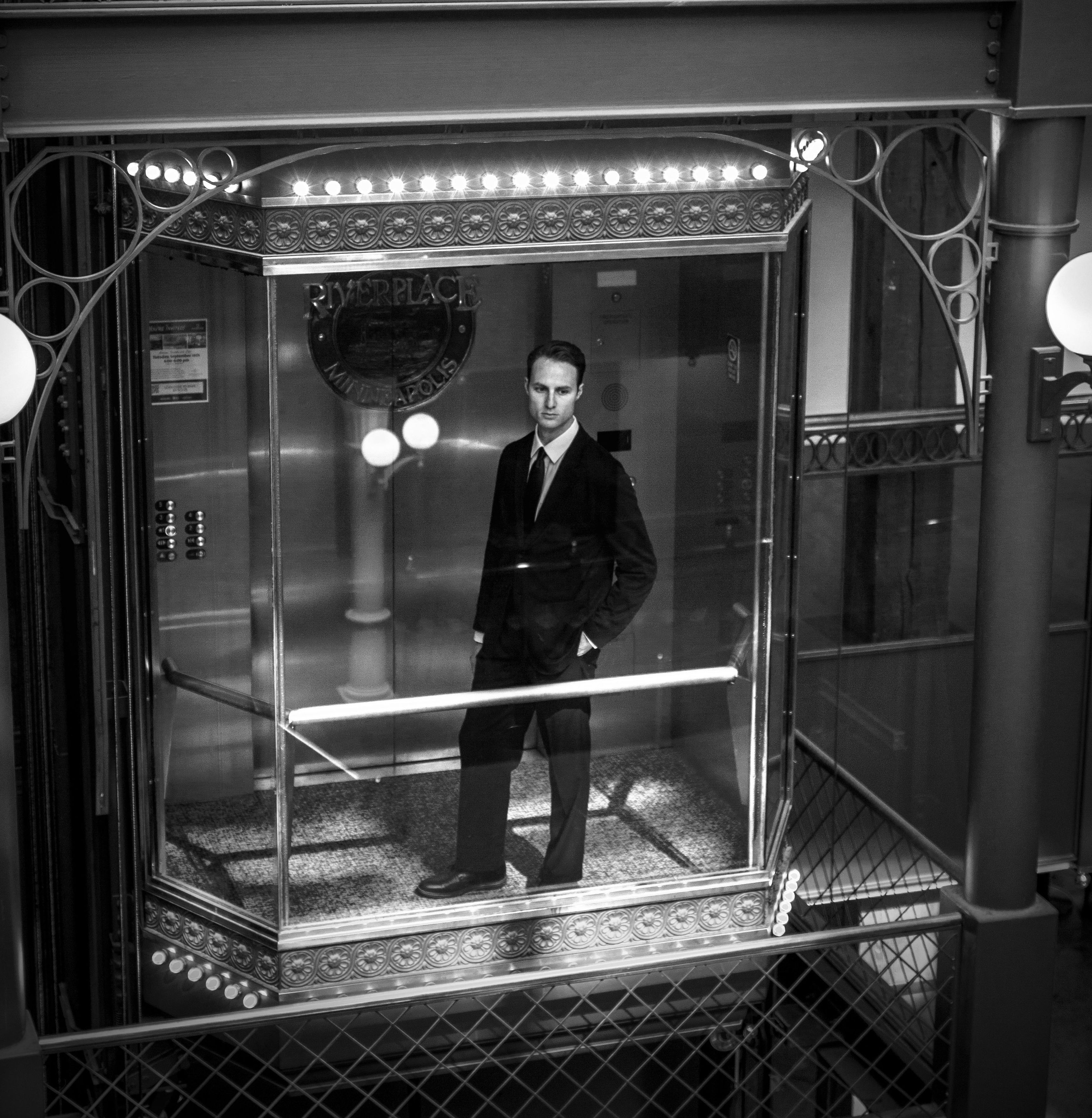
MD: This particular collaboration began in the summer of 2025 after we met at a performance by Swiss composer Manfred Werder in Minneapolis. I had recently moved to the city and was beginning to explore the experimental music scene when I met Alec, who had also recently moved to the Twin Cities.
Our first attempt at working together was actually a bit of a failure. I asked Alec to help me record a cover of the old song "Shall We Gather at the River" for an upcoming Lloyd Kaufman film called The Power of Positive Murder.
The song was ultimately rejected by the Troma Entertainment filmmakers, but that hiccup became the catalyst for a more serious collaboration. We decided to move away from that project and start fresh with ambient and synth-based music, which eventually became the sessions for Febrile.
What did you know about each other before working together? Describe your creative partner in a few words, please.
MD: We really didn’t know each other too well before we began working together, though I did know that Alec was a very skilled pianist and songwriter. In order to channel these gifts, I asked him if he could take a few passes using synthesizers on some pre-existing tracks I had recorded, including a number of very abstract field recordings.
AW: Max is a human machine of making things. I’m still learning about all of the different disciplines he gets into.
We first met at a house show in south Minneapolis. He was wearing all black, which I now understand to be his classic outfit, and he introduced himself as a filmmaker. I was excited because he told me that when he lived in LA, he was a production assistant on one of my favorite cringe-horror reality shows, Married at First Sight. He might not want me telling the world this!
After talking movies, we got into music, and I learned Max has a deep love and knowledge of experimental music. He’s also a painter; he just had a really fantastic show at the Minnesota Museum of American Art.
What do you generally look for in a collaborator, and what made you want to collaborate with each other specifically?
MD: When selecting a collaborator, I generally look for a similar sense of curiosity. I remember standing alone in the corner at the Manfred Werder concert the night we first met, and Alec came over and introduced himself. That gesture made an immediate impression on me that he was bold yet curious, and that alone told me he would make a great collaborator.
AW: I had the feeling when we met that we were either going to make something really brutal or really pretty, and I wanted to figure out which one it was going to be.
The answer is maybe that we made something quite middling. Which I also love.
Tell me a bit about your current instruments and tools, please. In what ways do they support creative exchange and collaborations with others?
MD: Well, as it stands, I don’t actually have a lot of musical gear. I don’t have many belongings period, which I equate to most likely a very severe trauma response.
But what I do have is a laptop and a field recorder (Zoom H1e), which I put to good use on the sessions for Febrile. I also have a pen and paper, which helped me compose graphic scores for the album. Several of these graphic scores were performed and recorded by Alec and me in our conference room studio, an example of this would be the track "Inner-face." I also tend to borrow instruments from friends and family members to make my albums.
AW: List of instruments that I love to play, ordered smallest to largest, with commentary:
-Yamaha Reface DX: Pure, round, and smooth. Neutrality.
-Yamaha Portasound: Flute and drums.
-Martin DRS-1 Acoustic Guitar: Trees and spirits.
-Jenco Celeste: Felt and metal. The stars, the moon, and the celestial bodies.
-My Human Voice: I like to sing all kinds of songs.
-Kimball Upright Piano: Felt and wood. The sound of my home.
-Wurlitzer Theater Organ: Darkness, mystery, a blessing, and a curse.