

Name: Memorial
Members: Jack Watts, Oliver Spalding
Nationality: British
Current release: Memorial's new album Jera, featuring Niamh Regan and Ólafur Arnalds among others, is out August 7th 2026 via OPIA.
[Read our Ólafur Arnalds interview]
If you enjoyed this Memorial interview and would like to find out more about the duo and their music, visit the band on Instagram, and tiktok.
When it comes to experiencing strong emotions as as a listener, which albums, performances, and artists come to mind?
When we’re moved by music, we’re often moved by the same songs or performances, but later realise it’s for completely different reasons.
Josh Burnside is a current favourite that comes to mind because he consistently hits the big three for us: great songwriting, angsty lyrics, and production that serves each song perfectly.
The song always dictates the production, and Josh makes all the right choices to support it. When those three elements live in harmony, it’s the best feeling in the world. We want music to inspire us, but also leave us thinking, “What’s the point in making anything else?”
In terms of a performance, one random example that always comes to mind is Bruce Springsteen’s live performance of “The River” from Tempe in 1980. Jack and I shared a house during lockdown and put it on YouTube at an unacceptable hour to be listening to Bruce at full volume.
His emotional delivery was absolutely disintegrating, and when we looked at each other after it was over, we both had tears rolling down our faces.
I remember thinking, it’s incredible how a live performance captured in the 80s still has such huge emotional weight that it’s currently making two men cry in a tiny one-bedroom flat during a global pandemic in 2020.
There can be many different kinds of emotions in art – soft, harsh, healing, aggressive, uplifting and many more. Which do you tend to feel drawn to most?
We tend to feel drawn to softness and yearning.
Yearning is such a complex emotion as it encompasses desire, passion and longing for something just out of reach or seemingly unattainable. I think we always feel drawn to trying to answer questions our actions and situations are telling us when we feel out of touch with our emotions.
We feel drawn to softness because it feels so powerful to reach a crux with words rather than volume and that’s what we feel in tune with. It reminds me of arguments; if someone shouts and you and you shout back, there’s passion but it also just feels like who can be the most angry until the other gives up.
But when someone shouts at you and calmly tell them how that’s made you feel and they don’t hear it and it could lead to that soft sting in choice of words that completely throws the person shouting off.
I have had a hard time explaining that listening to death metal calms me down. When you listen to a song or composition, does it tend to fill you with the same emotions – or are there “paradoxical” effects?
I (Jack) used to fall asleep to heavy music as well! I think it speaks to the functionality of music but it’s dependent on whether the person consciously wants functionality or subconsciously.
Like Ollie will put on Dean Martin when he’s making a Ragu. That’s conscious functionality.
But say your mind feels chaotic, conscious functionality would be ambient, soft, relaxing music. But the imbalance might make you feel worse, the chaos might be too loud.
The subconscious might suggest Primus. Match the chaos so there’s equilibrium, the chaos feels seen, appreciated and quelled.
Much like when you listen to sad music when you feel sad, it’s typically cathartic rather than sending you further into sadness.
In as far as it plays a role for the music you like listening to or making, what role do words and the voice of a vocalist play for the transmission of emotions?
It’s everything. Music kind of feels like physical presence or touch but words and voice is eye contact. When it’s that perfect mix it’s almost paralysing.
One song that springs to mind is "John Wayne Gacy Jr" by Sufjan Stevens. His voice is controlling how you feel the whole way, he starts of gently guiding (“His father was a drinker, his mother cried in bed”), then pulling you (“27 people, even more, they were boys, with their cars, summer jobs”) letting you go (“oh my god”).
I think vocal delivery and words for us is incredibly important and we’re increasingly drawn to imperfections as part of the whole honest picture. We often feel vulnerable when recording because we know what’s there is there forever, and we used to get obsessive about erasing our fear from the voice.
But we’re recognising the fear is part of the eye contact and through acceptance of this it can release so much more.
When it comes to experiencing emotions as as a creator, how would you describe the physical sensation of experiencing them? [Where do you feel them, do you have a visual sensation/representation, is there a sense of release or a build-up of tension etc …]
I think for us writing has always been a form of communicating with each other in a way we struggled to without this creative outlet. And we feel things differently.
In terms of extremes Ollie is often all or nothing; calm, content, or frantic, negative. I (Jack) tend to feel comfortably numb through chaos until there’s a dent and then every unwanted emotion is just another crack until it all breaks. We’re usually always in the middle and we write to find the undercurrents we’ve not been paying attention to.
And then there’s those moments where songs just fall out of the sky when you’re in the middle of an intense emotion. The thing that’s great about friends making music together is that understanding; what one sees and what the other feels and combining them for a whole experience.
There’s been points where we’ve really helped each other through something when writing like creating a final puzzle piece by being pulled out of internal by external and providing clarity. On top of that you have a reminder of that moment through a song.
When it comes to composing / songwriting, are you finding that spontaneity and just a few takes tend to capture emotions best? Or does honing a piece bring you closer to that goal?
There’s pros and cons I think. Spontaneity is great when there’s flow. But without flow yet knowing you have something good, honing it in and grafting can feel really rewarding.
When we finish a song we always do a voice memo. Keep it as is. We could work on a demo creating additional parts for days and days and eventually take everything out and keep what we started with. Each song holds an energy and you can need the energy out of it if you’re not careful. Demos are kind of like containers you put all the energy into a put the lid on and let it out when it comes to recording time.
The con of that is if recording takes place a long time after songs were created. If you can’t access that headspace again it can feel flat and out of place and then an even newer song takes its place. But then you feel bad because that song should have had its moment.
How much of the emotions of your own music, would you say, are already part of the composition, how much is the result of the recording process?
The emotions in the composition is kind of like the seed and soil. It’s this hidden thing, an amalgamation of feeling and intent and it’s just baked in.
Because of our process of minimal demoing, recording is just this intense photosynthesis. We have an idea on how it could flourish but the environment has its own plans, how you feel on the day, how yesterday went, is it midday or 3am.
It also feels important to us to have sensitive players that feel comfortable to add what they would add. It’s exciting to work together on those ideas than to tell people “can you do exactly this please and don’t deviate.”
For your current release, what kind of emotions were you looking to get across?
Actually this is a great example of the previous question. With “Dawn” we wanted this ambling feeling to match the aimlessness and numbness of what we were saying lyrically.
There was a steady drum beat throughout. Then we aimed to finish recording later in a different environment. And the drums were taken out and it changed everything. It made the song feel more contemplative and intentional, like questions thrown out to nature and you answering your echo.
It made so much more sense and it was just a moment in the studio (happy accident) then we worked with Olafur to work on the parts that didn’t make sense anymore. And he immediately felt it, understood and emboldened what the song was trying to say all along. That’s where spontaneity feels important.
How do you capture the emotions you want to get across in the studio?
With this record a lot of the songs felt soft and intimate and so the environment really played a role in connecting to the songs. There were moments where the feeling just wasn’t there and then we’d still be in the studio at 3am. And that feeling of isolation, late night haze and barriers down, it felt like the feeling was clearer to access.
Set and setting are important but also just energy in general. It feels perpetual and you go with it. When it fades you have to move on otherwise it feels like wasted time. Unless the frustration of missing energy, is perfect for another song you’re planning on recording!
What role do factors like volume, effects like distortion, amplification, and production in general for in terms of creating the emotions, energies or impressions you want?
Incredibly important! We often like to keep things dry as it just feels closer and more intimate. But effects and volume act as vehicles of emotions. Like if you need something to soar, reverb is the answer, it’s the vehicle for your intention.
Volume is our biggest one. Something can feel perfect and if it shifts even by 0.5db there’s frequencies that change the energy entirely. Sound is scary and confusing. But honing all of these elements is essential to feeling like you captured and conveyed the emotion honourably.
In terms of emotions, what changes when you're performing live on stage, with an audience present, compared to the recording stage?
There’s something about live that feels more freeing, which is odd. There’s nerves, you want to get it right, but it’s also just a moment. You’re in that room with the audience and it’s present. Therefore if you fluff a line or it goes terribly, you can just leave it behind.
Recording wise, the intention is to capture the moment, but that acknowledgement that this recording will last forever is terrifying! (Red light fever). It should feel freeing because you can just do it again if it goes bad. But when it feels really important to capture that moment it can be really difficult.
But they’re both so special for that reason, when it falls into place it’s magic.
How does the presence of the audience and your interaction with it change the emotional impact of the music and how would you describe the creative interaction with listeners during a gig?
We’re incredibly sensitive. So this has a massive impact. When an audience is with you, it’s like catching a wave and all the emotion in the room and the nerves in us mingle into a lovely intimate melting pot.
When it’s clear that the connection is off, it’s hard not to get in your head. You're less in your emotions and more trying to figure out how to present them convincingly enough to fix what’s happening and you overdo it.
On a good day though there’s something oddly liberating about a crowd being kind of withdrawn or disinterested (talking at the bar) just going inside yourself and doing it for you. Funnily enough that feels like it combats the situation sometimes.
What kind of feedback have you received from listeners or concert audiences in terms of the experience that your music and/or performances have had on them?
What’s really nice is we often try and explain a little bit of what the song is about, and just talk about it as we would to each other. And audience feedback is often emotional because that brief synopsis promotes more intentional listening and people often feel comfortable to share their stories about what the song made them think about.
It’s honestly the best feeling like you’ve connected to a stranger from accessing an inner monologue or situation because you’ve shared a moment.
Would you say that you prefer to stay in control to be able to shape the emotions or do you surrender to them and allow the music to take over? Who, ultimately has control during a live performance?
I think the beauty and the scariest aspect of live performance is that it depends on the day.
Sometimes surrendering is all you can do, you can’t help it or force it and sometimes you surprise yourself, and you feel excited or moved by something you may have sung 100 times. But then other days that control is fun, feeling like a weaver and perhaps adapting to the situation to try and make the song make sense in that particular room.
The beauty is that it’s always changing.
The emotions that music is able to generate can be extremely powerful. How, do you think, can artists make use of this power to bring about change in the world?
I suppose it boils down to connection. Every artist has their own vessel and communication style and when it speaks to an entire group of people, all of those people are connected in some way.
I think messages are important and values are important, but the think there are quieter messages that get overlooked. We know so many artists in these tiny rooms connecting so strongly 20 to 70 people and it can feel like it’s against the grain. Like the world is definitely shouting right now. So to whisper can sometimes feel pointless. But in those rooms it feels so powerful and urgent. Like a sort of peaceful protest or resistance.
Singing about trying to understand what’s going on, how you feel, and how you want to feel, is just as important as trying to bring attention to injustice or call to arms type music and just as important as dance music is to just let go and as important is heavy metal is to sleep!

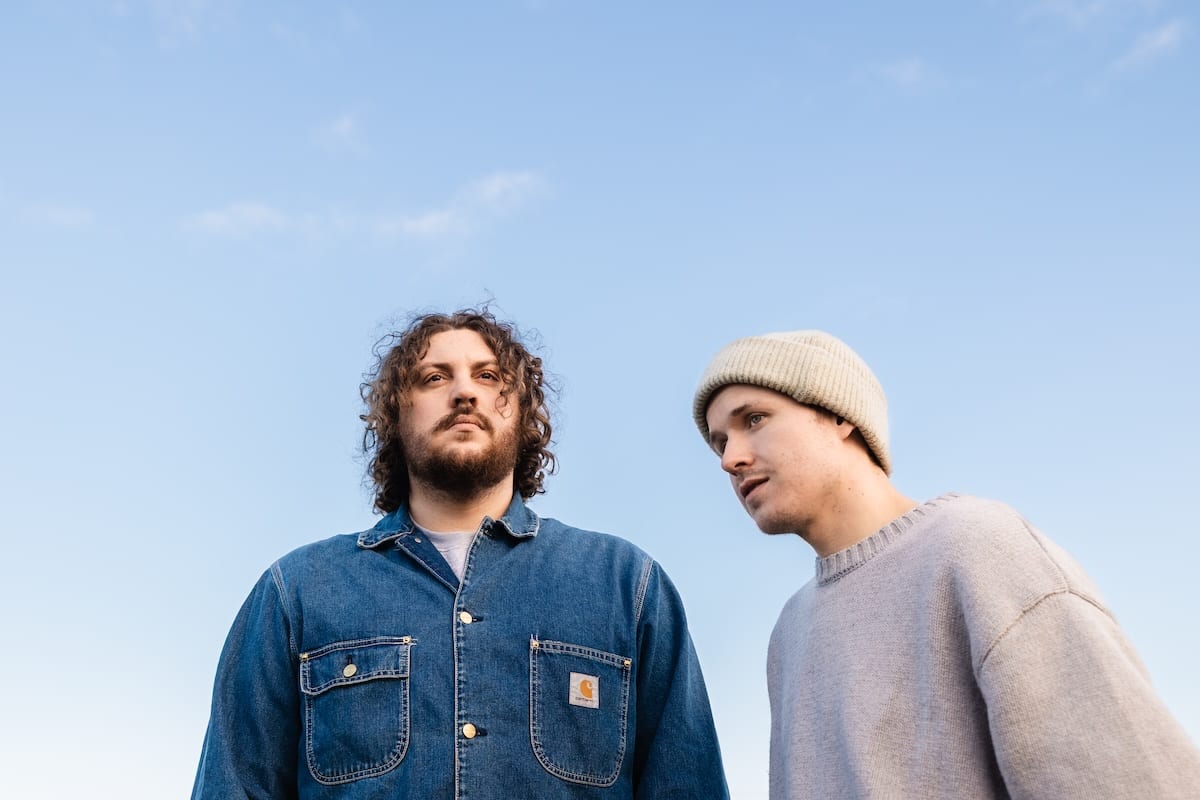 Memorial Interview Image by Sunna Ben
“We tend to feel drawn to softness and yearning.“
Video
