Published
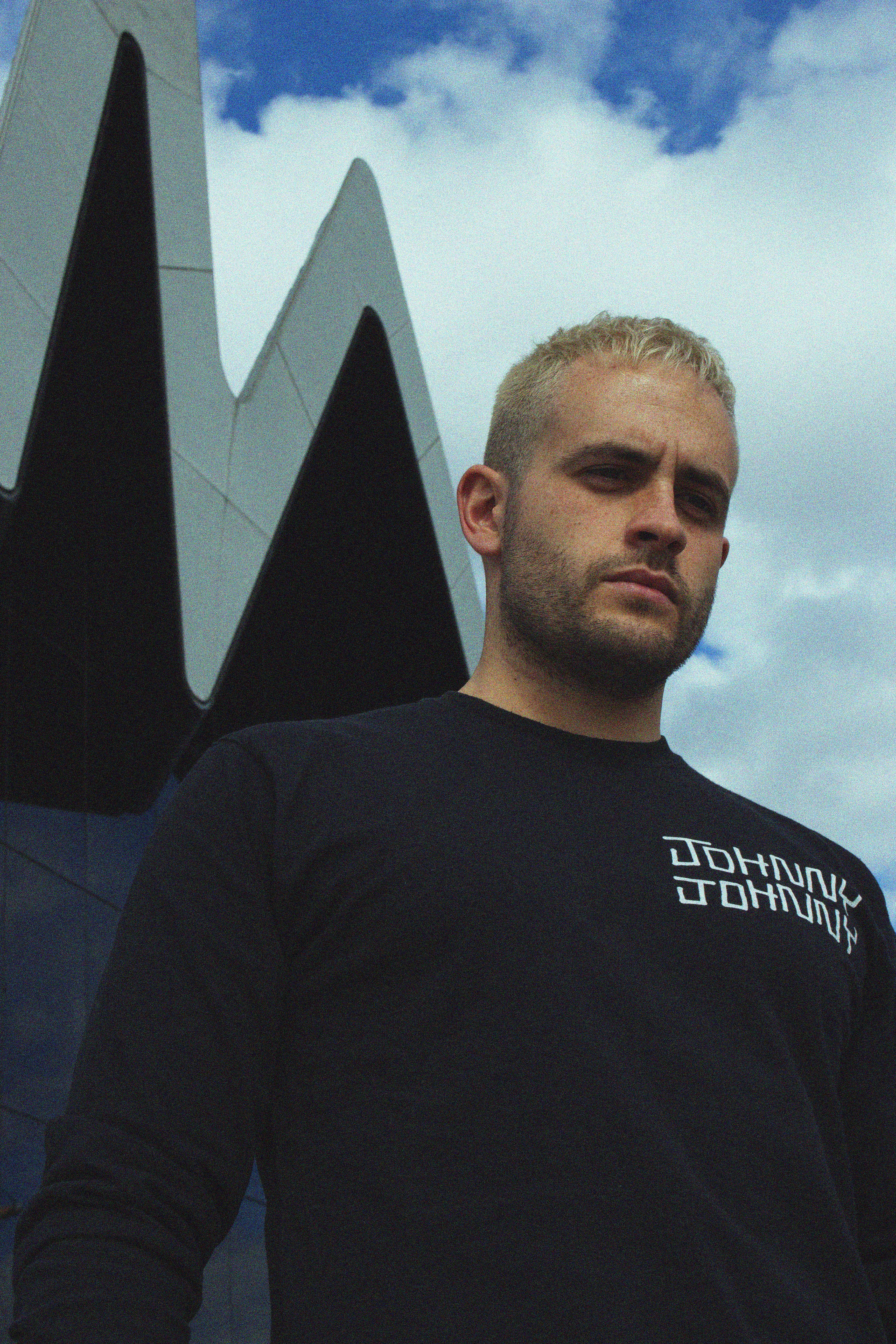
Name: Nick Mabon aka Modat
Nationality: Scotland
Occupation: Producer, DJ, label founder at johnnyjohnny, rhythmdot, and wsntme_
Recent release: Modat's new Dashin EP is out via REK'D.
Hometown recommendation: There's a great little sushi place in Finnieston called Hanami. The fried scallop there is genuinely the best I've ever had. Forget everything I've said about minimalism and order as much as you can pronto.
Things I am passionate about but rarely get to talk about: I listen to Warhammer 40K lore to fall asleep. There probably isn't a single detail about the Emperor or the Imperium that I don't subconsciously know at this point. Also nothing quite like drifting peacefully off to sleep while someone explains in detail how a Tyranid hive fleet is consuming an entire planetary population. I could probably give you another fifteen questions on that. Whether anyone should read it is another matter.
If you enjoyed this Modat interview and would like to stay up to date with his music, visit him on Instagram, Soundcloud, and Facebook.
Are there examples of minimalism in music – and outside of music – that impressed you early on?
My musical background probably contrasts quite heavily with what you'd traditionally associate with minimalist culture. I was into a lot of metal, punk and hip-hop when I was younger, so I came to minimalism from a slightly different direction.
Looking back, I think one of the biggest early influences on me was actually Depeche Mode, and particularly the artwork surrounding them. When I think about it, Anton Corbijn's stuff with them really is cool. There was something about that very stark, quite industrial, sometimes almost severe style that I was drawn to long before I really thought of it as "minimalism."
You can deffo see influences of it in a lot of the artwork I've used and created for Johnny Johnny Records. I've always liked the idea that an image doesn't need to explain everything to you. A few strong elements can create an entire identity.
I'm also massively into architecture, particularly Brutalism. Again, it's that combination of simplicity, functionality and something quite imposing that appeals to me. That's probably most obvious in the artwork for my sub-label Rhythmdot, where Brutalist architecture and that stripped-back aesthetic have been a big part of its identity.
So , I think minimalism entered my life visually before I properly recognised it in my music.
Were you ever interested in minimalism as a style – from the Philip-Glass-variety to solo instrumental work to minimal techno? If so, tell me a bit about your interest in this.
I'd love to tell you I was sitting around studying Philip Glass from an early age, but I'd be lying, I didn't arrive here through the classical route.
It happened much more naturally when I got deeper into electronic music and clubbing. I found myself increasingly attracted to records that could do a lot with very little. That's probably when it probably stopped being something I was just responding to aesthetically and became an outlet for me musically.
There's something class about hearing minimal in a club. With stripped back records, the smallest changes suddenly become massive. I think that's what appeals to me. Minimalism wasn't necessarily about making music that felt empty or deliberately sparse. It was about making decisions with elements that were there enough to actually matter.
Thinking about it, it makes sense that I ended up there. Even though, coming from music that was loud, aggressive and dense, I think I've always been attracted to strong ideas and strong identities. Electronic music just gave me a different way of expressing that.
Do you tend to find that, as many claim, “less is more?” Are the notes you don't play really as important as the ones you do play?
I think “less is more” is true, but only when its actually doing something. There's a big difference between something being minimal and just having f*ck all going on. You're playing with expectation as much as you're playing with sound. This something I've become much more aware of over the years.
When I was younger, my instinct was probably to keep adding things because you assume more means more energy or steeze. Eventually you realise the core idea is strong enough and everything you're adding after that is actually diluting it.
So yeah, the notes you don't play definitely matter. BUT I wouldn't say I've completely mastered the art of knowing which ones not to play yet.
Do you feel as that making music is a process of adding elements until it is done – or one where you chisel away pieces from something that is already there?
Both. its just different parts process ain't it?
When I start working on music it's a blank slate, I don't necessarily want to be thinking too much. I like to work quite serendipitously, throw enough sh*t, eventually it'll stick! Usually once the idea reveals itself I'll get a clear route of what I want out of things. That's when I'll start questioning whether things really need to be there.
That's the distinction for me. I don't necessarily want limitations getting in the way of the initial idea, but once I understand what the track wants to be, I'm quite happy to start chiselling away at it. I'll spend hours making a sound or an entire section then realise the track was better before you put it in.
Learning to delete something you've become attached to is probably as important as learning how to create it I think. Make the mess first, then work out what actually gets to stay.
Many artists are becoming more minimalist in their music as the years go on, focusing on the “essence.” How is that for yourself and how would you describe your development in this regard?
If I'm honest, I don't tend to lift my head up very often and think about my own development while it's happening. Looking back, I can see changes.
There are definitely things I made years ago that I'd have tackled arrangement, groove and sound design very differently to how I would now. But none of it felt like a deliberate focus on at the time. Just a result of listening to different music, having different experiences, or simply spending more time making records.
If you are focusing on any sort of essence, make it your own.
What were some of the starting points for the Dashin EP?
There wasn't really a grand concept behind Dashin EP, slightly disappointing for an interview like this I know.
If anything, I wanted to make four club tracks that worked, and that was pretty much the starting point. I was thinking about groove, movement and functionality more than anything else.
It's funny but I'd finished the EP and listened back to it as a whole, I could hear bits of my older Nico Mendez material creeping back in. So maybe the starting point for this EP was ten years ago haha!
Do you like to set yourself limitations? If so, which were some of those limitations for the new pieces?
Not particularly. I think there are already enough limitations between my ability, my attention span and the amount of equipment I can actually afford hahaha!
But to answer you a bit better. I'm very much in the box and I work in a pretty small space. Small enough that if I stretch my arms out I can touch both sides of the room. So there's your minimal studio! I don't tend to use a huge amount of plugins or VSTs either. My workflow is very sample-based and I spend a lot of time working directly with audio.
Those sort of limitations actually breed a more creative ways of thinking in my opinion. If you've got a piece of audio in front of you rather than another thousand presets to scroll through, you start asking what else you can make it do. So I guess my limitations are less a set of rules I set and more the result of my surroundings and workflow habits.
I've worked this way for long enough that I don't really see them as limitations anymore. Probs a large part of why the music sounds the way it does.
Thanks to sampling and digital synthesis, there are endless possibilities for sculpting the sounds and overall sound design of a piece or album. What are your considerations in this regard?
The endless possibilities are probably as much the problem as they are the benefit. You can change a sound forever if you want to, and at some point you have to decide that what you've got is more interesting than what it could potentially become.
With all the sampling and sound design capabilities out there, there's always another plugin, another preset, another process you could apply. And I don't want to be another one of those "Get this plugin or piece of kit its a game changer" producers. I try not to get too caught up in that.
Good sound design isn't about how far you can manipulate something. It's knowing when you've arrived somewhere worth stopping. Sometimes that just comes straight from good sound selection.
Would you say that you approach your creative tools with a minimalist mindset? Or do you need a wide choice of instruments and tools to make music?
I think I've accidentally answered this question already. In the spirit of minimalism, I'll leave it at that lol.
What were some of the most important pieces of gear or instruments for this release?
Max for Live's sequencer 'DarkSeq' is f'ckin class. I think it's ended up on pretty much every track on the EP in one form or another. It's become one of those tools I don't really think about anymore – I just use it.
I'd also give a shout to 'Surrealistic MG-1 Plus by Cherry Audio', which is completely free. It was tipped to me by Eden Burns, a phenomenal producer whose recommendations I'll happily take. It's a brilliant little VST with super phat sound that has definitely led most of Dashin EP forward.
French producer Guillaume Duchastel told me: “Minimalism is about more than owning fewer things. It’s about focusing on what truly matters.“ What are some of your strategies for separating what matters from that which doesn't?
A lot of it comes down to learning to trust your own instinct and taste.
The longer you make music, the quicker you become at recognising when you're doing something because it genuinely excites you and when you're doing it because you think it's what you're supposed to do. I've been on both ends of that stick, which left me feeling super lost for a long time to be honest.
I try not to overanalyse that too much. If something keeps pulling me back, it probably matters. If I have to keep convincing myself that it does, it probably doesn't. That applies to making music, and everything else in between in life. There's so much noise around everything now that being able to filter it is almost a skill in itself.
It kinda comes back to what I mentioned about “essence” earlier: if you're going to decide what matters, be sure you're the one deciding.
With so much incredible music instantly available, are you finding that you want to take it all in – or that you need to be more selective? How do you pick the music you really want to invest in?
There's an incredible amount of music out there, but let's be honest, there's an incredible amount of absolute shite too. Being super selective has become a defining part now more so these days id say.
But it's hard to be selective when everyone's throwing away ID's left right and centre in comments sections these days haha. I remember Laurent Garnier saying somewhere - and I'm probably butchering the numbers - that he'd sift through something like 500 tracks to find six or ten worth keeping. I completely understand that.
I'm finding myself digging backwards more these days, particularly into early-2000s records rather than exclusively through 2020s releases. A lot of contemporary music can feel quite carbon copy and disposable to me, I'm often finding more personality digging through older records.
It's all subjective though, and one man's trash is another man's treasure. In fact, Dashin EP trivia for you guys: one of the tracks on this EP was turned down by another label before it ended up here so I'm probably not in any position to decide what's shite anyway.