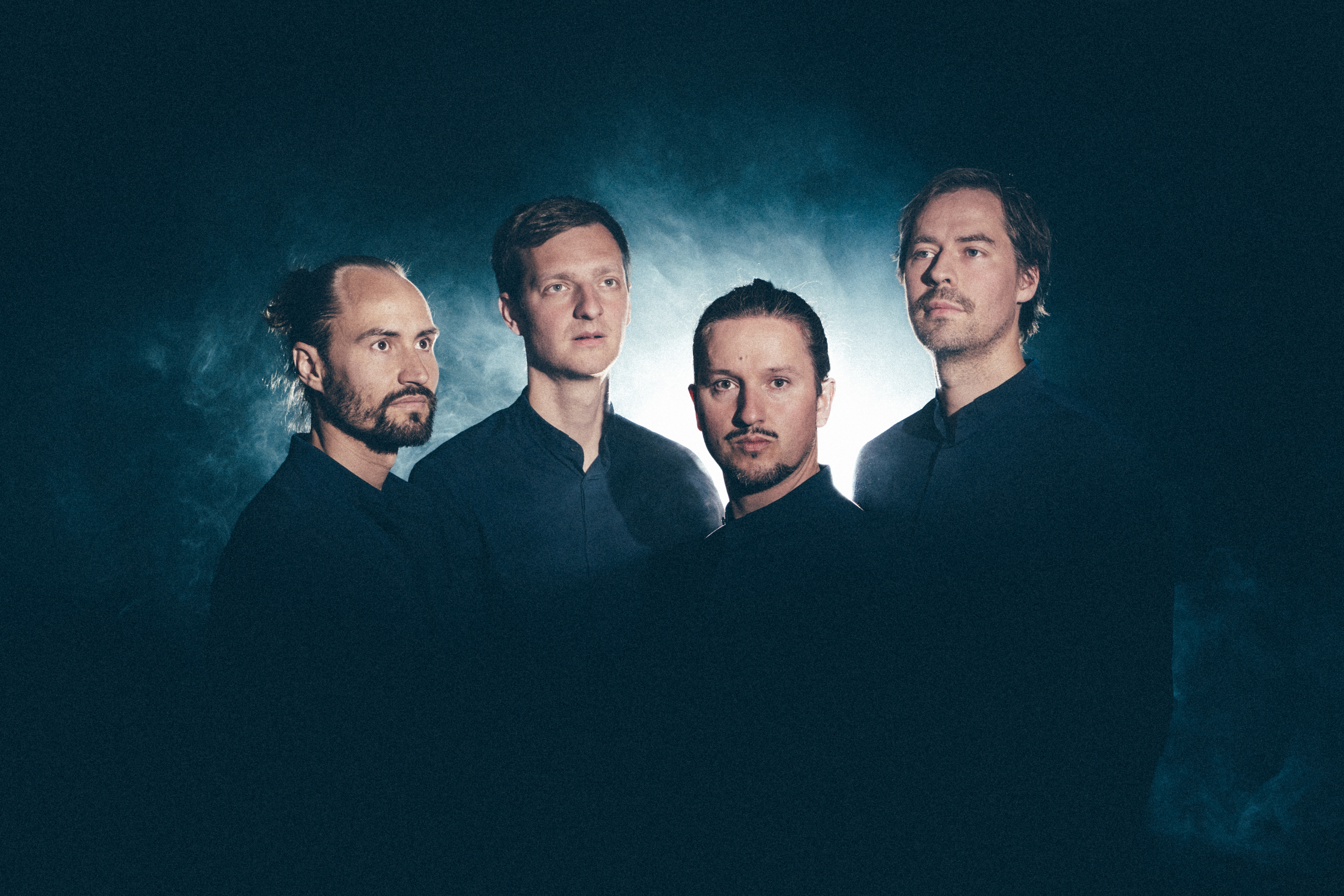
Published
Name: Norlyz
Members: Paul David Heckhausen (Producer, drummer, composer) Philipp Pueschel (Trumpet, Flugelhorn), Lasse Golz (Tenor Saxophone, Bass Clarinet), Gábor Hartyáni (Cello)
Nationality: German, Hungarian (Gábor Hartyáni)
Recent release: Norlyz's new album Älven is out now.
Current event: Norlyz are currently touring in support of their new album Älven. Catch them perform live at one of the following dates:
12.11. — Münster, B-Side B-Side
13.11. — Köln, Stadtgarten Stadtgarten Köln
14.11. — Hamburg, Knust Knust Hamburg
Shoutouts: One of the most exciting festivals is the ÜBERJAZZ Festival in Hamburg, which serves as a platform showcasing just how broad the concept of jazz is. It takes place in November 2026.
The Detect Classic Festival is another particularly interesting example, as it focuses on bridging different musical genres and cultures, especially classical music and electronic music. This openness to experimentation and the creation of connections between seemingly different musical worlds is something that really resonates with our project and its vision.
Festivals like the Fusion Festival also demonstrate that people can be enthusiastic about a wide variety of genres when they are presented with care and creativity.
Recommendations for Hamburg, Germany: If you're in Hamburg, you should spend a night in St. Pauli. Wander through the small, quaint pubs, check out the many clubs and live music venues, and wrap up the morning at the fish market. The sheer variety of experiences is unlike anywhere else in the world.
If you enjoyed these thoughts by Norlyz and would like to find out more about the band, visit them on Instagram, Facebook, bandcamp, and Soundcloud.
For a deeper dive, read our earlier Norlyz interview.
What does the term jazz mean today, would you say?
For us, the term “jazz” is more of a mindset—the idea that you’re searching for something, and that there’s a sense of spontaneity and flexibility on stage.
Since we also see ourselves more as part of the electronic music scene, this has a big influence on our work; we often feel that these elements are missing from techno, which is why we want to bring them together.
As of today, what kind of materials, ideas, and technologies are particularly stimulating for you?
Our music is shaped by images of Nordic and Scandinavian landscapes that we’ve had the privilege of experiencing on our many travels. These experiences excite and fascinate us, providing us with a wealth of inspiration that we want to set to music.
In particular, the contrasts in nature, the juxtapositions, and the vastness of the landscape are defining factors.
But concerts and special concert venues that we attend ourselves are also a major source of inspiration.
Where do most of your inspirations to create come from – rather from internal impulses or external ones? Which current social / political / ecological or other developments make you feel like you need to respond as an artist?
For us, concerts are a place for human connection and a counterpoint to the individualization of society.
Bringing together different audiences and generations excites us and is a major source of motivation for us.
We also want people to be able to decide for themselves at a concert whether they want to experience a NORLYZ concert as a party and an opportunity to dance, or enjoy it as a concert experience by simply listening.
Tell me a bit about the sounds & creative directions, artists & communities, as well as the colleagues & creative hotspots of your current hometown, please. How do they influence your music?
What defines us is that we always try to think outside the box when it comes to genres.
Paul spent 10 years in Berlin’s techno scene and was always looking for ways to break away from the pure techno sound. Philipp and Lasse are active in the Hamburg jazz scene and strive to bring projects to life that are “on the edge”—that is, to blend jazz with other genres and thereby reach a new audience that has so far been unfamiliar with jazz.
With its high concentration of clubs and live music venues, Hamburg offers an excellent opportunity to reach a diverse audience.
What role do electronic tools and instruments play for your creative process?
The basic ideas for the songs usually come about in a completely analog and acoustic way, for example, on the piano or the Hang. It’s only when these ideas are then transferred to a synthesizer and drum machine that they take on the NORLYZ sound and come to life.
But of course, some ideas only emerge through experimenting with arpeggios or synth sounds and letting oneself be inspired.
Thanks to technological advances, collaboration has become a lot easier. What have been some of the most fruitful collaborations for you recently and what approaches to and modes of collaboration currently seem best to you?
In our experience, we’ve found that we work best on ideas together in the same room.
That’s when the most exciting things have always happened, such as the feature with the Iranian musician Elshan Ghasimi or the creation of a made-up language with the singer Malika Alaoui.
Jazz has always had an interesting relationship between honouring its roots and exploring the unknown. What does the balance between these two poles look like in your music?
For us, the appeal lies in the fact that the acoustic instruments retain their natural sound, yet are played within an electronic context.
We also try to combine the freedom and improvisation of jazz with the repetitive and driving elements of techno, as in our track “Whales,” for example.
How much potential for something “new” is there still in jazz? What could this “new” look like?
Jazz is a genre that, more than almost any other, continues to evolve and change “every day.”
Because new groups are constantly forming and the music often bridges genres, there isn’t a single “typical” jazz sound. For us, the term refers less to a specific style and more to a kind of search for the unheard.
For many artists, life-changing musical experiences take place live. How do you see that yourself?
It's exciting for us to see how different songs work live, and it's always completely different depending on the club, the concert, and the audience.
And of course, you play totally differently when you're on stage in front of an audience.
What, would you say, are the key ideas behind your approach to improvisation?
It's just like speaking: say only what you're thinking.
So: play only what you're actually feeling and hearing in that moment. Less is more.