Published
Name: Omasta
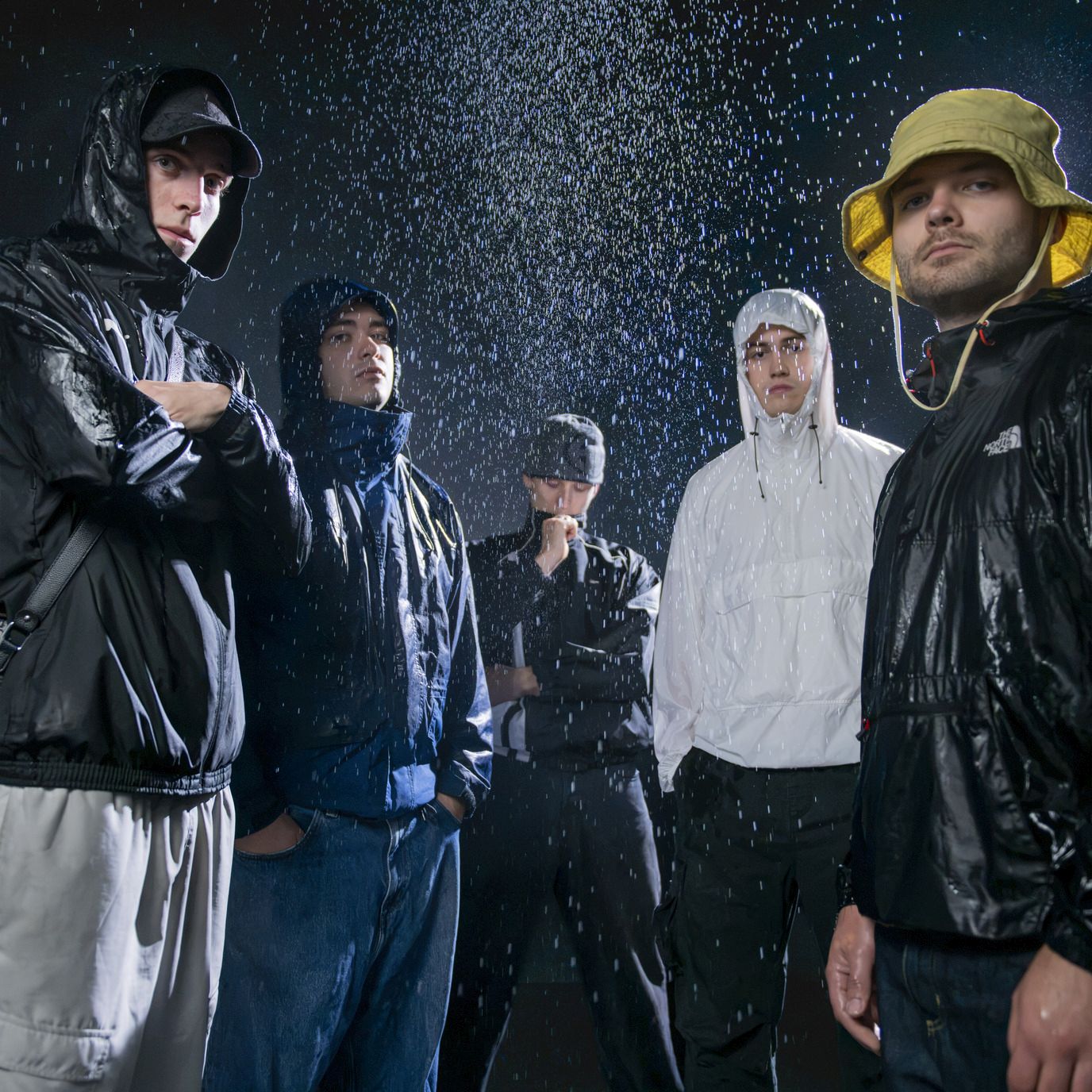
Members: Bruno Sikorski (keys), Antoni Blumhoff (soprano sax, flute), Paweł Kowalik (trumpet), Wojciech Roman (bass guitar), Nikodem Wikieł (drums)
Interviewee: Antoni Blumhoff
Nationality: Polish
Current release: Omasta's new single “Pillow Talk” is out via Astigmatic.
Shoutouts: We would like to shoutout our friends and colleagues who push the music into the future: Astigmatic Records label, Gent Jazz Festival, Tina Edwards, Irreversible Entanglements and South London’s Bina.
If you enjoyed this Omasta interview and would like to stay up to date with the band, their music, and upcoming live dates, visit their official homepage. The group are also on Instagram, bandcamp, tiktok, and Facebook.
What were some of the musical experiences which planted a seed for your interest in jazz?
I used to study classical flute. [Antek] When I became a teen I grew tired of it and wanted to switch to guitar. I discovered artists like Jimi Hendrix and after a while switched back to flute because I was way more technically advanced on it.
So I kind of gradually, naturally gravitated towards improvised music.
What does the term jazz mean today, would you say?
We think it strives to describe a whole array of genres with a shared commonality which is creative improvisation.
As of today, what kind of materials, ideas, and technologies are particularly stimulating for you?
I’m the woodwind player [Antek] and I’ve been looking into expanding the practical stage use of the electronic wind instrument, not just as an electronic equivalent to a sax but as an additional synth layer to the keys or the bass.
I’d love to have a custom EWI one day.
Where do most of your inspirations to create come from – rather from internal impulses or external ones? Which current social / political / ecological or other developments make you feel like you need to respond as an artist?
Inspiration is always there; you just have to tune in to it and be attentive and mindful to what the world shows you.
I think everyone should create an environment where it's easiest to tune into this wave of inspiration. For me, it could be the sun, the sea, or a solitary walk through the city after the dark.
I think silence can be really inspiring. For something to come into being, it must first have the space for it.
Tell me a bit about the sounds & creative directions, artists & communities, as well as the colleagues & creative hotspots of your current hometown, please. How do they influence your music?
These are difficult times for Krakow. I feel like every decision the city makes is made for the benefit of tourists, forgetting that people live here, too.
However, initiatives are starting to emerge that we strongly support, such as the Nienoc collective. They organize jam sessions which attract huge numbers of young people who want to discover improvised music. Other grassroots initiatives are also emerging, such as Jazz na Forum.
We need as many young people in Krakow as possible who want to push this culture in the right direction with us.
What role do electronic tools and instruments play for your creative process?
They’re playing an increasingly important role. This will become clear after the release of our second album.
Each of us has individually enhanced our instrumentation with new instruments and effects. I think Antek's EWI is a definite hit; it looks like a giant vape, haha. It's an important tool, worth using to enhance a live show as well.
We have some ideas for concerts with the new album, so come check it out.
Thanks to technological advances, collaboration has become a lot easier. What have been some of the most fruitful collaborations for you recently and what approaches to and modes of collaboration currently seem best to you?
We like to collaborate only with artists whose music we genuinely vibe with and think align with Omasta.
We like to approach artists in person rather than contact them online, we think it makes the connection more genuine.
Jazz has always had an interesting relationship between honouring its roots and exploring the unknown. What does the balance between these two poles look like in your music?
We of course highly acknowledge the tradition.
We like to especially honour the rich tradition of Polish jazz and think the PRL era polish jazz music deserves recognition on the international stage.
How much potential for something “new” is there still in jazz? What could this “new” look like?
We think the potential is endless because one of jazz’s characteristic traits is pushing forward. So as long as it’s pushing music forward, it’s jazz.
It can have many faces. There are many contemporary artists who are kinda jazz in that sense even though they are not labeled as such.
For many artists, life-changing musical experiences take place live. How do you see that yourself?
Hmm, we think our firsts are always these life changing breakthroughs. Like the first time playing a main stage or the first time at London’s Ronnie Scott’s.
Actually our first time on a main stage was exactly one year ago was. We played before James Blake, it was cool.
How, would you say are your live performances and your recording projects connected at the moment? How do they mutually influence and feed off each other?
Of course, we approach live performance and studio recording in fundamentally different ways.
We regard our recordings as a kind of calling card—something intended to encourage the listener to come to one of our concerts and experience our music in a truly unique way.
We arrange our live performances in such a way that each show is distinctive, allowing the audience to experience something genuinely special and unrepeatable.
Improvisation is obviously an essential element of jazz, but I would assume that just like composition, it is transforming. How do you feel has the role of improvisation changed in jazz?
For me, [Wojtek] and for the rest of the band, this is a deeply personal and intimate matter.
Each of us draws inspiration for improvisation from a wide range of aspects of life, and naturally, as we grow older, gain new experiences, or simply find ourselves in a different state of mind, our approach to improvisation evolves as well.
I believe that, to a great extent, this process is driven by emotion.
What, would you say, are the key ideas behind your approach to improvisation?
In my opinion [Pawel], the key to improvising is listening to the rest of the band.
You can't think about the phrases you want to play and plan your solo in advance. The key to improvising is what's happening in the moment and that it's fleeting, unique, and unrepeatable. Therefore, the most important thing is to listen to each other.
You shouldn't think it's YOUR solo, but the solo of the entire band, which you can somehow lead at that moment, but you can't do it without listening to the rest of the band.
The Montreux Festival intends to preserve its archive of recordings for future generations. Do you personally feels it's important that everything should remain available forever - or is there something to be said for letting beautiful moments pass and linger in the memories of those that experienced them?
Of course music should be preserved, it’s a cultural heritage, and by being preserved can remain in rotation and keep influencing future musicians forever.
As far as letting beautiful moments pass, we think by that you mean recording videos of shows more than experiencing the actual show, in that case we think, that’s okay to have recorded shows, but it’s crucial to not let that be the main memory from the show.
Remember to take the time to experience and enjoy the music and stay in the moment as much as you can.