Published
Part 1
Name: Our Man in the Field
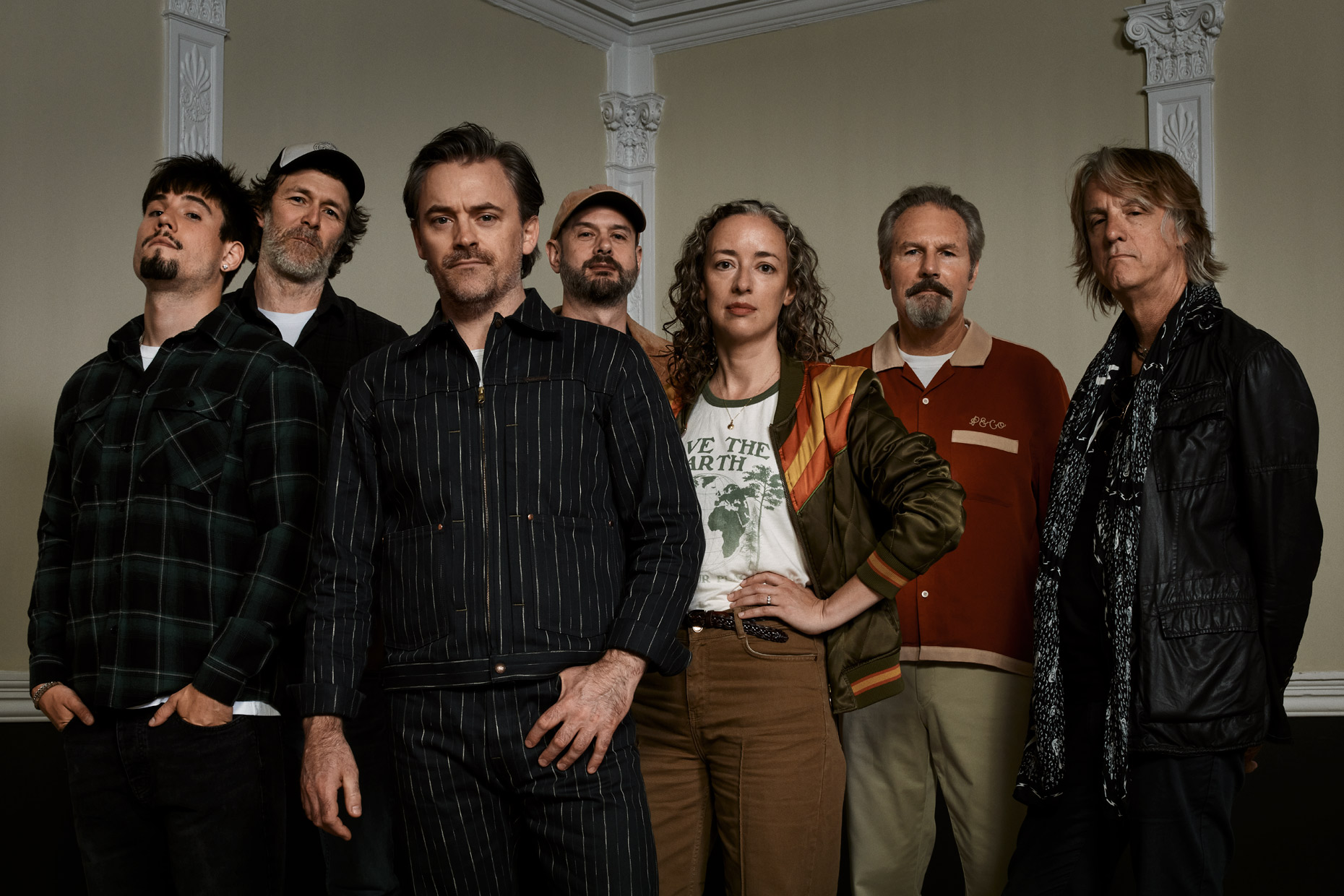
Main Member: Alex Ellis
Nationality: British
Occupation: Singer, songwriter
Current release: Our Man in the Field's new album Silverado is out via In the Field.
Hometown Recommendations: Saltburn-by-the-Sea is wonderful. Go down to the beach, have an ice cream and look up at Huntcliff. Walk along the pier, get fish and chips nearby, ride the Victorian funicular railway, or wander through the Valley Gardens. Any one of those is worth doing. But if you can only choose one thing, I'd say get a surfing lesson from the people on the seafront, hire a board and get into the sea.
Things I am passionate about but rarely get to talk about: I'm obsessed with proper espresso and old Italian coffee machines—their design, mechanics, smell and the whole ritual of making coffee. I fell especially hard for it while recording Gold on the Horizon at Tucker Martine's studio, where there was a Rancilio Silvia that I used constantly. Ask anyone in my band and they'll tell you I don't get to talk about coffee enough. I'm always happy to talk about it.
If you enjoyed this Our Man in the Field interview and would like to know more about the band, their music and current live dates, visit their official homepage. They are also on Instagram, Facebook, and bandcamp.
Do you think that some of your earliest musical experiences planted a seed for your interest in writing lyrics or poetry? How and when did you start writing?
I think it began very early. I had a toy guitar when I was about five or six, long before I knew any chords. I watched The Monkees on television and loved the idea of being in a band. I remember singing along to “Born in the USA” and enjoying making my parents laugh by performing for them.
As I got older I became shyer, but I never lost the urge to sing. I wasn't particularly interested in reading music or learning other people's songs. I started making up my own because I wanted to sing, and singing my own words meant I could deliver them exactly the way I heard them in my head.
Entering new worlds and escapism through music and literature have always exerted a very strong pull on me. What do you think you are drawn to most when it comes to writing?
I'm drawn to stories and people, particularly people who might otherwise be overlooked.
A song allows you to take a situation or a person's experience and put it out in the open, look at it from another angle, and invite somebody else to consider it. I try to put my own opinions to one side enough to serve the truth of the story, without losing the emotion.
Our Man in the Field is itself a character, rather like a journalist from another age, filing dispatches from a notebook. With Silverado I imagined that world extending into a kind of pirate radio station. It gives me a way to explore people and places, and to leave room for the listener to draw their own conclusions.
What were some of the artists and albums which inspired you early on purely on the strength of their lyrics? What moves you in the lyrics of other artists?
Ray LaMontagne's Trouble is a good example. When it came out, it sounded like a record from the seventies that I'd somehow missed—something I felt I should already have heard.
Part of that was Ethan Johns's production, but it was also the honesty of the songwriting and performance.
From speaking to Ethan, I've since learned how simple the process was: not all the ideas were finished, and they went into the room with guitar and drums and discovered the songs as they played. That seems fitting for the way the record feels to me.
Paul Simon, Jackson Browne and John Denver were also important, and later David Gray, before I'd begun to think of music as something I might do professionally. What moves me is how individual their lyrics feel. The words belong to the person singing them, and the emotion feels connected to that voice. It feels personal and believable, without being overdone.
I went through a Bob Dylan phase too. His work feels different to me: I hear an ongoing act of artistic self-creation, almost as though his whole life is part of the project. I can see a connection there with my own journalist or radio-presenter character. With LaMontagne, I often feel as though he's simply telling me about his life.
They're different experiences of listening, but that sense that the words could only come from that person is what draws me in.
Have there been song lyrics which actually made you change (aspects of) your life? If so, what do you think, leant them that power?
I can't think of a particular line in a song that's made me change my life. But the greatest songwriters make you look at situations and the world a little differently from the mainstream. Neil Young, Joni Mitchell, Ray LaMontagne, Laura Marling, Jeff Tweedy and Van Morrison have all influenced me in that way.
It's not just their lyrics, but the way they've approached their music and lived their lives as songwriters. Their truthfulness has helped shape what I value: experience rather than fame, money or material things. There's an extraordinary gift in being able to write a song about something you've experienced or felt, sing it to somebody, and have that person listen and connect with it.
Those artists have made me want to write honestly and to live that way too.
It is sometimes said that “music begins where words end.” What do you make of that?
I often know the feeling of a song before I've found the words for it.
There's a seed of something at the back of my mind, and I'll play the guitar, trying to find music that fits the feeling and teases it out. Sometimes the music helps me discover what I'm trying to say. We're very sensitive to what music does to us—you only have to think about how a film score can make you feel tension or sadness before anyone has said a word.
Melody is really important to me, and I try to find more than one melody within a song. I deliberately leave space after the words so they can resonate and have room to breathe. Then another musician, often Henry, can come in with a counter-melody that helps resolve a thought or moves it forward.
I picture it as a line being drawn by the vocal melody. Another colour might take over—that could be the dobro or the piano—and carry the line on, before it comes back to the voice. Sometimes there are two lines, the vocal melody and the melody on another instrument, wrapping around each other. The words and the different melodies take turns carrying that train of thought through the song.
I have always considered many forms of music to be a form of poetry as well. Where do you personally see similarities? What can music express which may be out of reach for poetry?
Poetry has music in it already: rhythm, phrasing, the sound of one word against another. A song adds another way to communicate, even before the words begin. An instrumental introduction can establish an emotional world that the lyric then enters.
I remember hearing about a documentary in which people who didn't understand the language of an operatic performance nevertheless recognised its sadness and connected it to their own families. I may be misremembering the details, but the idea has stayed with me.
Music can reach someone without the words having to be translated.
The relationship between words and music has always intrigued me. How do you see it? In how far can music take you to places with your writing you would possibly not have visited without it?
I don't think there's a fixed relationship.
Sometimes the music comes first, sometimes a line or a set of lyrics, and sometimes a whole song seems to arrive in ten minutes. Melodies can come to me in the shower, almost out of the drone of the water. The way I play guitar naturally opens some doors and closes others.
I try not to dissect the process too closely. There's something unpredictable about it, and I worry that if you interrogate it too much, the magic might get scared away.
What are areas/themes/topics that you keep returning to in your lyrics?
I return to the past, to the lives of ordinary people and to the idea of vocation—what it means to feel called to do something.
I'm fascinated by faith and conviction, partly because I admire them and perhaps envy them a little. I write about resistance, about whether life needs a meaning, and about people who are easily overlooked.
Everybody has a story, even if nobody has thought to ask them for it.