

Name: Plum
Members: Jeff Kelley (guitar, lead vocals), Heather Perry (bass, vocals), Eric Ridder (drums)
Interviewees: Jeff Kelley, Heather Perry
Nationality: American
Current release: Plum's new album Bodies in Motion is out now.
Hometown Recommendations:
H: Here in Chicago I highly recommend seeing Theater of the Mind, a strange and lovely combination of theater and neuroscience experiments co-written by David Byrne of the Talking Heads and Mala Gaonkar.
J: I’m a huge fan of the Neo-Futurists, a Chicago experimental theater company who creates work in an non-illusory aesthetic. Their signature show, The Infinite Wrench, is an attempt to perform 30 (constantly changing) plays in 60 minutes. (There are also New York, San Francisco, and London outposts but it originated here in Chicago in the 80s).
If you enjoyed this Plum interview and would like to know more about the band and their music, visit their official homepage. They are also on Instagram, and bandcamp.
Where does the impulse to create something come from for you? What role do often-quoted sources of inspiration like dreams, other forms of art, personal relationships, politics etc play?
J: For me, the impulse to create comes from experiencing something that moves me. When I listen to a great record or see a band perform (or see a great play or film, and so on) at some point I think “what exactly are they doing that I responded to?” and “how can I make someone else feel that way?”
H: For writing music, I often turn to the styles and mythologies of bands I love for inspiration. I like to analyze and immerse myself in others’ sounds and then discover how they fracture and warp and turn into something totally different through my own creative process.
I came up with the main riff for “Too Much Sunlight” after listening to the Bandsplain podcast episode about Minutemen and listening to nothing but Minutemen for a few days. It sparked curiosity: “What are the signatures of a Mike Watt bassline?
If I experiment with inhabiting those signatures myself, what could emerge that I might never have thought of otherwise?”
For you to get started, do there need to be concrete ideas – or what some have called a 'visualisation' of the finished work? What does the balance between planning and chance look like for you?
J: I’ve found it’s more fruitful to just be in process than to think about a finished piece.
H: I rarely have a visualisation of a totally finished piece, but I do like starting with specific writing challenges or frameworks.
For example, I realized it had been ages since I’d written in an unusual time signature, so I listened to a bunch of Sonic Youth songs in anything but 4/4 to get my brain and hands moving in that direction and then challenged myself to compose a new 5/4 bassline each day for a week.
It helps me to avoid “blank page” paralysis while still allowing a lot of flow and spontaneity as I write.
Is there a preparation phase for your process? Do you require your tools to be laid out in a particular way, for example, do you need to do 'research' or create 'early versions'?
J: I have a recording setup where I can record vocals, guitar, bass, or sequenced drums immediately. More often than not I’m putting in placeholder bass or drums, since Heather and Eric are better at writing for their unique voices on their own instruments, but having a scaffolding to build on top of is very helpful.
I demo things out constantly—after practice I’ll record whatever new ideas we came up with into Ableton so I can work with them the next morning.
Do you have certain rituals to get you into the right mindset for creating? What role do certain foods or stimulants like coffee, lighting, scents, exercise or reading poetry play?
H: I always find meditation helpful before a writing session, and I like to do something to “change the air” before I begin - opening windows, lighting incense, something simple that sets the session apart from ordinary times of day. .
For your latest release, what did you start with? If there were conceptual considerations, what were they?
Tell me a bit about the way the new material developed and gradually took its final form, please.
J: Heather and I started writing this album with a short retreat to a cabin in Wisconsin where we came up with a bunch of different exercises, processes, constraints, and games to come up with seeds that we could grow into new songs. Things like drawing each other graphic scores to interpret, or imposing limitations like “write an asymmetric phrase”.
H: one of my favorite practices from the cabin was that we mapped a version of Brian Eno’s Oblique Strategies over the Major Arcana Tarot cards. I love to utilize Tarot as a Jungian tool for self-reflection and intuition, which is so intrinsic to creativity. Tying that to Oblique Strategies cards gave us some wildly layered prompts to follow as we made creative decisions.
What makes lyrics good in your opinion? What are your own ambitions and challenges in this regard?
J: For me, lyrics need to toe the line between sense and nonsense. I like when I don’t understand a line when I first hear it, but it still evokes an image or a feeling.
I feel less confident writing lyrics than I do writing music, so it often feels like a struggle, but in the end I’m very happy with how it turned out in the end. One of my goals for this record was to write in a way that was more abstracted from personal experience, less diaristic and more fiction-like.
H: I can fall into a trap of taking lyrics way too seriously, just overthinking them to death. For “Club Scum” I did something I’ve never tried before, which was giving myself permission to hold the lyrics as lightly as possible and be totally ridiculous with the content.
You’d never know it, but that entire song is inspired by the 1988 horror movie Hobgoblins, which just delights me to no end.
What are areas/themes/topics that you keep returning to in your lyrics?
J: A lot of my writing is a way of exorcising negativity and anxiety.
“Bodies in Motion” expresses a kind of “entertaining ourselves to death” anxiety, “Too Much Sunlight” is directly inspired by Byung-Chul Han’s “the Burnout Society”, “Asymmetric” is about the dull, imposing conformity of the modern social-media panopticon.
Many writers have claimed that as soon as they enter into the process, certain aspects of the narrative are out of their hands. Do you like to keep strict control or is there a sense of following things where they lead you?
J: definitely more following things where they lead me. I honestly can’t imagine creating something with strict control.
There are many descriptions of the creative state. How would you describe it for you personally? Is there an element of spirituality to what you do?
J: Initially it feels like channeling something.
Ideally my technical skills and knowledge are in a place where I can generate ideas and grow them without having to explicitly think about it much. Then inevitably I get stuck and then fall back on music theory; lots of songs I’ll get to a point where I need to write out the melody on staff paper and think about what’s happening and how I can expand and mutate it into more phrases, sections, etc.
For this album I was thinking a lot about counterpoint, so writing out the primary melody and seeing where I can fit secondary and tertiary melodies and rhythms in was a core part of the process.
Once a piece is finished, how important is it for you to let it lie and evaluate it later on? How much improvement and refinement do you personally allow until you're satisfied with a piece?
J: I have to cut myself off at some point. Radical revisions can definitely be a part of our process—taking one section or even one riff from a song, trashing everything else, and rebuilding—but eventually we need to say a song is as complete as it’s going to get.
“Faster, Brighter” went through a ton of demos, dating back to when we were writing our first album. I kept coming back to the progression and rhythm of the chords in the chorus and rewriting everything else.
How do you think the meaning, or effect of an individual piece is enhanced, clarified or possibly contrasted by the EPs, or albums it is part of? Does each piece, for example, need to be consistent with the larger whole?
J: Themes emerge, lyrically and musically, that make an album more than a collection of songs, but for me much of it is emergent rather than planned.
There have definitely been times we’ve dropped songs in progress because they don’t feel consistent with the rest we’re working on, mostly in terms of the music because lyrics always come way towards the end of the process for me.
In terms of what they contribute to a song, what is the balance between the composition and the arrangement (including production, mixing and mastering)?
J: I think we’re a band that comes from the perspective of live performance primarily and recorded artifacts secondarily, so as a trio we have strict limitations on how we can build arrangements.
We only have five instruments total—drums, bass, guitar, and two voices—and as a result we have to put a lot of thought into how to use that to create a variety of textures and colors within a song and within an album.
I think it’s hugely important, considering how much repetition happens in rock and pop music, to make sure that when we bring a section back it feels vital and not like it’s just filling a space in the form.
Music and the accompanying artwork are often closely related. Can you talk about this a little bit for your current project and the relationship that images and sounds have for you in general?
J: I created the artwork after we had finished recording the album, but I knew I wanted it to feel abstract, messy, and organic.
It was helpful that I was working in a medium that I’m not experienced in at all; I bought brushes and a beginner’s set of acrylics specifically to create the album art and did a lot of experimenting with mark making and creating textures.
I suppose the connection to the music is that I was trying to work intuitively and embrace chance.
After finishing a piece or album and releasing something into the world, there can be a sense of emptiness. Can you relate to this – and how do you return to the state of creativity after experiencing it?
J: As a very DIY band, the process of releasing and promoting an album is so long and requires so much attention that by the time we’ve finished the artwork, ordered the physical media, written the press release, booked the shows, practiced the performance, so on and so forth, I’m dying to be able to get back to writing new ideas and scheduling a generative jam practice instead of a polishing-the-details practice.
I would love to know a little about the feedback you've received from listeners or critics about what they thought some of your songs are about or the impact it had on them – have there been “misunderstandings” or did you perhaps even gain new “insights?”
J: We’ll play new songs live long before we record them, or even before we’re really finished writing them, which allows us to get a sense of what a song feels like in front of an audience.
A friend once told me that his favorite song in the set was one I was on the fence about, and that can be a really valuable outside opinion when you’ve spent so much time looking at a song from the inside.
Creativity can reach many different corners of our lives. Do you personally feel as though writing a piece of music is inherently different from something like making a great cup of coffee? What do you express through music that you couldn't or wouldn't in more 'mundane' tasks?
J: I make coffee the exact same way every morning: 45 grams of whole bean coffee into the grinder, 720 grams of water at 205F, bloom for 30 seconds, roughly 4 minute extraction.
If I made music that way it would be godawful. If there’s no sense of play or exploration in the process I can’t imagine anything interesting would come out of it.

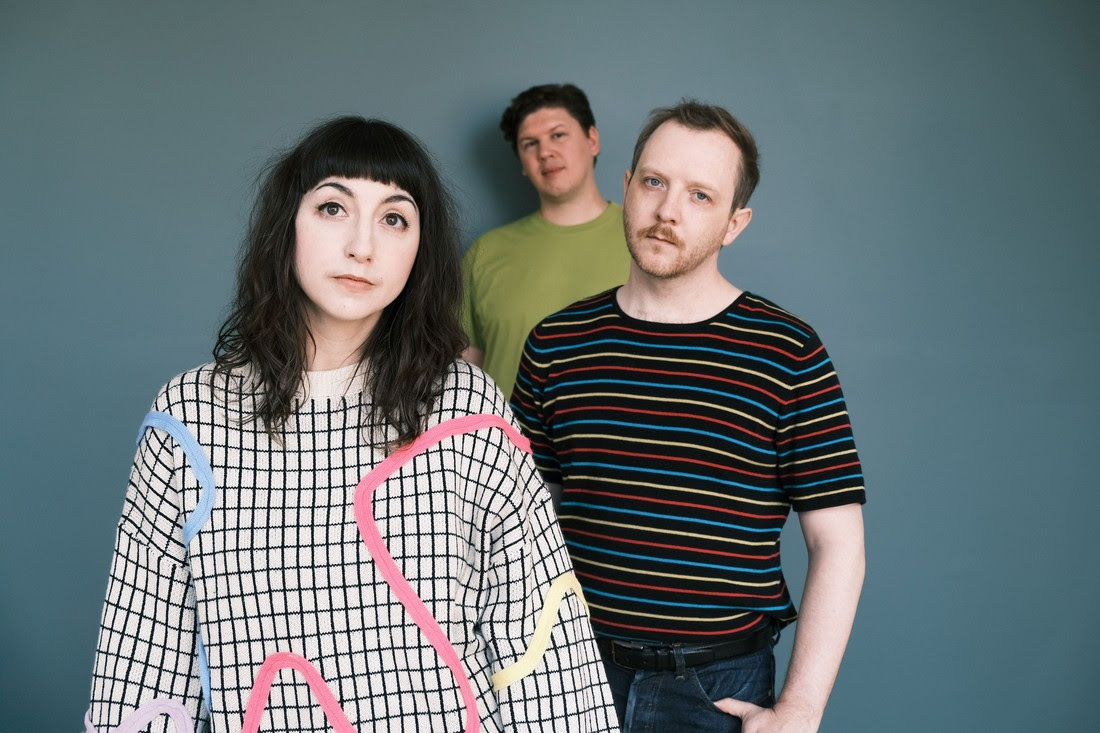 Plum Interview Image by Shannon Marks
Jeff Kelley: "I honestly can’t imagine creating something with strict control."
