Published
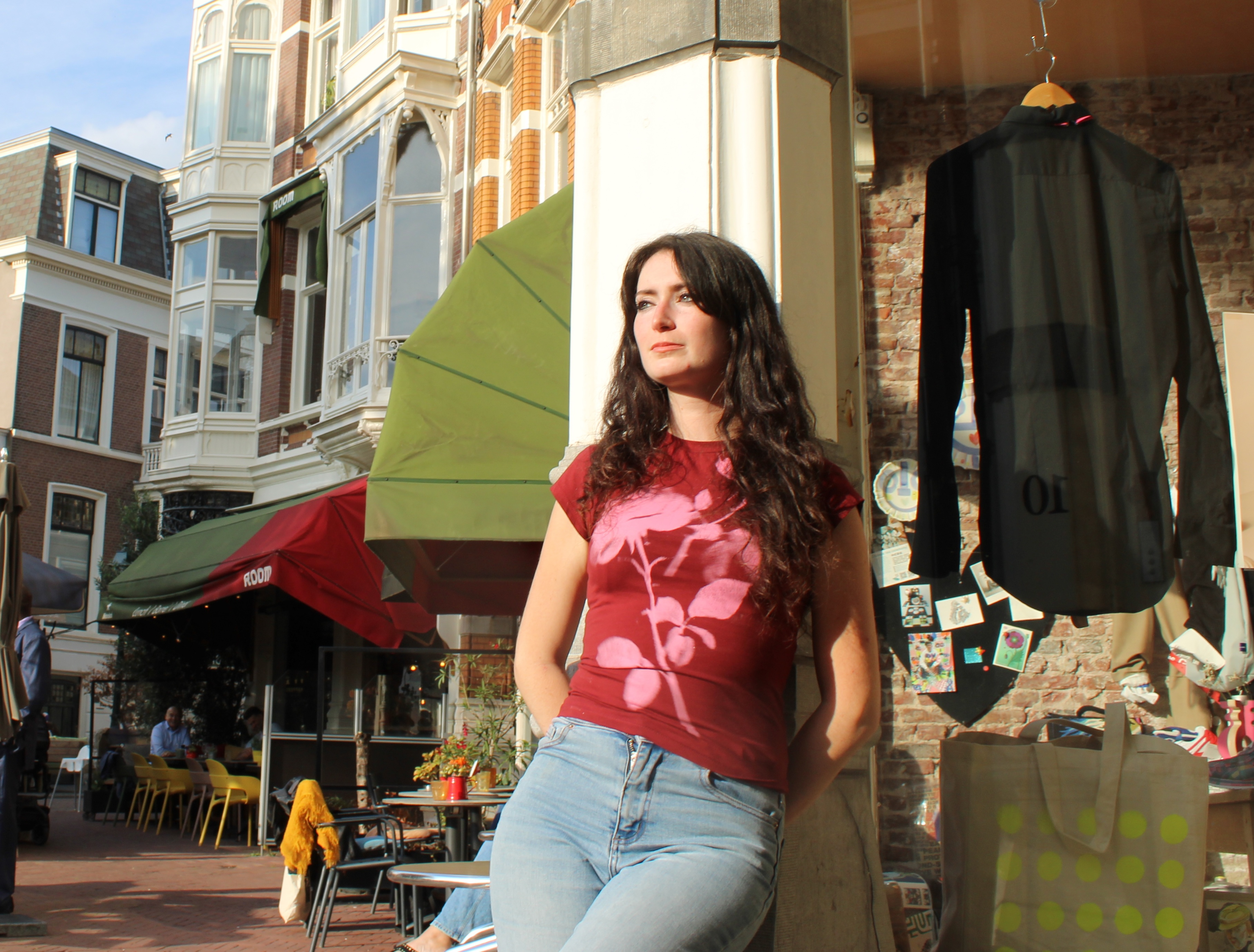
Name: Rebecca Galian Castello
Occupation: Composer, performer, researcher
Nationality: French, London-based
Current event: As part of PRXLUDES's PRX.LIVE series, a new work by Rebecca Galian Castello will receive its premiere performance at Chats Palace, Friday October 16th 2026. For more information and tickets, go here.
Shoutout: Shout out to Prxludes for all they do.
Hometown Recommendation: Don’t go to Pellici’s in Bethnal Green unless you want to have the best time ever. .
Topic that I am passionate about but rarely get to talk about: Seals (the animal).
If you enjoyed this Rebecca Galian Castello interview and would like to stay up to date with her music, visit her official homepage. She is also on Instagram, Soundcloud, and bandcamp.
The borders between producers, sound artists, and even songwriters are becoming increasingly blurry. What does being a composer mean today, would you say?
I think an overlooked aspect of the composer’s role is that of catalyst and facilitator. You don’t just write notes, you create flux, synergy, opportunities for interactions, a space for interesting things to happen. That’s a very important notion to me.
But arguably, that can also be said about producers, sound artists and songwriters. So maybe composers are not that special, maybe we are, in fact, just like other girls.
The frontiers between all those terms are quite porous today, so perhaps it’s just a question of medium and processes.
Many people perceive classical music and contemporary composition as having high barriers of entrance, both for listeners and musicians. What have your own experiences been in this regard?
It depends on what you mean by ‘high barriers of entrance’, but I think it can be true. To me, the issue often is a lack of appropriate framing.
Everyone knows who Mozart is, everyone will recognise the name and some of the tunes. We’ve been exposed to his music from a young age, we’ve been told listening to it is good for the brain, it helps us relax and focus and study, they even play it in hospital wards. Yet I’m not aware of that many people questioning whether Mozart’s music has high barriers of entrance, because we are familiar with it.
It’s about familiarity and exposure, in my opinion. I’m convinced more people would be drawn to contemporary music if we were more exposed to it in general. (I’m not suggesting we should play Penderecki’s Threnody to recovering hospital patients, by the way.) Sure, some currents of classical and contemporary music can be intimidating, they can feel opaque and mystifying and straight up weird, but a lot of stuff is hard to get into when you first come to it.
It’s not just classical or contemporary music. Some folk music is extremely hard to get into, because of aural transmission or language barriers or because one tune will have thousands of variants and it’s hard to know where it all starts and ends. Jazz can be hard to get into. Some more popular styles too, for example the work of highly prolific artists with a gigantic output. Anyone who’s ever tried to find their way through the entire catalogue of Frank Zappa or Johnny Cash will know what I’m talking about.
It’s ok to not know everything, you can be curious without having to become an expert or a convert. For musicians, the barriers of entrance definitely can be high. Classical music is a difficult discipline, it’s strict, it’s still ruled by very specific codes and standards and that can be stifling.
That’s part of the reason why I stopped being a Classical performer. It’s historically elitist, but things are changing. We need to keep investing energy and resources into making it fairer, and providing a broader representation of people, styles and influences.
As of today, what kind of materials, ideas, and technologies are particularly stimulating for you?
Repetition. Doing one thing and pushing it to the maximum of its potential.
Analogue technologies and DIY are still where it’s at for me. I always think: what’s the simplest, most accessible way of making this happen? How can I make this as easily repeatable as possible for the greatest number of performers?
Where do most of your inspirations to create come from – rather from internal impulses or external ones? Which current social / political / ecological or other developments make you feel like you need to respond as an artist?
Internal impulses, mainly. Most times, I think ‘I want to write a piece that sounds like an elastic band right before it snaps, or like a car driving so fast the wheels are coming off’.
Sometimes it’s a word or a sentence I read, or something someone said. Occasionally, it’s because someone annoyed me and I need to put the anger somewhere.
Tell me a bit about the sounds & creative directions, artists & communities, as well as the colleagues & creative hotspots of your current hometown, please. How do they influence your music?
I’ve lived in London for nearly 10 years, and the composer I am today couldn’t have emerged anywhere other than here.
Studying in London was very formative, but a lot of learning happened outside of the classroom, just going to gigs, meeting people and soaking up the energy. When I had just moved, I was at punk gigs every week, either at the 100 Club, the Birds Nest in Deptford or the New Cross Inn. I was very involved in the zine scene back then too.
It’s in those spaces that I developed my aesthetics, my DIY approach and a certain sense of freedom too. It laid the foundation for everything I do today.
Composing has always had an interesting relationship between honouring its roots and exploring the unknown. What does the balance between these two poles look like in your music?
Everything we do always comes from somewhere, or someone. It’s important to be aware of those roots.
It’s especially important when, like me, you believe that most great art is made in reaction to something. It’s through building your cultural literacy that you will find a painting or a piece or a film you fall in love with, and you want to bring more of that into the world.
Or you find a piece of art that you hate and you have a knee-jerk reaction to it, pushing you to make the polar opposite of it. Both are very interesting impulses.
How much potential for something “new” is there still in composition? What could this “new” look like?
To me, ‘new’ is recontextualisation. Putting together things you wouldn’t normally think would associate, offering new perspectives.
It’s what I aim to do with every piece.
What role do electronic tools and instruments play for your creative process? What does your creative space / studio look like and what tools does it contain?
My ‘studio’ is mostly my bedroom, occasionally the living room. It can also be a café, a library, a pub. I quite like the nomadic work lifestyle.
I don’t use a piano when I write, just some paper, a pen and my laptop.
It is my impression that adding a conceptual, non-musical dimension to one’s work is almost a prerequisite for commissions and grants. How do you view this tendency and how “conceptual” is your own approach to writing?
I share this impression with you, and I don’t like it. I think music that’s about itself – the sounds, the internal logic or unfolding of it, a gesture or an idea – is enough.
I find it frustrating that there’s always got to be a backstory to everything, because I don’t always work like that. Non-narrative, non-programmatic music is just as worthy as narrative, programmatic music. But the reality is that a piece with a backstory is more likely to be chosen for a grant or commission. People like a good story and they want to know why they should care about your music.
I don’t blame them, it’s just not how I work. If I like a piece and it happens to have some interesting background concept that enhances my understanding of it, great. But the first question always is, do I think the music is good as a stand-alone object?
At the same time, I don’t think that music can ever be totally abstract. Ideas always come from somewhere, even if you’re not fully conscious of it. There’s always an impulse. It’s just that most of the time, that impulse cannot be turned into a neat little marketable story of ‘I had this profound experience, I reflected on its broader implications and wrote a piece about it.’
Sometimes the impulse is ‘shit, the deadline’s coming up, better find something’.
Working with long forms, complex concepts or new vocabulary is potentially more challenging today because they require us to remember things that happened perhaps minutes ago – while most of us are finding it hard to focus even on what’s happening right now. Both as a composer and as a listener yourself, how do you deal with this?
I don’t really do long forms, YET. I want to. As a listener, I can struggle to stay engaged with longer formats, and it’s definitely a problem of our time.
I don’t feel bad about it though, it’s ok to drift in and out. Some art is like fireworks – impact, impact, impact - some is more like a wandering experience.
For many artists, life-changing musical experiences take place live. Few works these days, however, are performed beyond their premiere. What, do you feel, does this mean for composers, and the music they write, and how does this reality influence your own work?
I think you get stuck in a loop of always thinking about the next piece, the next achievement. It can become a numbers game.
I will however say that many of the performers, ensembles and organisations I’ve worked with (shout out to Orkest de Ereprijs and Xenia Pestova Bennett in particular) have made conscious decisions to perform my works several times, which needs to be said and for which I’m very grateful.
To some, the advent of AI and ‘intelligent’ composing tools offers potential for machines to contribute to the creative process. What are your hopes, fears, expectations and possible concrete plans in this regard?
I don’t believe AI can contribute to the creative process. AI works because it’s good at recognising and operating with formulas and patterns. There can be a formula to the way a composer writes, but that’s just a framework. The artistry is in what happens next. Upsetting the formula is where it gets interesting.
I nearly always work with repetition, but I wouldn’t call my process formulaic. You have to feel how long a section should last, how long an idea should get repeated for, when is a good time to mess things up etc.
Some artists make interesting work with AI and I’m able to recognise the value of that, even though I don’t necessarily relate to it. Personally, I’m just not interested in music produced by AI. I think it contradicts the purpose of art, the connective aspect of it, and it flattens music into a product that can be spat out by an algorithm within seconds.
Whatever happened to suffering for your art?!