

Names: Roy Montgomery, Martha Skye Murphy
Nationalities: British (Martha), New Zealand (Roy)
Occupations: Guitarist (Roy), vocalist, songwriter (Martha)
Current release: Roy Montgomery and Martha Skye Murphy's new album Nebular is out via AD 93.
Hometown Recommendations: Roy: The Port Hills and other parts of Banks Peninsula. Or, my 1948 Hudson Super Six Sedan which is God’s work as far as car design goes.
Martha: The Nickel Cinema in Clerkenwell, London.
Things I am passionate about but rarely get to talk about: Roy: Native birds of Aotearoa New Zealand. American cars from the 1930s to the 1970s. A-frame buildings. Moomintroll books.
If you enjoyed this Roy Montgomery and Martha Skye Murphy interview and would like to stay up to date with their music, visit Martha Skye Murphy on Instagram.
What were some of your earliest collaborations? How do you look back on them with hindsight?
Martha: My first experience of collaborating was aged 8, with Nick Cave. I sang a hymn for the opening credits to John Hillcoat’s film The Proposition, which Nick Cave scored with Warren Ellis.
I am immensely grateful for this experience as it initiated me into the musical profession with collaboration at the forefront. It also imprinted upon me a need to chase the profound beauty that can appear as the result of naivety.
There are many potential models for collaboration, from live performances and jamming/producing in the same room together up to file sharing. Which of these do you prefer – and why?
Roy: For me it usually depends on the circumstances of the moment and/or the phases of my life. I don’t generally inhabit a musician’s world in a day-to-day sense so the live performance/studio jam or being in the same space is and has been rare for a very long time.
Added to that I cut my playing and recording teeth at the end of a period where men of varying ages seemed to spend inordinate amounts of time simply pissing about with equipment in the “practice room.” It just didn’t interest me.
Furthermore, and perhaps related to that, I had and still retain a very limited technical playing ability so jamming or improvising was and remains out of my comfort zone. File sharing seems to work best for me although of course it misses special moments that happen in the room so I realise it is a compromise and sometimes I miss that chance aspect of collaboration.
Martha: I need to be able to find and then enter the same portal and once through it, surrender to whatever is there together.
How did this particular collaboration come about?
Roy: I think it started with a mixtape by Martha and then some electronic communication and then some files from Martha to which I added parts and later the other way around.
But that makes it sound clinical. The conversations were about seeing if we were on the same wavelength in terms of technology (low-fi is good), film and other aesthetics. Martha is more articulate about this!
Martha: I was a fan of Roy’s and put one of his songs on a mixtape, which Roy saw through our digital orbit. We started talking about shared principles and found we had very similar taste and approaches to our practice.
I remember in our first conversation we spoke about The Residents, theatre and performance art informing our work and digital recording illiteracy.
Describe your creative partner in a few words, please.
Roy: This is tricky because we have spent only a few hours at most in each other’s company (in London in 2023) and I am absolutely awful to speak with on the phone or by video link. [lengthy pause….].
So, nuance is lost here but: Superintelligent. Deep thinker. Knows what they are searching for in music and artistic expression. Very professional. Fearless. Kind.
Martha: Roy is best understood through his work. He is a completely holistic artist. He is as enigmatic, philosophical and earth bound as his mysterious music.
What do you generally look for in a collaborator and what made you want to collaborate with each other specifically?
Roy: I often look for a voice with more range and contrast and better pitch than mine. The ability to add accents or to shift a basic rhythm and/or pattern of mine to a different level. Bringing in different instrumentation. Direct emotional singing or playing.
I think the initial attraction was the way Martha described the musical world she inhabits.
Martha: Open arms.
Tell me a bit about your current instruments and tools, please. In which way do they support creative exchange and collaborations with others?
Roy: Over the past decade or so mainly six or twelve string electric guitar layered several times through effects such as TC Electronics Alter Ego x 4, shitty onboard presets on Tascam DP-01 FX digital 8 track recorder. I guess by providing a fairly filled out sound with repeating patterns that allows others to lay materials over the bedrock or sonic plane so to speak.
Conversely, I think I can bring in more ghostly guitar sounds to other people’s compositions rather than say, lead lines, or breaks.
Martha: For Nebular I layered a demonic analogue SoMa synth with an upright piano and my voice. I had minimal control over these tools, it felt more like I was their instrument.
Before you started making music together, did you in any form exchange concrete ideas, goals, or strategies?
Martha: No. With each song or bounce of stems we shared snippets of what was going on in our lives. But I didn’t see these as ideas for material, just context.
Roy: I think we discussed ideas but went pretty quickly to sharing files to see what might happen. I would have to look forensically at email exchanges to confirm this recollection.
In terms of the past two collaborations I have had such confidence in Martha’s intuition that I have just sent files without much suggestion or instruction. I think I plan my end of things and then hand over.
Generally speaking, what are your preferences when it comes to planning vs spontaneity in a collaboration?
Roy: I definitely plan when starting my own recordings from scratch so that the recipient tends to get a hefty package of sound which can be helpful or difficult, maybe impossible to undo, and therein my lie a loss in collaborative potential. Stripping things back or keeping things acoustic and then jointly building up.
I would love to do that with Martha!
Describe the process of working on Nebular, please. What was different from your expectations and what did the other add to the music?
Roy: As above, I handed over several built-up pieces of sounds which were already in orbit and would have benefited from any light touch Martha might have chosen for them.
But Martha really set the controls for the Sun and achieved escape velocity with them …
Is there a piece which shows the different aspects you each contributed to the process particularly clearly?
Roy: “Cloudburst.” Martha animates that piece emotionally in a way I could never achieve.
I can’t say anything more.
Martha: I agree that “Cloudburst” feels most like a meeting point where we co-inhabit rather than co-create a space.
What tend to be the best collaborations in your opinion – those with artists you have a lot in common with or those where you have more differences?
Roy: For one reason or another I don’t have much time to collaborate and I need to be working with someone with whom I already feel I have something in common sonically and aesthetically, or, and this has been important in my work, I rely on a trusted friend or source to say “You should do something with X.”
For example, in the case of my collaboration with Flying Saucer Attack it was the bracketing of a review in Popwatch Magazine which led me to write to Dave Pearce and then later visit him in Bristol, hence the Goodbye EP.
Martha: I think it can be either so long as you commit to each other.
What happens when another musician take you outside of your comfort zone?
Roy: I see it more as going deeper into your comfort zone without becoming self-indulgent.
My range is also quite simple as an instrument player. The guitar slides from the zen meditation end of the spectrum to the jagged distortion end.
If a musician wants something else or specific expertise then there are plenty of people with superior technical ability out there to call upon.
Decisions between creatives often work without words. How did this process work in this case?
Roy: Because of the distance, time zones and intermittent contact opportunities we sometimes had to make summary comments and decisions which were documented in emails or messaging, “notes” on our work if you like, which clarified what we felt could and couldn’t be done.
But more often it was trust based. If Martha or the producer chose not to use something I sent for the album Um, for example, that was that, whether it was explained to me or not. I trust Martha’s judgement.
What are your thoughts on the need for compromise vs standing by one's convictions? How did you resolve potential disagreements in this collaboration?
Roy: As above. We had talked some of our convictions through early in the process.
It should also be remembered that we sought each other for collaboration rather than being recommended or required to work together. It might be different if you have big management and a big label at your shoulder.
Was/Is this collaboration fun – does it need to be?
Roy: I think Martha and I probably have similar work ethics when it comes to making work. Heads down till it is done.
I wouldn’t describe it as active fun but deeply immersive with profound joy at the completion of the collaboration which we can hardly celebrate given the tyranny of distance.
Martha: I would describe it as necessary.
Do you find that thanks to this collaboration, you changed certain parts of your process or your outlook on certain creative aspects?
Roy: I think the certainty of knowing that Martha and I can give each other quite well-developed pieces for each of us to add to has whetted my appetite for starting work with Martha from scratch as I mentioned above.
But that doesn’t extend to wanting to work with others from scratch or simply improvising for the sake of it without the time to get to know what you can bring to someone else’s sound and style.
Collaborating with one's heroes can be a thrill or a cause for panic. Do you have any practical experience with this and what was it like?
Roy: Local heroes? Yes.
I wasn’t even playing an instrument when I first saw the Vacuum Band playing in Christchurch in the late 1970s. Over the next few decades I collaborated with Peter Stapleton (the drummer) in the Pin Group and Dadamah, invited Bill Direen (guitarist and vocalist) to guest on an EP, and most recently had Stephen Cogle (bassist and vocalist) contribute to an album (Broken Heart Surgery on which Martha also appears).
Otherwise? No, the opportunity never really arose.

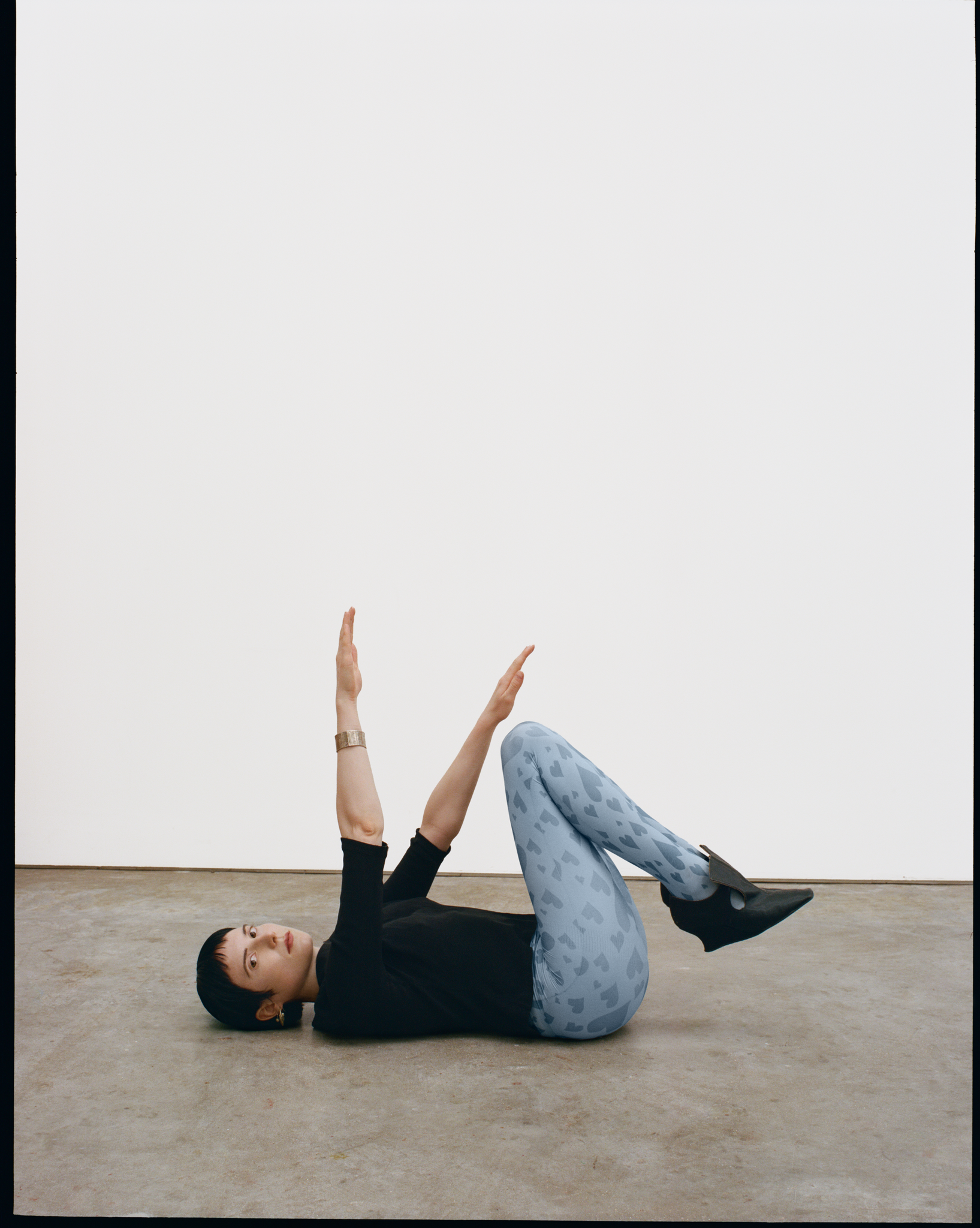 Martha Skye Murphy Interview Image by Ben Murphy
Martha: “Was this collaboration fun? I would describe it as necessary.”
Video
