Published
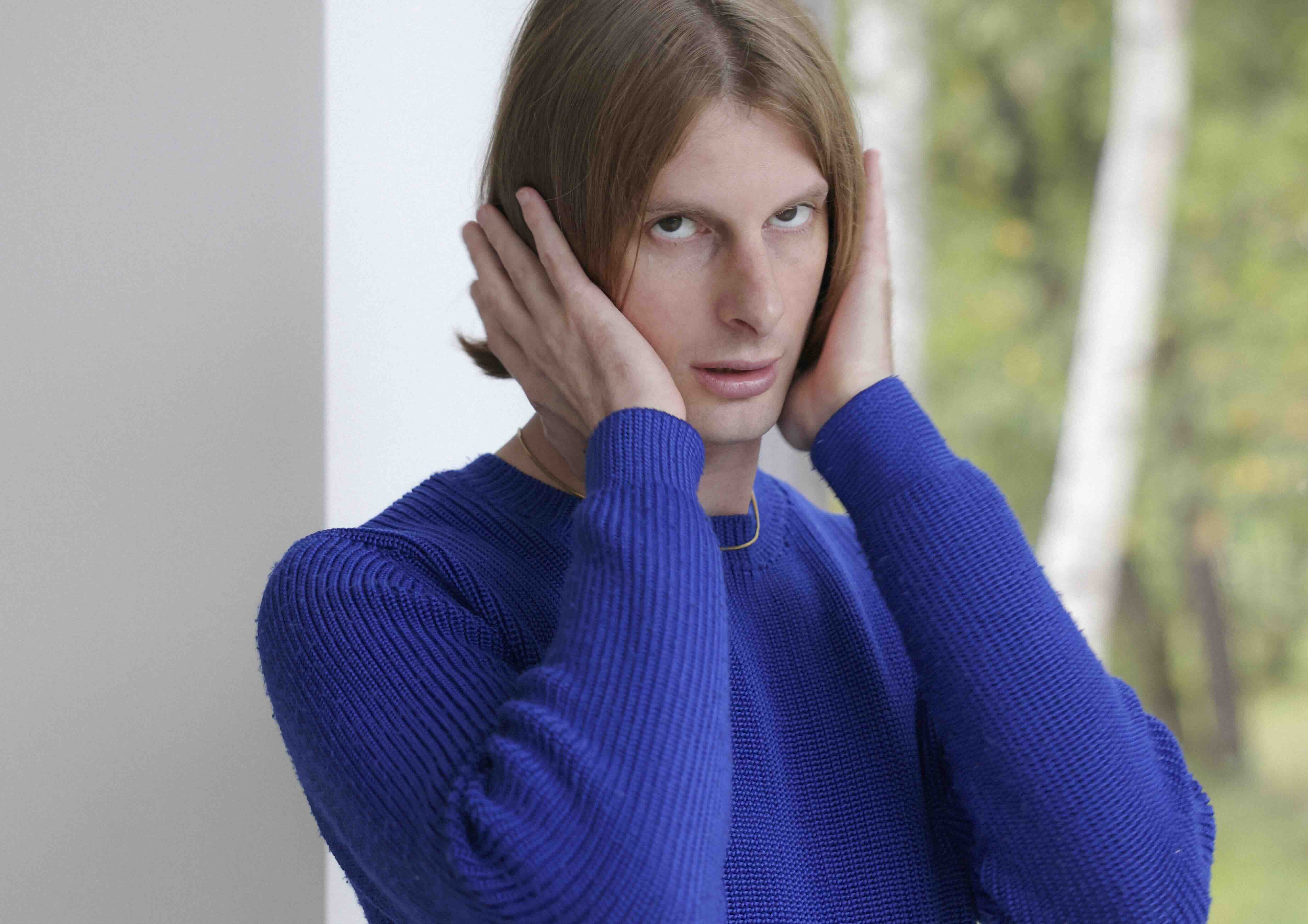
Name: Samuel Barbier-Ficat
Nationality: French
Occupation: Composer, sound artist
Current release: Samuel Barbier-Ficat's Siegfried EP is out now.
Hometown Recommendations: Palais Garnier, the opera of Paris.
If you enjoyed this Samuel Barbier-Ficat interview and would like to know more about his music and upcoming live dates, visit his official homepage. He is also on Instagram, and bandcamp.
What were some of the musical experiences which planted a seed for your interest in electronic music?
One of my biggest revelations was Further Down The Spiral by Nine Inch Nails. I was a teenager and didn’t understand how this kind of music was made.
I couldn’t explain why it felt so different from anything else I had listened to.
It was probably the first time I encountered music where the production and the mix felt like the composition itself. The sound became more important than the melody, the rhythm, and even the lyrics (I didn’t understand much English at the time). I was completely lost in the textures, the density, the distortion, and the intensity.
It influenced the way I started making music. I began recording sounds from my environment, from guitars and synths without really knowing how to play them. I was more interested in sculpting sound.
Reading Trent Reznor’s album notes also became a kind of map for me. It led me to explore artists such as JG Thirlwell, Coil, Adrian Sherwood, Aphex Twin … This slowly opened up a much larger world of electronic and experimental music.
[Read our JG Thirlwell interview]
Most genres of music make use of electronic production means. What does the term “electronic music” mean today, would you say?
For me ‘electronic’ has been the instrument of the last few decades, like how previously it was the piano, harpsichord, lute etc. You can produce all types of genres through this instrument.
However, the label of “Electronic music” denotes a genre despite it branching out enormously now. It’s just signifier for the press, distributors, and labels.
We are in a time where all genres are blended, there aren’t really any hermetic categories like there were back in the day. It’s a term for Spotify playlists!
Disco, house, techno, drum n bass, IDM and many other genres were about a lot more than just music. For you personally, is electronic music (still) a way of life – and if so, in which way?
Electronic music is way of life in that it’s really about community. When I moved to London 5 years ago, I immediately connected with so many artists from around the world with the same interests. I had never felt that strong sense of belonging before.
The scene over there is huge and the artists are on another level. It’s not even just a community of artists, it’s an environment full of passionate promoters, venues, labels and industry folks, all supporting each other.
London is interesting because it’s one of the few places where the DIY scene can connect with the industry, where the industry needs the underground scene mores than the opposite. It’s really inspiring.
Debates around electronic music tend to focus on technology. What, though, were some of the things you learned by talking to colleagues or through performing and/ or recording with other musicians? What role does community play for your interest in production and getting better as a producer?
I feel very lucky to have talented artists, musicians, and curators around me. Even simply sharing time in a studio, without any expectation that something needs to come out of it, can be incredibly enriching. Sometimes the most valuable part of a collaboration is just being exposed to someone else’s way of listening, thinking and working.
I really enjoy working alone on my own projects, but collaboration is an essential part of how I make art. It pushes me outside of my own habits and makes me question decisions that I might otherwise take for granted and helps me be confident about what creative directions I want to go in.
I also really enjoy working outside the traditional boundaries of music in my contemporary art career; through video art, performance, installation, or participating in other artists’ projects.
Entering someone else’s world is always challenging. You have to understand a different language, a different set of intentions, and find a way for your own practice to exist within it. Those experiences influence my solo work deeply.
What are examples for artists, performances, and releases that really inspired you recently and possibly gave you the feeling of having experienced something fresh and new?
Fatima Al Qadiri - Gumar
Peter Greenway - The Draughtsman's Contract Will Benedict - Pandemonium
What kind of musical/sonic materials, and ideas are particularly stimulating for your own work right now?
I saw the performance 27’52” by Jiří Kylián in Prague this year.
The scenography and the music was incredible and it was very inspiring how they incorporate the material and the mechanics of theater to build a climax; I was left speechless by the amount of emotion contemporary dance can convey.
Where do most of your inspirations to create come from – rather from internal impulses or external ones? Which current social / political / ecological or other developments make you feel like you need to respond as an artist?
For my new EP Siegfried, I started working on a more autobiographical body of work.
The project came from trying, for one of the first times, to express a process of self-reflection through lyrics. It became a way of looking back at myself while also trying to understand what happens when you leave a familiar place even when that place has become a kind of comforting claustrophobia.
The music reflects these contradictions. The composition moves very intensely between different states, from ambient passages to noise, from classical compositions to more distorted and fragmented textures. This constant shift mirrors the different states of euphoria, anxiety and pain that come with exposing yourself to new realities.
I’m also collaborating with the soprano Faustine de Monès on the project. Her voice brings another dimension to the work, something delicate and raw.
My latest work centres a lot around classism and gatekeeping in the art scene. There are so many obstacles and codes to enter certain spaces, and I find that the system filters out less-privileged artists over the years.
One political dimension that exists in my work is through the people I choose to collaborate with, the communities I participate in, the values I advocate, the way I choose to spend my time and energy … all of these decisions are part of how I exist as an artist.
And simply trying to make art, collaborate with people you believe in, and somehow manage to pay your bills while doing it is already a stance against capitalist principles. The choices you make about who you work with and what kind of world you want to participate in become part of the work.
Today, electronic music has an interesting relationship between honouring its roots and exploring the unknown. What does the balance between these two poles look like in your music?
I guess I tackle this often in my work.
I attended conservatory for twelve years, where I played electric guitar, saxophone, and piano. I was brought up in this classical environment and when I ventured into electronic music, I wanted to explore everything except the roots.
I was intentionally using the softwares in unorthodox ways, guarding a naive musical approach as long as I could.
What are some of the most recent innovations in sound design for you - and what are currently personal limits to realising the sounds you have in your mind?
Most of my sound design comes from accidents and not really knowing where I’m going. I’m not particularly competent in the engineering sense, and I often feel like I’m navigating in complete darkness, with my ears as my only guide.
I’m quite interested in this lack of control. Sometimes I discover a sound that feels important but doesn’t belong to anything I’m working on at that moment. Instead of forcing it into a piece, I archive it. Over time, this becomes a kind of personal library of accidents, fragments where I can draw from it for various projects.
There is a lot of waste in this process, and it requires a lot of patience. But I don’t really see the waste as a problem. It’s actually one of the parts of the process I enjoy most. The things that don’t work, the experiments that lead nowhere, the sounds that remain unused t-hey are all part of the work.
How, would you say are your live performances and your recording projects connected at the moment? How do they mutually influence and feed off each other?
When I compose music, I’m already thinking about the performance.
A concert is the most complete way to experience my music. I’m interested in performance as a space where an audience is invited to enter the music rather than simply listen to it. A live show is never just about sound. It is an act of world-building. I want to create an environment around the music with a scenography, costumes, and lighting.
The visual dimension enters my process very early. I need to have a clear vision of the delivery to compose and produce it. Without a concept or without a clear visual I can feel lost. I need that framework to guide me, not to impose limits, but to give the music somewhere to go.
This work is not always about making music the center of everything. Sometimes the concept works better than the music and I’m fine with that.
Even if AI will not entirely replace human composition, it looks set to have a significant impact on it. What does the terms composing/producing mean in the era of AI, do you feel?
I’m not interested in AI as a substitute for the act of making music. For me, creation is not a clean path toward a result. It is the mess, the accidents, the hesitation, the wasted takes, the wrong turns. That space where something is being made is sacred.
AI seems to place the goal elsewhere, on the result. But in art the result is only a trace. The real point happens in the moment of creation. Using AI to bypass that moment feels like confusing the orgasm with the experience that leads to it.
Yes, you can arrive at the result without the intimacy, the tension, the awkwardness, the time, the desire but then what exactly was the point?