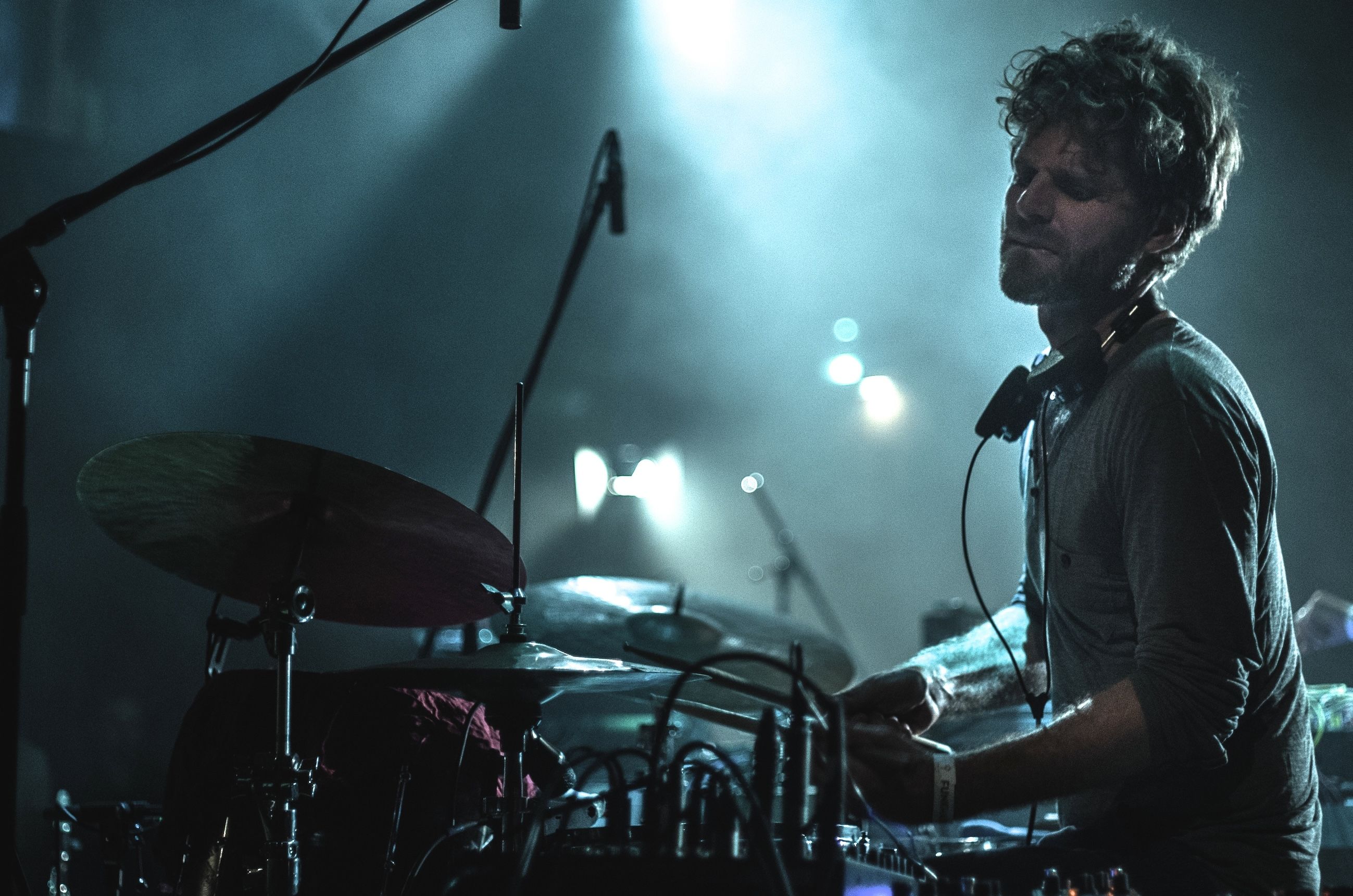
Published
Name: Samuel Rohrer
Occupation: Drummer, composer, producer, improviser
Nationality: Swiss
Recent release: Samuel Rohrer's Music for Lovers, featuring Nils Petter Molvaer, is out via Arjunamusic.
Pure drum music recommendations: One of my all time favourite is Doudou N´Diaye Rose, a master drummer from Senegal. Also Gamelan music from Indonesia or Gnawa music from Marocco I love to listen to.
[Read our Nils Petter Molvaer interview]
[Read our Nils Petter Molvaer interview about Certainty of Tides and Orchestral Meditations]
If you enjoyed these thoughts and insights by Samuel Rohrer and would like to find out more about his music, visit his official homepage. He is also on Instagram, Facebook, and Soundcloud. For a deeper dive, we recommend our earlier Samuel Rohrer interview.
Over the course of his career, Samuel Rohrer has collaborated with a wide range of artists, including Erik Truffaz, Wolfgang Muthspiel, Max Loderbauer, Bänz Oester, Jan Bang, Tyler Friedman, Eivind Aarset, Max Andrzejewski, and Kalle Kalima.
[Read our Erik Truffaz interview]
[Read our Wolfgang Muthspiel interview]
[Read our Max Loderbauer interview]
[Read our Bänz Oester interview]
[Read our Jan Bang interview]
[Read our Tyler Friedman interview]
[Read our Eivind Aarset interview]
[Read our Max Andrzejewski interview]
[Read our Kalle Kalima interview]
What was your first drum set like and what are you using today? What, to you personally, are factors in terms of build and design that you appreciate in drums and percussion instruments?
My first drum set was built from cans and old cardboard boxes. It was way before I actually started drumming, it was really in my early age. It then took quite a long time to get a “real” drum set, which I bought from my first self earned money when I was 14 years old.
Right now I still play Giannini drums, a Swiss brand, all fabricated manually. But also this one I bought about 20 years ago. Since I travel without my drums, I never got too much attached to one brand or specific instrument.
Usually I like thick, wooden and deep drums, to get as much low end as possible. But it all depends on the musical context.
Late Rush-drummer Neil Peart said: “The equipment is not an influence. It doesn't affect the way I play. It's an expression of the way I play.” What's your take on that?
Absolutely, I never got attached to any single idea or form of drums. But the beauty of it is that you can extend your instruments and add whatever you like, to express your ideas.
On the other hand I learned from early on to get a sound out of anything. I think this is the best school to find your sound actually, by always being challenged to work with different tools and instruments.
So it's both, the instruments form your playing but you also choose and adjust the sounds your playing needs.
Drumming is an integral part of many cultures, and traditions. Which of these do you draw from in your playing – and why?
I guess I have been influenced a lot through African/black American tradition from my early age, since this was the music I heard from the early days in our house.
Until today I feel most attracted to and influenced by West African drumming. Even though I learned drumming also lot through practicing south American rhythms, I never was really attracted to this kind of music, even though they have the same root. I just seem to like the stripped down power and rawness of African traditional music a lot.
What were some of the main challenges in your development as a drummer / percussionist? Which practices, exercises, or experiences were most helpful in reaching your goals?
Studying music was always a challenge for me. As much as I am an analyst, I am very intuitive when it comes to playing or creating music. On top of that I was not a traditionalist and I didn't really fit in anywhere. The fact that lots of things felt natural to me gave me a hard time to understand how or why I should explain it or have a reason for it.
At that time most schools for studying jazz were built on its traditional form, which I love and still do more than ever. (and I also believe it is very important to study the roots) But It was never my motivation to become a copy of something that has been already done way better. To find your own voice takes time and was difficult at that time. But I always felt it is just about that. Today schools are much more open for different influences than they were 25 years ago.
I learned most from playing with records and through imitating what I heard.
What do you think you're doing different than other drummers?
I guess I am not the “usual” drummer. I’m less and less interested in technique or actual “drumming”. I'm interested in musical expression.
I love to listen to Tony Buck, because he does exactly that. If he plays drums it is just music all the time.
[Read our Tony Buck interview]
[Read our Tony Buck interview about improvisation]
Anyhow, if the music brings you to places where “drumming” is needed, I am experienced enough to put that on the table, but I am more fascinated by how music works as a whole than what the drums actually do. I am fascinated by creating a web of sound and rhythm and how to make every voice heard to be equally important.
How do you experience the concepts of "groove," "swing," and "rhythmic feel" in music?
To me, within a groove and its accents, it is as much about the notes you do not play as the ones you actually do articulate. Swing is where you place these events in relation to the pulse, and how dynamic your micro time is.
Rhythmic feel is about dancing and especially listening, and this goes back to the beginning, so it is maybe a spinning wheel that creates this thing called “playing musical”.
How do time signatures and tempo affect our perception of rhythm?
It is more about how many events happen in one bar, rather than how fast this bar passes. The more events happen, the faster time feels. Little to none events can make a fast tempo feel slow.
Its the feeling of time we have now in general. Today every minute is packed with information and events. Thousands of years ago much less events were happening. I guess …. Time feels like it accelerates, but it is just much more dense.
I like to play with odd meters over common 3/4 or 4/4 rhythm, it can create super interesting polyrhythms. Often I also like to just use a pulse without a defined signature. If it is nicely done it can give you the feeling of a defined groove but still you have this open flexible feel to it.
What is the relationship between harmony, rhythm and melody? How do non-percussion instruments contribute to the overall rhythmic texture of a piece?
It's hard to separate any of these from each other. What I like and am getting better at, I guess, is to create rich textures of percussion and melodic elements that create a full sonic experience. Layered percussive sounds can create some sort of undefined harmonies or loose melodies.
Everything has rhythm, otherwise we don´t understand it. Without rhythm and accents words or sentences wouldn’t make any sense.
In relation to drumming, Stewart Copeland said: “Listening is where the cool stuff comes from. And that listening thing, magically, turns all of your chops into gold.” What do you listen for?
I think music (especially improvised music) is the only language where many speak (and listen) at the same time. You throw in the words which are needed to make sense with others, to create a story together.
This way, music can happen, and nobody cares about chops, as long as you have them.
Do you feel that honing your compositional / songwriting skills has an effect on your drumming skills?
Yes of course, composing is a lot about dramaturgy, tension and release. The more I am aware of what is needed as a producer, the more I’m able to shape the music from behind the drums more precisely.
Working on sound design helps me a lot in live situations or in a band context.
How has technology, such as drum machines and sequencers, impacted the way rhythm is created and perceived? Has it been a concrete influence on your own approach?
Of course. I was fascinated by DnB when it became popular. And I was trying to transport that to the drums.
Or all these broken beats we hear drummers play today, it comes from machines in the first place.
Many recording engineers have remarked that the drums can be particularly hard to capture. What, from your perspective, makes drums sound great on record and in a live setting?
I would say if it sounds natural. Meaning if you can really hear the acoustic drums, how they really sound.
I realise now how difficult it is to record drums since I do it myself. First it is about finding the right sounds, the tuning, then record it well and mix it into the music. I find it particularly difficult to mix acoustic drums into an electronic context if I want to keep the acoustic sound of it but blend it nicely into electronic and often highly compressed sounds. Also to make it all sound tight without making it sounding hard is a challenge.
I love low and warm frequencies, but they often don´t mix well into a dense context if you still want a clear overall sound.
Drums and percussion are remarkably often used for physical therapy / healing. What, from your point of view, makes them particularly suitable tools for this?
It must come from very old shamanic rituals and traditions, to call spirits or release or change energies. And it must be the vibrations/frequencies of the specific instrument, the physical impact they can have, and the trance like state you can achieve with drums.
Plus the intention you put into. Drums are the most archaic form of music, which was communication first of all, between different tribes but also to higher realms.
I think in our new age spiritual movement it is also popular to use drums because it is easier to play a gong or a drum and get a sort of decent sound out of it, than playing a violin and transport a transforming power on strings. It takes a lot of practice and skills to do so.