Published
Part 1
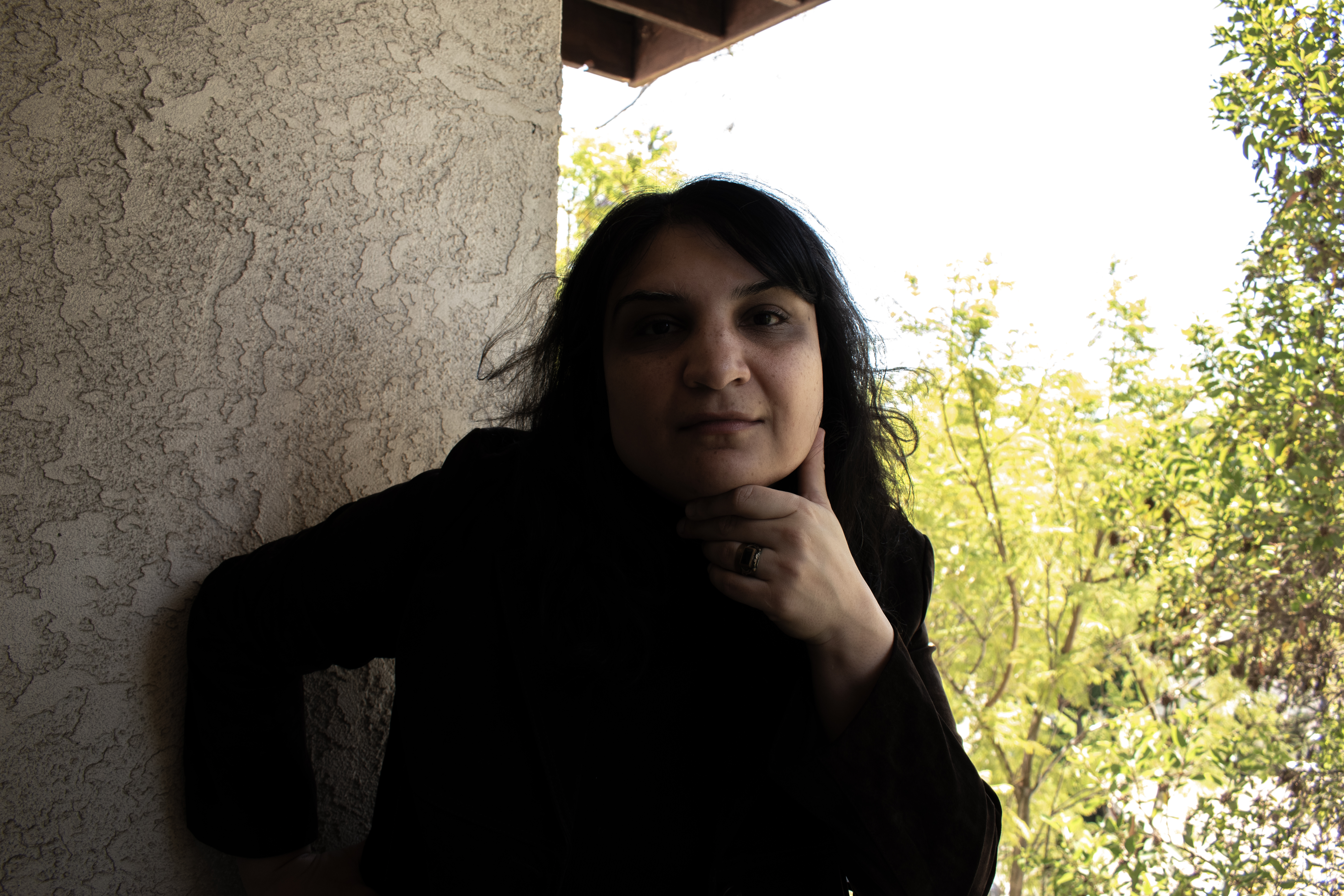
Name: Sarah Davachi
Occupation: Composer, sound artist, live performer
Nationality: Canadian
Current release: Sarah Davachi's new album The Will of Tongues is out August 28th 2026 via Late Music.
Hometown Recommendations: In my hometown of Calgary, Alberta, Canada, I would recommend visiting the National Music Centre, which is the musical instrument museum that I used to work at. It was very formative in my understanding of organology and timbre. The museum has changed a lot since I worked there and unfortunately most of the instruments in the collection are not on display in the public part of the building, so try to organize a tour of the recording studios, which house a wealth of incredible instruments that you would be hard-pressed to find altogether in a single room anywhere else in the world.
When you’re in Los Angeles, California, which is where I’ve made my home, you have to visit The Museum of Jurassic Technology. It is my spiritual home in LA, it is where I was legally wed to my husband, and it is one of the most magical places in the entire world, run by some of the best people you’ll ever meet. A description of what it is or isn’t won’t help, you just have to visit.
Also, both cities are blessed with proximity to epic natural beauty. Calgary straddles the Canadian Rockies to the west and the Canadian badlands to the east, both are beautiful. Los Angeles is a city of canyons, all of which are special, and is surrounded in all directions by overwhelming natural landscapes.
Topic that I am passionate about but rarely get to talk about: I am really interested in architecture! I see a lot of parallels between my musical practice and how I think about sound and acoustics and space etc., but beyond all of that, I just love learning about architectural styles and architectural history. I think architecture (and design) is a really overlooked art form but it’s an incredibly important one because it defines the spaces that we inhabit and thus has an enormous impact on the way that we live our lives. If not a musician, I probably would have wanted to be an architectural historian.
If you enjoyed these thoughts by Sarah Davachi, visit her official website for more about her music and current live dates. She is also on Facebook, Instagram, and bandcamp.
For a deeper dive, read our earlier Sarah Davachi interview and our conversation with her about her creative process.
When did you first start getting interested in the world of alternative tuning systems? Which artists, approaches, albums, or performances using alternative tuning systems captured your imagination in the beginning?
I grew up playing classical piano, and I think the desire that we all probably have in our late teens to look for alternative things was for me also heavily bleeding into that context of institutional and academic Western art music.
One of the first things that I became interested in at that time was spectral music, especially the works of Gérard Grisey and Claude Vivier, and then things that were kind of adjacent to that, like the music of Xenakis and Ligeti.
I don’t think I had the vocabulary to articulate it then, but I was really drawn to that way of thinking about sound in broader microtonal terms. I was mostly composing electroacoustic music at that time, so it made sense to organize sound in a malleable, continuous, and almost sculptural way.
When I was doing my undergraduate studies in philosophy and music at the University of Calgary, around age 20, I took an interdisciplinary seminar on tuning and temperament, which I was initially interested in because I was good at mathematics and enjoyed thinking conceptually with geometric relationships. But I think the learning curve with just intonation especially is pretty steep, so it didn’t stick in a way that went much beyond the theoretical.
Around the same time, I was also becoming more and more acquainted with the postwar American minimalist tradition and, perhaps not surprisingly, that had a massive impact on me. I think initially it was probably Terry Riley who sparked my interest in alternative tuning systems in a fairly concrete way.
I wasn’t super into his “lighter” compositions, like In C and A Rainbow in Curved Air, but I was deeply drawn to albums like Shri Camel and Persian Surgery Dervishes, and I think that clicked some kind of emotional resonance of tuning beyond the theoretical that I could locate and work with.
When I got to Mills College a few years later to do my master’s degree, it really snowballed and became something that I felt more dedication to learn and understand musically. In my first semester there, I took another seminar entirely on just intonation and went very deep into studying the music of La Monte Young and James Tenney.
Works such as Tenney’s Critical Band and Young’s The Second Dream of the High-Tension Line Stepdown Transformer were really important to my ear training. Those two composers are easily the most meaningful and significant early influences for me, with respect to tuning of course but also minimalist composition more generally. In relation to my more general interest in microtonality, I also became indebted during this time to the music of Éliane Radigue, Alvin Lucier, and Alvin Curran.
My earliest compositional explorations with alternate tuning systems were primarily expressed through microtonality, which can be heard in pieces like "In The Grand Luxe Hall" from 2016, and "If It Pleased Me To Appear To You Wrapped in This Drapery" from 2017-2018.
Both of those pieces use the concept of a slow and irregular glissando, allowing for incidental complex harmonies that are constantly shifting.
Microtonal approaches and alternative tuning systems are an integral part of many cultures, and traditions. Which of these do you draw from in your playing – and why?
My practical musical training, for better or for worse, has been almost entirely in Western academic traditions.
I feel pretty strongly that any meaningful understanding of a musical tradition requires some practice as well as theory, and so even as I attempt to learn about rational tuning systems in various non-Western traditions, I can’t help but feel that I’m perpetually sitting at the surface since I haven’t been able to devote myself to the practice of that music as well. I would love to go super deep and learn it all but there just aren’t enough hours in the day.
When I was at Mills, I began learning about Indonesian gamelan traditions, especially Javanese gamelan, and played in several traditional and contemporary ensembles while I was living in Vancouver in the years that followed; that definitely helped in developing an understanding of the tuning geometry, but I think structurally Javanese music moves in a way that’s quite different from my music and that the tuning serves a different function as a result.
So, learning about and practicing Javanese gamelan is valuable to me as a musician, but I don’t think it connects super directly with my own compositional practice.
I recently completed my doctorate in musicology at UCLA and in the early years of the program I was taking quite a lot of seminars in their ethnomusicology program, which has a rich history. During that time, I became quite interested in learning about maqam and Arabic musical traditions, and that helped me develop a deeper and more practical understanding of tuning systems in connection to their emotional resonance.
My doctoral studies were primarily in organology, or the study of musical instruments, and I can absolutely say that learning about instrument design in relation to tuning and resonance has had a very meaningful impact on how I think about sound more generally and how I approach composition.
I think it’s important to understand that the prison of equal temperament that Western musical traditions have created for themselves doesn’t have a function beyond practicality. Perhaps initially, when equal temperament was first standardized in the early twentieth century, it mirrored the pervasive interest in atonality of the time and meant something more intentional in its structure. But it persisted simply because it’s convenient and practical.
As soon as you move beyond it, either in historical time or in geography, you realize that tuning actually has a profound musical and often times spiritual function, even in music that’s entirely secular. So I suppose just rewiring my Western-educated brain to think of tuning in that way has been pretty monumental.
I’m always fascinated by how many non-Western musical traditions find that perfect balance between harmony and melody in relation to rational tuning, and I think that I’m still searching for that in my own compositional practice.
For The Will of Tongues, what did you start with, including your choice of tuning system? If there were conceptual considerations, what were they?
My favourite tuning system is quarter-comma meantone temperament. Which is funny because it’s a fixed system, meaning it’s tuned the same way every time. That makes it very different from just intonation and the historical practice of well temperament, which are approaches to tuning that contain a theoretically infinite number of expressions.
But I think all tuning systems, including fixed ones like meantone temperament and equal temperament, are like musical instruments in that they each have a specific way of sounding and they speak in ways that other tuning systems can’t. And they never get old; you could spend your whole life playing one instrument and you’ll constantly find new things within its cracks and crevasses. I think of tuning in the same way, and I approach it through the similar lens of orchestration.
The first pieces that I composed for the record were developed in tandem through a residency at EMPAC in upstate New York, and those are “The Rose Dialogues” and the “Interludes” series.
“The Rose Dialogues” is a bit more of a through-composed fixed piece, and so I wanted to explore in it a specific natural minor key within meantone temperament, to get a different flavour of the tuning than I’m typically used to. The “Interludes” series is more like an ongoing suite of harmonic studies, and it was important to have flexibility with the tuning, so those are all set to different structures of just intonation.
Then the choral pieces, “Songs of the Smile’s Fig,” were composed in a more traditional way with more conventional ensemble restrictions, so those were all written in equal temperament out of logistical necessity.
But even within equal temperament, I think that there are a lot of ways that one can explore aspects of harmonic resonance, certain intervals that can be emphasized or juxtaposed, so there are those kinds of considerations throughout that suite.
The organ pieces came last and were all written for specific organs in specific tuning systems, some in meantone temperament and others in different forms of well temperament, which is sort of like an extended version of meantone temperament in which there are different sizes of the same interval throughout, and no discordant wolf intervals.
Those pieces were all composed specifically in response to the tuning system of the instrument.