Published
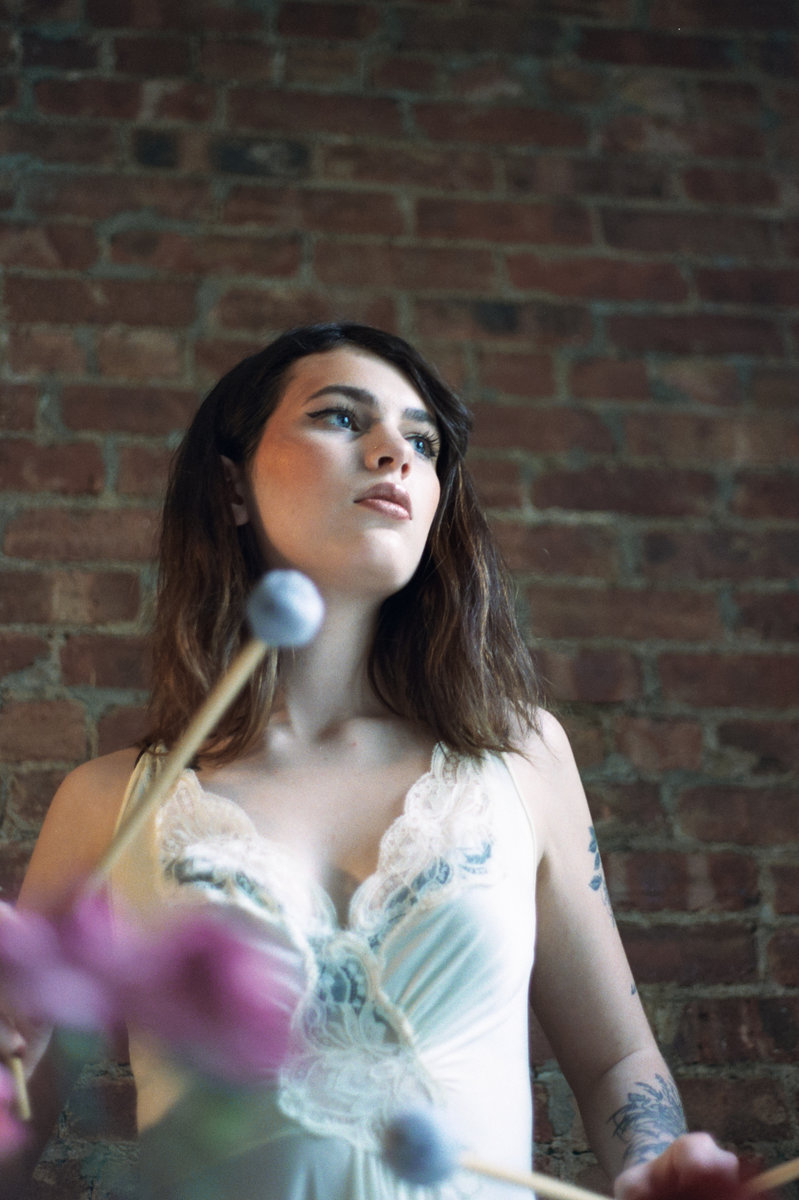
Name: Sasha Berliner
Occupation: Percussionist, improviser, composer
Nationality: American
Current event: Sasha Berliner is one of the artists appearing at the XJAZZ! 2024 festival in Berlin. For tickets, go here.
Other acts at the festival include Nala Sinephro, Shabaka, Bill Frisell, Bex Burch of Vula Viel, Portico Quartet, Sasha Berliner, Nubiyan Twist, Orchestra Baobab, Nduduzu Nakhathini, Sebastian Studnitzky and many more.
Read our expansive XJAZZ! Festival report. For a deeper dive, check out our previous Sasha Berliner interview about her performance at XJAZZ!
If you enjoyed this Sasha Berliner interview and would like to know more about her music and upcoming live performances, visit her official homepage. She is also on Instagram, tiktok, and Facebook.
Derek Bailey defined improvising as the search for material which is endlessly transformable. As of 2024, what kind of materials are particularly transformable and stimulating for you?
Anything and everything can be transformed and stimulating from an artistic standpoint. I think it’s important as artists to not rule out anything and stay open minded to anything influencing or transforming you/you wanting to transform something else.
This goes for both music and other art or educational forms - visual arts, history, politics, literary works, movies, etc …
Thanks to technological advances, collaboration has become a lot easier. What's your view on collaboration and its ongoing role for the music you make?
It’s pretty amazing! I’ve been able to collaborate with artists all across the world who I don’t know if I would have had the privilege to record with them had it not been for technological advances.
It helps dispel the barrier of finances and also time constraints that become issues when working with countries that are far away (can’t usually happen in a timely manner) or that have different currency values, and it might be difficult to bring an artist over from a certain country in which more money is required to make a living. We can skip the flights, the additional studio session time, things like that, and track from our own homes. I think it’s a sign of the times and not a bad one.
It’s allowing everyone to be more independent, too. Artists can take the recording process into their own hands without necessarily going through a professional studio or a label.
In terms of the results, the process, and the satisfaction, how do making music in the same room together versus filesharing compare to you, real concerts vs live streams?
I don’t think anything will compare to real concerts and being in the same room with humans making music, although virtual options are a good way to garner new audiences if you haven’t performed in a certain country yet.
The musicians respond more in real time to each other when recording or playing together rather than tracking over a part or recording that’s already been finished. It creates a certain kind of magic that can only happen in that live moment.
Ímprovisation is obviously an essential element of jazz, but I would assume that just like composition, it is transforming. How do you feel has the role of improvisation changed in jazz?
I don’t know that I feel the act of it has changed as much as maybe the “language” of improvisation used.
Every era of jazz has curated its own improvisational language (ragtime, bebop, post bop, fusion, etc), and I think the current era also has its own sound in regards to improvisational language.
What, would you say, are the key ideas behind your approach to improvisation?
I like to play a lot on the emotion of a song. Do I want my improv to be funky, mysterious, mournful, obsessive, abrupt, aggressive, happy …? What does the song or the chord progression call for? And what elements of improvisational language do I want to employ?
If I played bebop lines over a rubato electronic section, it wouldn’t feel like I’m honoring my song through improvisation.
How would you describe your own relationship with your instrument – is it an extension of your self/body, a partner and companion, a creative catalyst, a challenge to be overcome, something else entirely?
It’s a relationship more than anything else. Sometimes we’re very in sync and aligned, sometimes we fight a bit with each other, sometimes we meet in the middle. Vibraphone is a very physical instrument so blurring the line between self and instrument is a lifelong challenge - but when it happens, it’s very powerful.
Sometimes when I’m not in the mood to be as physically active with an instrument I will write on the piano instead, especially if I need to focus on a wide range of notes for certain arrangements (the vibraphone is only three octaves and doesn’t have any bass range, so it’s hard to hear everything in terms of arranging for a large number of instruments who occupy very different frequency realms).
But writing on the vibraphone is fun, too, because of its limitations. It causes you to think in a different creative way by imposing a limitation on things like range and number of notes played at one time.
I have always been fascinated by the many facets of improvisation but sometimes found it hard to follow them as a listener. Do you have some recommendations for “how to listen” in this regard?
I think that the issue stems from a listener feeling that they need to understand or follow everything that’s happening in order to experience something sonically powerful or impactful.
Sometimes musicians don’t even fully follow or understand everything that’s happening musically as it’s happening on stage - but that doesn’t necessarily make it bad, unusable, or invalid. A lot of things that intrigue us or can stir emotions in us are not things we fully understand.
I also think the more one exposes themselves to improvisation in general, the more the ear can start to pick up on certain notions like dynamics, articulation (hard, soft, aggressive, rushed, careful, excited, etc.), emotion, or density, which are all vaguer and easier to grasp by non musical audiences who don’t know everything about rhythm or theory or harmony.
In a way, improvisations remind us of the transitory nature of life. When an improvisation ends, is it really gone, just like a cup of coffee? Or does it live on in some form?
It occupies some sort of third realm. Because improvisation is not permanent or premeditated, the notes or phrases or moments may go away. But that doesn’t mean their effect on the listener or the musician participating doesn’t linger.
The emotion of that moment may stay with you for some time!