Published
Name: Saskia
Nationality: British
Occupation: Singer, songwriter
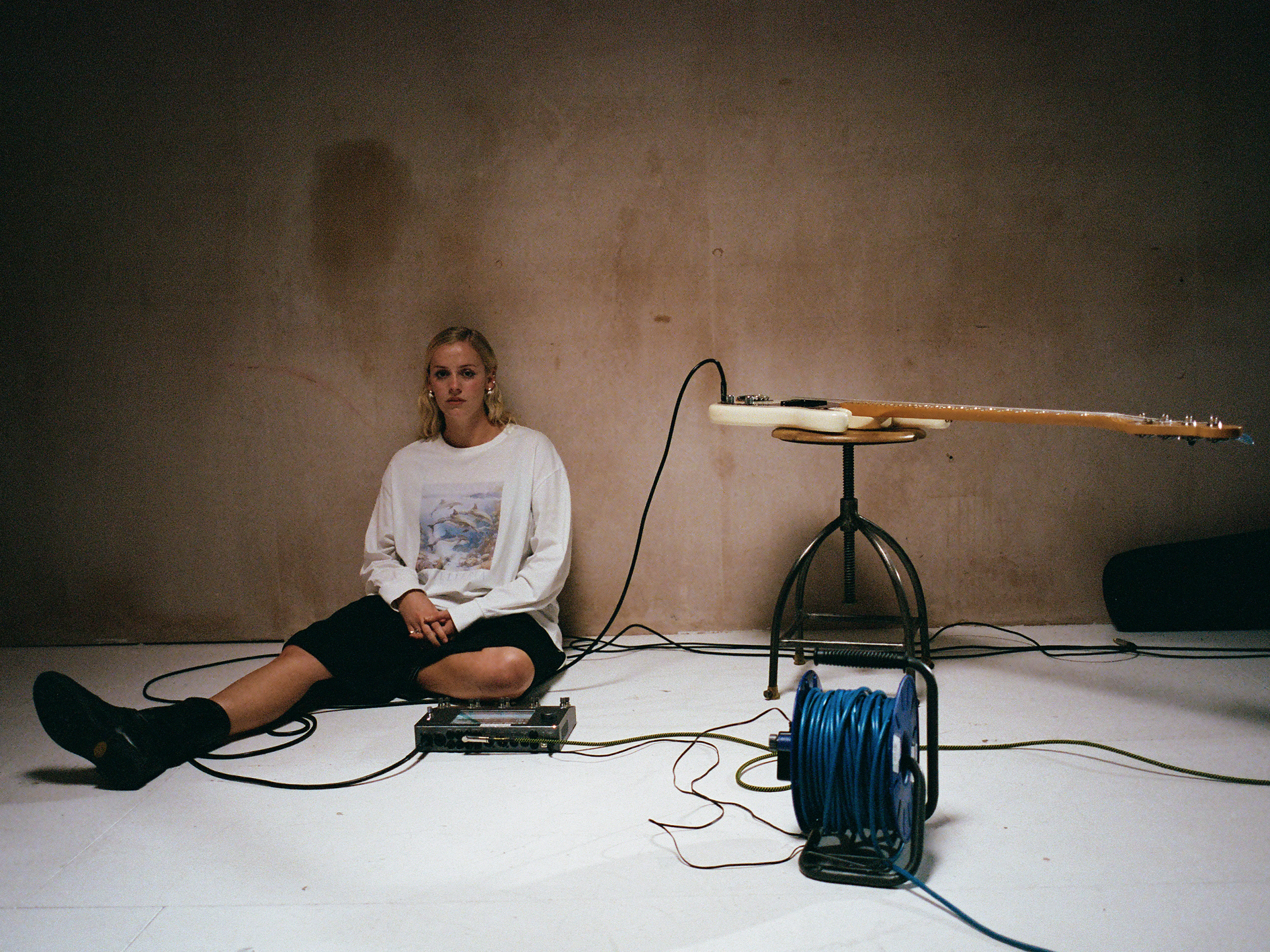
Current release: Saskia's debut EP Wearing All White Like An Angel is out via Black Butter.
If you enjoyed this Saskia interview and would like to know more about her music and upcoming live dates, visit her on Instagram.
When did you first consciously start getting interested in singing? What was your first performance as a singer on stage or in the studio and what was the experience like?
I really don’t remember a switch where I became interested in singing, it always felt somewhat inbuilt. It came from my family and there wasn’t really an option not to just get involved and sing with everyone else. I feel very lucky for that.
I’m sure my first performance on a stage was during one of the theatre productions at primary school, not that I can really remember it!
If you're also playing other instruments, how does the expressive potential of these compare to your own voice?
I think I find the process of playing the piano a more meditative and cathartic expression of my feelings. I can sit at the piano for hours and it shuts off my brain and allows me to just exist for a second.
Singing, whilst definitely an expression of emotion for me, sometimes feels more like something I have to think about. I also think about the fact that I don’t really know what my voice sounds like to other people, like I hear it through the reverberations around my skull and I find that strange.
Singing is an integral part of all cultures, and traditions. Which of these do you draw from – and why?
I suppose singing being an act of coming together, a communal thing. It’s always been that for me.
What were some of the main challenges in your development as a singer/vocalist? Which practices, exercises, or teachers were most helpful in reaching your goals – were there also “harmful” ones?
For a while I had a completely different tone from being taught “proper technique”. It felt sometimes that people were trying to force the natural breathiness out of my voice. As soon as I threw that technique out the window and leant into my natural tone things started going better for me.
I so strongly feel that our tone is what makes our voices unique and it makes me sad to think of younger me trying to sound more like other people. I don’t think anything in music should feel forced, it’s an expression and it’s yours.
What are the things you hear in a voice when listening to a vocalist? What moves you in the voices of other singers?
I really want to be soothed, I want to close my eyes and feel.
I also find something really captivating about raw, imperfect voices - ones that feel like they could break at any point, I think it shows real emotion.
I just want to hear feeling and soul, I’m not fussed by a replication of something technically impressive.
How would you describe the physical sensation of singing? [Where do you feel the voice, do you have a visual sensation/representation, is there a sense of release or tension etc …]
I guess the feeling is one of opening up physically and figuratively. I feel my chest and throat opening up.
I am asthmatic though, so sometimes that affects it.
We have a speaking voice and a singing voice. Do these feel like they are natural extensions of each other, ends on a spectrum or different in kind?
People tell me all the time that my speaking voice is different to my singing voice, I don’t know why that is.
I think my speaking voice is more a reflection of my outwards personality and my singing voice is much more emotional.
What are the potentials and limits of your voice? How much of your vocal performance can and do you want to control?
It so depends on the day, if I’m really nervous any sense of control goes out the window. If I’m dehydrated my voice might crack.
I don’t love feeling out of control of my voice.
As a singer, it is possible to whisper at the audience, scream at the audience, reveal deep secrets or confront them with uncomfortable truths. Tell me about the sense of freedom that singing allows you to express yourself and how you perceive and build the relation with the audience.
I feel most connected in those moments of quiet during a performance.
Maybe near the end of a song or just after a big build, the moments where you can hear a pin drop is when I know something’s resonating in some way.
I'd love to know more about the vocal performances for your latest release, please, and the qualities of your voice that you wanted to bring to the fore.
In the making of this project (Wearing All White Like an Angel) it was a big focus for me to have the performances feel as natural as possible. I made it a point not to use tuning and to leave the imperfections in my voice that I’d usually smooth out.
For ‘Creek Water’, ‘Tongue’ and ‘Wearing All White Like an Angel’, I recorded them sitting/lying in my bed as I felt like you could hear the vocals being over-thought when I recorded them in a studio setting.
‘Creek Water’ is almost a lullaby, an ode to my childhood, so this felt rather fitting.
When you're writing song lyrics, do you sense or see a connection between your voice and the text? Does it need to feel and sound “good” or “right” to sing certain words? What's your perspective in this regard of singing someone else's songs versus your own?
Singing my own music feels very different to singing others, although singing other people’s songs is a pleasure. That’s how I started writing, I was just figuring out other people’s songs for years which eventually turned into making my own.
When it comes to writing, the words I’m singing have to be my own as they have to feel genuine and sound right coming out of my mouth. If it’s not something I’d say then it’s not something I’d sing. I often don’t connect to words that are given to me.
That being said, for this project I did have help re-arranging and shuffling phrases around which was cool, hearing your own words just in a different order.
Strain is a particularly serious issue for many vocalists. How do you take care of your voice? Are the recipes or techniques to get a damaged voice back in shape?
I love steaming and yogi throat comfort tea.
How has technology, such as autotune or effect processing, impacted singing? Has it been a concrete influence on your own approach?
I wouldn’t say that it’s impacted my singing as I tend to keep my lead vocals fairly natural on a song,
I use other processing effects more as creative choices surrounding the lead vocal usually.
For recording engineers, the human voice remains a tricky element to capture. What are some of the favourite recordings of your own voice so far and what makes voices sound great on record and in a live setting?
Honestly finding the right mic for your voice is so key to getting a good vocal take.
For me I actually love the lower quality, less defined mics that have a natural warmth to them.
I’m also a huge fan of the Shure SM7B which is great because everyone has one in their studio. I recorded everything on Wearing All White like an Angel on that.
Motherese may have been the origin of music, and singing is possibly the earliest form of musical expression, and culture in general. How connected is the human voice to your own sense of wellbeing, your creativity, and society as a whole?
I crave the feeling of being sung to sleep, that is probably the most comforting feeling in the world.