Published
Part 1
Name: Scree
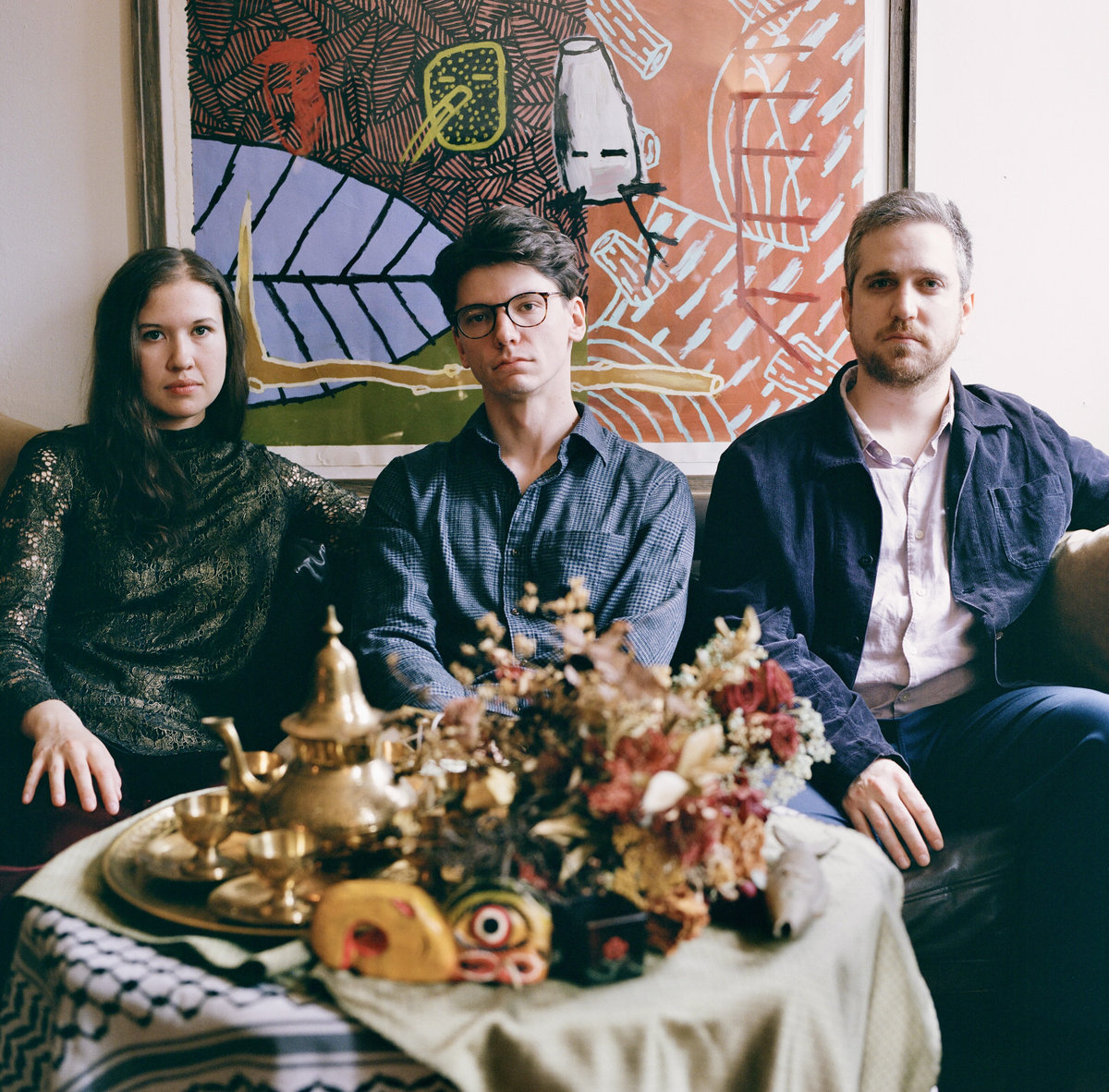
Members: Ryan El-Solh (guitar, keyboards), Carmen Rothwell (bass), Jason Burger (drums, percussion, kalimba)
Interviewee: Ryan El-Solh
Nationality: American
Current release: Scree's new single "TV Sometimes" is out now via Ruination. It is the second single taken off their upcoming full-length album August, slated for release August 22nd 2025.
Recommendation for New York City, USA: Check out the Umm Kulthum workshop series run by Sami Abu Shumays at Barzakh Cafe in Crown Heights. NYC has an incredible Arabic music scene and this series showcases some of the best players in the scene doing incredible repertoire from the music’s golden age that you rarely get to see performed anywhere else. and they do it on a monthly basis. And the vibes at Barzakh are always great.
Things that I am passionate about but rarely get to talk about: I would say that the things in life that elicit the most passionate response from me these days are: the experience of waking up every day for the last two years to footage of fellow Arabs being slaughtered, maimed, starved and otherwise humiliated; the knowledge that support for these actions is worn like a badge of honor among all echelons of American officialdom and that roughly half the people in the city I call home are either cheering these atrocities on or wringing their hands and equivocating; and the visceral feeling that a piece of every dollar I earn is taken from my pocket to fund it all. Most days I see or read something that leaves me completely overwhelmed by disgust and rage and have to spend some part of the day, whether a few minutes or several hours, lifting my head back up.
Over time this has had a corrosive effect on my soul, deepening my reliance on mind-numbing, time-wasting behavior like scrolling and dulling my passion for otherwise fulfilling activities in life, music included. The slaughter in Gaza spits in the face of any optimistic outlook on the human condition and shows definitively that the true value of a human life in this age is determined by whoever happens to be holding the bigger gun. These truths cast long shadows.
If you enjoyed this Scree interview and would like to know more about the band and their music, visit them on bandcamp. Ryan El-Solh is also on Instagram.
Where does the impulse to create something come from for you? What role do often-quoted sources of inspiration like dreams, other forms of art, personal relationships, politics etc play?
Most music I write starts as improvisation. I find some initial idea, then as I get to know it and understand its character, it might remind me of something I’ve read or a particular place etc, then I can draw on that association to develop the piece.
Our last LP, Jasmine On A Night In July took inspiration from poetry. I’ve also written some music for scenes in The Master & Margarita.
Certain authors have a general tone that I find inspiring and very musical, like the historian Mike Davis. He writes in this tragic-heroic prose that feels like listening to Mahler.
Sometimes I also borrow directly from things I hear. “Zikra,” on this new record, is an approximation from memory of a melody I heard in a Qur’an recitation during Ramadan. Or sometimes I’ll take a piece of a progression from a classical piece and see what I can do with it. I find that’s a good way to get the imagination going when I feel stalled.
But if the question is where does the impulse to make something in the first place come from, that’s harder to say. Whatever it is, I've had it for so long that I forgot where it came from. I suspect depression or some kind of chemical imbalance.
I often think I’d be happier in life without that impulse. Then I could enjoy music without it being totally tangled up with my self-worth.
For you to get started, do there need to be concrete ideas – or what some have called a ‘visualisation’ of the finished work? What does the balance between planning and chance look like for you?
The balance for me leans heavily toward chance. My process is so volatile that every piece feels like a fluke, and when it’s done I always worry that the spark won’t come back again. I’ve had this worry consistently since I was a teenager.
Even on more complicated pieces - like “My Life Through The Eyes Of A Cat” on this record, or “Jasmine On A Night In July” off the last one - the initial kernel was something that came about by chance.
Both of those pieces started with small improvised melodic fragments that ended up yielding these long, intricate forms.
There are so many possibilities for form and melody embedded in the simplest musical ideas. So many that it can be hard to leave a simple idea alone and let it be simple.
Is there a preparation phase for your process? Do you require your tools to be laid out in a particular way, for example, do you need to do ‘research’ or create ‘early versions’?
Not really.
I often create a million “early versions” on my phone, recording different takes of a section, listening to them over and over, hearing alternatives while I listen. A lot of my compositions come together that way.
But that doesn’t feel like preparation, more like an integral part of the process.
Do you have certain rituals to get you into the right mindset for creating? What role do certain foods or stimulants like coffee, lighting, scents, exercise or reading poetry play?
No, and I think my productivity really suffers from lack of routine. Most of my pieces start with me picking up an instrument at an inconvenient time like 5 minutes before I thought I was going to bed.
I am very finicky about lighting though. It’s a lot harder to play or write or anything when you’re dealing with bad lighting, I can’t remember who started it but there was a thing among my friends in music school, we would all bring lamps to the practice rooms.
For your latest release, what did you start with? If there were conceptual considerations, what were they?
There wasn’t any central concept at the beginning for this record. Scree has a large backlog of unrecorded material so I knew I wanted to get some of that on record.
But the overarching theme of the record didn’t become clear until later in the process.
Tell me a bit about the way August developed and gradually took its final form, please.
The material started to take shape as an album after a show we played at the Owl Music Parlor here in Brooklyn in October 2023 - a venue that has been absolutely crucial to our development as a band.
That was the first time we played with the large ensemble featured on this record - Zosha Warpeha on violin, David Balatero on cello, Ivan Arteaga and Levon Henry on clarinets and I knew after that show that I wanted to try capture that group and the material we’d played on record.
The centerpiece of that show was “My Life Through The Eyes Of A Cat” and the spirit of that piece set the tone for me as I started filling out the set. The rest of the material came about gradually over the next year.
Writing the title track was sort of the finishing touch. That piece tied the whole set of music together spiritually for me and also thematically by reprising the theme from the end of “Me Me Me.”
Many writers have claimed that as soon as they enter into the process, certain aspects of the narrative are out of their hands. Do you like to keep strict control or is there a sense of following things where they lead you?
I follow whatever the initial inspiration is until it feels like that stalls out, then I’ll try applying some kind of concept or developmental tool to help get things moving again.
But I wouldn’t say I ever totally lose control when writing, that’s more something that can happen with improvising, if I can stop myself from writing polemics in my head about every note choice I make.
There are many descriptions of the creative state. How would you describe it for you personally? Is there an element of spirituality to what you do?
The boundary between musical and spiritual generally feels very blurry to me. If I really get in a flow composing I can get a taste of something you might call spiritual. There’s something magical about the way melodies sometimes just present themselves out of nowhere.
But a lot of composing is more patient and experimental work that feels “rational.” Same with playing, sometimes you can really step outside yourself and enter a kind of spiritual state, but a lot of times I have an internal thought process that I can’t get to shut up that gets in way of letting go like that. So I’d say there are many different creative states that all have slightly different characters.
I do think the audience is an important part of the equation for reaching that spiritual state of performance though. All of the most powerful musical experiences I’ve had have come from playing live for a room of people.