Published
Part 2
Once a piece is finished, how important is it for you to let it lie and evaluate it later on? How much improvement and refinement do you personally allow until you’re satisfied with a piece? What does this process look like in practice?
In New York, rehearsal and performance time for original music is always tight so I like to get stuff into performance or at least bring it to the band as soon as that feels viable.
Sometimes things need to change after the first few performances but often those are things that to me only show themselves in a live context. There are things you can only learn about a piece of music by playing it in front of other people.
How do you think the meaning, or effect of an individual piece is enhanced, clarified or possibly contrasted by the EPs, or albums it is part of? Does each piece, for example, need to be consistent with the larger whole?
It doesn’t need to be consistent, but in the context of the larger whole that piece’s inconsistency then becomes part of its character. I think of “Either Way” on this record like that. It feels like it sticks out from the other tracks, but that was my intention in writing it, to write kind of a palate cleanser.
Certainly each song on a record takes on a different color in context because the listener has the sounds of what came before (and, if they’ve heard the record before, what comes after) ringing in their memory.
That’s part of why listening to a whole record is a much richer experience than listening to songs on a playlist. The artist controls the flow of the record and can craft the production and the songs themselves with an ear to how they will combine and constitute a total statement.
On this record, there’s a main theme that recurs across a few tracks, and I think that kind of intentional unity does make the front-to-back listening experience more powerful than the songs on their own.
But I also have to admit all that feels less and less relevant since full-album listening has long since become a niche habit.
What’s your take on the role and importance of production, including mixing and mastering for you personally?
I think each of those roles are very important to translating the artistic vision into the particular medium of recorded music.
My writing and performing styles are really geared toward making sound in a room. But what works in the room doesn’t always resonate the same way on record (and vice versa), they’re fundamentally different ways of making and hearing music. So you need people who know how any given musical gesture is going to translate from the room to the record and know what could be added or subtracted to better communicate the vision.
For Scree, that person has been Ari Chersky, our producer for August as well as our last LP, Jasmine On A Night In July. He’s a fantastic “translator” for us because he has a thorough understanding of the possibilities the modern studio offers for enriching improvised music and because he has incredible ears. He understands the music in such a detailed way, it even surprises me sometimes.
That doesn’t mean we always agree about what the right move is in a given moment, but I know that everything he brings to the music is rooted in the deepest possible knowledge of the musical world we’re operating in.
What is the balance between the composition and the arrangement (performance)?
I think it’s a constantly shifting thing.
There are some songs we play where we develop a very specific arrangement and execute it similarly from show to show, then maybe we decide to try a looser version of it or extend a section, or find some other way to change it up. That’s one advantage of playing with the same group for so many years, we have a deep book to draw on and the pieces can evolve over time.
It can also evolve as we bring in different instruments. The basic arrangement of “TV Sometimes” hasn’t changed much between the live version we recorded in 2018 and the studio version we made for this record - that is, the song still moves through the same form. The textures that the large ensemble brings obviously add a lot to the character of the whole thing but I think it’s clear between those two versions what constitutes “the composition.”
On the other hand, with something like “My Life Through The Eyes Of A Cat” it would be much harder to pick apart what’s the piece and what’s the arrangement. In that case I didn’t write a piece and then arrange it. The composition and the arrangement are in that case essentially the same thing.
Music and the accompanying artwork are often closely related. Can you talk about this a little bit for your current project and the relationship that images and sounds have for you in general?
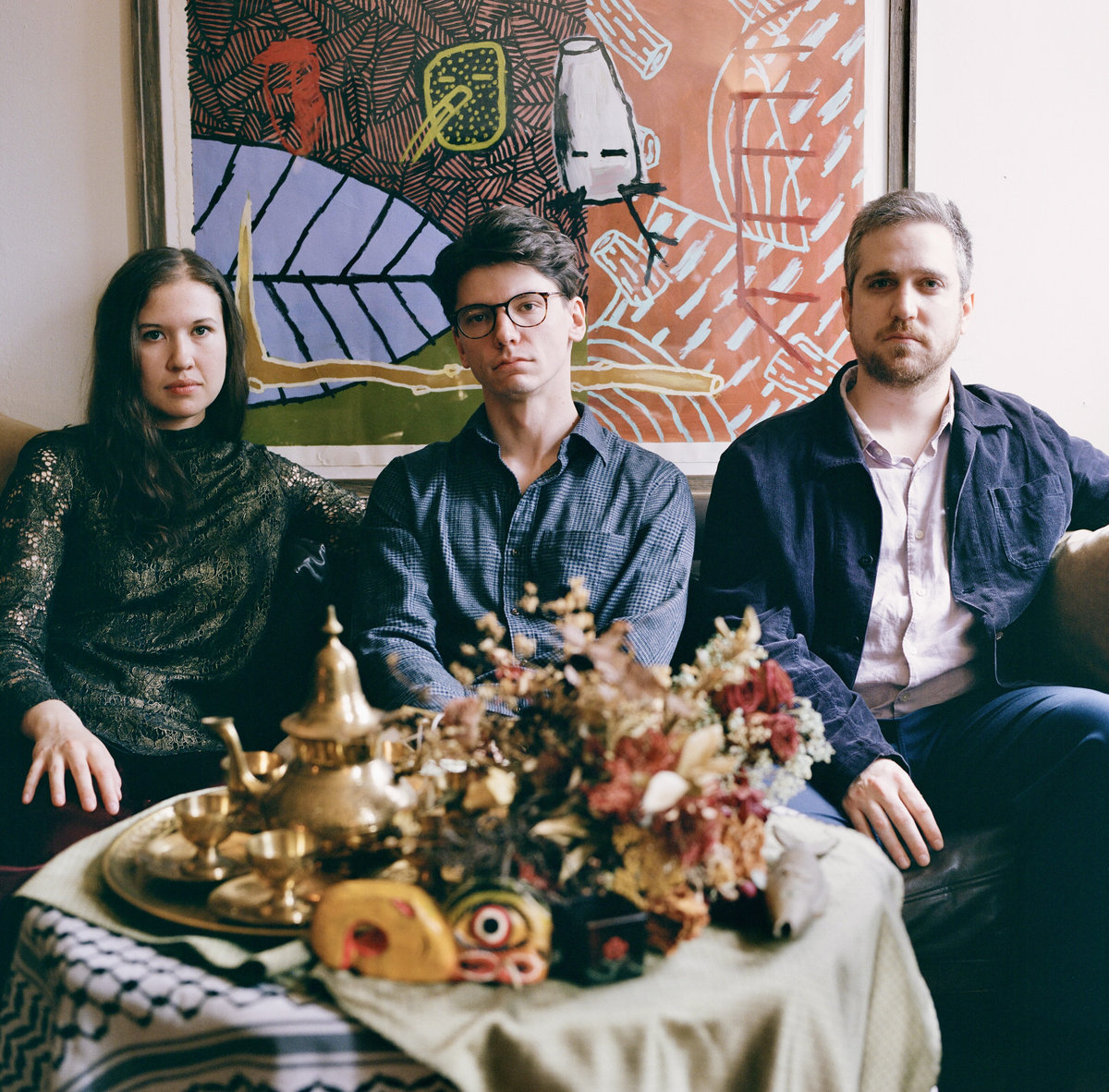
The idea for the artwork came from the general theme of retrospection. A tableau of some of these objects from my apartment, some very charged meaning, some just knick-knacks I’ve picked up along the way - that felt like a fitting representation of this music that has a lot to do with looking back and taking stock.
Generally speaking I use lots of visual metaphors when thinking through music and writing. I associate sound and color very strongly, though not as strong as some.
I met someone once who said they didn’t like Ornette Coleman because he sounds like green mustard - that’s a whole other world of sensory experience I can’t really imagine.
After finishing a piece or album and releasing something into the world, there can be a sense of emptiness. Can you relate to this – and how do you return to the state of creativity after experiencing it?
It takes so long to get a record out into the world that I’m usually pretty sick of the music by the time release day comes. At least I’m definitely worn out on those specific recordings, just from sheer volume of listening throughout the process. So if there’s emptiness, for me it’s of a pleasant sort.
And then you get to start something new, which always feels like the most creative part of the process for me.
I would love to know a little about the feedback you’ve received from listeners or critics about what they thought some of your songs are about or the impact it had on them – have there been “misunderstandings” or did you perhaps even gain new “insights?”
Getting feedback of any kind is in itself a privilege these days - whether from critics or peers.
I wish there were more forums for constructive peer feedback in the music scene but no one wants to seem like a psycho and come up after a show like “hey so I have notes.” Artists, we’re all pretty sensitive too so giving feedback can feel like walking on eggshells. But there are friends I can trust to give me honest feedback - Carmen, Jason and Ari chief among them - which is incredibly valuable.
I have noticed that people who aren’t musicians or who don’t listen to a lot of instrumental music feel a lot less confident in describing how instrumental music makes them feel. I think there’s a concern that they’ll be “wrong” or something because there isn’t something clear-cut like lyrics to hold on to. But a lot of people describe the music as cinematic or dreamy which is pretty much what I’m going for, so that’s reassuring!
Creativity can reach many different corners of our lives. Do you personally feel as though writing a piece of music is inherently different from something like making a great cup of coffee? What do you express through music that you couldn’t or wouldn’t in more ‘mundane’ tasks?
A cup of coffee can get very deep.
Jason Burger, our drummer, makes great coffee. I really love situationally specific coffee. Coffee on the Washington state ferry is a big one. Diner coffee, obviously. Coffee after dinner in the garden of my relatives’ home in Sheikh Jarrah is an experience whose presence in my mind is as rich as that of any great piece of music. It’s the type of experience you build your life around repeating.
But the difference is, I can write a piece of music about the feeling of that scene - the coffee, the people, the feel of the air. I can’t make a cup of coffee about something. I can make a coffee in a pot that I bought in Jerusalem specifically for its resemblance to my cousin’s coffee pot so I could get a bit of that feeling here in NY, but I couldn’t imbue the coffee with that feeling for someone else without telling the story.
But I can write a piece of music, and if I successfully craft it to evoke the feeling of drinking the coffee in the garden or the feeling of remembering drinking the coffee in the garden, then some version of that feeling will get to the listener even if they don’t know the whole story.
The specific thing it brings to mind for them might differ, but the mood I’ve crafted is, ideally, a place where their memory and mine can meet.
(I did write a song about drinking coffee in the garden in Jerusalem, it’s called “Four Waltzes.” There’s a live version on Live at the Owl, Vol. 2 which we released last year on Ruination Records)