

Name: Shane Forbes
Nationality: British
Occupation: Composer, percussionist, drummer
Current Release: Shane Forbes teams up with Nathaniel Facey (alto saxophone), Thomas Farmer (double bass), Ivo Neame (piano), and David Preston (guitar) for the new Empirical album Like Lambs: To The Slaughter, out via Whirlwind.
If you enjoyed this Shane Forbes interview and would like to find out more about his music, visit him on Instagram. The band also have their own profile there.
It seems as though most aspiring artists are drawn to the drums and percussion for one of two reasons: Creating sound/noise and creating rhythm. What captivated you?
Studying how something called ‘Musical Language’ is expressed on the drums.
The drums have travelled from Africa all over the world, and I’ve always been curious about discovering how that language was, and is still, progressing and developing.
What was your first drum set like and what are you using today?
My first ever drum kit was a combination of plastic Tupperware, pot lids and books. The different depths and thicknesses of them gave me enough pitches to hear percussive melodies.
After that, I got a kit which was the cheapest in the shop at the time, called a ‘Diamond’.
What, to you personally, are factors in terms of build and design that you appreciate in drums and percussion instruments?
I like it when the drums have a well-centred tone.
For me, older drums are more what I’m drawn to. This isn’t me being a traditionalist or retrograde, because I’m not. It’s simply that my ears and hands prefer the drumming experience on older kits.
Better craftsmanship, wood quality and shell thickness. The bearing edges are cut in a way that takes all the twangy overtones out (something people stick stuff all over the heads of modern drums to eliminate these days 🤷🏾♂️). There’s a smoky character to them that I like as well.
I feel there was more attention to the sonic details of drums that’s just got lost nowadays with modern drum companies.
Late Rush-drummer Neil Peart said: “The equipment is not an influence. It doesn't affect the way I play. It's an expression of the way I play.” What's your take on that?
I would disagree with Neil.
There are so many aspects to the instrument, like heads, lug tension, tom diameter/depth, responsiveness, dynamic range, overtones, etc. I like to know what the instrument is about and what its limitations and strengths are. I like to tune into these and allow them to inspire me to play differently. If I can make it work, then great.
Sometimes I’m unable to make it work, and that’s great too. I find something out that I need to refine.
I could be misinterpreting what Neil Peart meant!
The drums and percussive instruments are an integral part of many cultures, and traditions. Which of these do you draw from in your playing – and why?
Jazz music, and how African rhythmic sensibilities have informed jazz music.
The drums have the scope to be a part of the overall narrative of the performance, not just a rigid pulse that isn’t participating in any of the conversations.
What were some of the main challenges in your development as a drummer / percussionist? Which practices, exercises, or experiences were most helpful in reaching your goals?
I wouldn’t say I’ve reached any of my goals!
But I’ve found insight through deep listening, transcription, conversations with some extremely inspirational people, and playing in bands that challenged my knowledge.
How would you describe the physical sensation of playing the drums? [Where do you feel the resonances/pulse/groove, what are emotional sensations, is there a sense of release or tension etc …]
In a weird way, I don’t like too much of a physical sensation from playing the drums.
The optimum sensation I prefer, I can only describe as weightlessness and falling freely with the music.
Do you feel that honing your compositional / songwriting skills has an effect on your drumming skills?
Honing my compositional skills makes me an all-round better musician and helps me get closer to my own voice. This, in turn, does make me a better musical drummer.
It doesn’t help me play faster, though, unfortunately.
I've long been intrigued by bands or ensembles where the drummer is the leader and/or main composer. In as far as it is possible to generalise, what do you think changes in terms of the music or performance in these situations?
I don’t think much changes at all. All the things a composer researches and studies just become the musical focus in that particular setting.
How are you making use of the timbral and textural potentials/possibilities of your drums and percussion instruments when making music?
I’m constantly trying to explore this.
I like to use different types of sticks, brushes and mallets. I have a lot of drums and cymbals, which I also like to be creative with depending on the project I’m playing.
Taking drum solos using just my hands is something I’ve been enjoying a lot lately.
How has technology, such as drum machines and sequencers, impacted the way rhythm is created and perceived? Has it been a concrete influence on your own approach?
No, drum machines and sequencers have had no influence on my playing at all.
Until a drum machine creates its own style of drumming completely unprompted by a human, then maybe I’ll listen to it with any interest. For now I’m only interested in the human experience of making music.
Physical strain is a particularly serious issue for many drummers. How does it manifest itself, how do you deal with it and in how far does it affect your creativity?
I believe there’s a lot that contributes to physical strain for drummers: over-gripping the sticks, leaning to one side, pinching your shoulders upwards, or not setting the drums up in a way that suits your body build for the best ergonomics.
But as well as all of these technical practicalities, lifestyle is very important. Eating and sleeping well, and doing exercise, helps your body repair itself, especially when touring or practising for many hours. I’ve always found swimming works very well for me.

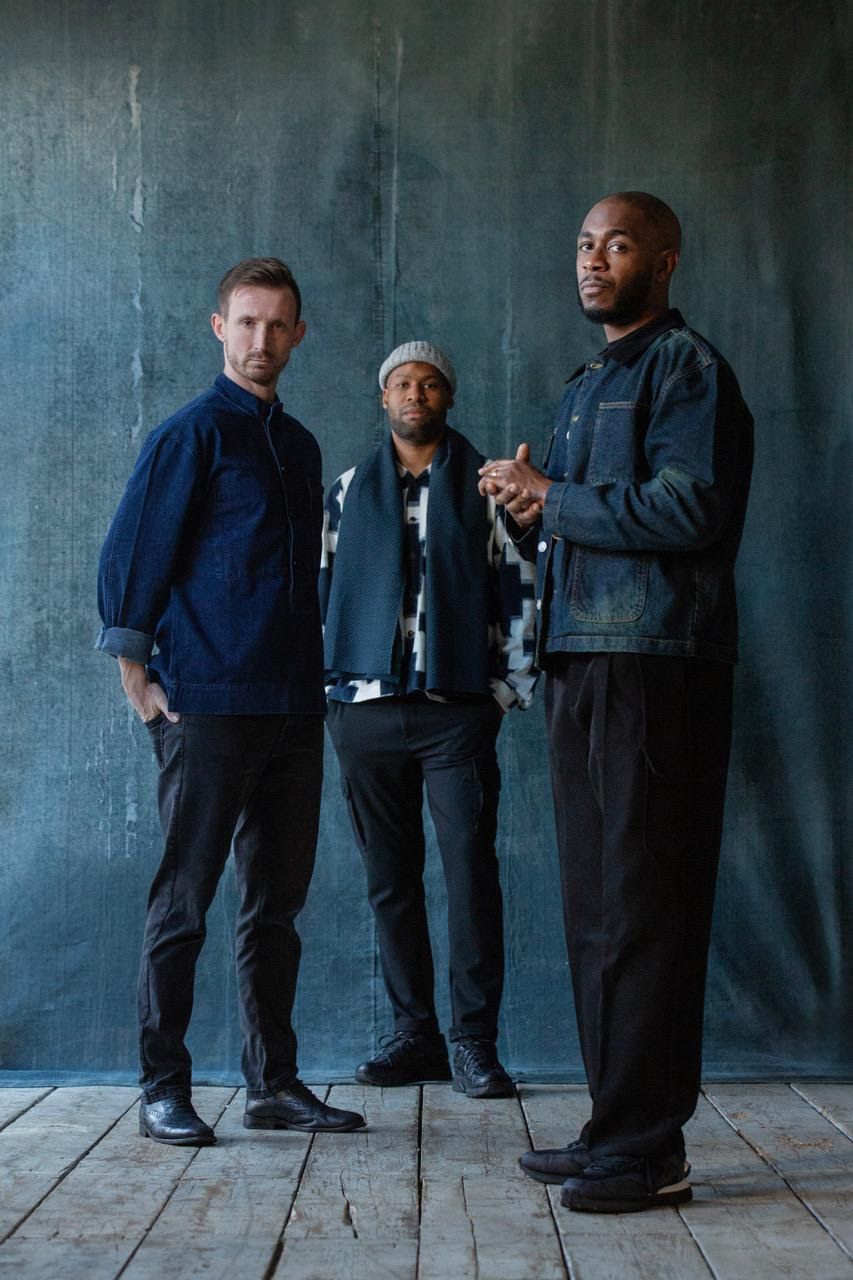 Empirical Interview Image by Karolina Heller
“My ears and hands prefer the drumming experience on older drum kits.“
Video
