Published
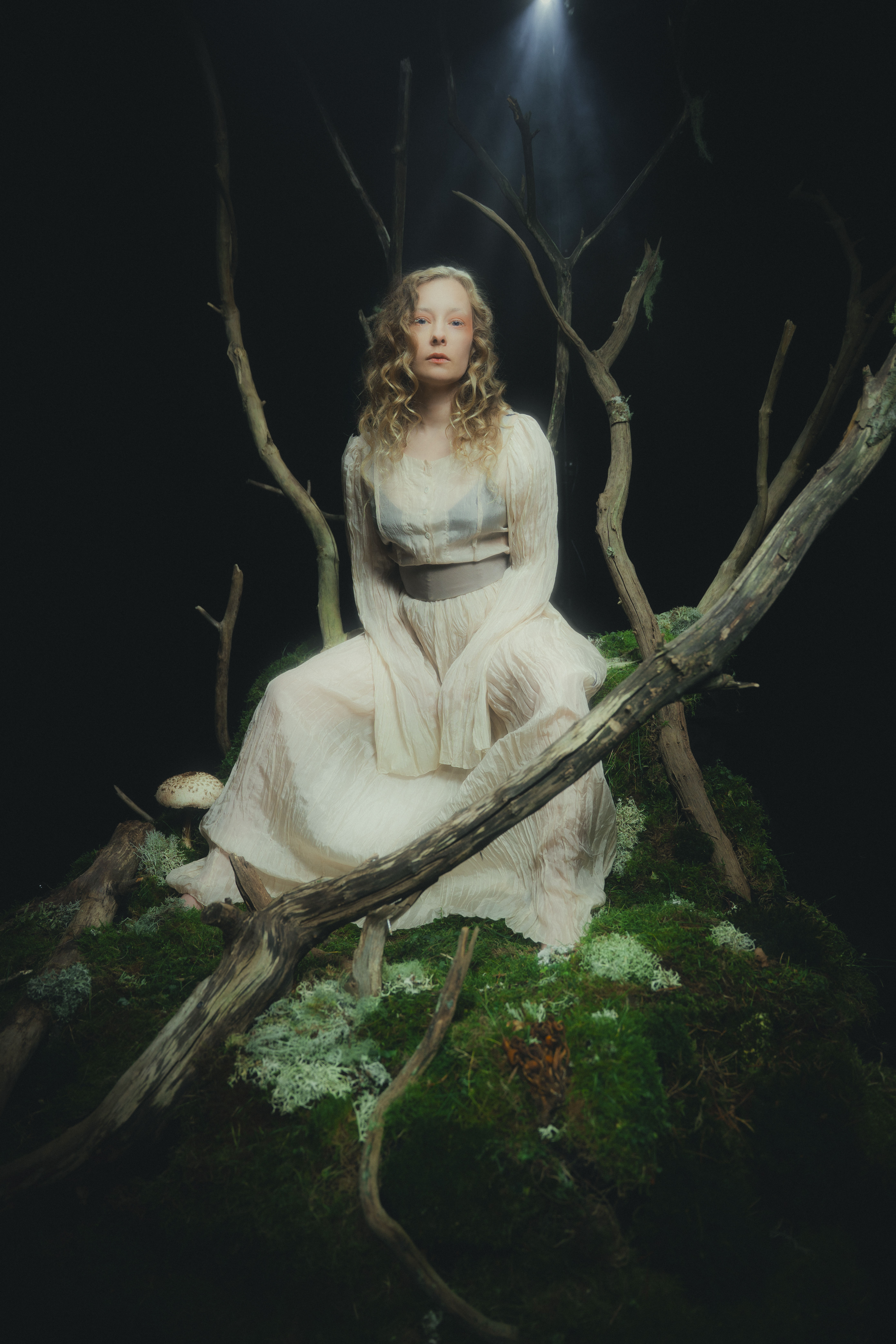
Name: Sofia Nystrand aka Vargkvint
Occupation: Composer, producer, songwriter, vocalist
Nationality: Swedish
Recent release: Sofia Nystrand's new album Jorden kallar, featuring folk quartet LYN, is out via piano and coffee.
Recommendations for Stockholm, Sweden: There is a beautiful antique bookshop called Rönnells Antikvariat that I really really enjoy, they have a really special collection of books and they also host artists events, talks, poetry readings and concerts several days of the week.
Things I am passionate about but rarely get to talk about: I also work a lot with stop motion animation and I think it is such a cool way of making videos. I really love making my music videos, and I recommend anyone to do it, if you have a bit of patience mundane and small items kan become quite magical to animate. And of course, it feels like it’s as far away from prompting AI as you can come which is also a really inspiring thing.
If you enjoyed this Sofia Nystrand interview and would like to find out more about her work, visit her on Instagram, Facebook, Soundcloud, and bandcamp.
When it comes to experiencing strong emotions as as a listener, which albums, performances, and artists come to mind?
Especially live music has this way of transporting me into other worlds, away from the everyday struggles. I love it when music makes me feel closer to something bigger than myself, something that is serene and just connects you with the joy of being alive.
As someone who wasn’t raised religious, I think music experiences are probably the closest thing I’ve had to a spiritual connection. A few months back I had the pleasure of hearing Alessandro Cortini in Stockholm and it gave me this feeling.
[Read our Alessandro Cortini interview]
I had a similar experience listening to Erik Klinga's new album Hundred Tongues, it just touched something really deep inside of me.
Another equally strong experience was listening to the new album Oceanine by vocal ambient artist Jolanda Moletta.
She has made this really exciting new collaborative album where she invited 11 female vocalists to collaborate with her, me included, and it’s such a treat to hear all of the different voices coming together to form these elaborate landscapes that she creates. It feels like floating on waves.
There can be many different kinds of emotions in art – soft, harsh, healing, aggressive, uplifting and many more. Which do you tend to feel drawn to most?
I always feel more drawn to calmer music but also music that brings out the more mixed emotions. There always needs to be a drop of melancholy in the music for me to really connect.
And it’s the same when I’m writing my own music, I think I write with a lot of softness but there always has to be something a bit melancholy or strange in there for the vibe to feel just right.
I want my listeners to feel like they are relaxing and exploring beautiful forest but at the same time wondering what is hiding behind the trees.
I have had a hard time explaining that listening to death metal calms me down. When you listen to a song or composition, does it tend to fill you with the same emotions – or are there “paradoxical” effects?
Oh I think this is so interesting! I have a bit of a similar experience when listening to heavier music. I have a theory that since music is so tied to our subconscious emotions they can sometimes help us process those too.
I really don’t think humans where made to live in such big structured societies where you have to know and follow very specific norms to fit in and keep a lot of strong emotions hidden. To listen to heavier music can make me feel like I’m getting in contact with emotions that I tend to put a lid on, like my anger, or a special kind of joy that exists in a darker more feral way.
When listening to heavier music sometimes the non ”acceptable” emotions get to manifest and that makes me more calm. Like a meditation in a way, but very different. Maybe it’s the same for you?
In as far as it plays a role for the music you like listening to or making, what role do words and the voice of a vocalist play for the transmission of emotions?
Vocals are such a carrier of emotions, but I’m not sure if the lyrics need to be central all the time.
Personally, I’ve made this really uncompromising, or just a really stupid decision, to sing most of my music in my native language, Swedish. I know a lot of my listeners don’t understand the lyrics. Sometimes it is freeing, personally I really enjoy listening to music where I don’t understand the lyrics, and sometimes words can be a lot more mundane than the actual emotions being presented within the music itself.
I’m such a Sigur Ros fan and they really put the pin in this, for some of their songs they came up with their own language that no-one understood just to create this otherworldliness.
But this changed a bit for me with my latest album Jorden kallar.
With this music I really wanted to connect with my listeners through the lyrics. They where not just there to set a vibe or be an extra layer to discover, the whole theme surrounding climate change and ecological decline is a big part of the music and the lyrics mean a lot for me. And some of the songs feel really strange to sing in an international setting where I feel that the lyrics need to carry the songs.
So it is a bit of a puzzle for me to solve. I’m considering writing my next album without lyrics, to see if that will make a difference.
When it comes to experiencing emotions as as a creator, how would you describe the physical sensation of experiencing them? [Where do you feel them, do you have a visual sensation/representation, is there a sense of release or a build-up of tension etc …]
There is a special feeling when I feel like I have found something by intuition or find a vibe that really strikes something in me, often when playing and just kind of searching for something new. I imagine it’s a little bit like waiting to catch a fish on a fishing rod, or some sort of balancing act, and it takes a lot of effort not to snap out of this space and to stay there once I’ve found it.
I’ve never been one who gets like a lightning-strike and finishes a song in 10-minutes. I more struggle to find that space and to come back there again and again until the piece feels done. The emotions in that process are what leads me, not really the craft of songwriting even if it has to play a part too.
When it comes to composing / songwriting, are you finding that spontaneity and just a few takes tend to capture emotions best? Or does honing a piece bring you closer to that goal?
I work with concepts a lot, and I always plan for an album or something similar to it, where the songs share a similar emotional ground and theme. For me it helps to look at songs, and visual art as well, as part of a bigger whole.
Without being able to look at a bigger picture I’m not sure if I could ever get past the honing part.
How much of the emotions of your own music, would you say, are already part of the composition, how much is the result of the recording process? For your current release, what kind of emotions were you looking to get across?
My latest album Jorden kallar (The earth beckons) is very much an emotional album from the start.
It's about homes, the love I feel for my safe spaces, the love I feel for nature and the fear of loosing it due to climate change. It was such a tough album for me to write, but I felt the need to let it all out there, to be this sensitive in public and to trust the ones listening with my emotions. It takes a lot of inspiration from traditional Swedish folk music and folk stories and was written in a very simple setting in my living room.
But when recording the pieces in Nils Frahm's beautiful Funkhaus studio, the album took on a new grander shape, making the songs slower, more ethereal and sorrowful. I think it has to do with the space there, the high ceiling and the vastness, the songs became a little bit more ghostly which I think fits them very well.
[Read our Nils Frahm interview]
So in a way it’s a little bit of both! But the big emotions where surely there from the beginning - I jokingly call this album my sad ambient ballads about climate change.
How do you capture the emotions you want to get across in the studio? What role do factors like volume, effects like distortion, amplification, and production in general for in terms of creating the emotions, energies or impressions you want?
For me to capture the emotions and to make inspired recordings is mainly about getting in a good zone where I can channel them. But for that to happen, I need to let go of my ”engineer-brain”.
For a long time I recorded everything myself and even though it can be creative in its own way, I need to let go of the part of my brain that wonders if ”I maybe should have moved that third microphone a bit more to the left”.
I also need to practice a lot before recording so that I can trust my fingers or voice so that I can perform and not think too much about the technicalities. Sometimes I imagine an audience that I perform to, it tends to give me a bit of an edge too.
How does the presence of the audience and your interaction with it change the emotional impact of the music and how would you describe the creative interaction with listeners during a gig?
I love performing live. Sometimes there is this tension being built where I just feel like me and my performers and the audience are forgetting about what is happening outside of the venue.
In a way all my creative work is about getting to that space. Sometimes it doesn’t happen, sometimes there are technical issues or I get up on stage and feel stressed or scared, or mess up something and get angry with myself, but when it happens, it is magical and then everything is worth it.
The release concert I did for Jorden kallar was one of those special concerts where you could feel the tension in the air, I’m so excited because I had two friends who filmed it and looking back I still get goosebumps because it did become truly special, the space in itself, the opportunity to have the choir LYN to perform with me, as they did on the album, it was magical.
Would you say that you prefer to stay in control to be able to shape the emotions or do you surrender to them and allow the music to take over? Who, ultimately has control during a live performance?
Oh, that is such a good question, well there is always the need for balance. I want to be able to surrender just enough for the performance to feel inspiring for the audience. But if I give in too much then I’m sure I will probably mess something major up due to being too emotional.
I guess what I really love is the feeling of control and to be able to hold the audiences emotions for a little while too.
What kind of feedback have you received from listeners or concert audiences in terms of the experience that your music and/or performances have had on them?
The most beautiful thing happens when there is a deep connection with the audience. It feels a bit morbid to say but I love it when people say that they cried, when you know that the emotions kind of welled over.
But also some people have reached out to tell me that they have had a great connection with nature while listening to my music. And that feels really important too, to know that my art really achieved what it was suppose to do.
To give listeners a space to calm down and maybe re-recognize the beauty we have around us, that we are all connected to, and that we need to protect.
The emotions that music is able to generate can be extremely powerful. How, do you think, can artists make use of this power to bring about change in the world?
Music has such a special way of reaching into people and bringing people together, maybe in a more direct way than other forms of art.
And I think artists have a huge potential to push more conversations and to bring about spaces where more of the change can happen. I think more artists need to ask where we can be can be of service, and to see where that is leading us. For me I feel like it has given me a bigger purpose.
The coolest thing that have happened when releasing this new music is that I’ve had the opportunity to perform for climate activists and at manifestations demanding more action fighting climate change. Through this my music is a part of the fight for a better world and that really is the most important thing I’ve ever contributed to.
At the same time we are at a time where the artist role is being questioned more and more and it feels like the struggle for attention is endless. I think as humans we all need to think about where we put our attention and our time, and what we are feeding, in ourselves and in our communities.
If we want art to be a part of our lives we need to take time for it, and if we want change to come we need to be a part of it and not wait around for someone else to do it for us.