Published
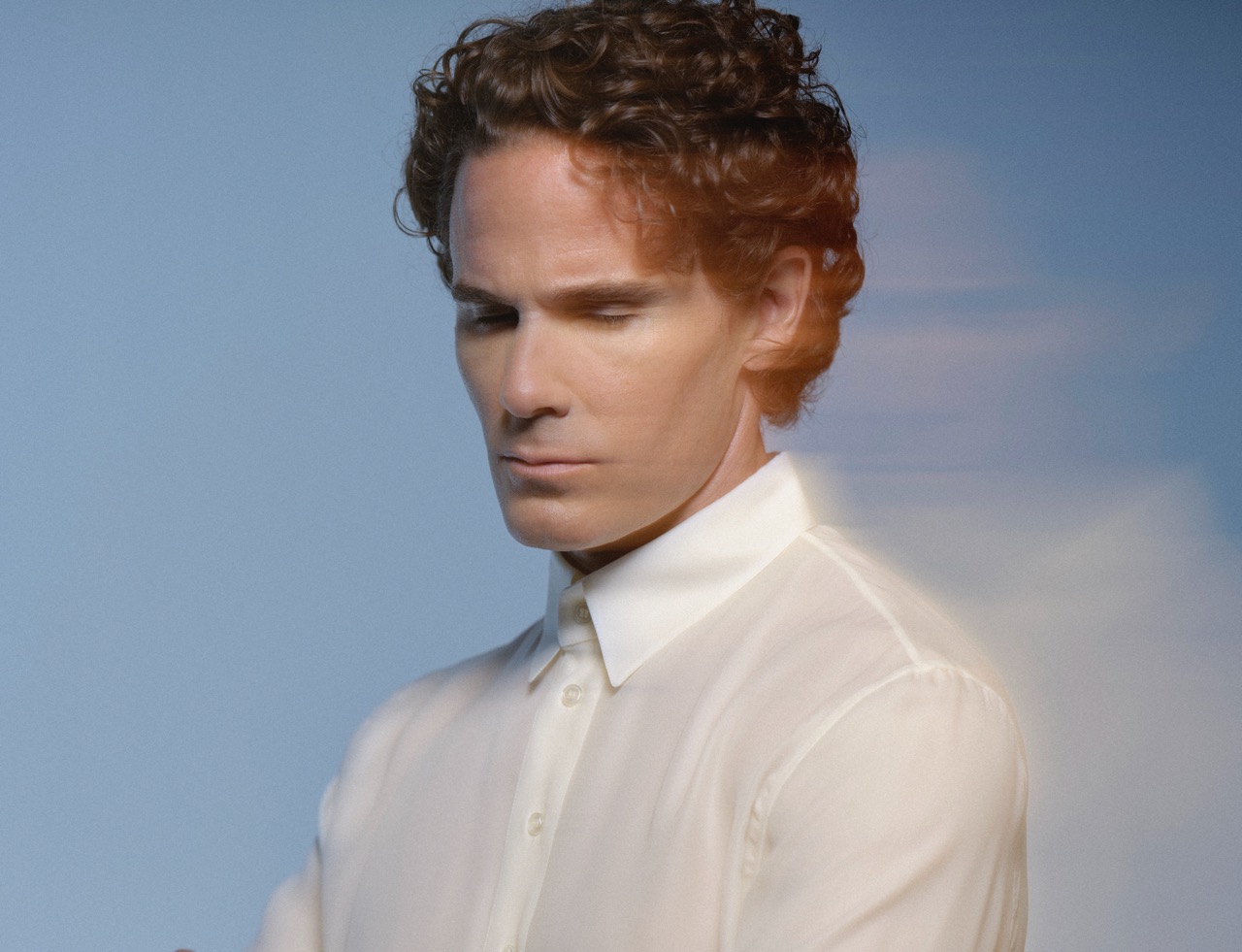
Name: Steve Hackman
Nationality: American
Occupation: Composer, producer, songwriter, conductor
Current release: Steve Hackman's new album SACRED MATH is out via Soundfuse.
If you enjoyed this Steve Hackman interview and would like to know more about his music and upcoming live dates, visit his official homepage. He is also on Instagram, and Facebook.
The borders between producers, sound artists, and even songwriters are becoming increasingly blurry. What does being a composer mean today, would you say?
I believe the calling of a composer is the same as it has always been: to create something unique that reflects your own individual experience, set of techniques and world-view.
In today’s age, due to technology, creators of music have more access than ever before to powerful tools and mechanisms. It allows them to become more multi-faceted. But while the possibilities and directions are more wildly manifold, it can be harder to focus and refine.
This underscores the importance of limitations and boundaries, and brings to light one of the requirements of being a composer that perhaps is more unique to our era: securely knowing and believing in your voice and path, and not getting distracted.
Exploration is a beautiful thing, but so is delivering and publishing. This year, I have made an intentional effort to publish. I feel secure in my voice, as wide-ranging as it is, and have been excited to finally share it.
The album THIS CONDITION OF LOVE, for instance, illustrates the kind of blurring of lines that you describe, as my work on that album shifted between composer, conductor, arranger, producer, and programmer.
Many people perceive classical music and contemporary composition as having high barriers of entrance, both for listeners and musicians. What have your own experiences been in this regard?
I didn’t grow up in a classical music family; I just took to it at a young age. I am thankful for this, because it meant nobody told me what I should or shouldn’t be listening to. I was able to fall in love with classical and popular music in parallel. I didn’t see them as being very different.
The deeper I got into the classical music world, as epitomized by attending the Curtis Institute and then conducting orchestras early in my career, the further the divide became between the classical music world and the rest of the world.
I felt judged for enjoying popular music. I saw classical elitists looking down on other genres. And I experienced firsthand the audiences for classical music dwindling. Some of the exact people that the classical music world should be prioritizing- passionate lovers of other genres of music- could feel that they weren’t valued.
This is what I’ve been trying to fight against. I’ve always been passionate about introducing classical music to new audiences, and I’ve always seen the connections between the two. In my professional life I have manifested those connections literally, creating fusions of classical and popular masterworks called SYMPHONYFUSE. They have been a powerful tool to build bridges of access to new listeners.
As of today, what kind of materials, ideas, and technologies are particularly stimulating for you?
Counterpoint is foundational to my composing.
I often think of the continuum between classical and popular/folk music, since on a daily basis I am exploring that continuum. On the classical side, I am stimulated by the generation of beautiful and virtuosic sound. A Palestrina mass, a Beethoven quartet, a Reich movement.
On the sound design side, I enjoy the obfuscation of that sound; manipulation to the point that the source is unrecognizable. Then treating that sound in a classical way: counterpoint, development, structure.
Where do most of your inspirations to create come from – rather from internal impulses or external ones?
Certainly both internal and external.
My journey has been one of constant struggle between two competing sides: the conductor and composer. Playing other people’s music and my own. The careful assessment of how to navigate this, and the best path forward, is ever-present.
That tension has resulted in quite a lot of music. THE BRINK, a project of mine that will be in residence at National Sawdust in Brooklyn next spring, was founded out of this idea, almost an existential crisis: if I don’t get this music out, it will consume me.
Composing has always had an interesting relationship between honouring its roots and exploring the unknown. What does the balance between these two poles look like in your music?
I feel extraordinary gratitude and reverence for the teachers I have had and the places I have studied. Walking into the Curtis Institute of Music every day, and passing the pictures of the greats who studied there, one couldn’t help but feel a profound sense of honor and tradition. They instilled in us techniques, values and teachings that felt a part of the very lineage of classical music itself.
That is not something that I ‘call upon’ or have to actively summon; it is now ingrained in the person and musician I am. This frees me to explore the unknown and to push as hard as I possibly can; I have no fear of becoming untethered from those traditions.
How much potential for something “new” is there still in composition? What could this “new” look like?
Unlimited. The Latin origins of the word ‘compose’ literally mean ‘to put together.’ Some of the most important breakthroughs in the history of music have been when unexpected elements are combined—from Haydn and Mozart introducing Hungarian influences in his symphonies, to Messiaen using the Ondes Martenot, to the Beatles using a sitar and a Moog.
Then the advent of sampling accelerated this exponentially, and in modern hip-hop we have some of the most innovative instances of combining disparate elements to form a compelling whole.
Kendrick Lamar, 9th Wonder and Bekon’s sampling of September’s “Ostavi Trag” on “DUCKWORTH.” comes to mind as a startling example.
Working with long forms, complex concepts or new vocabulary is potentially more challenging today because they require us to remember things that happened perhaps minutes ago – while most of us are finding it hard to focus even on what’s happening right now. Both as a composer and as a listener yourself, how do you deal with this?
As a composer today, it’s important to acknowledge what an opportunity it is to actually have people’s attention.
Perhaps in times past that was taken for granted. These days, given how distracted we all are, and given the constant influx of stimulation, it’s nearly miraculous that we are able to go on a journey with an audience or a listener. It feels sacred.
So we must treat it as such; we must create gripping music that is deserving of this attention, and that is a reminder of what can happen when we let go and unplug.
To some, the advent of AI and ‘intelligent’ composing tools offers potential for machines to contribute to the creative process. What are your hopes, fears, expectations and possible concrete plans in this regard?
I use AI-powered tools for sound design and manipulation and consider them highly valuable.
I love Synplant. I also love old-school manipulation: stretching, overdriving, pitch-shifting, and taking sounds past their boundaries. Antares Harmony Engine is a favorite for transforming any sound source into something completely unrecognizable.
Regarding AI’s ability to compose convincing music and songs, I enjoy the notion that this will push us all to be more human, genuine, creative and soulful.
The Montreux Festival intends to preserve its archive of recordings for future generations. Do you personally feel it’s important that everything should remain available forever – or is there something to be said for letting beautiful moments pass and linger in the memories of those that experienced them?
It seems to me that, even if omnipresent archival recording becomes more and more of a reality, there will always be moments of power, connection and intimacy that live only in our memory—even if it means the recording exists but we resist finding or listening to it.
The existence of a live recording doesn’t have a bearing on whether or not I remember a moment as beautiful magic; the memory and the moment are powerful whether or not we can reference it.
Tell me a bit about the sounds & creative directions, artists & communities, as well as the colleagues & creative hotspots of your current hometown, please. How do they influence your music?
I grew up in Chicagoland and was in middle school during the Chicago house surge in the ’90s. B96 would play late-night DJ mixes on weekends, and I would tape them, then listen back to the tapes all week.
Those DJs were combining disco, R&B, techno and pop with classical, film and TV music, and soundtracks. It is no wonder to me that, in my professional life, I have pushed so extensively into the area of remixing, fusing and interpolating, like in the SYMPHONYFUSE productions or in my own sound design.
The idea of agnostic and unfettered combination was ingrained in me at such an early age!