Published
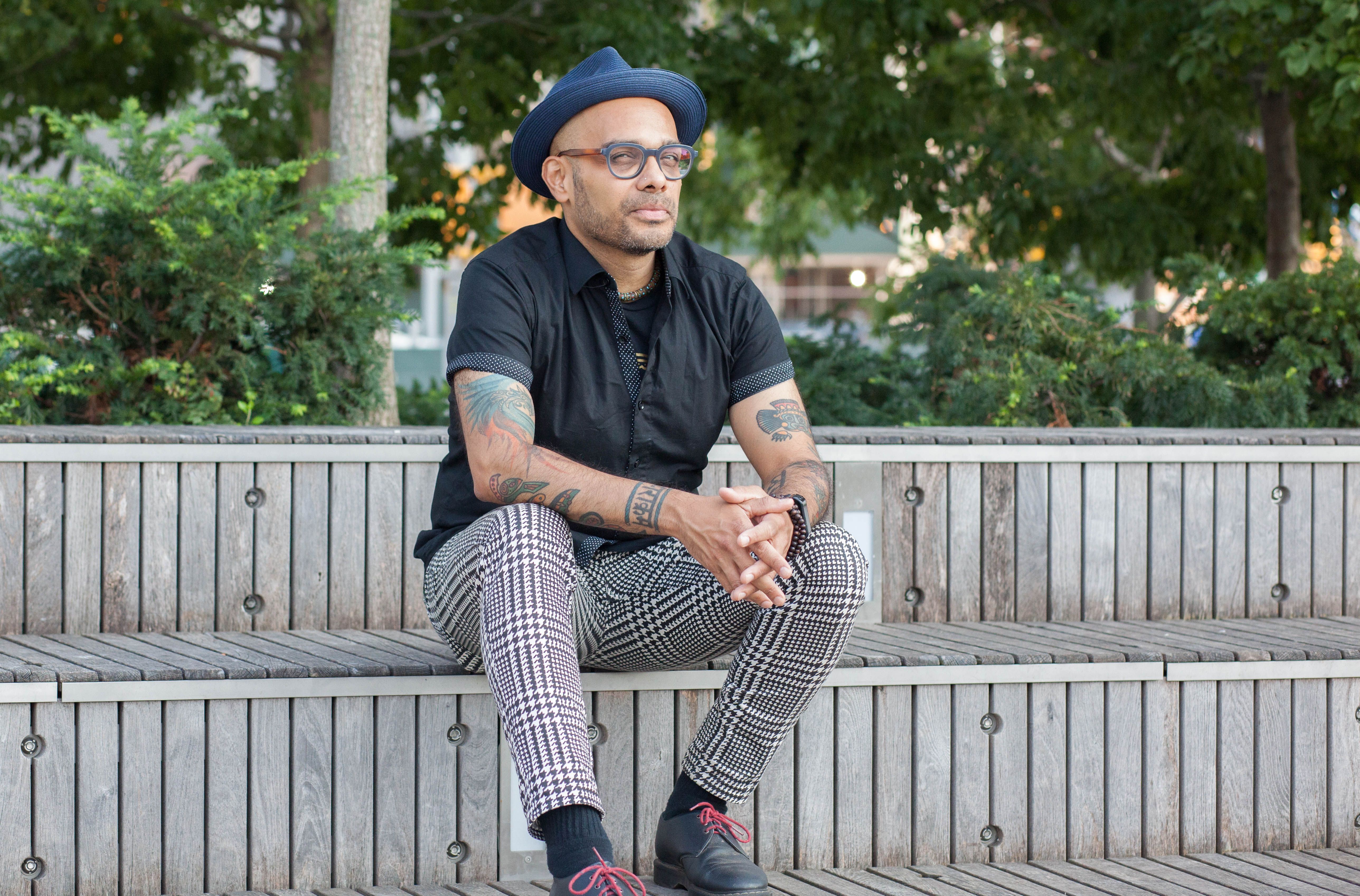
Name: Ravish Momin aka Sunken Cages
Nationality: Indian, USA-based
Occupation: Drummer, producer, composer
Current release: Sunken Cages's new album Neram Pularumbol (As The Dawn Breaks) is out via Mahorka.
Hometown Recommendation: Philadelphia punches above its weight for vegan restaurants. I’d recommend the Unit Su Vege restaurant for amazing vegan DimSum.
Things that I am passionate about but rarely get to talk about: I used to work as an environmental engineer. My degree is actually in Civil/Environmental engineering and I worked on clean-up projects at industrial sites in the past. Thinking and talking about the impacts of pollution, and climate change is something I’m deeply passionate about.
If you enjoyed this Sunken Cages interview and would like to stay up to date with his music, visit his official homepage. He is also on Instagram, and bandcamp.
What were some of the musical experiences which planted a seed for your interest in electronic music?
In 2008, I heard Flying Lotus’ LA EP 1 x 3 and was mesmerized by the sounds and how fluid/organic it felt.
Prior to that, my main exposure had only been to commercial dance music- which wasn’t my bag, coming from a background in experimental music.
Later on, between 2011-14, I got exposed to a ton of alternative, underground or whatever you wanna call it, electronic music via my cousin, Alap Momin, who was a member of the experimental HipHop group Dalek.
So, everything from Andy Stott to Robert Hood to Ikonika to Rhythm & Sound to DJ Rashad fell upon my ears, and I was blown away by how fresh the music sounded.
[Read our Rhythm & Sound's Moritz von Oswald interview]
I immediately knew that I wanted to blend my approach to music making -largely acoustic at the time- with electronic elements inspired by all that new listening.
Most genres of music make use of electronic production means. What does the term “electronic music” mean today, would you say?
For sure, electronic music is such a broad and all-encompassing term.
In simplest words, any music that has primary electronic elements, inclusive of beats and synths, while still embracing acoustic elements, qualifies as electronic music :-)
I don’t limit that definition to specific genres or music solely created by producers who are using production software or analog/digital synths.
Debates around electronic music tend to focus on technology. What, though, were some of the things you learned by talking to colleagues or through performing and/or recording with other musicians? What role does community play for your interest in production and getting better as a producer?
Over the past 20 years, I’ve performed in Pop, Jazz, Global and experimental music groups, and worked mostly with other musicians. I’ve played music that was rhythmic and also free-form. While song-based music can be more rigid in terms of one’s role, there still lies an incredible amount of trust and musical chemistry at the core.
Now, in performing free-form and experimental musical genres, in addition to the trust and chemistry, there’s the added dimension of deep listening and reacting in real-time in an improvised setting.
Community itself is a charged word for me. My music community is now global as I wasn’t finding any like-minded producers in my geographical vicinity. Continuing to collaborate and exchange ideas with similar forward-thinking producers from across the globe is of utmost importance.
What are examples for artists, performances, and releases that really inspired you recently and possibly gave you the feeling of having experienced something fresh and new?
Off the top of my head, I’ve really been inspired by 3Phaz (Egypt), Deena Abdelwahed (Tunisia), Slikback (Kenya), and Kibrom Birhane (Ethiopia), all artists who have beautifully blended their respective traditional music with future-seeking electronic music elements.
For live-performances, the UK-Ugandan group Nihiloxica was an amazing discovery, as they presented an incredibly powerful blend of traditional Ugandan drums and heavy UK Bass.
The duo of singer/trumpeter Adbullah Miniawy (Egypt) and producer Simo Cell (France) is also very inspirational.
What kind of musical/sonic materials, and ideas are particularly stimulating for your own work right now?
Right now, even though it's commercial music, I’m really enjoying Amapiano and how they put together all the rhythmic elements.
Generally speaking, I’m also seeking out global artists who are blending their traditional folk rhythms with Industrial, Dub, Footwork, G’com and other underground electronic dance music genres.
I’m still also inspired by Spiritual Jazz and South-Indian folk music.
Where do most of your inspirations to create come from – rather from internal impulses or external ones? Which current social / political / ecological or other developments make you feel like you need to respond as an artist?
Lately, I’ve been motivated by wanting to shine light on working-class rituals and music (folk traditions) as the music scene is often co-opted by upper-class artists.
I’ve always felt that the personal is the political. Whether we consciously claim them or not, all actions have political resonance, speak to our privilege (or lack of), whether it’s gender or racially based and our relationship to power (colonized vs colonizer.)
Raising awareness of the impacts of global warming, with the irreversible climatic changes that threaten our very survival, has been an important motivator.
Also, as a student of world-history, paying close attention to the ongoing genocides in Sudan, Gaza, Myanmar for starters, and how the world has chosen to respond, has been incredibly motivating- to raise awareness of their sorrow and plight through music.
Tell me a bit about the sounds & creative directions, artists & communities, as well as the colleagues & creative hotspots of your current hometown, please. How do they influence your music?
I am currently based in Philadelphia, after more than 20 years in New York City. While I’m still learning what makes this town tick, I regret to say that the world that I explore around beat-based experimental/electronic global music doesn’t really have a community here (neither did New York City for that matter.)
However, I found the local musicians, producers and DJs to be very welcoming of my work, and in a short span of a few years, have had performances hosted by established organizations, independent artists and DIY collectives as well.
I’ve also been inspired by genre-bending HipHop artists like Savan DePaul, electronic music producer/sound artist Kilamanzego and cultural provocateurs like Vicenta and Alex Smith.
Today, electronic music has an interesting relationship between honouring its roots and exploring the unknown. What does the balance between these two poles look like in your music?
Back in my acoustic music performance days, I used to work with the legendary saxophonist Kalaparush Maurice McIntyre of the AACM (Association for the Advancement of Creative Musicians, created in Chicago in1965) whose motto was “ancient to the future.’
We honored the traditions while adding new sounds and influences.
I bring that same spirit to electronic music making, where I use established electronic music techniques and blend vintage synths and drum machines with modern VST instruments, to produce tracks rooted in Indian Folk rhythms.
What were some of the recent tools you bought, used, or saw/read about which changed your perspective about production, performing, and making music?
The latest addition to my live-rig has been AFK Audio’s (Berlin based company) DrumBeam, which is essentially one surface that can be mapped to contain up to 12 programmable zones (or pads) and played with drumsticks.
Prior to this new arrival, electronic drum multi-pads were neither pressure responsive nor did they contain more than 8 fixed pads. Most multi-pads were also quite expensive.
Now I can easily switch between multiple drum-kits and Ableton drum-racks with ease, truly a game-changer.
How do you see the role of sampling in electronic music today?
I have no qualms with responsible sampling that acknowledges/compensates the creators. Layering in audio samples adds an unmistakable ‘air’ and warmth to electronic sounds which makes the productions sound more organic and multi-dimensional.
That being said, sampling from other cultures for the sake of sampling, without any spiritual or cultural connection is definitely extractive and appropriative.
What are some of the most recent innovations in sound design for you - and what are currently personal limits to realising the sounds you have in your mind?
Adopting Ableton for production has been a quantum leap in my approach to sound design.
Specifically, the ability to create non-linear scenes or musical segments (which can be triggered in any order) in “session view” and to then produce them into a song in “arrangement view” had been extremely empowering in allowing me to improvise and quickly make multiple arranged versions of a track.
My personal limits, quite frankly, are constrained by my finances. I’m a big advocate of making music on affordable electronic instruments.
How would you say your live performances and your recording projects are connected at the moment? How do they mutually influence and feed off each other?
Sunken Cages is a hybrid performance-production project. I create electronic sound design elements inclusive of drones, synth based melodies, electronic textures and samples for live performance where the drums are layered on top in real-time.
Once I’m satisfied with how an arrangement feels in a performance, I then record all the elements, add EQ, track automations, compression and other plug-ins to produce the track.
Even if AI will not entirely replace human composition, it looks set to have a significant impact on it. What do the terms composing/producing mean in the era of AI, do you feel?
Well, the verdict on how set it looks is still out. Just a few days ago GEMA won a landmark lawsuit against Suno- a generative AI music platform, for copyright infringement.
When we now look back to NFTs as being considered the inevitable future of monetizing music, we must take anything ‘inevitable’ with a grain of salt.
Moreover, all AI is just large language models that scrape existing data and extrapolate, and can never be truly innovative. There, I said it, now let’s frame this comment. :-)