Published
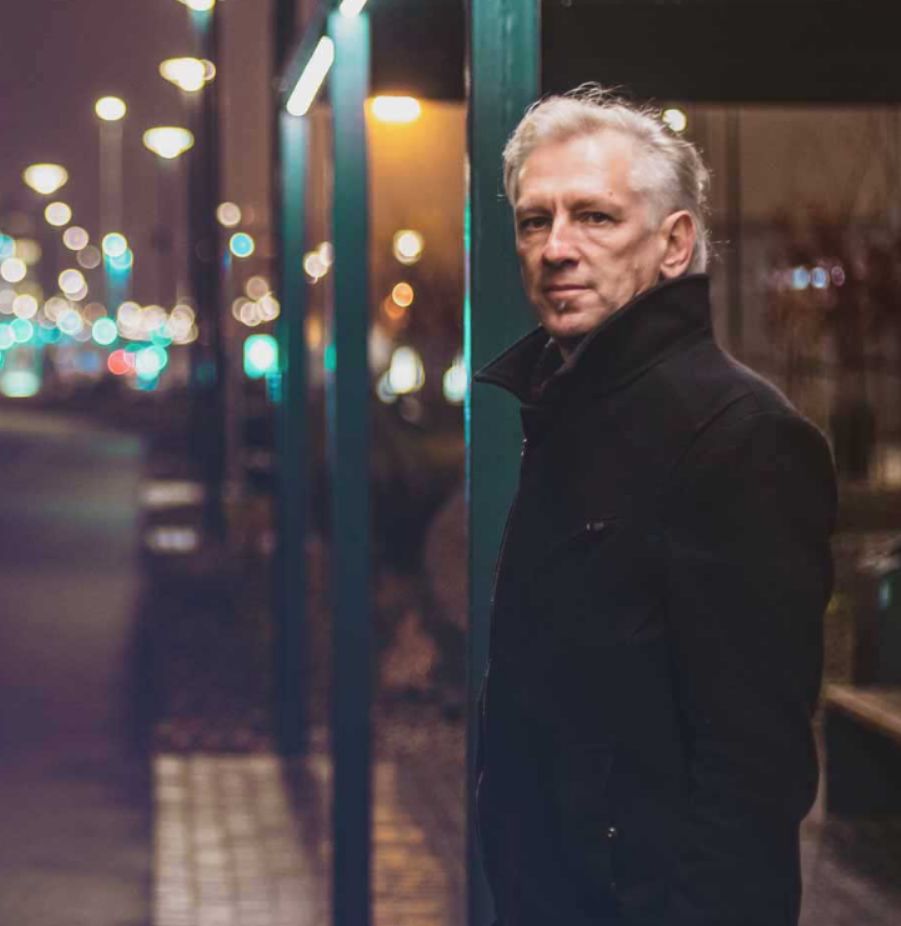
Name: Tanel Ruben
Nationality: Estonian
Occupation: Drummer, composer, improviser
Current release: Morgenthaler/Röllin/Ruben's new album Alarmstufe Rot is out via unit. For it, Tanel Ruben teamed up with Urs Röllin (guitar, effects), and Robert Morgenthaler (trombone, effects).
Global Recommendations: There is a wonderful jazz club in Tallinn called Philly Joe’s, located in the city center. Visit it if you ever come to Tallinn.
[Read our Robert Morgenthaler interview]
[Read our Urs Röllin interview]
If you enjoyed this Morgenthaler/Röllin/Ruben interview and would like to stay up to date with the band and their music, visit them on Facebook. Tanel Ruben also has a personal website.
What were some of the musical experiences which planted a seed for your interest in jazz?
Listening to music, of course, laid the foundation for my interest in jazz.
What does the term jazz mean today, would you say?
For me, it must contain an element of improvisation. The specific musical style is not important.
And it is certainly not limited to swing, as some conservatives still believe.
As of today, what kind of materials, ideas, and technologies are particularly stimulating for you?
I’m interested in everything. It has to feel fresh, new, and compelling.
Where do most of your inspirations to create come from – rather from internal impulses or external ones? Which current social / political / ecological or other developments make you feel like you need to respond as an artist?
Current political or environmental developments do not play a major role.
Inspiration is born from intuition, imagination, and dreams.
Tell me a bit about the sounds & creative directions, artists & communities, as well as the colleagues & creative hotspots of your current hometown, please. How do they influence your music?
A lot is happening in my hometown. There is less jazz than other genres, but beyond music there is always theatre, cinema, and visual art.
If jazz were my only interest, life would be boring. Variety is essential.
What role do electronic tools and instruments play for your creative process?
Over the years I have used loopers, multitrack studios, electronic drums, samplers, synthesizers, and computers.
Thanks to technological advances, collaboration has become a lot easier. What have been some of the most fruitful collaborations for you recently and what approaches to and modes of collaboration currently seem best to you?
I even performed a concert using 5G technology – half of the band was on the opposite side of the country.
And we did that nearly ten years ago already.
Jazz has always had an interesting relationship between honouring its roots and exploring the unknown. What does the balance between these two poles look like in your music?
I believe I’ve always drawn from those roots – rhythm, harmony, form, improvisation, and my own sound.
How much potential for something “new” is there still in jazz? What could this “new” look like?
The new always appears unexpectedly.
Dave Liebman once said everything in jazz had been done. I didn’t agree then, and I still don’t.
For many artists, life-changing musical experiences take place live. How do you see that yourself?
A concert is a perfect moment.
But the music performed there is always presented in a slightly new form.
How, would you say are your live performances and your recording projects connected at the moment? How do they mutually influence and feed off each other?
I work in the studio regularly. It’s essential for developing one’s sound and musicality.
Ímprovisation is obviously an essential element of jazz, but I would assume that just like composition, it is transforming. How do you feel has the role of improvisation changed in jazz?
I think its role has always varied.
Some genres emphasize improvisation more, others less.
What, would you say, are the key ideas behind your approach to improvisation?
Improvisation is living, deciding, and sensing in the moment.
Are there approaches, artists, festivals, labels, spaces or anyone/-thing else out there who you feel deserve a shout out for taking jazz into the future?
I am grateful to everyone who performs, teaches, organizes, and promotes jazz. And grateful to the audience.
In the end, we are all part of the jazz audience, regardless of which side of the stage we stand on.
The Montreux Festival intends to preserve its archive of recordings for future generations. Do you personally feels it's important that everything should remain available forever - or is there something to be said for letting beautiful moments pass and linger in the memories of those that experienced them?
If technology allows us to preserve something, we should. Just look at how we value ancient texts.