Published
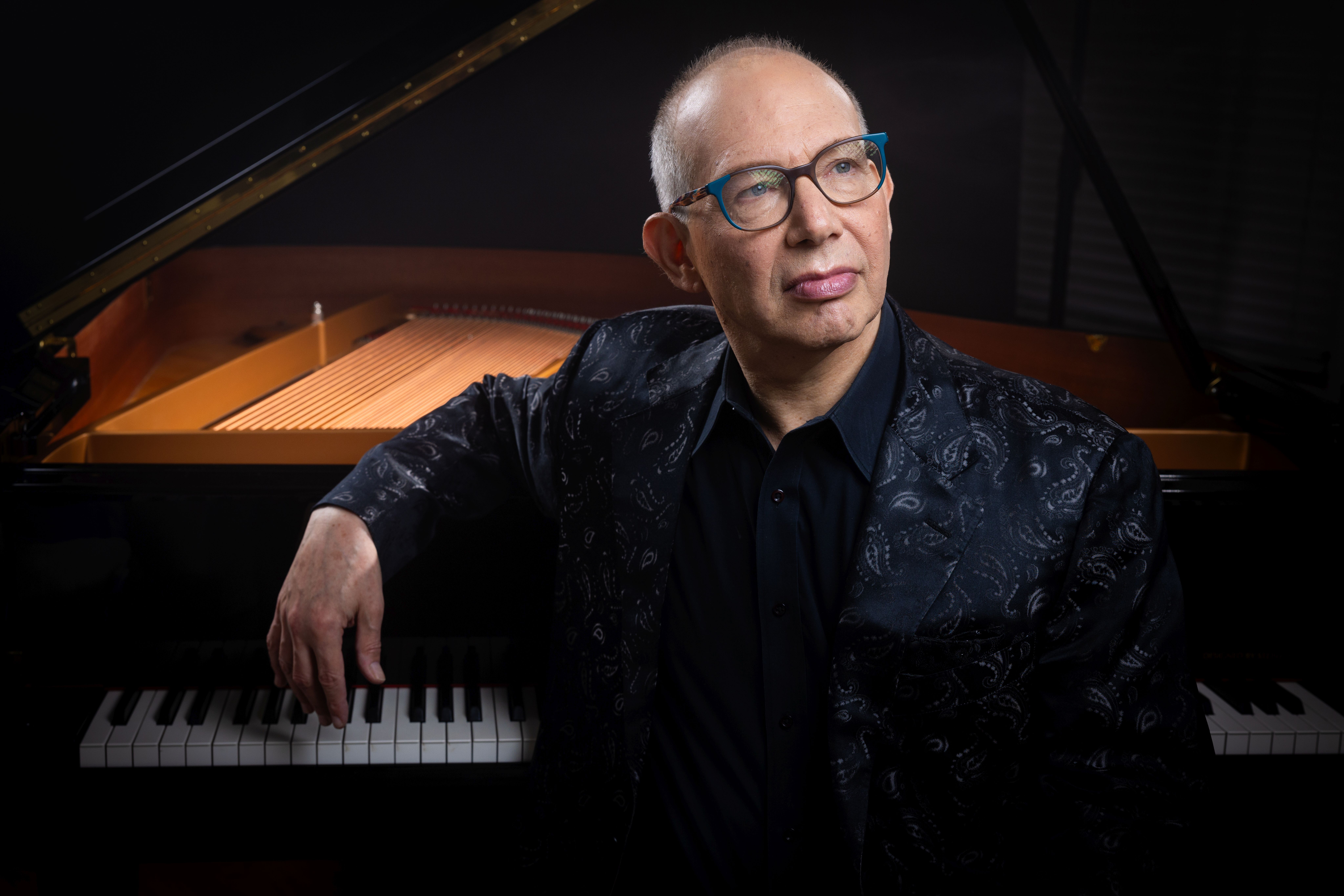
Name: Ted Rosenthal
Nationality: American
Occupation: Pianist, composer, improviser
Current release: Ted Rosenthal's latest album with his trio, The Good Old Days, is out via Tmr.
Shoutouts: Jazz in educational institutions has changed the landscape. Although it may be “chic” to find fault, I believe it is mostly a great development. The young musicians are developing at a remarkable pace. Of course, that final level of artistry is informed by life experience and individual depth. But these schools form wonderful communities for both students and faculties. Also, through creative arranging and programming you can find ways to be tied to the tradition while also taking material in new directions.
If you enjoyed this Ted Rosenthal interview and would like to stay up to date with his music and upcoming performances, visit his official homepage. He is also on facebook.
What were some of the musical experiences which planted a seed for your interest in jazz?
At age 12 I began studying with Tony Aless, a pianist that played and recorded with Woody Herman and Charlie Parker among others. He introduced me to Bebop and songbook standards, which I play and record to this day.
At 16 I studied briefly with Lennie Tristano, but it was in my 20s that I truly appreciated his music and I’ve recorded “Wow” [Ted Rosenthal Trio, Rosenthology,] and “Lennie’s Pennies” [Ted Rosenthal, Live at Maybeck Hall], and composed songs inspired by his concepts such as “Back Up” [Ted Rosenthal Trio, Threeplay].
Around that time I also studied with Jaki Byard, who instilled my love for the entire history of jazz piano, a big influence for my most recent recording, The Good Old Days.
Later in my teens I played with Paul Jeffrey, Thelonious Monk’s last tenor player, and was exposed to, and gained a great appreciation for Monk’s music. This was part of the inspiration for my CD, Images of Monk.
What does the term jazz mean today, would you say?
For me, it’s music that is primarily acoustic, and includes a good deal of improvisation, swing, and aspects of the blues.
But there are many styles and flavors out there.
As of today, what kind of materials, ideas, and technologies are particularly stimulating for you?
I draw a good deal of inspiration from classical music and recently released, Classics Reimagined: Impromp2 I take melodies from classical repertoire and reimagine them for jazz trio.
For me it is a natural and organic process, and I am gratified that this music is appreciated by both jazz and classical fans.
I also am interested in larger forms in jazz. I have written two jazz piano concertos and a jazz opera, “Dear Erich.” “Dear Erich” was premiered in 2019 by New York City Opera.
I drew some of my musical inspiration from Gershwin’s “Porgy and Bess,” in that there are discrete songs in the opera. On my recent CD, The Ted Rosenthal Songbook, I play four selections from the opera with my trio.
Where do most of your inspirations to create come from – rather from internal impulses or external ones? Which current social / political / ecological or other developments make you feel like you need to respond as an artist?
My inspirations come from both internal and external sources. Sometimes it comes from hearing something for the first time or in a new way that sends me on a musical path.
Sometimes there is a non-musical idea that I want to express and explore in music. “Dear Erich” which tells the story of my father’s escape from Nazi Germany and its effect on him and family members, has many themes – personal, social and political.
I’ve also written a piece inspired by the pandemic, “Round for a Plague Year,” that I hope to record in the near future. Also, there is nothing like a deadline to get the creative juices flowing!
Tell me a bit about the sounds & creative directions, artists & communities, as well as the colleagues & creative hotspots of your current hometown, please. How do they influence your music?
Living in New York City, I’m exposed to musicians performing at the highest level of jazz on a daily basis, many of whom are friends and colleagues.
Also, teaching at The Juilliard School and Manhattan School of Music, I have some of the top piano students in the world. They keep me on my toes and inspire me as I hope I inspire them!
Jazz has always had an interesting relationship between honouring its roots and exploring the unknown. What does the balance between these two poles look like in your music?
I am very connected to the tradition but always look for ways to expand and develop musical ideas to express my own musical ideas and personality.
While I have the greatest respect for the jazz masters, I don’t want to simply copy what they do, but to build on the tradition. Part of that tradition is individuality and innovation.
Even when I arrange a standard, I try to add musical devices that give it my personal voice.
How much potential for something “new” is there still in jazz? What could this “new” look like?
I think rather than an emphasis on a “new” sound, the emphasis should be on a “personal” sound. The ideas can be “new” but are not driven primarily by the need to create something never heard before.
This approach can also can keep you connected to the jazz tradition.
For many artists, life-changing musical experiences take place live. How do you see that yourself?
To me, connecting with human beings – both on the bandstand and with the audience – is essential to what we do. I don’t consider it life changing necessarily, but extremely valuable and gratifying. It’s what performers live for.
I don’t think this experience for both performers and audiences will be replaced by technology anytime soon or perhaps ever.
How, would you say are your live performances and your recording projects connected at the moment? How do they mutually influence and feed off each other?
I have been regularly performing music from my 4 recent releases: High Standards, The Ted Rosenthal Songbook, Classics Reimagined: Impromp2, and The Good Old Days.
The music was evolving before the recordings and continues to develop since their release. I have a wide repertoire through 4 decades of performing and composing, and it’s also nice to revisit and mix in music that I’ve played and recorded from years back.
The 4 CDs each have identifiable programs. I think programming is essential to a successful set and audience experience. The theme(s), pacing, and variety of moods and tempos can really add to the success of the performance for both performer and listener.
Improvisation is obviously an essential element of jazz, but I would assume that just like composition, it is transforming. How do you feel has the role of improvisation changed in jazz?
Solos were shorter in early jazz, then became much longer, as the music and recording technology changed.
As a jazz performer and composer, I think there are many interesting options to explore as far as a piece having more or less composition or improvisation, which also could mean shorter and longer solos.
What, would you say, are the key ideas behind your approach to improvisation?
There are many, and it’s nice to feel there is a variety of options in approaches to soloing.
I like a thematic approach, as it’s related to the song and composition. I also like exploring different textures on the piano, since there are so many possibilities. Experimenting with denser (busier) approaches versus using more space is also valuable.
As a jazz pianist, I love working with and enriching harmony, which will also affect the improvisation. And interacting with the group is another important aspect of shaping the improvisation.