Published
Part 1
Name: Thorsten Quaeschning
Nationality: German
Occupation: Producer, composer, synthesist, performer
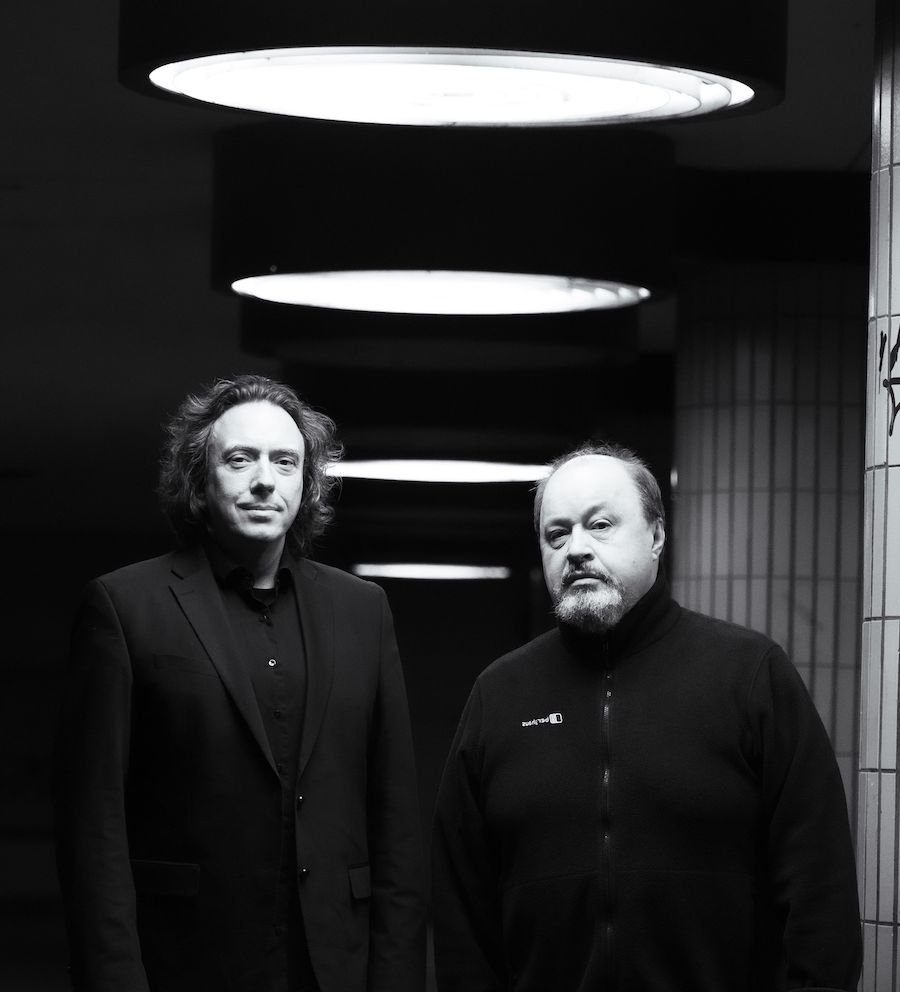
Current release: Thorsten Quaeschning teams up with Marillion's Steve Rothery for their collaborative project Bioscope. Their debut album Gentō is out via earMUSIC.
Recommendations for Berlin, Germany: I think Berlin has something special in every direction. The best thing is: I can choose whether I want to enjoy the energy and culture of the city center—or escape to the calm of the outer districts. It’s a completely different life, and I can decide every day which version I need. That flexibility is what I value most about living here.
Things I am passionate about but rarely get to talk about: I enjoy the freedom of long bike rides. Sitting on a bench in a square with a fountain in the middle, watching a lake, listening to good music, and being with people I care about—that’s one of the best things there is.
And after moments like that, going back to the studio feels easier. Waiting for the next musical idea, for the next moment worth recording, becomes more natural—less of a struggle. Those quiet moments help.
[Read our Steve Rothery interview]
If you enjoyed this Thorsten Quaeschning interview and would like to know more about his music, visit him on Facebook.
For a deeper dive, read our earlier Tangerine Dream interview and our interview with the band about improvisation.
Debates around production tend to focus on gear. What, though, were some of the things you learned by talking to colleagues or through performing and/or recording with other musicians? What role does community play for your interest in production and getting better as a producer?
The presence of another person always changes the process.
You begin to adjust what you’re playing based on what you imagine they might be hearing—or expecting. Even subtle moves, like shifting a panorama slightly, can become charged when someone else is in the room. You start listening differently.
Making music with others—whether in the same room or in dialogue through recordings—often leads to unexpected insights. Everyone approaches sound differently. Every session, every exchange teaches you something. Hopefully, with every note you play together, you become a better musician and producer.
The community around you doesn’t just offer feedback—it shapes your musical instincts over time.
That said, in the actual moment of recording or shaping a sound, I personally need to be in my own tunnel. That’s when I can fully concentrate and make decisions that feel right to me.
Would you describe yourself as a very “technical” person with a natural affinity for technology, gadgets, electronic circuits, software, etc …?
The technical aspect of making music is fascinating because it can sometimes get you to a result faster—and with more control. But too much over-editing can be counterproductive. You have to break it open occasionally. That’s where free sessions, messy jams, and uncertain decisions come in.
I do love gear, but I wouldn’t call myself a collector. I actually use the instruments I have. Each one is a color, a shade, a texture in a larger sonic palette.
I’m not interested in imitating real-world instruments. Most of the time, at least. One of the goals in synthesis—especially modular synthesis—is to get close to a sound you imagined before you even touched a key. Not to match an oboe, trumpet or double bass, but to shape something that couldn’t exist physically.
Electronic music allows you to move beyond the natural decay curves and timbral boundaries of acoustic instruments. That’s where it gets exciting for me.
The word “production” as a separate item from “composition” suggests a creative process with different stages. Do you see it that way – or are all the steps towards a piece of music always integrated and connected for you?
For me, sound and harmony are deeply connected. Different timbres often inspire specific chord progressions or melodies. So I wouldn’t separate sound design from composition.
Of course, there’s usually a harmonic concept and a structural framework. But the choice of sound—its texture, articulation, presence—can directly influence the tonal decisions within that framework.
Composition and production move side by side. They serve the emotional expression and the intent of the piece. The sound is part of the message.
Do you want technology and production to mainly “serve musical ideas” – or do you like to bring them to the fore and play with them?
Everything is subordinated to music itself—production, technology, even performance decisions.
If technology offers new forms of articulation that aren’t just flashy or on-the-nose, but actually serve the piece, then it’s more than welcome. Tools that add depth without drawing attention to themselves are the most powerful ones.
There’s also a moment—at least in my experience—when the piece itself seems to take over. It starts to tell you what it needs. From there, the next steps feel almost natural. You’re no longer shaping it consciously; you’re just listening and responding.
In how far would you say was your evolution as an artist connected to the evolution of your music setup? Were there shared stepping stones?
Today it’s fairly easy to express a wide musical range using just a computer and a DAW—in my case, Steinberg Cubase. That already sets it apart from writing on paper.
In the early 90s, I had a small hardware sequencer. Moving from that to computer-based composition and production felt like gaining an aerial view. By the 2000s, you suddenly had all these new sound possibilities. That was a major shift.
Still, I prefer turning real knobs and working with physical hardware. But I’m not religious about it. If a plugin sounds better than a hardware version, it wins. It doesn’t happen often, but it has happened.
But beyond the tools, it’s about experience. Discipline. The act of working with music every day. You hope to be in the right place at the right time—ready to press record when something that feels right happens. That moment—if you manage to capture it—is what counts.
And even then, I don’t think we should judge our own music. At best, we witness it.
What’s your preferred and most intuitive/natural way of making music and why?
For me, keyboards—piano and synthesizer—are my natural musical input. That’s where I come from. It’s not just expressive and fast, it’s the way I think musically.
I also enjoy step sequencers, where you predefine pitch sequences and connect them in creative ways. They offer a different kind of structure. Editing with a mouse has its place too—especially for precision.
And I often use loopers with all kinds of sources, including acoustic ones—sometimes just contact mics on cardboard boxes. If it works, it works.
Tell me about one or two of your early pieces that you’re still proud of (or satisfied with) in terms of production – and why you’re content with them.
The first album I wrote with Tangerine Dream was called Jeanne d’Arc. We started writing it in 2004 and it was released in 2005.
It all has its time window, but in some way I often think that the next piece can be the next better one.
Tell me about the space of your current studio/workplace and how you’ve set it up to optimise creativity.
My idea was to set up the studio like a large orchestra. All instruments—synthesizers, modular systems, sound modules—are connected simultaneously through multiple mixers. I can listen to everything at once.
The entire setup is wired into a large computer system—actually two systems working together—so as soon as something is switched on, I can play it through a master keyboard and immediately record it into the DAW. We can record 74 tracks simultaneously and listen to over 130 at the same time. I don’t want to take a synthesizer off the shelf and plug it in first. In my world, it’s ideal to just sit down and play.
Another key idea is to stay in the MIDI domain for as long as possible before committing to audio. Because when multiple sound sources are running in parallel, they start to interact—or even force interaction. You shape the interaction rather than just the isolated sound.
It’s orchestral thinking—through a polyphonic workflow.