Published
Part 2
What’s your take on SOPHIE’s statement about unlimited possibilities and not limiting oneself in electronic music?
I don’t think music should be framed in terms of limitations. In some cases, it’s more about freeing yourself from the temptation to bury a sound under endless layers of other sounds.
At first, three, four or more layers can sound majestic and powerful. But the nuance and texture of a single sound—especially one that’s not spread across the entire frequency spectrum—can be just as moving. Getting one sound to stand on its own, and to function musically, takes a lot of detail work. That’s something I really enjoy.
In terms of structure or scope, though—I don’t believe in limiting the number of tracks or how long or short a piece should be. That would go against the idea that the piece of music eventually takes control.
Whether it needs 150 layers or just one tone, I try to follow that moment. It’s still orchestral thinking—just with a polyphonic workflow that can stretch in very unexpected directions.
For you personally, where does composition end and production start (or vice versa)?
For me, composition and production go hand in hand. They are both subordinate to the piece itself and lead together toward the same goal.
You can compose sounds just as you can edit notes. It’s all part of shaping the musical identity of a piece.
From the earliest sketches to the finished piece, tell me about the production process for Gentō with Steve Rothery, please.
We first met in 2014 on the Cruise to the Edge—a festival cruise that starts in Florida and sails through Mexico and surrounding island groups.
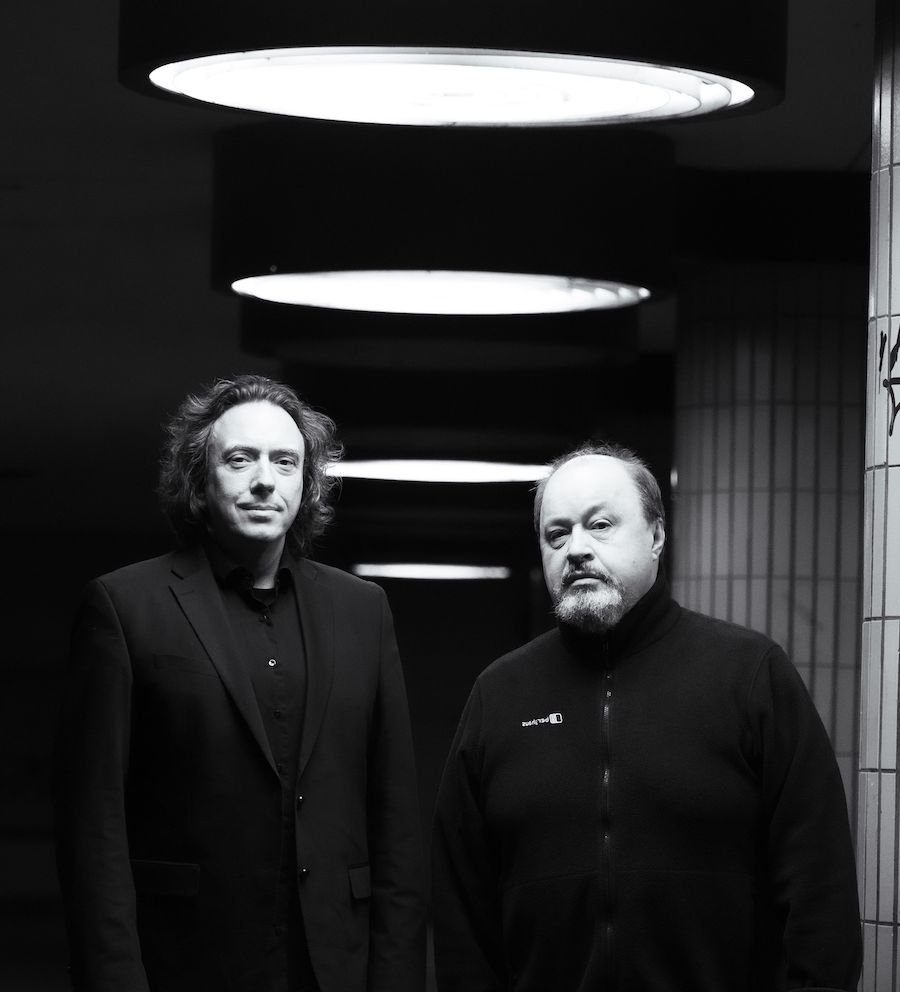
In 2018, before a Marillion show in Berlin, we met again and realised that we got along really well, personally and musically. That conversation led to our first studio session in 2019, in my old studio in Berlin.
From there, things evolved slowly and naturally. We began to understand that we were developing a shared musical language. In 2020, after two solo shows in the UK, I travelled to England and we recorded at the Racket Club—Marillion’s studio—because my equipment was already there.
What mattered most was the act of playing together. That remained the heart of the project. Because of our conflicting tour schedules, it wasn’t possible to work more frequently, so we began meeting once a year, every December, in Berlin.
That became a really precious time—focused, quiet, and honest. Each session brought us closer, and the way our individual styles blended never had to be discussed—it just happened. Nothing ever felt forced. The musical direction revealed itself naturally. Over the years, we kept developing the material until we realised: this is not just a collection of sketches—this is an album worth finishing.
In 2025, Alex Reeves from Elbow joined us on drums. His contribution brought a sense of cohesion and sensitivity to the music—rhythmic, emotional, and precise. It completed the process beautifully.
Tell me about your aesthetic preferences when using reverb, delay, compression, chorus etc … What was the role of these effects in the production of your current release?
Because synthesizers and Steve’s E-Bow guitar don’t have a direct reference to classical acoustic instruments, there’s no need to place them in a “real” room. That gives us the freedom to use reverb settings that wouldn’t exist in the physical world.
We often work with long-tail reverbs, shimmer effects or synthetic spaces—not to imitate anything natural, but to create surreal, emotionally charged environments that serve the music’s intent. It’s a very free, imaginative process, not bound to what exists.
I especially love working with Strymon effects—NightSky, BigSky and StarLab—for creating interesting textures that feel spacious, shifting and deeply musical.
Delays are central to my sequencer work. They give the structure pulse and breath. Compression helps maintain signal consistency, but in instrumental music it’s important not to overdo it. Dynamics still matter. Chorus, phaser and similar tools are used selectively—only when they actually contribute to the sound.
Granular and scatter effects are also part of my palette, especially for creating movement and layers that feel organic. Sidechaining, when used musically, can be very effective too.
For me, effects are part of the actual sound design. They’re not something you add later—they belong to the sound from the beginning.
Do you see a benefit in getting an external producer on board for your studio work?
I normally don’t want anyone else producing my work—or the work I’m involved with.
For me, production is part of composition. The way a piece sounds, how it evolves, where it breathes—all of that is already a creative decision. I don’t separate writing from sound shaping. That’s why having someone else come in as a producer doesn’t feel right to me. It would mean handing over part of the musical identity.
Mastering, though, is a different story. I actually like the idea of someone with fresh ears giving it a final polish—especially after you’ve been listening to it a hundred times.
But producing? That’s something I prefer to keep within the process.
Have you used AI or generative music tools for your own productions?
No.
To me, AI often feels like someone copying other people’s diaries and pretending they’ve lived it themselves.
Music and art—at their best—are the result or catalyst of emotions, experiences, things you’ve learned, read, seen. And I still believe that something created from a place of real experience, something that comes from the heart, carries a kind of honesty and authenticity you can feel.
On the other hand, I’d be more than happy if AI could handle parts of my email inbox, do my tax returns, maybe wipe the kitchen table and do the dishes.
We can watch videos on production, take producer courses, and exchange deep insights on gear forums. Amidst these options to improve one’s chops/skills, how do you keep things playful?
I always enjoy watching how other people make music or compose—there’s always something to learn. Most of the time, people approach things differently. And that’s also because software and gear often allow for very different production methods.
So I absolutely welcome tutorials, masterclasses or magazine features—whether on YouTube or elsewhere. They can be very inspiring.
But they shouldn’t become an excuse to avoid making music yourself. That’s the key: stay curious, but don’t forget to actually sit down and play.