Part 1
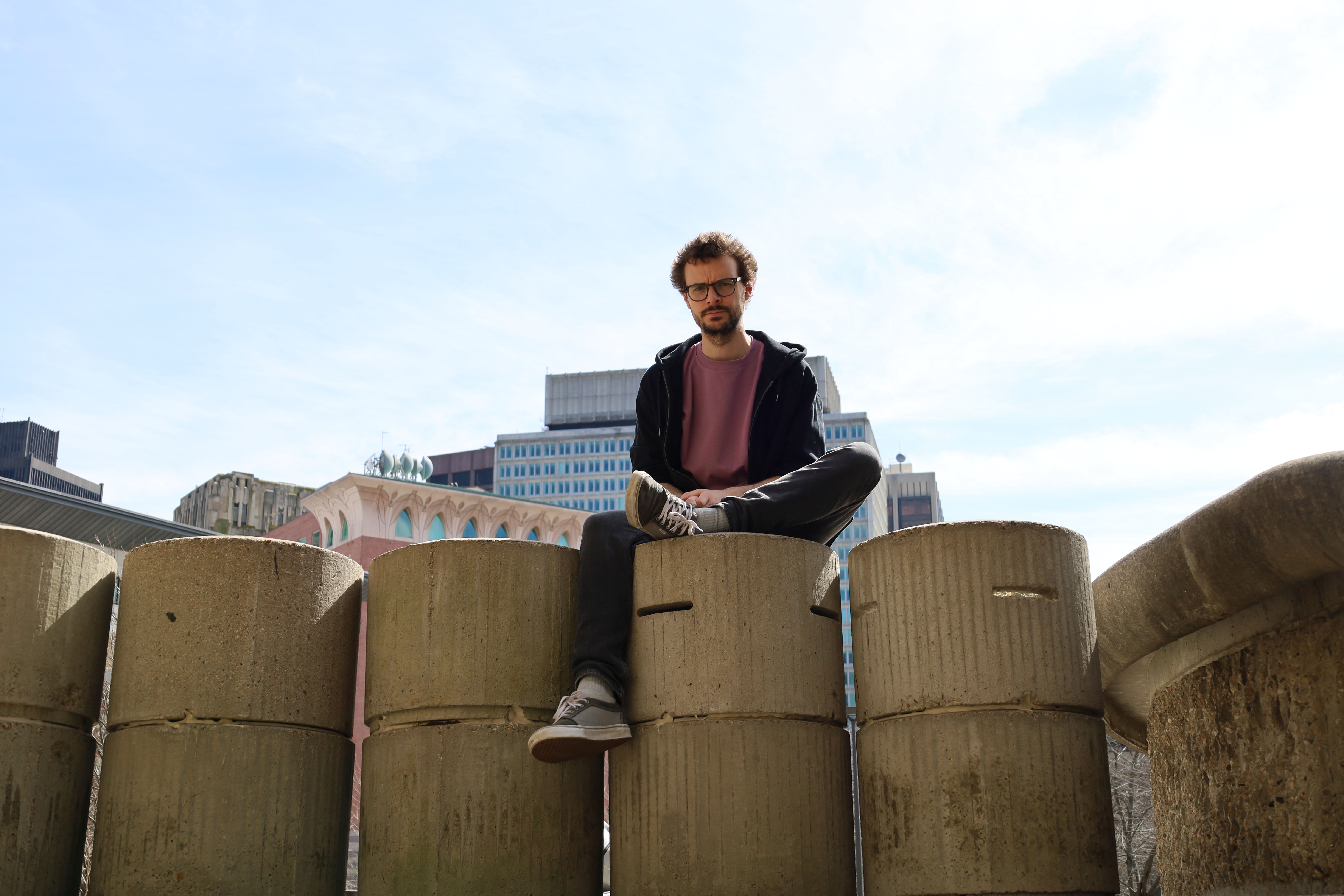
Name: Tobias Meissl
Nationality: Austrian
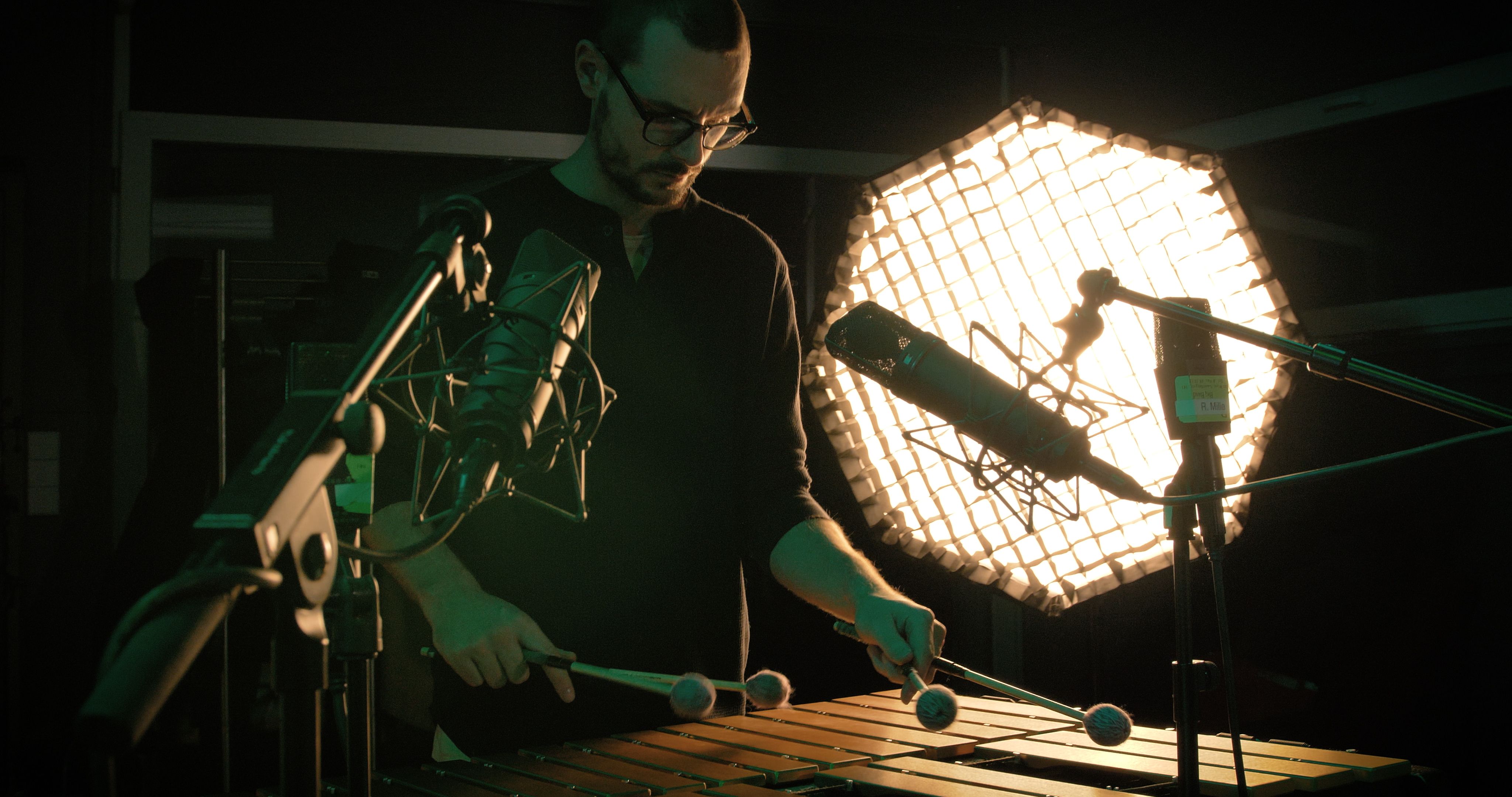
Occupation: Composer, improviser, vibraphonist
Current release: Tobias Meissl's new album Mr. Resolved, featuring Ivar Roban Križić (bass) and Valentin Duit (drums) is out via Unit. Stream it here.
If you enjoyed this Tobias Meissl interview and would like to know more about his music, visit his official homepage. He is also on Instagram, and Soundcloud.
What were some of the musical experiences which planted a seed for your interest in jazz?
There was a Dave Brubeck and a Django Reinhardt record we used to listen to in the car on family trips. Also, both of my first teachers on drums and mallets had me improvise in our lessons and introduced me to different recordings, I remember Buddy Rich’s “Big Swing Face” or Blues on Bach by the Modern Jazz Quartet.
Around 15 years old, a friend showed me Steamin’ and the rest of the first Miles Quintet records and something clicked.
Around that time, I started going to Porgy & Bess in Vienna quite regularly and also began researching the history. Milt Jackson, Thelonious Monk, the Jazz Messengers, and the Chick Corea / Gary Burton Duos were very important to me then.
Another friend knew about more contemporary artists touring at the time and showed me Avishai Cohen Trio, Esperanza Spalding, and Chrsitian McBride. I also heard Brad Mehldau live quite a few times, especially the first solo concert I went to at maybe age 19 blew me away. Also, the first couple of instances of improvising with other people in front of an audience were incredibly exciting.
[Read our Avishai Cohen interview]
How do jazz and jazz culture factor into your artistic processes and the music resulting from them?
“Jazz” as an approach to (collective) music-making with the space and freedom for individual expression, contribution, negotitation and decision-making through improvisation informs everything I do as an artist.
Many of my compositions contain a good deal of freedom for the players and I encourage them to take liberties with the material even when everything is written out in detail. I also appreciate music that grooves on some level.
What does the term jazz mean today, would you say?
There are many points of view on this, of course. I often see and hear it used to encompass anything that doesn’t readily fit the boxes one keeps in one’s mind, but then soon it comes to mean not much but a kind of “other”.
I guess at one point, it was used to refer to a certain way of music-making which originated in African American culture, as well a body of recorded music that documents different expressions of it.
Personally, the Wayne Shorter definition of “Jazz means I dare you” is one I could subscribe to. Daring each other to be really present, and also flexible. In conversation.
Jazz was about a lot more than just music in the 60s and 70s, from politics to fashion. For you personally, is jazz still a way of life – and if so, in which way?
Any music has an implicit politics in terms of how it is organized and how it functions. I would definitely say that in some aspects, like being an improvisor and of a certain disposition, jazz is a way of life for me, but much more on the inside than politics or fashion.
Being present and dealing with what’s in front of you, rather than automatically referring to preconceived, established or currently fashionable patterns of behaviour (while still being cogniscent of them and maybe playing with or around them), certainly informs my daily life.
It’s an approach to problem-solving, as well. Giving up on the illusion of being in control of everything and not trying to force one’s own worldview on the next person. Also trying to hear and really listen to each other while still maintaining what is important to oneself. All that, I think, can be practiced in the music in a more abstract way but is just as relevant to being in the world.
Many people perceive jazz as a genre with high barriers of entrance, both for listeners and musicians. What have your own experiences been in this regard?
In some regards that is true. In certain areas of the music, there is a lot of information being dealt with and you have to be ready to handle that on either end. But I think there is something that goes beyond this fact. You don’t need to know what something is to get something out of it. However, gaining a deeper understanding will certainly enrich the experience and add layers of appreciation, as with anything else.
As a player, I have definitely experienced not being able to hang with what is happening around me, not getting into something you audition for, or not knowing a tune and not being quick enough to figure it out on the spot. But it all depends on how you frame things.
Through the years, these kinds of experiences having to do with musical skills or repertoire have become mostly motivating and inspiring. Just knowing that someone else can or could do this thing that might seem so out of reach from where one is at while witnessing it (live or in a recording) really makes me want to go and see where I can get to if I try that myself.
The really frustrating things, for me, have little to nothing to do with the music.
Derek Bailey defined improvising as the search for material which is endlessly transformable. As of 2024, what kind of materials are particularly stimulating for you?
For several years, it’s been European Classical music, especially piano repertoire, and Stride Piano, lots of piano …
Also, singing into my phone while taking walks, reacting to or picking up things out of what is happening around me. I feel like I can get inspired by any kind of sounds or ideas, whether from different musics, books, films, visual arts or just how someone else makes sense of the world for themselves or tries to explain it to themselves. I usually make a quick note to preserve that spark and then (sometimes much later) work it into something. There is a huge backlog of little recordings and notes to get to …
Recently, I started trying to apply some ideas from rudimental drumming to the vibes and piano, which opened a whole new world of possibilities and problems to tackle. More concisely, I am still rather stimulated by the idea of finding material for composition through improvisation and also allowing for an improvisational spirit within more systematic compositional processes.
I like to think of that as several steps of filtering; I study lots and lots of things that move me in some way, then improvise with them and then work them into something more fixed, which I then improvise with again. Also, at this moment I think, with the right amount of irreverence and recklessness, most things are endlessly transformable. But we’ll see.
What, would you say, are the key ideas behind your approach to improvisation?
Being present and trying to get at something (together), possibly beyond what one thought a thing to be or one thought one could do. Constantly re-examining a thing and reaching for the Unknown within it and oneself. I wrote a horribly wrong Master’s thesis about it … “What if”, “I dare you” and all that.
But, more recently, also “what if we play it as written?” has rejoined my thought process and the pool of possibilities.
How would you describe your relationship with your instrument – is it an extension of your self/body, a partner and companion, a creative catalyst, a challenge to be overcome, something else entirely?
Probably all of the above. I think when you are seriously practicing an instrument, the extension of the body/mind/self thing is certainly something you strive for, especially when improvising. I want to be able to get out what I want as immediately as if I were making that sound with my voice. Not there yet.
Because I play Vibraphone and Piano, not one particular instrument (like with a horn) but certainly “the instrument” as an abstract entity, is a companion that I spend a lot of time with, whether actually playing or thinking about it. Creative catalyst less and less. Maybe an instrument that one doesn’t know, which lets you do some things easily, some not at all etc. That would be one particular instrument that you spend a couple of hours with and have to figure out a way of working together. Some things might work great and others not so much.
But more generally, I strive for the playing to be more informed by my ideas than what I am able to do on the instrument. That leads directly to the challenge to be overcome. Playing what you want to play in the moment without planning it beforehand requires certain things to be in place and ready. Working on those seems like an unending process, because I constantly discover new challenges.
I would say that, because my music contains a large amount of improvisation, my instrument is my main way of communicating the most complete (but certainly not final) versions of my musical ideas to the world, in relation to what is written on the paper.